

Nonprofit Blog Carnival call for submissions: Letting the non-profit sector go to the dogs

Betrys3Approximately 14 years ago, I was a young and eager executive director of a non-profit organization in Elgin, Illinois. While I had already worked in a number of different capacities in the non-profit sector, it was the first time I had held the job of “executive director.” Thinking back to that time in my life is where I pull my inspiration for the May 2014 Nonprofit Blog Carnival.
As a new executive director, everything was new and there were days I found my head spinning, especially when I thought about which metrics and indicators I needed to watch with regard to my agency’s health.
However, I very clearly remember the day when all of that stopped. It happened after a Board Development committee meeting, and one of my board members pulled me aside. He asked me how things were going.
We talked about the organization’s health and how I knew what I thought I knew. It was at that moment he decided to play Oprah and pointed me in the direction of the following two books written by Frederick Reichheld:

Just to give you a small taste of what these two books are all about, here is a short quote from chapter one of “The Loyalty Effect“:

“. . . businesses that concentrate on finding and keeping good customers, productive employees, and supportive investors continue to generate superior results. Loyalty is by no means dead. It remains one of the great engines of business success. In fact, the principles of loyalty — and the business strategy we call loyalty-based management — are alive and well at the heart of every company with an enduring record of high productivity, solid profits, and steady expansion.”

Not to be too dramatic, but that informal book club assignment changed my point of view on all things pertaining to the non-profit sector. After reading those books, my personal non-profit management litmus test usually centered around this simple question:

“What would Betrys do?”

As you’ve probably guessed, Betrys is our 13-year-old Welch Terrier who is featured in all of the pictures you see in this blog post.
This brings me to the May 2014 Nonprofit Blog Carnival . . .
With all of the talk about donor loyalty in recent years, I thought dedicating an entire Nonprofit Blog Carnival theme to the broader idea of LOYALTY might be fun.
So, calling all bloggers!  Please write and submit a post this month focused on how non-profit organizations can and should be building loyalty among any of the following stakeholder groups:

  • donors
  • employees
  • volunteers
  • board members
  • social media networks

If you can identify another type of stakeholder group with which you believe a non-profit organization needs to build loyalty, then please feel free to blog about that, too. This is intentionally a broad topic. Feel free to get creative. All I ask is that you include in your blog post strategic or tactical suggestions on how to build loyalty so that our collective readership can walk away from our content with lots of new ideas.
To help get into the spirit, I will dedicate all of the content at DonorDreams blog in May 2014 to the idea of building loyalty.
Betrys1But wait . . . there is more!
If you couldn’t tell from the title of this post, I am a dog lover. Is there anyone or anything in this world that embodies LOYALTY more than dogs?
At the end of the month, there will be difficult decisions made about which submissions get published and which ones end up on the cutting room floor. If you can incorporate some reference to the canine community in your Nonprofit Blog Carnival submission, then you will get bonus points.  🙂
So, I’m sure some of you are wondering what I mean.  
A reference to the canine community could be as simple as working your dog (or someone else’s famous dog like Spuds MacKenzie, Snoopy or Lassie) into your post. It could be more complicated like the time when John Greco centered an entire organizational development blog post titled “Puppy Perspective” around his dogs.
Good luck and regardless of whether or not you get a dog into your post, please have some fun with this month’s carnival!

Betrys2How to submit your work for consideration?

You are welcome to write your blog post anytime during the month of May (or even submit a post you may have previously published); however, I must receive your submission by the end of the day on Monday, May 26, 2014:

How do you submit? Simply email the following information to nonprofitcarnival[at]gmail[dot]com:

  • Your name
  • The URL of your post
  • A two of three sentence summary of your post

We will publish the May 2014 Nonprofit Blog Carnival on Wednesday, May 28, 2014 right here at DonorDreams blog.

Go visit April’s Nonprofit Blog Carnival

In April, the carnival was hosted by Nancy Schwartz at ” her blog — Getting Attention!”  The theme was “The Work Behind Your Work: Your Methods and Wants for Nonprofit Blog Carnival“. She asked bloggers to consider the following questions:

  • the methods and tools you use to stay focused, productive and happy on the job
  • or the barrier that keeps you from getting there

If you’re interested in reading what some very smart and talented bloggers had to say about this Nonprofit Blog Carnival theme, click here.

Betrys4Miscellaneous details?
Click here to learn more about the Nonprofit Blog Carnival. If you want to view the archives, then you want to click here.
Do you want to become a “Friend of the Carnival” and receive email blasts twice a month with reminders about the Carnival? Click here if you want to receive those reminders.
In a tip of my hat to the Nonprofit Blog Carnival that I hosted last May, I leave you with this Dr. Seuss-inspired quotation to inspire your much anticipated submission:

“You’re on your own. And you know what you know. And YOU are the one who’ll decide where to go . . .”

I am very much looking forward to see what you decide to do and where you decide to take this month’s Nonprofit Blog Carnival.
Here’s to your health!
Erik Anderson
Founder & President, The Healthy Non-Profit LLC
www.thehealthynonprofit.com 
erik@thehealthynonprofit.com
http://twitter.com/#!/eanderson847
http://www.facebook.com/eanderson847
http://www.linkedin.com/in/erikanderson847

Don't text and drive, but please use it to fundraise!

Text messaging for solicitation (or stewardship) of donors

By Rose Reinert
Guest blogger
rose1For those of you who are new to the DonorDreams blog, I’m going chapter by chapter through Lon Safko’s book, The Social Media Bible and applying his thoughts to the non-profit sector in a blog on Monday mornings. Of course, it is Tuesday morning (because Erik just returned from his five month engagement in Texas & New Mexico and he got confused).
Last week, we explored marketing yourself through SEM — Search Engine Marketing — and this week we will explore maximizing your message through using mobile.
Do you remember back in January 2010 when The American Red Cross received an overwhelming response with text message donations after the Haiti earthquake?  Well, “overwhelming” equaled $41m! The Red Cross received 4.1 million messages valued at ten dollars each, 95% of which were from first-time donors.
Text Message Donations
Simply put, you advertise the fundraising phone number to potential donors. The donors send a text message, and 60 to 90 days later you receive the donation. Seems simple right?
There are some common frustrations that surround that simple equation, which are important to explore. Many non-profits have and are running similar campaigns as The Red Cross, but there are some large hurdles including the cost of processing.
Mobile Site Donations
As we have discussed through our journey in this blog, ensuring that your website is mobile friendly is critical. It also can provide the opportunity to raise funds. A downfall of text message donations is that there is a limit of $10. This, of course, can leave money on the table for your non-profit.
You can utilize similar methods as text message donations, but direct people to your website’s Donate Now button.
Text Message Cultivation
Beyond the usage of text messaging for the end result of raising money, you can utilize it to build your relationship with your donors to position them for larger solicitations in mind.
Send your donor a few quick messages every month (or even once a month) focused on how their contribution is making a difference. Using text messaging in this manner can keep your donors excited and engaged with your mission.
In a year-end campaign for the Humane Society, donors who periodically received stewardship messages via text contributed online with an increased response rate of 77%.
So, what are you waiting for? Let’s get texting!
I am very interested to hear your experiences (both good and bad) with utilizing text messaging for donations or engagement for your agency. Additionally . . . have you used text messaging to donate to an organization? Please share what you liked and disliked in the comment box below.
rose draft sig
 

Can we please stop talking about how bad the economy is?

recessionThat is it . . . I am fed up and can’t stop myself from saying something that has been on my mind for a little while now. Can non-profit organizations please stop running around and telling anyone who will listen that the economy is bad and the recession is hurting their agency?
I hear my non-profit friends (both staff and board volunteers) bemoaning how bad it is and how they’ve been impacted. I know that I’ve heard it at least once a month going back to the 2008 stock market meltdown, which by the way was FIVE YEARS ago.
I totally understand why people were talking about this 12 to 24 months removed from the epicenter, but as I just pointed out more than half-of-a-decade has passed since that time.
The fact of the matter is the recession officially ended in June 2009, according to Cycle Dating Committee of the National Bureau of Economic Research. Don’t believe me? Just go ask Google.
In fact, the Blackbaud Index just arrived in my email inbox, and they are estimating that charitable giving rose 4.9% in 2013. Additionally, online giving increased by approximately by 13.5%.
When I see numbers like these, it always stirs my emotions when juxtaposed against comments such as:

  • The economy is bad and donors just aren’t giving.
  • We can’t ask people for money while the economy is still doing so poorly.
  • Our agency hasn’t recovered from the economic downturn.
  • Our board members are afraid to ask their friends for charitable contributions as long as the economy is doing so poorly.

Believe it or not, I heard some variation of each of these comments just this last weekend!
At first, I found myself shaking my head and asking the obvious question, “WHY?” However, I quickly stopped that when I realized that I know the reasons why. Here is what I think drives those comments:

  • Fear is irrational and people believe what they believe in spite of facts.
  • Some parts of the country are taking more time to emerge from recession.
  • Some non-profit agencies never adjusted their revenue model and resource development plan to accommodate for what economists are calling “The New Normal“.
  • Some non-profit professionals are always looking for excuses to justify poor fundraising performance.
  • Some misguided fundraising professionals and volunteers think pleading poverty and pointing at the economy makes for a good “case for support” (which really works the opposite way on how donors perceive your case).

Regardless of whether or not you believe these reasons, the reality is that we need to shake ourselves out of this mindset. Our clients deserve better and whining has never been shown to solve problems.
So, what should you do to combat this mindset? I suggest the following:

  1. Involve your volunteers in developing a new resource development plan and answering this simple question: “If how we raised money before the recession doesn’t work anymore, then what should we do to secure the resources we need to fund our mission today?
  2. Involve your volunteers in developing a new case for support document and build consensus to stop talking to donors about the economy.
  3. Be the change you want to see in the world and stop talking about the economy.
  4. Take your volunteers by the hand and go with them on cultivation and stewardship visits with prospects and donors.
  5. Engage in benchmarking activities and compare your agency’s fundraising performance to other non-profit organizations (e.g. check out Blackbaud’s performance comparison tool by clicking here).

What are you doing to combat this insidious, self-defeating mindset that is still pervasive in many non-profit boardrooms? Please use the comment box below to share your thoughts and experiences. We can learn from each other.
On a side note, before you take me to task with comments about my insensitivity, please know that I know there are people out there who are still hurting. I have never said there weren’t. In fact, I know some of those people, and I am sure you do, too. However, the reality is that non-profits cannot wait until there is no more unemployment. Our agencies cannot wait until economic indicators are back to the ridiculous 1990s levels. Those who wait for that to occur won’t be in business for much longer. Let’s rediscover that often-celebrated “American spirit” of picking ourselves off the ground and doing the hard work to get our agencies moving again. 
There! I’ve said it . . . now please feel free to excoriate me.  🙂
Here’s to your health!
Erik Anderson
Founder & President, The Healthy Non-Profit LLC
www.thehealthynonprofit.com
erik@thehealthynonprofit.com
http://twitter.com/#!/eanderson847
http://www.facebook.com/eanderson847
http://www.linkedin.com/in/erikanderson847
Online videos offer endless opportunities to non-profits

Mission in Motion

By Rose Reinert
Guest blogger

rose1It was years into my role as Executive Director at a youth serving agency that it became crystal clear to me that helping people see could help them believe. Hands down, I encouraged board members to bring people in for tours, which often ended in an ask for an investment in our mission.

There is no argument that a story rich in description — sharing colors, smells, and sights — is gripping and engaging. There are countless opportunities for our beloved elevator speeches, and organization overviews, but there is no doubt, when you can provide someone the first hand look at the mission in motion, your sales pitch gets much easier.

This is the concept of Chapter 10 — “Got Video? (Video Sharing)” — in Lon Safko’s book, The Social Media Bible.

It is very easy nowadays to capture your “Mission in Motion” through various strategies. Consider utilizing some of these:

  • Client Testimonials
  • Board Member Orientation & Engagement
  • Donor Highlights
  • Organization Overview

It is sometimes difficult to get prospects for a tour or even to an event. So, why not utilize a short video via e-mail to share your mission and introduce them to your services? One of my favorite stories is a video that was made especially for a donor that highlighted a youth of the program thanking them for their investments.

How impactful!

Another great one was another youth agency that featured youth inviting guests to attend a benefit event through a short video invite.

Another great way to stand out to supporters!

Of course, the most simple online video is the simple case for support message like the one you see in the World Wildlife Fund (WWF) video about stopping the ivory trade and supporting their efforts to save the elephant population. Click here or on the video below to check-out this example.

[youtube=http://www.youtube.com/watch?v=_FB2doKRl94&feature=c4-overview-vl&list=PL0WSjIIFKH_gUaKCS6M1jfMP8PE1q0H_t]

In addition to reading Lon Safko’s book, here are a few additional links you might find helpful in developing your agency’s “picture” to share with prospects and donors:

So how can you capture your mission to share your story best? How have you used video to engage donors or volunteers?
rose draft sig

The case for developing your agency's Gift Acceptance Policies

With whom is your non-profit in bed?

By Dani Robbins
Re-published with permission from nonprofit evolution blog
bedfellows1Politics — and non-profit fundraising — make strange bed fellows. Most non-profits look for donosr and sponsors. At some point, there will be a conflict between the mission of the non-profit and the reputation (earned or unfair) of the potential sponsor. Some donors and sponsors will be better for your mission than others. A Gift Acceptance Policy can help you determine what’s best for your organization.
When I used to run local Boys & Girls Clubs, the national organization — Boys & Girls Clubs of America (BGCA) — held a workshop encouraging board members and executive staff to talk through potential gift acceptance liabilities. The scenario they offered was this:

“A local restaurant, known for well endowed waitresses in skimpy uniforms, who’s owner is the friend of a Board member, wants to donate $10,000 and conduct a public media blitz connecting the two organizations.”

bedfellows4Of course, my brain immediately went to the possibility of a billboard with two scantily clad waitresses in low cut very tight Boy & Girls Clubs tee-shirts. (Note: Boys & Girls Clubs, among many other amazing and life changing programs, have self esteem programs for young women as well as a similar program for boys teaching them what it means to be a man.)

BGCA offered the question “Do you accept the gift?
The two Board members with whom I attended immediately said, “Yes!” My reply was “Over my dead body!
bedfellows2BGCA encourages its local Club leadership to talk about such things, and Clubs across the country are better for it. Since I opened my consulting firm, I have found that this to be the exception, not the rule.

The Susan G. Komen Foundation, in addition to the incredibly negative press it received in 2012 for its decision to defund and then re-fund Planned Parenthood, was also cited on NPR.org for its “2010 ‘Buckets for the Cure’ campaign with Kentucky Fried Chicken. Some studies have linked fatty foods to a higher risk of cancer.”
According to the documentary philanthropy.com, the World Wildlife Fund (WWF) got in trouble with some of its supporters for accepting a large gift from Coca Cola. At the time, Coke was accused of sucking up (literally) the limited drinking water supply from the very poor in India to support a local bottling plant. Some WWF supporters claimed that Coke was only supporting the WWF to buy its way back into love.
Is there a similar PR problem in your non-profit’s future? Does your organization have a gift acceptance policy?
Polices, like plans, allow you to frame and respond to the question at hand. Do you know — and like — with whom your non-profit is in bed? Could you defend it publically? As Komen, the World Wildlife Fund and others have learned, the day might come when you have to.
dani sig

New Years resolutions for me and your non-profit agency

new yearGood morning everyone! Yesterday was New Years Day and I spent the first day of 2014 in a car trying to make it half way back to the Dallas-Fort Worth metroplex. As many of you know, I am still working on a contract temporarily providing technical assistance and organizational services to 20 organizations in New Mexico and West Texas.
During the first leg of my drive yesterday, I spent lots of time thinking about New Years resolutions, which is the focus of today’s post.
To resolve or not to resolve?
resolutionsLet me first address the question of whether or not resolutions are meaningful.
There is lots and lots of talk about whether or not New Years resolutions are helpful or just a waste of time. The way I look at it, resolutions are akin to goal setting. And an  individual or organization without goals is rudderless. Right? So, where is the harm in setting a few realistic resolutions.
While driving yesterday, I came up with a few goals for improvement that I’d like to tackle in 2014. Of course, there is my annual re-commitment to health and weight loss, but I’m not going down that path with you today.
There are two other resolutions that I am very excited about and thought you might want to consider adopting for your agency.
Technology
techWhen I opened my non-profit consulting practice 2.5 years ago — The Healthy Non-Profit LLC — I did so on the cheap. I used $15,000 of savings to get everything off the ground including: branding, marketing materials, website, home office set-up, and technology.
Needless to say, I ended up making some tough decisions around technology. Case in point, I’m typing this mornings blog on a small Netbook laptop-ish looking computer that operates with an Itel Atom processor (which I think is akin to having a gerbil power the engine of my car).
One of my 2014 New Years resolutions is to invest in technology in a way where I will straddle a 3-way fence.
What I mean is that I will combine the power of the technology world’s three biggest players:

  • Google
  • Microsoft
  • Apple

When I opened my business, I sold my soul to Google. I primarily did this because there was lots and lots of free stuff to be had.
I also didn’t have money to purchase Microsoft products and ended up using free productivity software like Apache OpenOffice, which is really good public domain free software that mimics Microsoft products.
However, the world is changing and technology is progressing along faster than ever. Microsoft is racing to the cloud and challenging Google for market share. Have you seen the new Microsoft Surface computers? What about Microsoft 365? These questions don’t even touch the issues associated with Google purchasing Motorola and getting into the smart phone business. Ugh!
My New Years resolution to move closer to the cutting edge of technology by purchasing a Surface tablet/laptop, subscribing to Microsoft 365, and integrating an iPad into my Google and Microsoft new world order is ambitious. But the timing feels right to me.
For your non-profit agency, I suggest you take a good hard look at technology. I suspect there there might be a New Years resolution waiting there for you.
I cannot tell you how many times I’ve walked into a client’s office and their technology is biting them in the butt.
Many non-profit organizations are “resource poor” by definition. In environments like these, technology is typically basic and under-maintained.
Since tech has a short shelf life, most non-profits live with severely outdated hardware, software, networks, and systems.
I can almost hear you moaning and yelling into your computer: “But we don’t have the money, Erik!
OK, OK, OK . . . 2014 doesn’t necessarily have to be about buying technology for your agency. Your resolution could be all about getting the right group of volunteers around the table to help you develop a written technology plan addressing issues such as:

  • How will your organization upgrade its tech over the next three years?
  • What should your agency’s tech policies look like?
  • What does your agency want to look like from a tech perspective (e.g. network, cloud, Apple, Google, Microsoft, desktop, laptop, tablet, phone, website, blog, ePhilanthropy, databases etc)? And how will all of this capacity be maintained?
  • What is the funding model to attain and maintain what you build?

Tackling this issue is the right thing to do.
Non-profit leaders need to break out of this “starvation cycle” in which they find themselves. It isn’t healthy to under-invest in organizational capacity building because you weaken yourself and plant the seeds of your your own demise.
Communication
enewsOne of the features on my company’s website offers viewers the opportunity to subscribe to a free monthly eNewsletter.

I must confess that I’ve been woeful at keeping this promise. Over the last two years, I’ve published just a handful of newsletters.
My other New Years resolution for 2014 is to do a better job of getting my eNewsletter situation figured out and in working order.
While zipping down the interstate yesterday, I started wondering if this might also be a good goal for your organization?
Too many of my clients seem to be in the same boat as I am when it comes to finding time to publish a newsletter.
However, the reality is that you are going to put yourself out of business if you don’t get this thing figured out. That’s right . . . you heard me correcting — “out of business“!!!
Donors need to hear three big things before they make another contribution to your organization:

  1. Thank you . . . we appreciate your investment
  2. We are using your contribution in the manner in which we told you we would
  3. Your donation is having an impact and making good things happen

Your newsletter or eNewsletter strategy is focused on communicating these three things. Your inability to find the time to communicate these things drives your donor turnover rate sky high, which in turn makes raising money arduous and expensive.
Tackling this issue is the right thing to do.
As I said earlier in this post, non-profit leaders need to break out of this “starvation cycle” in which they find themselves. It isn’t healthy to under-invest in organizational capacity building because you weaken yourself and plant the seeds of your your own demise.
What are your New Years resolutions for 2014? Please use the comment box below to share. Let’s inspire each other today.
Here’s to your health!
Erik Anderson
Founder & President, The Healthy Non-Profit LLC
www.thehealthynonprofit.com
erik@thehealthynonprofit.com
http://twitter.com/#!/eanderson847
http://www.facebook.com/eanderson847
http://www.linkedin.com/in/erikanderson847

Handwritten letters … Simple yet powerful

thank you noteI am a member of Gen-X, and I behave like a typical person of that generation especially when it comes to my mailbox. I hate going to the mailbox. I hate opening mail because 99.9% of it is junk. Anything important comes to me via email, and all of my bills and charitable giving is set-up using automatic bill pay. So, imagine my surprise the other day when I was opening a three-week stack of mail, and I came across a handwritten envelope from one of my favorite local charities.

Inside of the hand addressed envelope was a simple thank you card with a handwritten message that said (and yes I am changing some of the wording to protect the innocent):

Erik-
Thank you for your support of XYZ Agency in recent years. With your help, we continue to expand our reach and now serve more than 350 kids on a typical school day.
Sincerely,
Jane Doe
Board Member

Two simple sentences, but they pack a powerful punch. This simple handwritten note was not in response to a recent contribution. It was out of the blue and unexpected. The reason this simple acknowledgement is so powerful is because:

  • it acknowledged my lifetime giving
  • it sent a clear message this agency appreciates my consistent and loyal support (because this was about my overall giving and not a specific gift)
  • they tied my giving to their success
  • they shared a data point that implies they are doing good things

Handwritten notes from non-profit organizations are rare.
According to Penelope Burk, who is the President at Cynus Applied Research and author of Donor Centered Fundraising, non-profit organizations use handwritten notes when they want to “maintain close ties with a donor“. On page 47 of her book, Penelope shares with her readers that her research indicates non-profits use handwritten than you letters when:

  • the donor is well-known to the writer (70% of respondents)
  • the gift is of exceptional value (68%)
  • the donor is also a leadership volunteer (42%)
  • the donor has been giving for a long time (39%)
  • the donor is prominent in the community (30%)

It is a funny thing because I recently started thinking that I should re-evaluate my charitable giving to this organization. The reason is because:

  1. I like to see and hear about what my charitable giving is doing.
  2. I like to see and hear about the outcomes and impact my charitable giving is helping accomplish.

The truth of the matter is that these needs haven’t been met recently (by this I mean in the last 12 to 18 months), but I have to admit a simple handwritten note has put all of that on hold.
Why?
Simply put, a note like this communicates a special relationship. When I look at my charitable giving portfolio, this letter reminds me that this agency is one of my top three “charities of choice“. A decision to change my giving pattern, especially when it comes to them, isn’t a decision that can be or should be made rashly or overnight.
Wow! Who knew that a handwritten note — two simple sentences — could be so impactful and do so much good?
How does your non-profit organization use handwritten notes? Is it a strategy that is part of a bigger stewardship plan? Do you have any success stories that you’d like to share that involve the power of a handwritten note? By the way, Penelope Burk has a whale of a success story that she shares on page 47 of her book. If you don’t have a copy of this book yet, you really need to go to Amazon.com and purchase one.
Please use the comment box below to share your thoughts and experiences. We can all learn from each other.
Here’s to your health!
Erik Anderson
Founder & President, The Healthy Non-Profit LLC
www.thehealthynonprofit.com 
erik@thehealthynonprofit.com
http://twitter.com/#!/eanderson847
http://www.facebook.com/eanderson847
http://www.linkedin.com/in/erikanderson847

Meet Ernie Gamino: The best fundraising pro who isn't a fundraising pro

ernie gaminoIt happens every year. My partner and I get a phone call from Cindy, who is Ernie Gamino’s assistant, and she asks us to please schedule a year-end sit down meeting. Ernie is our Edward Jones financial advisor, and getting time in both of our calendars is a challenge. However, we found some time this past Saturday. I’m glad we did because I discovered that Ernie is a really good fundraising professional, who has never been trained as one or worked at a non-profit organization. We can all learn a lot from Ernie and his colleagues.

Let me set the stage for you. It was Saturday morning. I was cranky after spending too much money on a Friday night. I really just wanted to hang around the house. The last thing I wanted to be doing was talking to my investment advisor about retirement, which seems like a far away fantasy world to this 43-year-old.
The meeting
ernie2I started the meeting off by growling at poor Ernie. I wanted to know why this annual meeting is necessary? Can’t he just go about doing his job and call me when he needs to get permission to do something with my investment portfolio.

Since the customer is always right, Ernie responded perfectly and with a smile. He simply said that he can do anything I ask of him, but he didn’t stop there. He continued quickly to share the following:

  • He has it set in his calendar to call me every two months.
  • His bi-monthly calls prompt him to review my portfolio and look critically at whether or not anything really needs to be done.
  • His annual year-end sit down meeting is a best practice. It allows him to educate me on where the market has been and where it is going. It also allows him to tell me what I should be doing differently.

Sigh! He made his point. He is right. I am wrong. So, I shut up and let him continue with the meeting. Here is what we talked about over the course of approximately 60 minutes:

  • ernie3We talked about his Northern Illinois University (NIU) football team and the state of the BCS football system.
  • We re-visited the reasons my partner and I chose Edward Jones over the countless other financial management firms out there. We like the old fashion Edward Jones approach to business development and asset management. It was nice to talk for a few minutes about that decision. It was re-affirming and rewarding.
  • We talked about our personal information. We reviewed email addresses, phone numbers, accounts, etc. While I  thought this was mundane, it turns out that we did have some information change in the last 12 months. It was a good thing he asked so our records could be updated.
  • We talked about a recent seminar Ernie facilitated for his clients about the Affordable Care Act (aka Obamacare). While we didn’t attend, it was a subtle reminder that he offers those free services and we should be participating. Hmmm? Maybe some day. Besides, what a nice value added service.
  • We looked at our investments as well as the market. It was a good thing we did because my partner’s portfolio was unbalanced because of how the market has evolved recently.
  • Ernie showed us projections of how our assets might grow or shrink based upon decisions we are making today. He made a few suggestions about increasing our savings, reducing our expenses, and doing some estate planning. He even got us talking about whether it was smarter for me to close my consulting practice and go back to work for a non-profit agency who could match my retirement account contributions. I dunno . . . but these were good things to be thinking and talking about.

The truth of the matter is that I like to see how my money is invested. I like to feel involved in the decision-making process even though at the end of the day I always tell Ernie to do whatever he thinks makes the most sense. He is after all the expert.
Regardless, it is nice to feel informed and involved.
At the end of our meeting, Ernie walked us next door in the strip mall and introduced him to a fellow merchant, who just so happens to be a client. He made a connection.
Lessons learned
As I walked away from this encounter with Ernie Gamino, I realized how wise this young man is and how much fundraising professionals could learn from him.
Here are just a few of the takeaways:

  • Communicate regularly with your donors. They want to feel involved.
  • When a donor pushes back, listen to them. Offer to adjust your communications plan with them, but educate them about why you’re doing what you’re doing. You may be surprised at how they respond.
  • Personal information changes regularly. You need to review it and change it or your donor database will become garbage. Routine phone calls and sit down meetings are the perfect opportunity to do this kind of work.
  • Talk about things (e.g. football, tattoos, etc) with donors. While it might not have anything to do with your mission, you’re deepening a relationship, which is the most valuable thing you can ever do when it comes to donor communications.
  • Share information with the donor about what their contribution is helping support and the results coming from those programs. People like to feel involved. When this happens, then you get a deeper sense of engagement and donors don’t walk away from your mission.
  • Share other opportunities with donors about how they can do more. You never know where that conversation goes, and it can be done in a donor-centered way that doesn’t feel like you’re pushing.

Ernie doesn’t sit down and call all of his clients. He said that some people are really passive with their investments. So, he just periodically checks in on them to see if their circumstances have changed and to update their records. In other words, you should segment your donor database and decide who needs to hear from you and how often.
Does your agency have a formal donor communications plan and strategy. If so, what is it? What does it look like? If not, then why not and what are you planning to do about it? Please use the comment box below to share your thoughts and experiences. We can all learn from each other.
Here’s to your health!
Erik Anderson
Founder & President, The Healthy Non-Profit LLC
www.thehealthynonprofit.com 
erik@thehealthynonprofit.com
http://twitter.com/#!/eanderson847
http://www.facebook.com/eanderson847
http://www.linkedin.com/in/erikanderson847

BOO: Halloween is a non-profit holiday

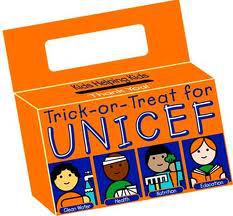
Happy Halloween everyone! In the spirit of today, I decided to reach back into the DonorDreams archives and re-post an article from two years ago. Are your children collecting donations for UNICEF? is your non-profit agency using Halloween to steward donors? We’re re-hashing these issues today. Enjoy!

BOO: Halloween is a non-profit holiday

By Erik Anderson
reposted from October 31, 2011
unicefI just love this time of the year. The temperature outside is lovely. Trees are turning colors and putting on a show. Charity is coming into focus for millions of Americans. Last year approximately 174 million Americans donated approximately $50 billion to charities during the holiday season. While most resource development people will tell you this all starts with Thanksgiving, I contend that Halloween is when the starters gun goes off in my head.
I was reminded this past Saturday afternoon when two kids came to my door holding a small orange box and asked if I’d consider donating some pocket change to UNICEF. Not only do I have fond memories of doing the same thing as a child, but I realized that it might have been the very first time I ever solicited anyone for anything on behalf of a child.
My passion for charity and professional career path might have started all because of a UNICEF box more than 35 years ago.
This realization got me thinking . . . perhaps the year-end charitable giving season starts with Halloween and not Thanksgiving.
Let’s put solicitation to the side. Halloween can be a stewardship opportunity. In fact, non-profit organizations can turn most holidays into stewardship opportunities for their donors as I wrote in my post titled “Stewardship opportunity on Labor Day” which is one of my better read posts of all time. Go figure!
Here are just a few thoughts I have for how your agency can use Halloween to frame your case for support heading into the holiday season:

  • Host a Halloween costume party for your top 100 donors. Don’t solicit them. Just invite them to come to a free event, have some fun, and hear a few short testimonials about how your agency is using their investment from earlier this year to do good things. End everything by saying you hope they will consider reinvesting with a contribution to your year-end holiday mail appeal that is sure to appear in their mailbox in a few weeks.
  • Organize a phone-a-thon where volunteers call donors to whom you plan on mailing your holiday mail appeal. Use a “trick-or-treat” script that talks about how your non-profit doesn’t believe in “tricks” which is why you are calling with a Halloween “treat,” and then read a small snippet of outcomes measurement data that you’ve recently been collected. Thank the donor for helping your agency achieve that specific accomplishment and then end by saying you hope they will consider re-investing when your year-end holiday mail appeal arrives in their mailbox in a few weeks.
  • Simply organize a Halloween theme inspired stewardship mailing (e.g. a ghoulish looking impact report). Don’t ask for any money. Just communicate some return on investment information and thank them for their previous charitable contribution. This can softly frame your case for support in donors minds just a few weeks before you send a solicitation mailing.

As I said in my Labor Day blog post . . .

Many non-profit organizations struggle with stewarding their donors and instead become solicitation machines (which ironically burns out donors and creates a cycle of turnover). When I’ve talked to my non-profit friends and asked WHY, the most common answer I’ve heard is that time is a limited resource.

So, take a look at your stewardship calendar and ask yourself how you can do a better job of aligning these activities with holidays.
Does your non-profit organization have any fun and effective stewardship activities and best practices wrapped around holidays? If so, please use the comment box to share because we can all learn from each other.
Here is to your health! And oh yeah . . . BOO . . . Happy Halloween!!!
Erik Anderson
Founder & President, The Healthy Non-Profit LLC
www.thehealthynonprofit.com
erik@thehealthynonprofit.com
http://twitter.com/#!/eanderson847
http://www.facebook.com/eanderson847|
http://www.linkedin.com/in/erikanderson847

What don’t you know about your non-profit D&O insurance policy?

insurance1Just the other day a friend started talking with me about non-profit directors and officers (D&O) insurance. During the course of that conversation, all sorts of things were discussed and at one point I made a mental note to do a little research. Having just finished my homework, I honestly can say that I completely understand why people don’t like insurance companies — this stuff is complicated.

Let me begin by saying to all of my insurance friends out there . . . I love you. I understand the importance insurance. This will not turn into a rant against you or your employers. I promise!

Next let me suggest to all of my non-profit friends — volunteers and professional staff — that you need to be very careful when it comes to D&O insurance. As I’ve just been reminded by Googling around, the devil is in the details.

Here is some of what I learned . . .

Confusing coverage

I didn’t know until a few hours ago that D&O insurance policies are NOT standardized. In other words, what one company covers in their D&O policy may not be covered in another company’s D&O policy.

To make matters even worse, D&O policies don’t really affirmatively list what is covered. In my experience, just saying that the policy covers “wrongful acts” usually results in board members using their imagination. This is where the trouble starts.

Some of the best advise I read online when researching this topic was:

  1. Read the definitions section of the policy
  2. Read the exclusions section of the policy

By understanding “what is what” and “what isn’t what,” you can get a better picture of what your actual coverage looks like.

Typical exclusions

insurance2The list is long, but the following things are typically excluded from the average D&O insurance policy:

  • Bodily injury (General Liability)
  • Property damage (General Liability)
  • Professional services (Malpractice)
  • Handling Funds (Fidelity, Bond)
  • Nuclear radiation, pollution damage
  • Illegal acts
  • Dishonest acts
  • Intentional misconduct
  • Punitive damages
  • Fines, penalties and matters uninsurable by law
  • Failure to obtain adequate insurance
  • Contract claims
  • Employee retirement income security act (ERISA)
  • Antitrust, price-fixing, restraint of trade
  • Peer review, standard setting
  • Credentialing, certification
  • Discrimination
  • Sexual misconduct
  • “Insured versus insured”
  • Injunctions/no pecuniary suits

I found this list in a document published by the Ohio Youth Soccer Association North (OYSAN), which was at one time part of a larger handbook published by the Nonprofits’ Risk Management and Insurance Institute.

If you find yourself saying “Hey, but I need coverage for those things,” then don’t worry because your insurance company is more than willing to sell you other policies to cover those things.  😉

When you assume . . . 

You know how this expression ends, and it is very applicable to what most board members do when it comes to D&O insurance.

A long time ago in a galaxy far, far away . . . a friend of mine was the board president for a non-profit organization that went out-of-business. As the board started down the long, sad path of winding things down, the following facts were discovered:

  • the executive director hadn’t paid payroll taxes in three quarters
  • there wasn’t enough money in the bank to pay the final payroll
  • many vendors hadn’t been paid in full for their products or services

To make a long story short, Uncle Sam always gets his, and you must pay your employees. These things aren’t covered by D&O insurance (in fact, as I recall, the executive director also forgot to pay the D&O insurance premium). In the end, board volunteers were forced to write a number of big checks and those who couldn’t had a lein placed on their house by the IRS.

Ouch!

Best practices?

insurance3I shared some of my research with a group of amazing non-profit consultants tonight. The consensus of this group of very smart people was that board volunteers never ask the hard questions about their D&O insurance policies until it is too late.

This prompted me to ask the obvious question, “What are some best practices that non-profit boards should follow?” Here is what they said:

  • Once a year in a board meeting, time should be set aside to review policies and coverages with an opportunity for Q&A.
  • Boards should pay for a lawyer, who isn’t a board member and who specializes in risk assessment, to review your policies and inform the board about their gaps.
  • Engage an insurance broker who can help you shop policies and tailor the search to your needs.

Yes, insurance can be boring and board volunteers may not want to do this every year, but the angels of our better nature must prevail. Failure to do the right thing when it comes to D&O insurance and other insurance coverage all too often results in tragedy and hardship for the organization and board volunteers.

What is your organization’s process for renewing insurance policies? How do you educate board members about your agency’s gaps and their risk and exposure? Please use the comment box below to share your thoughts and experiences.

Here’s to your health!

Erik Anderson
Founder & President, The Healthy Non-Profit LLC
www.thehealthynonprofit.com 
erik@thehealthynonprofit.com
http://twitter.com/#!/eanderson847
http://www.facebook.com/eanderson847
http://www.linkedin.com/in/erikanderson847