
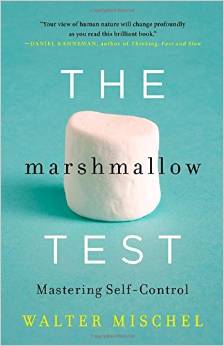
 I’ve been on the road a lot lately. When this occurs, I typically look for eBooks to help pass the time during airport delays and other frustrating travel hiccups. Last week, I downloaded The Marshmallow Test: Mastering Self-Control. I selected this work of non-fiction because I blogged about it on October 26, 2012 in a post titled “Does your non-profit agency pass ‘The Marshmallow Test’?” It was part of an ongoing series we called “Organizational Development Fridays” at DonorDreams blog, and it was based on OD blog posts at “johnponders ~ about life at work, mostly”.
The Marshmallow Test blog post was one of my favorite posts during that time period. So, when I saw the eBook I knew that I just had to read it.
I suspect the next few DonorDreams posts this month will likely connect back to this book. Today, we are talking about the always elusive idea of what characteristics and traits make-up a productive non-profit board volunteer.
The Marshmallow Test explained
The Marshmallow Test (as it has been dubbed by the media) is an experiment to test self-control in small children. In a nutshell, here is how it works according to Walter Mischel, the book’s author and lead researcher:
“On the table were a desk bell and a plastic tray the size of a dinner plate, with two cookies in one corner of the tray and one in the other corner. Both the immediate and the delayed rewards were left with left with the children, to increase their trust that the treats would materialize if their waited for them as well as to intensify their conflict.”
Here were the rules:
- The researcher would explain to the child that they had to leave the room for a little while. The child would be left alone with the rewards in plain sight.
- The child could ring the bell at any time and the researcher would come back immediately.
- If the child waited until the researcher came back without ringing the bell, then the child would earn the two cookies (aka marshmallows) on the plate in front of them.
- If the child rang the bell and summoned the researcher back, then they would only earn one cookie.
- The child had to remain in their seat and not wander off to play in other part of the room.
- The child was allowed to eat one cookie at any time, but if they did then they forfeited their right to the second cookie.
Researchers observed behavior and timed how long various children took before they rang the bell or caved in and ate a treat.
In subsequent years, researchers have followed up on their research and found that kids who did better on the tests (exercising self-control and opting for the delayed reward) actually did better in life (e.g. income, retirement savings, weight control and health, etc)
Using marshmallows during board recruitment?
Of course, this is a whimsical question. I’m not suggesting you pull out marshmallows and administer the test as part of your agency’s board recruitment process, but the mental image makes me giggle.
However, as I read more and more of the book, I find myself wondering if some of the characteristics and traits of those who practice self-control should be added to our board development prospecting processes.
For example, the following is a list of key board member competencies and characteristics that I recently found included in a sample non-profit board member job description:
- Has achieved recognition and status within the community.
- Is knowledgeable about the social concerns of the community.
- Has the resources (personal and/or corporate) to apply to the needs of the organization.
- Is committed to youth and the agency’s mission.
- Has the ability to listen, analyze, and think strategically.
- Has the ability to work well with others and demonstrates tolerance of differing points of view.
- Is willing to prepare for and regularly attend board meetings and relevant committee meetings.
- Exhibits honesty and sensitivity.
In Chapter 8 “The Engine of Success: I Think I Can!” the author ends the chapter with the following list of characteristics and traits of successful people who exercise self-control and maintain an optimistic view of life:
- pursue goals with persistence
- develop optimistic expectations for success
- cope with frustrations, failures and temptations
- inhibit impulsive responses
- develop mutually supportive, caring friendships
I couldn’t help but wonder if these characteristics and traits should be added to our prospecting criteria when searching for new non-profit board volunteers?
What criteria does your agency use as part of its board development cycle? How do you assess whether or not a prospect possesses those traits and characteristics? How many of your board volunteers would pass “The Marshmallow Test” if it were administered at the start of your next board meeting? What does that say about your board? 😉
Please use the comment box below to share your thoughts and experiences. We can all learn from each other.
Here’s to your health!
Erik Anderson
Founder & President, The Healthy Non-Profit LLC
www.thehealthynonprofit.com
erik@thehealthynonprofit.com
http://twitter.com/#!/eanderson847
http://www.facebook.com/eanderson847
http://www.linkedin.com/in/erikanderson847
 I ran across an old board development handout the other day, and it made me laugh. So, I decided to share its essence with you today and ask for your thoughts and opinions. The handout started off with the following two sentences (and I’ve changed the names to protect the innocent):
 I believe it is a basic truism that you can’t make people do anything they don’t want to do. Every example I can think of ends up not working.
 Board Development
 Resource Development Plan
 I’ve been doing a lot of “board roles and responsibilities” training sessions in the last year. The curriculum breaks out responsibilities into group obligations and individual duties; however, in both lists there is verbiage such as:
 I received a call from a old friend (we used to be real close 🙂 ) who served on the board of a very prominent organization. This is the story she told me. I share it with you to both illustrate how easy it is to disengage good board members and how important it is to institute and follow good process.
 Every time I hear a donor from a community’s “old guard” lament about no one taking their place and wishing organizations would start recruiting younger, up-and-coming professionals, I can’t help be smile. Why? Because in my experience, it is usually the same crowd who laments that a board of young professionals:
 Welcome to the May 2014
  Donor loyalty & fundraising
 Brand loyalty, marketing & social media
 At DonorDreams blog, I dedicated the entire month of May to this month’s Nonprofit Blog Carnival theme of loyalty.
 Welcome to May! While this month represents lots of things to lots of people (e.g. rain, flowers, planting gardens, non-profit conferences, etc), May is an anniversary month for
  Approximately 14 years ago, I was a young and eager executive director of a non-profit organization in Elgin, Illinois. While I had already worked in a number of different capacities in the non-profit sector, it was the first time I had held the job of “executive director.” Thinking back to that time in my life is where I pull my inspiration for the May 2014
 How to submit your work for consideration?
 Miscellaneous details?
 On Tuesday of this week, my blog post titled “
 Now this didn’t happen because I smelled bad or people disliked me (at least I don’t think so). It happened because of how I approached my individual meetings with board members. Here is what was on my agenda: