Dani Robbins is the Founder & Principal Strategist at Non Profit Evolution located in Columbus, Ohio. I’ve invited my good friend and fellow non-profit consultant to the first Wednesday of each month about board development related topics. Dani also recently co-authored a book titled “Innovative Leadership Workbook for Nonprofit Executives” that you can find on Amazon.com.
Governance: The Work of the Board, part 1
Hiring, Supporting and Evaluating the Executive
By Dani Robbins

As mentioned in Board Basics and reposted on this very site “Boards are made up of appointed community leaders who are collectively responsible for governing an organization.” That includes:
- Setting the Mission, Vision and Strategic Plan,
- Hiring, Supporting and Evaluating the Executive Director,
- Acting as the Fiduciary Responsible Agent,
- Setting Policy, and
- Raising Money.
As you know, one of my goals is to rectify the common practice in the field of people telling non-profit executives and boards how things should be without any instruction as to what that actually means or how to accomplish it.
Since I wrote a recent post on Strategic Planning, I’m going to circle back to that one and start with Hiring, Supporting and Evaluating the Executive Director.
What that means is:
It is the Board’s role to hire the Executive Director, also called CEO. Prior to hiring, interviewing or even posting the job, it is imperative the Board discus what they want and need in an Executive Director. This conversation cannot be farmed out to a committee primarily consisting of non board members, or to a consultant or hiring firm. That will only get you what they want and think you need – not what you want and actually need.
What skill sets and experience do you need in a leader?
Growing, turning around or maintaining an organization require very different skill sets. Which trait do you want your new leader to have? Does your leader need to be a subject matter expert? Does she need to be local? Does he need to be a fund raiser, an operations person or both?
I recommend a search, REGARDLESS OF . . .
- if there is a good internal person,
- if someone on the board wants the job, or
- if there is an obvious heir apparent.
Do a search, let everyone apply and see who best matches your needs. For more information on conducting a search, please click here.
 Once your hire an Executive Director, s/he needs to be supported. Supporting an Executive Director is where the rubber meets the road.
I once had a colleague tell her board to “Support her or fire her, but to choose.” While I was shocked, I was also in agreement. The job of the Executive Director is very difficult and energy spent on worrying is not spent on moving the organization forward. (To the Executive Director’s out there: Worrying about keeping your job precludes you from doing your job. You have to do what you believe is best, based on your experience, information and training, within the boundaries of your role and the law. We all know that any day could be the day you quit or get fired. That can’t stop you from leading.)
Communication is key: the Board needs to know (and approve of) what the Executive Director is doing and the Executive Director needs to know (and be willing to do) what the Board wants.
It is the Board Chair’s job to be the direct supervisor of the Executive Director and the entire Board’s job is to support him/her, set goals and hold her accountable to those goals. This means the Board has to let the Executive Director fulfill the bounds of his/her role. There should also be a strategic plan that is being implemented, board approved policies that are being followed and an annual evaluation process for the Executive Director (and the rest of the staff).
The vast majority of Executive Directors rarely get evaluated, and when they do it’s often because they asked for an evaluation. (To the Board Presidents out there: Executive Directors, just like Board members and most other people, when left to their own devices will do that they think is right. What they think is right will not necessarily be aligned with what the Board wants, especially if what the Board wants has not been discussed or communicated. It also may not be aligned with anything anyone else is doing. See the Strategic Plan link above to create alignment.)
Executive Directors should be given expectations and goals (just like all other staff) and should be evaluated against those expectations and goals every year. There should be a staff (including executive) compensation plan that has a range for salaries for each position and reflect comparable positions in your community; raises should be given within the confines of that plan, or the plan should be revised. (More on that in the Setting Policies blog to come in the next few days.)
Hiring, Supporting and Evaluating the Executive Director has to happen – in full- for your executive to be an effective leader, for your board to fulfill its responsibilities and for your organization to fulfill its mission.
When an Executive Director is hired right, supported appropriately and evaluated effectively there’s no end to the impact it can make on an organization and a community.
What’s been your experience? As always, I welcome your insight and experience.
 When it comes to financial management, I’ve run into two types of non-profit organizations. There are those organizations who struggle with financial management and don’t have a strong and independent Finance committee in place. Then there are agencies whose Finance committee is the strongest voice in the boardroom. For the latter type of organization, the question about whether or not to form an audit committee always seems to linger in the air with a diversity of opinions spinning around it.
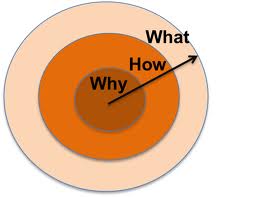 Those organizations that excel at strategic planning have a very clear understanding of what they do, how they do it, and why they exist. However, those organizations that are little fuzzy on these ideas do a lot of wrestling with themselves. Sometimes countless hours are spent at the 50,000 foot view talking about these issues . . . and for good reason! Without clarity on What-How-Why, there is no way you can set goals, develop objectives and write action plans that are meaningful in any way, shape or form.
 When I used to work at Boys & Girls Clubs of America (BGCA), my colleagues were responsible for the existence of something called theFUNDRAI$INGbank, which is a special webpage embedded inside of the intranet accessible to local affiliates. We outsourced maintenance of this page to FundRaisingInfo.com. There were many different resources located on “The Bank” including a free service called “Ask The Expert“.
 September 15, 2008 . . . do you remember where you were and what you were doing? It was the day the world changed. It was what some people have called an “economic 9-11″. Regardless of how you characterize the day that Lehman Brothers filed for bankruptcy and the stock market started its crash, it is hard to argue the following: 1) the economic paradigm we all used to live in shifted and 2) nothing will ever be the same again.
 Mentally take a look around your board room and see if you can identify how many Dorothy-like volunteers occupy chairs. They are kind folks (dare I say friends) who look and sound like the following:
 Don’t get me wrong. I am not suggesting a “witch hunt” to root out these folks and fire them. Dorothy serves an important role on your board. She is that cautious voice that keeps you from getting into trouble. She will stop you from pulling the plug on your annual campaign and direct mail appeals and “going all in” on ePhilanthropy efforts. Valuable? YES! However, what happens when you have too many Dorothy-like board members? Or what if you have those well-intentioned people serving in the wrong roles (e.g. board president, annual campaign chair, strategic planning committee, etc)?
 As a new business owner who just opened up a nonprofit & fundraising consulting practice, I’ve made it my business to “get around”. In addition to visiting with many of my oldest and dearest non-profit friends in Elgin, Illinois, I recently attended a regional Boys & Girls Club conference and engaged countless staff and board volunteers from around the country through a very aggressive social media strategy including Twitter, Facebook, LinkedIn and this blog. While I don’t want to exaggerate, I was surprised at how many conversations looked and sounded like this




 Identifying blog topics can be hard. Sometimes you find a comfort zone and ideas flow freely. Other times, it is next to impossible and the writers block is crippling. So, I love it when readers sometimes email me on the side and suggest topics.