And the Oscar goes to . . . Take Two

Yesterday, we talked about how donors are like a Hollywood movie and act as a mirror for your non-profit organization (e.g. reflecting what you’re about, who supports you, what messages resonate and which ones don’t, etc). If didn’t get a chance to read that post, click here and check it out. Today, I want to extend this conversation and talk about the power of testimonials and using video to capture them.

If you watched the Academy Awards on Sunday, then you may have noticed the myriad of “testimonials” sprinkled through out the television production. There were short little snippets showing Brad Pitt or George Clooney or Angelina Jolie or Sandra Bullock, and they were talking about their love of making movies. While watching those testimonials, here were some of the things I noticed:

  • Their words seemed “powerful” and captured my attention. They caused me to reflect upon why I love movies.
  • There was a sense of honesty in their words. It felt like they were bearing their souls.
  • I felt a connection to that person. It was almost an intimate conversation you have with a friend or family member.

That was my experience . . . I’m not sure if you felt the same thing. Did you feel it or was I drinking too much wine?

This experience got me thinking . . . why can’t non-profit organizations do the same thing? Interview donors on video. Ask them to recount the first time they were asked to donate to your organization? Why did they do it? Why do they continue doing it? What about your mission inspires them?

Sure, I can hear many of you already mumbling about costs and time, but does this need to be something really expensive or time-consuming? I own a flip camera and tripod. Microsoft MovieMaker isn’t that hard to use. Hasn’t technology come far enough where almost anyone can produce something like this without it looking like a train wreck? I think so. Don’t believe me? Then go spend a little time on YouTube. Sure, some of it is crap, but some of it isn’t all that bad either.

As I contemplated all of these thoughts yesterday, the most amazing thing happened. It was almost like the blogosphere gods were listening to my thoughts because one of my favorite bloggers — Jeff Brooks at Future Fundraising Now — posted his blog titled “How to make nonprofit videos that people share” and it landed in my email inbox. WOW!

Jeff shares 10 tips on how non-profits can produce great videos. I urge you to read Jeff’s post, and then circle back here to DonorDreams blog and share your thoughts and experiences using the comment box below. Has your agency done a similar project? What were the results? Were the time and money obstacles too high to overcome? What are the obstacles keeping you from doing something like this? Please remember that we can all learn from each other.

Here’s to your health!

Erik Anderson
Founder & President, The Healthy Non-Profit LLC
www.thehealthynonprofit.com
erik@thehealthynonprofit.com
http://twitter.com/#!/eanderson847
http://www.facebook.com/eanderson847
http://www.linkedin.com/in/erikanderson847


And the Oscar goes to . . .

On Sunday night, I found myself at an Oscar party with some of my favorite local non-profit mavens. There was great food, great wine, and great company. I’m thrilled to report that I won the “voting contest” and walked away from the party with some very nice parting gifts. However, more so than anything else, I came away from Sunday with an epiphany about Hollywood and philanthropy.

This epiphany started with the realization that most of the films nominated for Best Picture were set in the past and a celebration of “where we’ve been” rather than future focused and a look at “where we’re going”. I thought  . . . “Hmmmm, the film industry is like a mirror and reflects the mood and values of our society.”

At this point, I started wondering about what Hollywood has captured in past years on the big screen about non-profits, charitable giving, donors, and philanthropy. So, I of course Googled it and surprisingly found very little on the subject until I used the following search words: “movies about giving back”. Ah ha . . . eureka! As you can imagine, there are a number of movies that are either themed or have threads of “giving back” as part of their plot.

In April 2011, FilmBuff blog shared what they thought were the top five films about “giving back”:

  1. Pay It Forward
  2. It’s a Wonderful Life
  3. Milk
  4. Young Mr. Lincoln
  5. Exit Through The Gift Shop

My very next thought took me back to the final scene in It’s a Wonderful Life, when George Bailey is in his living room surrounded by all of his friends and neighbors and they are supporting him and “giving back”. It made me think that movies aren’t just mirrors, but so are the people who surrounded us . . . and . . . for non-profit organizations those people are our donors.

This thought smacked me upside the head and the following questions rushed forwarded:

  • What do your donors look like? Are they men or women? Are they white-collar or blue-collar? Are they old or young?
  •  What are those donors telling you? Are they saying that you solicit them too often or not enough? Are they asking lots of questions about what you do with their dollars?
  • How often do your donors stick around? Have they been giving to your agency for a long time or do many of them just give to you once?
  • What would your community look like if your non-profit organization had never been born?

The reality of the situation for many philanthropy driven non-profit organizations is that donors represent the real life motion picture films unfolding all around us. So, without the benefit of filming those interactions, how does your agency capture those pictures? Is your donor database like a video camera? Do you use tools like interviews, focus groups and surveys much like film directors use scripts, storyboards, and dress rehearsals?

If you are “recording” all of these things, then what are you doing with the information? Are you folding it into your resource development planning process? Are you using it to adjust your strategies and tactics? Are you using it to engage others around your mission? Are you monitoring and tracking your results? If so, what have been your results?

Lots of questions today! Do you have some of the answers? If so, please scroll down and share them by using the comment box.

Oh yeah, I almost forgot to ask . . . What is your favorite movie of all times that deals with non-profits, charitable giving, donors, philanthropy or giving back?

Here’s to your health!

Erik Anderson
Founder & President, The Healthy Non-Profit LLC
www.thehealthynonprofit.com
erik@thehealthynonprofit.com
http://twitter.com/#!/eanderson847
http://www.facebook.com/eanderson847
http://www.linkedin.com/in/erikanderson847

It’s a party! Non-profit special event tips and tricks

Welcome to non-profit special event season. At least that is the case where I live. Over the course of this last week, we’ve examined FOUR very special and unique special events. Today, we’ll end all of this “party talk” by discussing a few tips and tricks.

However, before we start, please read this quick disclaimer:

“If your agency is small (e.g. too few staff, too few board members, too few volunteers, too few donors, etc) and you need to raise some SERIOUS money, then STOP thinking about throwing a party to raise money! Remember, CharityNavigator.com studied the return on investment (ROI) question and found that the average non-profit will spend $1.33 (direct & indirect costs) to raise $1.00 using a special event vehicle.”

So, if this disclaimer describes your non-profit agency, then I urge you to round-up a small group of volunteers (e.g. those who REALLY believe in what you’re trying to do) and organize them into a group that asks their friends-neighbors-family for direct contributions. Yes, this approach is scary for a lot of people, but it is more effective and you’ll raise more money with less effort.

With that disclaimer out-of-the-way, the following are a few special event observations, tips and tricks for those of you who aren’t quite so desperate and might already have a comprehensive resource development program in place:

  • If you look around the table and see more staff than volunteers during the planning phase, then please STOP and go recruit more volunteers. This isn’t hard. There are so many people out there who love to plan and participate in a party (at least more so than there are people dying to work pledge cards).
  • Remember, special events that make crazy sums of money typically do so because of corporate sponsorship and not because a lot of people purchased tickets. Yes, you need people to attend, but make sure to focus your energy on selling sponsorships.
  • Speaking of sponsorships . . . make sure there is VALUE in those sponsorship packages. Remember . . . companies give you money for different reasons than individuals. So, sit down with your corporate prospects and figure out what they value. Once you figure that out, you’ll easily be able to sell them a sponsorship or craft one around their needs (e.g. marketing impressions, employee involvement, etc). The key here is talking to them in advance AND listening to them AND giving them what they want and need.
  • The first three letters in fundraising are F-U-N, and special events should personify this word. If you and your volunteers aren’t having a blast planning, organizing and running a special event, then you need to STOP and figure that out! There are so many ways to inject fun into your event: theme, contests, recognition, etc. However, it doesn’t happen accidentally. Non-profit and fundraising professionals set the stage with their demeanor, attitude, approach and ideas.
  • Infuse mission into your fundraising event. Your special event is a great opportunity to “cultivate” new prospects and “steward” existing donors. This is your moment to shine and educate. Sure, playing 18 holes of golf is fun, but if you can’t find fun and ways to talk about your mission and get people excited about what you do, then I suggest not doing the event.

I don’t have unlimited space to share an infinite number of ideas with you. So, the following links are just a few additional fundraising professionals and organizations I suggest you check-out and read as you strive for creating bigger and better special events: Joanne Fritz, Convio & Event 360, and Andrew Olsen.

If your “fundraising strategy” is predicated on using special events to bring money into your agency, then you’re heading down the wrong fundraising road. Special events don’t make you much money when it is all said and done. I’m not saying “don’t throw a party;” however, I am saying “throw a party for the right reasons.” Sure, you’ll bring some cash into your bank account (not accounting for indirect costs, of course). However, special events are very effective when there is another step (or two or three) in your resource development program that you can transition your event donors (e.g. annual campaign, mail campaign, etc).

Here’t to your health!

Choo! Choo! All aboard the philanthropy train

On Tuesday of this week, I climbed aboard a train and made my way to downtown Chicago for a meeting with a former co-worker and current marketing consultant. It was on that train trip that I was thunderstruck by a revelation . . . trains are an amazing metaphor for non-profit organizations when it comes to resource development.

It starts at the train station. If you look around at those waiting for the train, you’ll observe people from all walks of life. There is a lot of diversity standing on that train platform, which also holds true for the average non-profit agency’s pool of prospective donors. Those who are interested in supporting your agency are young and old, white-collar and blue-collar, and rich and poor.

Non-profits who are successful at resource development recognize their mission is something everyone wants to climb aboard, and those agencies are very good at offering seats to everyone on that train.

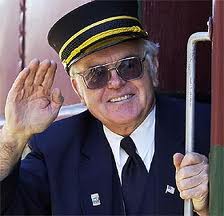
Once the train pulls up to the platform, the doors open and the conductors come down out of the train onto the platform. They greet commuters, provide valuable information, and assist those who need help getting up into the train. After everyone is seemingly aboard, they look around and make sure there are no stragglers.

Successful fundraising organizations use fundraising professionals and fundraising volunteers to identify, cultivate, educate, inform and help prospective donors.

On the train, conductors are punching pre-purchased tickets as well as selling tickets to those who need them. Everyone pays to ride and no one goes without a solicitation. This all occur while the train is chugging along to its destination. After the solicitation period is over, the conductor stops and chats with passengers. They answer questions and talk about the “expected outcome,” which of course is arriving safely at your destination. The focus isn’t on the solicitation, it is on the outcomes (e.g. talk about the journey, reminders about safety, and the final announcement at the end of the trip that the ultimate outcome has been achieved).

Non-profits who make fundraising look effortless understand that fundraising isn’t the focus. They work hard to keep their donors and supporters focused on the journey, the outcomes and the impact. The message is never “we need your money” . . . it is always “we’re making a difference because of everything you do to support us.”

As the train pulls into Union Station, the conductor makes the following announcements:

  • We’ve arrived on time (e.g. we delivered on our promise)
  • Thank you for riding Metra (e.g. appreciation and acknowledgement)
  • Have a great day, watch your step getting off the train, and be safe
  • Remember to buy your ticket at the station for your return trip because you’ll save money

Stewardship is more than just thanking donors for their money. In addition to thanks and appreciation, the effective non-profits share return on investment information with their donors and take a genuine interest in their lives.

If you’re reading today’s blog post and think I’m exaggerating to make a point, then I think you need to take a train trip. For me, the proof is in the pudding when I see how many commuters appear to personally know their conductors and look happy to see them.

Non-profit organizations who want to improve their resource development programs and make them more donor-centered should climb aboard the philanthropy train and enjoy the ride. None of us are ever too old to learn a thing or two.  😉

Who are the “conductors” for your resource development program? No everyone is cut out for that job . . . how do you identify and recruit those individuals? Are you strategic in your efforts or is it more organic? What does your agency do to keep the focus off of fundraising and on the outcomes and impact (while ensuring donors are still contributing)? Does your fundraising program feel like a fun journey or is it just a series of unconnected stops?

Please use the comment box below to weigh-in. I promise that it is a warm and nurturing place. It will not bite you.  😉

Here’s to your health!

Erik Anderson
Founder & President, The Healthy Non-Profit LLC
www.thehealthynonprofit.com
erik@thehealthynonprofit.com
http://twitter.com/#!/eanderson847
http://www.facebook.com/eanderson847
http://www.linkedin.com/in/erikanderson847

Lessons Learned from The Susan G. Komen Foundation’s Use of Social Media

How important is social media to non-profits? Ask the Susan G. Komen for the Cure Foundation.

Last week, the popular breast cancer awareness group announced that it would no longer provide grants to Planned Parenthood. In the past, the Susan G Komen Foundation provided funding to Planned Parenthood to provide mammogram screenings for those in need. Due to a change in policy, based on an investigation into where donor dollars were making the largest impact, these grants would no longer be funded. With in hours of this announcement, Facebook and Twitter were alive with posts from people voicing their opinion on the matter. Within 72 hours the decision was reversed.

Let’s not focus on the politics at hand, but moreover, what can we learn from this situation?

1. Never underestimate the power of the web. We are living in an age that has seen governments overthrown due to the organization efforts of people on Twitter. These days, information travels faster than the speed of sound. How are you using this to your advantage? Does your organization have an active presence on social media networks or is it more haphazard? People use social media every single day. Facebook, alone has over 800 million users and is projected to hit over a billion in August of this year. These are all people who can hear about the mission of your agency, but they can’t hear about it if you aren’t talking. Make sure that the message that is being published on social media sites on behalf of your organization is being controlled and constantly monitored to ensure that the message is clear and fosters a sense of community.

2. We are all connected. Do employees and volunteers understand how their activities on the web impact the mission of your agency? For example, what if an employee, let’s call him Sam, has your organization listed as their place of work and he comes home from a hard day and vents his frustration on Facebook. The next day, a donor, Jane, is looking for a new organization to donate her hard-earned dollars to, does a google search and finds your organization. On the side of your website there is a Facebook link. Jane clicks it only to find that her friend — Sam — works and your organization and is connected. Upon clicking on Sam’s profile, Jane sees what he has to say and thinks twice about making that donation. If your organization does not have a clear social media policy for employees, this situation could very likely happen.

3. The most important lesson for non-profits that can be taken away from last week’s news, is that transparency is the best policy. I know that Erik has stressed this before on the DonorDreams blog, and I can’t help but echo it again. The Susan G. Komen Foundation made a very difficult decision that they knew would probably anger some supporters. Where they made a mistake was in the messaging. They allowed people to make the issue a political one because they didn’t share all of the details behind why that action was necessary. Susan G. Komen Foundation had a number of resources at their disposal to share information and defuse the situation after the announcement was made. If they had reacted to their critics in real-time through social media as opposed to reacting through a produced video a day or so later, they might have controlled the situation a little better. How do you use social media to announce changes to your agency?

This hiccup in the timeline of The Susan G. Komen Foundation will sure come to the minds of future donors. However, what I find most interesting is to see how if they will embrace social media to help control the conversation and move the public forward.

In my upcoming “Mondays with Marissa” posts, I plan to focus on one social media site a month and how you can cultivate a community of supporters through it. To best serve our readers, I have created a quick survey to see what sites are being used and how. Please take a few moments to share your thoughts, by clicking on this link. Thank you!!

Wise words from a frog on donor recapture initiatives

This week we’re looking for non-profit and fundraising advice from one of my favorite books — “It’s Not Easy Being Green: And Other Things to Consider” — written by Jim Henson, The Muppets, and Friends. In yesterday’s post, we examined song lyrics from Dr. Teeth and the Electric Mayhem band and the importance of training your annual campaign volunteer solicitors. Today, we look at a quote from Kermit the Frog and the concept of re-engaging lapsed donors.

The following passage is something Kermit said in one of the muppet movies. I think these words are inspirational for non-profit and fundraising professionals who are looking at a long list of lapsed donors and contemplating how to re-engage them.

“Look at all those people out there. Lots of people. But my friends . . . my friends are all gone. Well, I’m, I’m going to get ’em back. I’m gonna get ’em back! ‘Cause the show’s not dead as long as I believe in it. And I’m gonna sell that show. And we’re all gonna be on Broadway. You hear me, New York? We’re gonna be on Broadway! Because, because I’m not giving up! I’m still here and I’m stayin’! You hear that, New York? I’m stayin’ right here. The frog is stayin’.”

While every non-profit organization’s donor recapture initiative will likely look a little different due to circumstances and available resources, they are all rooted in the following foundational approaches:

  • Identifying which lapsed donors are the best candidates for your recapture activities,
  • Assessment to determine if there were systemic reasons for the donor disengaging,
  • Developing a case for support specifically focused on why a donor should come back, and
  • Creating a plan that involves varied cultivation, solicitation, stewardship and testing strategies that uniquely speak to a family member who has been away from home for a while.

Doing all of this falls into the category of “good strategy,” but what Kermit speaks to is something entirely different — good attitude.

I cannot tell you how many times I’ve opened a letter, taken a phone call or visited with a fundraising professional who wants to engage me in a conversation about renewing my lapsed financial support. For me, it is all about tone and energy. I can tell if you really care about me or if you just care about my dollars. I can tell if you believe in your heart that I’m a member of your non-profit family.

You can put together the most strategically sound donor recapture initiative and still fall short if you don’t take Kermit’s words to heart about:

  • Being perseverant and demonstrating sticktoitiveness,
  • Believing in a cause, and
  • Understanding the concept of salesmanship.

Jerry Juhl was a good friend of Jim Henson and a puppeteer associated with the muppets. He said, “Kermit is the eye in the middle of the hurricane. And, you know, he’s always in control. And the interesting thing about it, of course, is that he created the hurricane.”

Every fundraising professional should take these words to heart because: 1) you are at the center of your agency’s fundraising program, 2) you need to always exude a sense ofbeing  calm, cool and collected, and 3) you likely created the situation that you’re currently dealing with.

Has your agency every created or invested in a donor recapture initiative? If so, please share what it looked like? If you created a special case for support, what were some of the messages and themes you hit upon? How did you infuse emotion into your efforts? Please scroll down and share your thoughts using the comment box below. We can all learn from each other.

Here’s to your health!

Erik Anderson
Founder & President, The Healthy Non-Profit LLC
www.thehealthynonprofit.com
erik@thehealthynonprofit.com
http://twitter.com/#!/eanderson847
http://www.facebook.com/eanderson847
http://www.linkedin.com/in/erikanderson847

Are you and your non-profit agency a fundraising leader?

This week at DonorDreams we are talking about what it looks like to be a fundraising “LEADER”. Today, we will frame the issue using a few of Noel Tichy’s ideas around leadership. The rest of the week we will examine other points of view on the subject as well as examples of good leaders.

Noel Tichy is an iconic figure in the field of leadership. He has authored and co-authored the following books on this very popular subject: Control Your Destiny or Someone Else Will, The Leadership Engine, and Judgment: How Winning Leaders Make Great Calls. While it would be impossible to summarize all of what Tichy believes about leadership into this very small blog post, I believe the following key principles from chapter three of The Leadership Engine captures some of it nicely:

  • Leaders accomplish their goals through the people they teach
  • Leaders teach others to be leaders, not followers
  • Leaders consider teaching on their primary roles
  • Leaders use every opportunity to learn and to teach
  • Leaders have clear ideas and values, based on knowledge and experience
  • Leaders articulate those lessons to others

In that same chapter of the book, Tichy quotes former Honeywell CEO, Larry Bossidy, as saying:

“How am I doing as a leader? The answer is how are the people you lead doing?”

Hmmmm . . . all of this got me thinking! If leaders teach and if leaders can be evaluated by those they lead, then would Tichy advocate that a non-profit and fundraising leader be evaluated through a “donor lens”?

After some careful consideration, I think Tichy would probably agree and I think the following questions can shed lots of light on whether you are leading or just raising money:

  • Do your donors know what the goals of your agency are?
  • Do you know what your key donors’ personal goals are with regards to their philanthropy?
  • In your efforts to cultivate new prospective donors, do you teach them what to expect as a donor to your agency and how to engage your organization in being accountable to them and their fellow donors?
  • Do your donors know what your  agency’s values are? Do they see and echo your edge and emotional energy around your mission?
  • Do your donors enthusiastically go out into the community and teach others about your mission and enlist the support of new prospective donors?

If you can answer ‘YES’ to many of these questions, then congratulations . . . “You very well might be a fundraising leader.” If you fall a little short, then there might be a little bit of work for you to do.

And what does this work look like? Well, I’m happy to say it is probably something you should fold into your existing donor stewardship efforts (e.g. focus groups, donor surveys, stewardship receptions with a mission-focus, engaging donors in prospect cultivation efforts, etc).

How do you propose we take measure of whether or not you and your agency are non-profit and fundraising leaders? Does it even matter to you or do you think it is more important to just focus on fundraising outputs (e.g. cash raised, goals attained, etc)? Are you trying to create what Tichy refers to as a “virtuous teaching cycle” with your donors? If so, what does that look like?

Please scroll down and share your thoughts on some of these questions in the comment box because we can all learn from each other.

Here’s to your health!

Erik Anderson
Founder & President, The Healthy Non-Profit LLC
www.thehealthynonprofit.com
erik@thehealthynonprofit.com
http://twitter.com/#!/eanderson847
http://www.facebook.com/eanderson847
http://www.linkedin.com/in/erikanderson847

Non-profits can learn a lot from the Chicago Cubs

I attended the Chicago Cubs Convention this last weekend with my partner, father, brother and nephew. This is the 27th annual convention, and I think this is the fourth or fifth time I’ve attended with my family. As many of you know, I look for signs of philanthropy everywhere I go in life. It is one of my quirky charms.  🙂

It would’ve been easy to write about the $4 million that the Chicago Cubs have raised for charities with the proceeds from this convention, but I decided to look a little deeper this year. Not surprisingly, I found three things that the Cubs organization does at its annual convention that non-profit and fundraising professionals can take away from the experience.

A Sense of Accountability
Everyone in America knows the Chicago Cubs haven’t won a World Series in more than 100 years. This is the equivalent of a non-profit organization being unable to demonstrate community impact or program outcomes to its donors. To some people, it is surprising that the Cubs have any fans remaining with such an amazing inability to produce any return on investment (ROI).

However, the convention does something interesting for the Cubs organization. It gives fans the sensation they can hold the team “accountable”. There are sessions with ownership , management, coaches, and players. During those sessions, fans are permitted to ask questions and make comments from the floor.

While it is important for non-profit agencies to demonstrate ROI and impact, it looks like letting donors “hold you accountable” can go a long way when your ability to generate outcomes might still be a few years off.

It is all about the upgrade
It shouldn’t surprise you that the cost for last weekend was high (e.g. convention passes, hotel, and food). Tack onto this pricetag the cost of attending a few Cubs games throughout the summer, and it becomes apparent that being a Cubs fan isn’t cheap. However, this didn’t stop the Cubs from gently trying to up-sell me at every turn.

Have I considered attending spring training with the team in Arizona? What about signing up for a tour of Wrigley Field? Will I give some thoughtful consideration to upgrading from a fan who just attends a few games every year to a 9-Game Pack ticket holder?

I’ve met too many non-profit organizations who are afraid of asking their donors for more. The excuse usually given is that they’re afraid of “offending” those donors. Well, I can honestly say that I was never once offended by the Chicago Cubs and their vendors. I highly doubt most donors would either. However, I suspect that the key to not offending anyone is in how you go about doing it. In each of the previous up-sell examples, the Cubs had a very well-defined “case for support” (aka sales pitch).

If non-profit organizations invested more time in crafting solid case statements focused on why special event donors should also become annual campaign donors, I suspect a lot more money would be raised.

Becoming part of the family
At one point during the weekend, I had to giggle to myself because I paid the Cubs a lot of money for the right to be their captive all weekend and permitted them to market to me. While this realization should make me feel stupid (because they should be paying me for that privilege and not vice versa), I really don’t feel that way. As a matter of fact, I feel lucky and a little privileged to have been part of the experience.

The Cubs made every one of their guests feel special and a part of their family. Everyone likes to “belong” to something (e.g. church, alumni associations, service organizations, etc), and the Cubs have created an experience that nurtures this feeling, which in the end helps them make a lot of money.

Non-profit organizations who put their minds to it can turn their marketing materials and donor recognition societies into a similar kind of experience for their donors. I suspect that those who do so will see their donor loyalty rates skyrocket.

In closing
As a lifelong Cubs fan, all I have to say is that I believe a World Series title is waiting for us right around the corner in spite of the fact that the Cubs have embarked on a major “team re-building project” this year.  I guess hope does spring eternal, which is a good thing for some non-profit organizations.

Please use the comment box below to weigh-in with your thoughts. What opportunities do your donors have to hold your agency accountable? What are you doing to instill a sense of family among your donors? What are you doing to upgrade donors gifts and giving opportunities?

Here’s to your health!

Erik Anderson
Founder & President, The Healthy Non-Profit LLC
www.thehealthynonprofit.com
erik@thehealthynonprofit.com
http://twitter.com/#!/eanderson847
http://www.facebook.com/eanderson847
http://www.linkedin.com/in/erikanderson847

Strategic special events?

Back in October, I outted myself as a fundraising professional who isn’t very fond of special events when the purpose of the event is to raise money. I don’t know how many times I’ve shared the link to Charity Navigator’s 2007 Special Events Study with subscribers to this blog. I’m sure it has been too many times, but I’ve haven’t seen anything else that more convincingly makes the case that special events cost more money than they raise.

However, my position on special events does change when the objectives associated planning and hosting an event are more inclusive than: “let’s make some money.”

So, some of you might be asking: “What other objectives could there be?” Well, try some of these on for size:

  • Engaging new volunteers from a different social circle in your community.
  • Introducing yourself to a new set of prospective donors from a different social circle in your community, and cultivating new prospective donors for your individual giving annual campaign.
  • Stewarding existing donors by providing them an enchanted evening awash in mission-focus.
  • Marketing and getting your agency’s brand into the media marketplace.

I think it is great if your agency wants to run a few (e.g. one, two or three) special events as part of its annual resource development plan. However, I encourage you to ask the following questions before doing so:

  • How does this event support other aspects of your fundraising plan?
  • Who is the target audience for each of your special events? Does this event really do a good job of engaging that segment of the donor marketplace?
  • Are you just sending invitations out to those who attended last year? Are you just blasting invitations out to your entire donor database? Or are you thoughtfully engaging your event committee in identifying new prospective attendees who fit within the target audience parameters you’ve set?
  • How are you injecting “mission-focus” into each of your events so new prospective donors are getting cultivated and current donors are getting stewarded?

There is something very powerful about throwing a party focused around your agency’s mission. If it is done haphazardly and all in the name of “raising some money,” then you most likely didn’t raise the money you thought you did (read the Charity Navigator report and look at both direct and indirect costs) and you also missed an opportunity.

However, if you are strategic in your approach to special events, then I suspect you are seeing improvements in your overall fundraising program and starting to attract new donors.

Is your non-profit organization “strategic” in its approach to special events? If so, how? Please use the comment box below to answer these questions. The one or two minutes it takes for you to comment might make a huge difference in another fundraising professional’s life.

Here’s to your health!

Erik Anderson
Founder & President, The Healthy Non-Profit LLC
www.thehealthynonprofit.com
erik@thehealthynonprofit.com
http://twitter.com/#!/eanderson847
http://www.facebook.com/eanderson847
http://www.linkedin.com/in/erikanderson847
Introducing Mondays with Marissa

Happy New Year! I hope that your year-end celebrations were fun, and you are ready to tackle resolutions in the new year. Speaking of resolutions, I made a number of them, and a few of them had to do with the DonorDreams blog.

Specifically, it is easy to see how technology is dramatically changing the world around us, which is why I reached out to my friend and fellow blogger — Marissa Garza — and asked her to address technology issues every Monday. (A picture of Marissa is posted to the right on your screen . . . Hi Marissa! 🙂 )

Marissa graduated from the University of Illinois with a BA in Education. She has taught in the classroom, worked for Kaplan, and is one of the most curious self-taught students I’ve ever met when it comes to technology. In fact, every time we get together she is telling me about a some new technological piece of magic.

When I needed help customizing this blog, I turned to Marissa. When I needed feedback on the The Healthy Non-Profit’s website, I turned to Marissa. When I needed to test my webcam with regards to Skype, GoToMeeting, GoToWebinar, and Google+, I turned to Marissa. When a former co-worker asked me for tips on how to get her blog up and running, I sent her to Marissa.

If you haven’t figured out that Marissa is my “go to gal” when it comes to technology, then let me just say for the record . . . she is super smart and someone I think of very highly. I am thrilled to death that she has agreed to become part of the DonorDreams family, and I predict you will fall in love with her.

The inspiration behind “Mondays with Marissa” came from the following two places:

  • One of National Public Radio’s (NPR) popular shows is Talk of the Nation with Neal Conan, and on Fridays Neal turns his show over to Ira Flatow who hosts a show branded “Talk of the Nation: Science Friday“. This approach to specialized content inspired me to add a new voice to DonorDreams one day a week.
  • Perhaps, more central to my decision to ask Marissa to join the team is how often non-profit friends ask me about technology related issues and those questions have been very broad including: websites, social media, email marketing, blogs, ePhilanthropy, e-commerce, donor databases, CRM, etc.

I’ve asked Marissa to write about all of these topics and more. As she does, I will use the comment section of this blog to weigh-in with my thoughts on how these technology topics apply to non-profit management, marketing, board development, programming/operations, and resource development (including prospect cultivation, donor solicitation, donor stewardship, etc).

I don’t know about you, but I am very excited about 2012! I am very optimistic and excited to get started.

Please use the comment box below and weigh-in with a few technology topics that you’d like Marissa to write about over the next few Mondays. Your suggestions are very much appreciated. Please also help me welcome Marissa to our family.

Happy New Year and here’s to your health!

Erik Anderson
Founder & President, The Healthy Non-Profit LLC
www.thehealthynonprofit.com
erik@thehealthynonprofit.com
http://twitter.com/#!/eanderson847
http://www.facebook.com/eanderson847
http://www.linkedin.com/in/erikanderson847