Seinfeld, silver medals, and your employees

Welcome to O.D. Fridays at DonorDreams blog. Every Friday for the foreseeable future we will be looking more closely at a recent post from John Greco’s blog called “johnponders ~ about life at work, mostly” and applying his organizational development messages to the non-profit community.

Today, I am focusing on a post that John wrote a post inspired by a Jerry Seinfeld stand-up comedy piece about winning silver medals at the Olympics. He talks about a research study that shows that Olympic athletes who win a silver medal are significantly less happy than bronze medalists. John, of course, goes on to talk about expectations and performance in the workplace.

John’s post got me thinking about many of the jobs that I’ve held in various non-profit organizations.

While I loved all of those job and experiences, the general memories that stick with me are:

  • Good is good enough
  • Don’t worry about cutting that corner
  • It is understandable that the outcomes and impact data aren’t what we hoped because we’re making do with less

For those of you who know me personally, you know that I am a results-focused person who constantly strives for the gold. So, it might come as a surprise to you that in spite of all the glowing performance reviews I always felt like the silver medalist.
Now I already know that some of you are rolling your eyes and chalk my observation up to unrealistic expectations on my part. While some of that might be true, please stick with me because I think it is more than just that.

Dan Pallotta speaks to this issue a little bit in his new book “Uncharitable“. He points to the lack of resources in the non-profit sector and highlights what he believes is ineffectiveness in many instances and failure in others. For example . . .

  • With so many non-profits focused on raising money for cancer and AIDS research, why hasn’t it been cured?
  • With so many church food pantries and non-profit food banks, why is child hunger on the rise?
  • With so many after-school programs for kids, why are academic achievement test scores still so low?

Non-profit sector employees are a special breed. Most studies that I’ve read show that these individuals are more motivated by “mission” than by a paycheck. They want to save the world and they are passionate about what you are trying to do.

So, when we tell these people that “good is good enough” or “cutting corners is acceptable and understandable,” aren’t we contributing to our own demise and helping them feel like silver medalists?

Again, please don’t misunderstand me. I am not suggesting that you put an expense line in your agency budget for party supplies to make everyone feel like a gold medalist. Of course, I do hope that you’re demonstrating your appreciation for what those people do for you from time to time.

What I am suggesting is that your agency will benefit greatly if you start rightsizing your expectations. While talking about your organization’s mission and vision is important, I encourage you to put it in the context of today.

For example, talk about working towards the elimination of hunger with the focus being on helping one more more kid put food in her belly today.

Perhaps, we can reduce employee turnover AND donor turnover if we adjust our expectations, place our outcomes and impact data in the right context, and stop telling our employees that “good is good enough”.

Do you know how many of your employees feel like silver medalists? If you do, then please share with us how you know. What do you do to make your employees feel like winners rather than a runner-up. Do you know your employee turnover rate or door loyalty numbers off the top of your head? Do you share those metrics with your board and set goals against those benchmarks?

Please scroll down and share your thoughts and experiences in the comment box below. We can all learn from each other.

Here’s to your health!

Erik Anderson
Founder & President, The Healthy Non-Profit LLC
www.thehealthynonprofit.com
erik@thehealthynonprofit.com
http://twitter.com/#!/eanderson847
http://www.facebook.com/eanderson847
http://www.linkedin.com/in/erikanderson847
What’s in your mailbox? Part 2

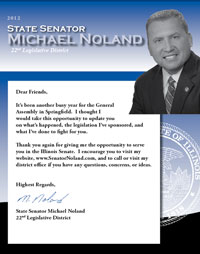
We started a conversation yesterday about direct mail when I posted “What’s in your mailbox? Part 1“. We looked at a political fundraising piece that showed up in my mailbox from Michelle Obama and dissected it. Today, we’re going to my mailbox and pulling out a newsletter that I recently received from Michael Noland, who is my state senator.

As I said yesterday, I believe “the average American can become educated about what works and what doesn’t work when it comes to direct mail if they only pay attention to what is being sent to them, what they are opening (or not opening), and how and what they’re reading (or not reading).”

So, let’s open this newsletter and see what we’ve got.

The front page is actually quite simple. It contains a two paragraph letter from the senator explaining that the legislative session that just ended was busy. It essentially invites me to open the newsletter for an update on “what’s happened, the legislation he sponsored, and what he’s done to fight for me.”

Hmmm . . . the feel and tone of the letter makes this newsletter seem more like campaign literature. To be honest, I am hesitant to turn to page two; however, I will do so for you, my dear reader.  😉

This is a four page newsletter. So, when I turn the page I am looking at the middle of the newsletter — pages two and three. Here is what I am starting to notice:

  • Lots of pictures (four to be exact)
  • 18 point font headlines and 14 point news copy
  • Headlines are in color

I suspect the senator is concerned about senior citizens not being able to read his newsletter, which is why everything is so big.

You’ve heard it a million times . . . a picture is worth a thousand words. All of the pictures are of the senator doing something. He is talking to a concerned older couple. He is delivering the commencement speech at Elgin Community College (ECC). Since most people won’t spend more than as few seconds with this mail piece, pictures become very important in conveying quick information. In this instance, the senator obviously is trying to send the message that he is working hard on your behalf.

In a previous life, when I ran a weekly newspaper, we learned from reader surveys that big pictures and headlines were the first thing to which people paid attention. If the picture or headline was interesting, then they would make the decision to read the article. It is obvious that this newsletter is designed with thatsame principle in mind.

I don’t believe people read much anymore, which is an ironic observation for a blogger like myself to make. What I do believe is that people skim, and I suspect the senator believes the same thing when I look at his newsletter copy.

There are seven mini-articles with topics ranging from public employee pension costs and healthcare to child welfare and veterans. Nothing is more than one paragraph in length. It is written in the first person and very action oriented with phrases like:

  • “I co-sponsored . . .”
  • “I fought . . .”
  • “I believe . . .”

To translate all of this into non-profit terms, the senator is demonstrating to the voting public the return on investment for your vote. This is simply the senator stewarding voters in much the same way you steward your donors. The only difference is that you want your donors to renew their financial support and the senator wants people to vote for him again.

Let’s turn the page and look at the back of the newsletter.

I am invited to stay informed and encouraged to routinely visit the senator’s webpage for updates, news and email access. There is a monstrously large QR code on the page that I can scan with my cell phone, and it will take me to his website instantly.

Here are a few best practices that we can take away from our dissection of the senator’s newsletter today:

  1. Be mindful of font size, especially if your donors are older.
  2. Use lots of pictures to communicate information quickly.
  3. Use color and big headlines to make things pop off the page and generate interest in reading the newsletter copy.
  4. People skim . . . so keep stgories short and snappy. Short sentences and very few paragraphs.
  5. Cross-channel marketing . . . use the newsletter to drive people to your website where you can spend more time with them and go into more detail.

Personally speaking, I really dislike newsletters like this one. I believe that the typical slick/glossy, one color, four page newsletter is a thing of the past. I really liked the previous piece sent out by the senator. It was a one page bulletin that looked like what Penelope Burk describes in her book “Donor Centered Fundraising“.

If you are interested in learning more about what donor bulletins looks like and why they are more preferred by your donors, then I suggest that you go back and read the following three blog posts from last year:

If you want to see a copy of Senator Noland’s most recent newsletter so that you can compare it to what you read in these three donor-centered newsletter posts, then click here.

Does your non-profit organization use a newsletter to steward supporters and donors? Are you happy with it? What have you found in your experience works or doesn’t work? Please use the comment box below to share with your fellow non-profit professionals.

Here’s to your health!

Erik Anderson
Founder & President, The Healthy Non-Profit LLC
www.thehealthynonprofit.com
erik@thehealthynonprofit.com
http://twitter.com/#!/eanderson847
http://www.facebook.com/eanderson847
http://www.linkedin.com/in/erikanderson847

Social media ROI — Non-profits shouldn’t make it difficult

At the end of Tuesday’s post titled “Are non-profits yelling at their donors using social media?” I promised that I’d share a few revelations from a social media conference that Marissa and I attended last week hosted by SkillPath Seminars. Yesterday, I posted “Answers to the two most popular social media questions asked by non-profits,” and today we’re talking about that thing that for-profit companies are obsessed with and non-profits seem to struggle with . . . RETURN ON INVESTMENT (ROI).

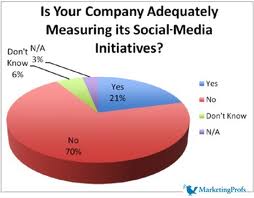
“43% of current social media marketers haven’t measured ROI.”

This number was shared with Marissa and me by our lovely  SkillPath Seminars trainers at last week’s social media conference. They cited this information from King Fish Media in 2010.

Well, if I were a betting man, I would guess that this number is much, much higher when you just look at non-profit organizations using social media.

Let’s be honest. Most non-profit organizations are stretched too thin. So, asking employees to track a lot of stuff as it relates to your social media presence just doesn’t make a lot of sense. Right?  However, it is important to measure something. Right? After all, resources are tight and you are dedicating time and resources to this thing called social media. If the ROI is very poor, then you probably have 101 ways to better spend those hours and dollars.

Additionally, keeping an eye on certain metrics also helps you evolve your social media presence and approach because when you see that something isn’t working then you stop and when you see something is working you do more of it.

This brings us to the big question . . . “What can non-profits easily measure and how should they do it?”

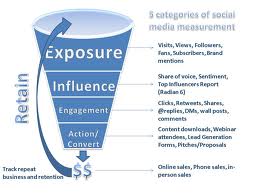
Looking across the fence at our for-profit cousins, I can tell you that they start by asking “What is most important to the success of the company?” It usually boils down into one of four things: conversion rates, generating sales leads, increased site traffic/number of new customers, and brand awareness.

Once they narrow their focus, they then pay a visit to their social media analytics buffet and look around at all of the yummy things that you can track including:

  • web traffic
  • viral video activity
  • bounce rate
  • page views
  • comments
  • social bookmarks
  • inbound links to your website
  • ratings
  • number of new followers
  • comments / mentions
  • leads generated
  • downloads
  • uploads
  • engagement activity

As we discussed in yesterday’s post — “Answers to the two most popular social media questions asked by non-profits“–  your organization probably uses different social media platforms to achieve different objectives in your resource development plan (e.g. Facebook = stewardship; Twitter = cultivation; etc). So, it makes sense that what you measure might look a little different for each of the platforms your agency uses.

If I were using Facebook to steward donors and didn’t have enough time or money, then I would simply track: 1) how many Friends does my Facebook page have (and how did that number change in the last year), 2) how many “likes” and comments did my posted content generate, and 3) how many Facebook friends remained a donor to my agency in the last year (e.g. donor database loyalty report cross referenced to Facebook Friends list)?

If I were using Twitter to introduce and cultivate new prospective donors, then I would track: 1) how many Followers does my Twitter account have (and how did that number change in the last year), 2) what is my Klout score and level of online influence with my Twitter followers, and 3) how much traffic back to the agency’s website comes from Twitter (e.g. Google analytics from your website will tell you this number and much more).

As I’ve just done in the last two paragraphs, I suggest you do the same for each of your social media platforms: 1) determine your target audience and main objective for each platform and 2) select a small handful of metrics from your analytics program (e.g. Facebook Insights, Google analytics, etc) that make the most sense for what you’re trying to accomplish.

But wait . . . there’s more!

Measuring data for the sake of measuring data is a waste of time. You need to turn your data into something “actionable“. Here are just a few thoughts:

  • include it an annual performance plan for the employee who is responsible for managing your social media communities
  • build a social media dashboard and share with your marketing or resource development committee every month
  • place it on committee meeting and staff meeting agendas and facilitate conversations around the questions: “What does the data tell you?” and “What should we do differently with our content?”

Here are a few links that you might also want to read on this subject from me, Marissa or others:

Keep it simple. Don’t go overboard. And whatever you do, make sure you use the data.

Does your agency use social media? Are you measuring stuff? What are you measuring? Why are you measuring it? What are you doing with it? Has it made a difference in anything you do online or offline? Please scroll down and share answers to these questions or whatever else is on your mind in the comment box. We can all learn from each other.

Here’s to your health!

Erik Anderson
Founder & President, The Healthy Non-Profit LLC
www.thehealthynonprofit.com
erik@thehealthynonprofit.com
http://twitter.com/#!/eanderson847
http://www.facebook.com/eanderson847
http://www.linkedin.com/in/erikanderson847
Answers to the two most popular social media questions asked by non-profits

At the end of yesterday’s post titled “Are non-profits yelling at their donors using social media?” I promised that I’d share a few revelations from a social media conference that Marissa and I attended last week hosted by SkillPath Seminars. Today, we’re talking about two of the most popular social media questions that I’ve been asked by non-profit organizations:

  1. Which social media platforms should your non-profit organization use to speak to donors and supporters?
  2. How can your agency do a better job at engaging its supporters using social media and gain more traction?

Let me first say that I highly recommend this SkillPath training conference to all non-profit professionals who are responsible for managing their agency’s social media communities. You can find more information at the other end of the link that provided above. (No, I was not paid to say this)

When looking through the conference materials on this subject, they list more than 20 different platforms that companies are using to market their efforts. However, it came as no surprise that Facebook, Twitter and LinkedIn were the top three “networking platforms;” YouTube was the most popular “promotional platform;” and various blogging platforms (e.g. WordPress, Blogger, and Tumblr) were the most popular “sharing platforms”.

Our trainers suggested that a company should give serious consideration to developing a presence on all three platforms and five sites. While that might sound easy enough, it becomes more complicated when you consider that you’ll be saying different things in each of these places. You need to figure out who your target audiences are and which social media platforms are best at communicating with them.

As I sat through many of the sessions, I found myself trying to translate the training curricula into non-profit speak. Assuming that my universal translator is working well, I concluded the following:

  • Facebook looks like a great stewardship tool where you can engage donors and show your “friends” how their contribution is being put to good use.
  • Twitter and its 140 character limitations could be an awesome cultivation tool where you catch the attention of prospects and drive them to a place where they learn more about your mission.
  • LinkedIn is more than a human resource tool. It is a place to build relationships with potential corporate supporters and identify special event sponsors.
  • YouTube can be a multi-purpose resource development tool and used in many different ways. However, it might be best used for raising brand awareness and developing a pool of interested prospects who you are positioning for cultivation activities.
  • Your blog is a friendly online place to engage in conversations with supporters and potential supporters. You can establish yourself as a “thought leader,” advocate and engaged listener.
  • All of these social media tools should be used to drive traffic to your website where there is more information, volunteer forms, donation pages, etc.

Yes, this is a lot of work and at some point you’ll need to frame your agency’s strategy in a written social media plan. While it is easy to think that it might end up on the fundraising department’s plate, I think there is an opportunity for thoughtful organizations to transform their agency into a “social company” and share the workload and transform your workplace culture.

Enough on platforms.

What about building momentum? Gaining traction? Engaging more deeply?

The following are just a few of the suggestions offered by our SkillPath trainers:

  • Write content that is interesting to your reader. (If you don’t know what that is, then go ask them)
  • Host contests
  • Offer coupons
  • Make your content interactive
  • Include links to things that your audience will find interesting and useful

Perhaps, one of the best ideas I heard was that a picture is worth a thousand words. Write less and post more pictures of your mission, your programs, your volunteers, and your donors. This one simple idea that will probably result in increased traffic, more content sharing, and deeper engagement.

Is your agency using social media? How’s it going? Do you feel like it is working? Why or why not? Please scroll down and use the comment box to share your thoughts. We can all learn from each other.

Here’s to your health!

Erik Anderson
Founder & President, The Healthy Non-Profit LLC
www.thehealthynonprofit.com
erik@thehealthynonprofit.com
http://twitter.com/#!/eanderson847
http://www.facebook.com/eanderson847
http://www.linkedin.com/in/erikanderson847

John’s puppies provide perspective for non-profit organizations

Welcome to O.D. Fridays at DonorDreams blog. Every Friday for the foreseeable future we will be looking more closely at a recent post from John Greco’s blog called “johnponders ~ about life at work, mostly” and applying his organizational development messages to the non-profit community.

Today, we’re focusing on a post that John titled: “Puppy Perspective“. In that post, he describes two different perspectives that he and his wife have on the exact same occurrence. The event in question has to deal with John’s dogs and the daily arrival of their mail carrier. While John’s post is cute and fun to read, you should really click over and read it for yourself because John’s dogs tell an important story about one of the biggest challenges every non-profit organization faces.

“Perspective” is a funning thing. It can sometimes feel like one of those circus fun house mirrors.

Think about how many different stakeholder groups your organization has:

  • Executive director
  • Fundraising professionals
  • Program staff
  • Clients
  • Donors
  • Board volunteers
  • Fundraising volunteers
  • Program volunteers
  • New prospective or incoming board volunteers
  • Prospective new donors

OMG . . . the list could go on and on, and John’s post “Puppy Perspective” very clearly shows us how common it is for different groups to have very different perspectives on the same thing.

This phenomenon means that building consensus around important decisions can sometimes feel like “Mission Impossible”.

When looking back at some of the organizations I’ve worked with on planning, implementing and evaluating an annual campaign, I now clearly see how different perspectives made implementing change difficult. To illustrate this point, the following is a short list of stakeholders and what I am sure they were thinking as they listened to me talk about running an annual campaign:

  • Staff — Ugh, this is so necessary, but this sounds like a lot of work and there is no time.
  • Board members & fundraising volunteers — Sitting down in-person with a donor and asking for money? That sounds scary!
  • Donors — OMG, another fundraiser? How many more times will they come back and ask for money?
  • Program staff — Why can’t people just give money and leave us to our important work? Outcomes measurement is so hard and takes time away from actual program time.

Everyone has a different perspective, and this makes getting something done very difficult. This is why non-profit executive directors must be highly skilled at driving change. When they aren’t good at getting everyone on the same page, then nothing happens and the non-profit organization dies a slow death.

Our friends at the Change Management Learning Center offer some interesting tutorials, training, and books that you might find helpful when developing your case and leading change.

Are you regularly on a different page than your board volunteers? If so, how do you manage that and close the gap? Has your agency’s fundraising staff found themselves at odds with program staff? How have you eliminated those silos and facilitated peace throughout your kingdom? Please use the comment box to share a story or an approach that has worked for you. We can all learn from each other.

Here’s to your health!

Erik Anderson
Founder & President, The Healthy Non-Profit LLC
www.thehealthynonprofit.com
erik@thehealthynonprofit.com
http://twitter.com/#!/eanderson847
http://www.facebook.com/eanderson847
http://www.linkedin.com/in/erikanderson847
Does your non-proft organization make a difference? Americans don’t think so!

While driving around doing some errands yesterday, I was listening to sports talk radio WSCR 670 AM in Chicago. One of the radio hosts was talking about how teachers make a difference in people’s lives. He knew this to be true because his mother is a teacher and every year countless high school and college kids return home, visit their favorite teachers, and tell them so.

The radio host went on to share that he used to have doubts about the impact his work has other people’s lives; however, his opinion recently changed after one of the station’s listeners emailed him. The listener was diagnosed with cancer and needed to complete a rigorous chemotherapy regiment to find his way back to health. While that treatment path is a tough road to hoe, the listener scheduled his treatments during the this radio host’s show and credits him with getting him though some very tough times.

It dawned on me that many of us strive to make a difference in someone’s life or the world around us. In fact, I think it is at the core of the human condition and the non-profit sector, which got me thinking . . .

Does your non-profit organization make a difference?

I am currently reading Dan Pallotta’s book — “Uncharitable” — and it has been challenging my non-profit belief systems. In a nutshell, he argues that the non-profit sector is extremely under-resourced and constrained by laws and cultural beliefs that don’t apply to for-profit corporations. As a result, non-profits are seen as ineffective and are in many instances actually ineffective.

Does that sound overly harsh and upsetting? In the opening pages of his book, he eggs his critics on and encourages all of us to take a look around the non-profit sector and our community and ask questions such as:

  • Why do things seem to stay pretty much the same?
  • Why have our cancer charities not found a cure for cancer?
  • Why have our homeless shelters not solved the problem of homelessness?
  • Why do children still go hunger on the streets of America?

While Pallotta ends up blaming the system (not the people in the system) and points to the lack of resources, apparently many Americans aren’t as charitable and Pallotta points that out by sharing the following information from various opinion surveys:

“A study released in 2008 by Ellison Research showed that ‘most Americans believe non-profit organizations and charities are not financially efficient enough in their work.’ A 2004 Brookings Institution study found that ‘nearly one out of three respondents expressed little or no confidence in charitable groups, and only 11% said they believe that charities do a very good job of spending their money wisely.’ Seventy percent of people surveyed in a 2008 NYU study said that charities ‘waste a great deal’ or a ‘fair amount’ of money.”

As the radio show host said yesterday, all of us wake up every morning and strive to make a difference or at least make our lives matter. Pallotta posed some tough questions, but they aren’t out-of-bounds. The surveys cited by Pallotta paint a stark picture of what many Americans think of the non-profit sector, which includes your non-profit agency. In this context, it should come as no surprise that the average annual donor turnover rate in America hovers around 50%.

So, how do you know that you and your organization is making a difference? How are you sharing that with your donors and your community? Are you seeing any difference in your donor loyalty rates? Please use the comment section to tell us what you’re measuring to prove everyone wrong. Or are you having a hard time getting out of bed in the morning because you aren’t finding that sense of satisfaction and fulfullment from your non-profit job?

Over the next few days, I will share a few more observations from Dan Pallotta’s book “Uncharitable;” however, I encourage everyone to buy a copy of the book. It will make you mad, but I think it is healthy to have your beliefs challenged every now and again.

Here’s to your health!

Erik Anderson
Founder & President, The Healthy Non-Profit LLC
www.thehealthynonprofit.com
erik@thehealthynonprofit.com
http://twitter.com/#!/eanderson847
http://www.facebook.com/eanderson847
http://www.linkedin.com/in/erikanderson847

Saying ‘NO’ to donors and minimizing how often it is done

Welcome to O.D. Fridays at DonorDreams blog. Every Friday for the foreseeable future we will be looking more closely at a recent post from John Greco’s blog called “johnponders ~ about life at work, mostly” and applying his organizational development messages to the non-profit community.

Today, we’re focusing on a post that John titled: “I Disagree. Now What?“. In that post, he describes “the sound of righteous indignation hitting managerial prerogative,” and the lessons learned about when it is right to disobey and when it is not.

John’s post could send me off in a number of different HR directions this morning, but I am in a resource development mood and want to talk about donors — those investors in your mission.

When I read  “I Disagree. Now What?” it got me thinking about all of those times I’ve seen donors throw their dollars around. They want you to develop and launch a new program. They only want their contribution to support certain programs or certain activities.

Thinking back upon those situations reminds me a lot of the boss character in John’s post. This got me wondering: “Is there ever a situation when a non-profit organization can say ‘NO’ to a donor and use their contribution in a manner that is inconsistent with the donor’s wishes?”

To be honest, I can’t think of any situations where you can take someone’s money and disregard their expressed intent. However, that doesn’t mean you shouldn’t say ‘NO’ . . . you just need to do it by declining to accept the contribution.

While it is hard to say ‘NO’ to money, especially in today’s philanthropic environment, non-profit organizations need to know when it must happen. If you’re having a hard time thinking of when this might be appropriate, the following are a few examples of when I might do so:

  • When Bernie Madoff calls and wants to write me a big check.
  • When a company whose brand is inconsistent with your non-profit image wants to contribute (e.g. Hooters, local bar, strip clubs, the tobacco industry, etc)
  • When a donor’s wishes are not compatible with your mission.
  • When a donor’s wishes are not compatible with your strategic direction.

In my experience, the first two examples are easily identifiable and actionable for most non-profit organizations. It is the last two examples that are very challenging.

For example, it might make sense for you to accept money to develop a new intergenerational program that brings kids and senior citizens together, but it might not be a strategic priority for your organization. As a matter of fact, it might distract from other more important and pressing strategic initiatives.

Declining a donor’s contribution is really hard and should be done rarely, which is why having the right mindset, approach and tools in your fundraising toolbox is important. John does a really nice job addressing this issue in his post:

  • When John says, “Pick your battles” . . . I read this as: “Don’t over-solicit. Be very thoughtful about when and what you ask your donors to support.”
  • When John says, “Some things I can’t control, but I can influence” . . . I read this as: “Cultivate new prospects and steward existing donors significantly more than you solicit them, and only solicit when it feel right.”
  • When John says, “Craft my argument, with data and facts” . . . I read this as: “Develop an amazing case for support and train fundraising volunteers to use it as the foundation of their solicitation.”
  • When John says, “Make my case in a compelling fashion” . . . I read this as: “Convince donors to support your mission and the agency’s strategic direction. Demonstrate how doing so aligns with their philanthropic wishes and dreams.”
  • When John says, “Take my hits; the pain is temporary” . . . I read this as: “Once in a blue moon, you will have to politely turn down a donation. It will not be the end of the world.”
  • When John says, “Seek to understand even while I strive to be understood” . . . I read this as: “The listening-to-speaking ratio involved in donor interactions needs to significantly favor listening. Doing so will improve the odds of understanding, which in and of itself should minimize the number of times you have to say ‘NO’ to a donor because you are able to align the solicitation with their known interests.”

Non-profit organizations should strive to never be in the position of having to say ‘NO’ to a donor, but they need to be prepared to do so.

Have you ever been in a position of having to say ‘NO’ to a donor? If so, how did you go about doing it without damaging the relationship? What mindsets, approaches and tools are in your fundraising toolbox to ensure that you are rarely in this position? Please use the comment box below to share your answers.

If you are responsible for HR at your organization or are currently at odds with your boss, I encourage you to click over to John’s post titled “I Disagree. Now What?” and read it from that perspective, too.

Here’s to your health!

Erik Anderson
Founder & President, The Healthy Non-Profit LLC
www.thehealthynonprofit.com
erik@thehealthynonprofit.com
http://twitter.com/#!/eanderson847
http://www.facebook.com/eanderson847
http://www.linkedin.com/in/erikanderson847
Charitable giving was anemic in 2011

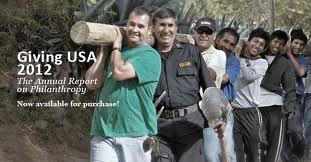
It is that time of the year when Giving USA releases its findings on how well (or not so well) the charitable giving sector did in the previous year. After adjusting for inflation, the experts tell us that charitable giving rose less than one percent in 2011, and individual giving did about the same.

You can secure a free copy of executive summary of Giving USA’s report from their online store or by clicking here.

A few observations

  • Nothing has changed. The charitable giving sector has been in a holding pattern for a number of years since the economic crash of 2008. It mirrors the slow sluggish economic recovery numbers. Is anyone surprised? I know that I am not.
  • It could be worse. Charitable giving dropped by dropped by double digits in 2008 and 2009. Complaining about a one percent increase feels wrong when juxtaposed against those historic numbers.
  • Good is still good. Look around your community and you will see three different kinds of non-profit agencies . . .  ones that are struggling, ones that are holding their own, and ones that are have found a way to do well.

The bottom line is very simple for me. Donors have less money (or feel like they have less money) and started prioritizing their charitable giving. Figuring out their priorities and how to remain a priority is as simple as asking them.

Are you a non-profit organization that has either weathered the storm or done fairly well since the 2008-09 economic crash? If so, please scroll down and share why you think that is in the comment section.

Here’s to your health!

Erik Anderson
Founder & President, The Healthy Non-Profit LLC
www.thehealthynonprofit.com
erik@thehealthynonprofit.com
http://twitter.com/#!/eanderson847
http://www.facebook.com/eanderson847
http://www.linkedin.com/in/erikanderson847
Jazz up your non-profit agency’s annual report using online video

Every once in a blue moon I will scroll down to the very bottom of someone’s email. It has become fairly standard practice for people to tuck all sorts of things into the signature block of their email. A few days ago I received an email from Jonathan Trapp who is a Vice President at Assurance Agency, which is an insurance brokerage company. At the bottom of his email was a YouTube link to a company video they developed last year to celebrate their 50th anniversary of being in business.

I’m dropping a copy of this online video into this morning’s blog post because after watching it I had one of those “Oh-Wow” epiphany moments:

Click here ===> Assurance Agency 50th anniversary video

So, did you see it, too? Did you have the same epiphany ?

I don’t know about you, but after watching that video I immediately flashed back to those days as an executive director when I struggled at the end of every year to develop content for my agency’s annual report. It always felt like I was doing the same thing every year. There was always:

  • content about the agency’s Youth of the Year,
  • last year’s financial summary,
  • a list of the agency’s big accomplishments,
  • a letter from the executive director and board president, and
  • of course . . . the long and boring donor honor roll.

Can there be any doubt that the typical non-profit annual report needs to be “jazzed up”???

In reality, the annual report is super important. It is the perfect stewardship piece because it speaks to the return on investment that donors received resulting from the contributions they made to your agency. Additionally, it can be a great cultivation piece because it shows prospective donors what they might expect your agency to do with their future donation.

I think human beings are very visual creatures, which is what intrigues me about using online video to tell the story about where your non-profit organization has been in the last 12 months. If I were in your shoes I don’t think that I’d totally get rid of the paper version, but I would be very tempted to produce a much smaller document that is supplemented by an online video.

You’re probably asking: “How would that work, Erik?” Well, I could see a one-page, double-sided annual report with key content including:

  • financials
  • major accomplishments
  • thank you message to supporters
  • lots of pictures of your happy clients

At the bottom of the abbreviated annual report, I would print the YouTube link with a message encouraging donors to view the annual report video online. If I were in the habit of distributing the agency’s annual report at a special event, I might consider handing out the abbreviated paper report along with a CDROM or USB flash drive with a copy of the video on it.

You could easily post a copy of the annual report video on your website and Facebook page.

You could also do what Jonathan Trapp of Assurance Agency does and include a link to the video in the signature block of every email you send out for the next year.

While doing some research for today’s blog post, I came across a similar post by the good people at Socialbrite. Click here to view their post on this subject and you will see four sample non-profit annual report videos.

If today’s post generally got you excited about jazzing up your agency’s annual report, then visit Kivi Leroux Miller’s website. She is selling an e-book on this subject. She also offers webinars. You’ll also find a link to her free annual report wiki page with a few resources that you might find useful.

Are you happy with your annual report? What do you put in this critical document? Have you tried using online video as part of your annual report process? If so, how did it work out for you? Please share your thoughts in the comment box below.

Here’s to your health!

Erik Anderson
Founder & President, The Healthy Non-Profit LLC
www.thehealthynonprofit.com
erik@thehealthynonprofit.com
http://twitter.com/#!/eanderson847
http://www.facebook.com/eanderson847
http://www.linkedin.com/in/erikanderson847

Donor Loyalty: Inspect what you expect

Tuesday’s post titled “Time in the office versus time with donors” begged more questions than it answered. Today, we’re going to zoom in on one of those questions and examine it more closely.

How do you measure relationship building
and the success of such activities?

It was suggested in earlier posts that a weekly contact report is one tool that can be used to track relationship building activities; however, there are other tools that you should consider using in conjunction with a contact report.

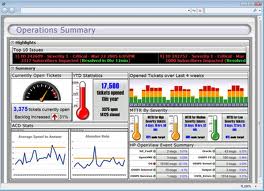
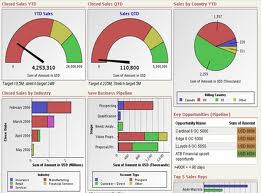
  • Dashboard
  • Scorecard
  • Annual performance plan
  • Weekly or monthly reports
  • Donor database reports
  • Moves Management reports

If you want to learn more about organizational dashboards, click here to check out a BoardSource book titled “The Nonprofit Dashboard: A Tool for Tracking Progress“. If a dashboard isn’t appealing to you, then you might want to look into a balanced scorecard approach. Click here to see what Bernard Marr at the Advanced Performance Institute has to say about this tool.

Of course, choosing the tool is probably the easiest part of this decision. The more difficult thing is determining which relationship building metrics to track. Here are a few suggestions:

  • Number of cultivation meetings with prospects
  • Increased contribution size – maintained – decreased
  • Number of face-to-face stewardship meetings
  • Number of prospects converted into donors
  • Donor loyalty rate
  • Donor satisfaction survey score
  • Renewal rates for year two, year three, year four, and year five donors
  • LYBUNT and SYBUNT renewals

There are no right or wrong answers to the question of what you should track. I believe that it really boils down to the title of this post: “Inspect what you expect”.

I suppose the best advice I can give to you is “don’t try to make decision by yourself”. I encourage you to engage fundraising staff, resource development committee volunteers, board members, fundraising volunteers, and even donors. There is nothing wrong with pulling together a small focus group, ordering a few pizzas, and engaging them with a few thoughtful questions.

If you are looking for a few good samples, the following are a few links that I think are worth looking at:

Using tools and metrics like these should help you answer the difficult question posed in Tuesday’s blog post: “How much time needs to be spent outside of the office compared to behind your desk?”

What tools does your non-profit organization use to track relationship building and resource development activities? What metrics do you hold your fundraising professionals and executive director to? Please use the comment box below to share your thoughts.

Here’s to your health!

Erik Anderson
Founder & President, The Healthy Non-Profit LLC
www.thehealthynonprofit.com
erik@thehealthynonprofit.com
http://twitter.com/#!/eanderson847
http://www.facebook.com/eanderson847
http://www.linkedin.com/in/erikanderson847