
 Have you ever stopped whatever you doing, took a deep breath, and observed the world around you? (And I mean really take a deep look.) I did this just the other day, and what I saw kind of surprised me. Everywhere I looked I saw R-U-L-E-S. There were formal rules such as stop signs, registration forms and sales taxes. There were also informal rules such as people walking on the right side of the sidewalk.
As I pondered this revelation, it dawned on me how complex and layered this practice has become for humans. Consider the following:
- There are rules that govern our international interactions (e.g. diplomacy, war crimes, etc)
- In the United States, there are federal rules, state rules, and a myriad of local rules (e.g. municipal, county, township, etc)
- Every profession operates within a set of rules (e.g. ethics, accreditation, operational norms, etc)
- Individually speaking, there are informal rules many of us follow in public spaces (e.g. opening doors for others, smiling and shaking hands when introduced, not purposely passing gas, etc)
- Also, individually speaking, many of us create a set of rules for ourselves when we’re not in public (e.g. wake-up at 7 am THEN start the coffee THEN let out the dog THEN feed the pets; brush teeth before leaving the house; make the bed)
- I haven’t even mentioned . . . a) the rules of physics, b) the rules of biology, c) the rules of chemistry (all of which govern our ability to exist)
- And don’t even get me started about the rules of God and our world’s major religious institutions
 My mind was completely blown! (yes, I was completely sober)
It almost became overwhelming to think about how many rules existed in my little life. Many of which I don’t even think as I go about living my day-to-day life.
Of course, every once in a while, we are reminded about this phenomenon by authors such as Robert Fulghum, who authored “All I Really Need To Know I Learned In Kindergarten.”
Sometimes, we even enjoy a rebellious rock-n-roll song bemoaning all of the rules that exist in our world. One of my personal favorites is the Five Man Electric Band’s 1971 song “Signs.” I just love how the lyrics start off with “And the sign said, long hair freaky people need not apply.”
All of this deep thinking got me wondering about RULES that govern resource development and fundraising practices.
While there is obviously the Association of Fundraising Professionals’ (AFP) Code of Ethical Standards, my curiosity goes deeper. I am wondering what policies and practices (e.g. rules) you’ve put in place in your local organizations. And more importantly, I’m wondering why you feel these rules are important.
I looked at some of the resource development practices I put in place at my last organization. The following are just a few examples:
- Gift acknowledgement letters must be in the mail within 24 hours of receiving a pledge/gift
- All pledges/contributions must be entered into the donor database even if it meant double entry from other sources (e.g. duck race software, financial management software, etc)
- All board volunteers were asked to hand write at least five thank you notes at the end of every board meeting to donors who made a pledge/gift in the last 30 days
- Annual reports were produced and distributed in time for the annual dinner fundraising event held at the end of January
- Every gift acknowledgement letter included IRS language in the footer of the letter indicating whether or not any goods/services were received by the donor in lieu of their contribution and the value of those goods/services
In addition to looking at my own experiences, I went back to an old training curriculum titled “Stewardship” to see if I could identify more “rules.” This was what I found on a PowerPoint slide titled “Stewardship Activities & Functions:”
- State Registration — Before you begin to solicit, be sure you are in compliance with all state laws (State registration is usually done through the Secretary of State)
- Acknowledgement — Official thank you letters or receipts that include information required by IRS
- Recognition — Giving clubs, named gift opportunities, special events, individual activities
- Communication — The information stream that reinforces appreciation of gift and tells about its impact
- Administration — Back office activities in resource development and finance ensure gifts are accounted for and invested properly
- Implementation — The work of executive director and program staff to see that gift is used according to stated purposes
Obviously, stewardship goes well-beyond simply thanking donors for their contribution.
As I bring this post to conclusion, I am first struck by how many formal and informal resource development and fundraising rules exist in the average non-profit. However, I’m also left wondering if all of these varied rules can be rolled up into more global truisms similar to the ones found in Fulghum’s book about the values we all learned in kindergarten.
Maybe one of those simple, comprehensive rules can be summed up as: “Treat your donors like your BFF.” (e.g. do unto others as you would have them do unto you).
What rules do you operate your resource development shop under? And why have you instituted those rules? Please use the comment box to share your thoughts and experiences. We can all learn from each other.
Here’s to your health!
Erik Anderson
Founder & President, The Healthy Non-Profit LLC
www.thehealthynonprofit.com
erik@thehealthynonprofit.com
http://twitter.com/#!/eanderson847
http://www.facebook.com/eanderson847
http://www.linkedin.com/in/erikanderson847
 As the curtain falls on 2015 and a new year bursts onto the stage, I can’t help getting excited for countless non-profit organizations across this great land of ours. As many of you know, I am a planner by training with both a BAUP and MUP from the University of Illinois Urbana-Champaign. Embedded in every planner’s soul are ideas such as:
 Like so many other people, I am a sucker for year-end predictions. I suspect it has something to do with being uncomfortable with an uncertain future. So, for each of the last few years, I’ve blogged about non-profit predictions and trends during the final few days of the year. Needless to say, I can’t resist doing it again as 2015 comes to a close. Drum roll please? I predict non-profit organization in 2016 will . . .
 It is a basic truism for some organizational development professionals that “Culture trumps strategy“. In the last few months, this expression has been front and center in my mind. I guess the reason it bothers me is because of its implications, which is none of what I bring to the table as a non-profit and fundraising consultant matters unless the organization’s culture is ready to receive it and act upon it.
 I’ll stop Googling now. Because I think I get it now.
 Last month I sat down with an executive director and two board members to explore how I might be able to help their organization grow their organizational capacity. Over the course of an hour, we talked about all kinds of awesome things such as:
 Most non-profit organizations have a very clear understanding of what they need from their board members, but there is a better question that needs to be asked. “Do you know what your board volunteers need from you?” This week and part of next week, we are focusing on board development questions at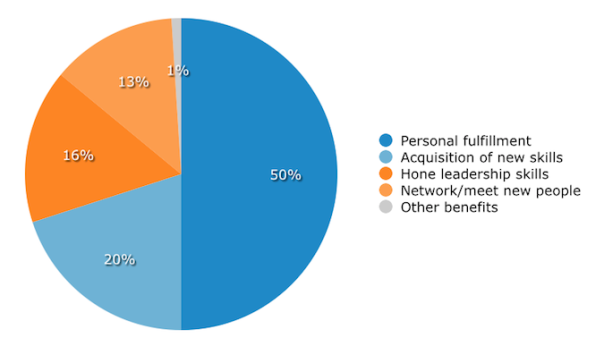
 I think Oprah wrapped all of this up best when she said:
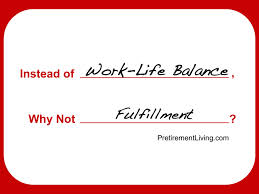 Structure your board development process in a manner that allows the following to occur:
 I cannot tell you how many boards I’ve worked with on board development and governance projects push back on the idea of year-end board member evaluations.
 So, I guess I’m feeling a little bah-humbug about the entire idea of #RetentionWednesday. If I were king for a day (a scary thought), I would decree 2015 “The Year of Retention“.
 After spending a nice long Labor Day weekend in Michigan at a friend’s summer cottage on Saginaw Bay, I am now faced (as are you) with the long slide towards the end of the year. Not only can I not wear white clothing now that Labor Day has come and gone, but my fundraising friends should be starting to engage board, staff and fundraising volunteers in developing their agency’s written 2015 resource development plan.
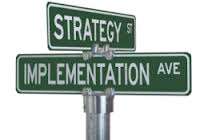 Having two degrees in planning, I tend to get overly excited about developing plans, and some of my past resource development plans have been 50 and 75 pages in length (Yeah, I have gotten carried away). Those plans included elements such as: