
 On Tuesday of this week, my blog post titled “The executive director’s first 90 days” focused on what the new CEOs and boards should do during those crucial first few months. That post took me for a walk down memory lane to when I was a new executive director embarking on new and exciting challenges.
While it isn’t always the case, sometimes a new executive director finds themselves walking into a challenging situation. After all, there are reasons why people leave their place of employment and those stories aren’t always ideal. In extremely challenging circumstances (e.g. someone ran out the door or they were chased out the door), I guarantee you that the issues don’t just reside with the person who left. There are typically board issues related to the resignation or termination.
For example, in the case of embezzlement . . . you usually can’t just point at the embezzler. There is likely issues with oversight and internal control policies.
One of the best practices I mentioned in Tuesday’s post was that new executive directors should meet individually with every board member within their first 90 days.
One of the more common issues with which many new executive directors are faced (especially when going to work for an agency with little organizational capacity) is having the “wrong people” sitting around the boardroom table. The challenging question many new CEO’s find themselves asking is:
How can we tactfully ask well-intentioned board volunteers
to find a different seat on the bus?
As I reflected back upon my first 90 days (more than 14 years ago), I remembered that my board had 20 volunteers on the day they hired me and within my first three months nine board members resigned.
 Now this didn’t happen because I smelled bad or people disliked me (at least I don’t think so). It happened because of how I approached my individual meetings with board members. Here is what was on my agenda:
- Introduce myself and talk about my background
- Engage board member in discussion on the “state of the agency“
- Ask board member on where they see the agency in 3 to 5 years
- Share with the board member where you think you will need their help (e.g. their board roles & responsibilities, their role in fundraising, etc)
- Ask them to get more involved and in specific projects
When I had these discussions, those board volunteers, who weren’t a good fit for serving on the board, saw the handwriting on the wall. I didn’t have to tell them to get off the board. A simple, straight-forward conversation centered around expectations and vision was more than enough.
In most situations, it was only a few weeks after our meeting that a resignation letter was inked. Reasons always varied. Here are a few that I remember:
- Work responsibilities won’t permit commitment of time necessary to serve on the board
- Not willing/able to commit to fundraising responsibilities
- Time commitments in personal life (e.g. caring for a sick relative)
In each instance, we celebrated the volunteer’s service. We engaged them in a discussion about finding a different seat on the bus that might be a better fit for them. It was respectful and graceful.
Now this approach isn’t always effective, and sometimes it isn’t appropriate.
For new executive directors, are there other approaches you might suggest with regards to giving good people an easy way off the board? Please use the comment box below to share your thoughts and ideas. We can all learn from each other!
Erik Anderson
Founder & President, The Healthy Non-Profit LLC
www.thehealthynonprofit.com
erik@thehealthynonprofit.com
http://twitter.com/#!/eanderson847
http://www.facebook.com/eanderson847
http://www.linkedin.com/in/erikanderson847
 There have been multiple things that have happened in the past week that have made me re-consider the phrase “Don’t drink the Kool-Aid.”
 “Silent Starts — Set aside 2 minutes for each trustee to anonymously write on an index card the most important question relevant to the issue at hand.”
 Bright eyed and bushy-tailed. I love those two descriptions because they perfect describe most newly minted non-profit executive directors. They are eager, optimistic, and ready to change the world when they walk through your agency’s door on their first day of work.
 Exhausted yet?
 OK, Erik is back from baseball Spring Training, today is Opening Day and DonorDreams blog is back. Since it is Monday, we’re looking at Chapter 17 of Lon Safko’s “
 “Ah, but a man’s reach should exceed his grasp, else what’s a heaven for?”
 Now you might be thinking how in the world that notion would be relevant to share in a business strategic planning meeting. I don’t blame you, I would be thinking that too, if I intended to use that meaning.
 The two questions I get asked on a regular basis are “What is the right number of board members?” and “How often should our board meet?” The answer to both is the same: whatever it takes. You should have the number of board members you need who meet as often as necessary to get the job done.
 There has been some movement in recent years toward boards meeting less often with committee meetings in between. Some boards meet every other month. Some boards (mine obviously) meet monthly and their committees do as well. Some boards meet quarterly.
 Still, as I stated at the beginning, only you can decide what the best model is for your organization. I offer some questions for you as you consider the right number of meetings:
 Again, only you can decide what the best model is for your organization. I offer some questions as you consider the right number of members:
 How do you measure success?
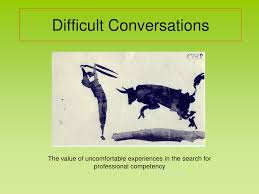 From time-to-time, we all need to have a difficult conversation with someone. It could be an employee, board volunteer, donor, collaborative partner, or even a spouse or loved-one. I was in such a position a few days ago, and needless to say it didn’t go very well. In the subsequent days, I spent a lot of time licking my wounds and thinking about what I could’ve done differently. So, I’ve decided to share some of my thoughts with the readers at DonorDreams blog and hope you’ll also share your thoughts and experiences.
 I’ve done some research into how I can do better in the future with engaging others in these type of conversations. Here are just a few of the best practices that resonate with me:
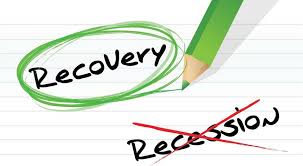 That is it . . . I am fed up and can’t stop myself from saying something that has been on my mind for a little while now. Can non-profit organizations please stop running around and telling anyone who will listen that the economy is bad and the recession is hurting their agency?