A few weeks ago I received a call from a friend who asked me (aka The Healthy Non-Profit LLC) to submit a proposal to conduct an organizational assessment for a regional non-profit organization. He recently joined the board of directors of this organization, and during his first few meetings he concluded that his fellow board members might need a little “perspective”. As we spent a little time on the phone framing the proposal, he made a very specific request of me . . .
“Please go into great detail about why it is a best practice for non-profit organizations to invest in an organizational assessment facilitated by an external consultant.”
In the space below, I attempt to elaborate on this question by sharing two personal non-organizational stories that I consider analogies for non-profit organizations. I also end this post by sharing the actual one-page of text I included in my proposal and ask DonorDreams readers to please use the comment box to help me add/subtract to this case for support (for the benefit of future proposals).
Story #1: Mom & Dad aren’t on the same page
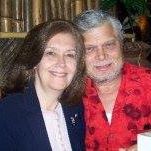 I am a lucky son because both my Mom and Dad are still married and living in the same community and same subdivision where I grew up (except they moved across the street when I went away to college). A few years ago, both of my parents retired and have been trying to figure out what to do with their new found time.
Just the other day while visiting Mom and Dad, the conversation turned to the subject of “To Infinity and Beyond“. To clarify what I mean by this, here are a list of questions that were being asked and not really answered:
- How long do you plan on staying in your current house?
- Have you given any thought to what you want to do when staying where you’re at doesn’t make any more sense?
- Oh? You want to move to Florida? When were you thinking you might do that?
- Where in Florida do you see yourself living?
- Are you keeping the house in Illinois and planning to live like “snowbird retirees“? Or are you selling the house? And when are you planning to do that? And when do you plan on thinning out all of your STUFF?
UGH!
If you’ve ever gone down this road with your parents, you know how frustrating this discussion can become.
In my instance, it became clear that these two people, who spend approximately 75% of their lives no more than 100 feet from each other, were NOT on the same page. I’ll spare you the details (and protect their privacy), but suffice it to say one of my parents has a two-year plan in mind and the other was taking the long view with a 10-year plan. And this was just the beginning of their differences.
So, what does this have anything to do with your non-profit organization and the best practice of periodic organizational assessment?
Simple . . .
Next time you are in your boardroom, I encourage you to stop whatever you’re doing, look around the room at each of your board volunteers and imagine how each one of them would answer the following questions:
- Who are we as an organization? Why do we exist?
- Where are we going as an organization?
- Where should we be going as an organization?
- What is currently working well for us?
- What are we challenged by?
- What opportunities exist outside of our four walls that we should be trying to take advantage of?
- What storms are brewing on the horizon that we need to better position the organization for?
I guarantee that if you do this exercise honestly, you will probably find the same thing I found with my parents which is . . .
You will see awesome people, who are engaged around shared values and a mission, BUT who all have a slightly different view on things that are very important to your organization.
It is for this reason that periodic assessments are necessary. If done by someone external to your organization (possessing a fresh set of eyes and ears), then you can learn a lot about what isn’t being said and then incorporate it into the next step — a planning process (of some sort).
Story #2: My trip to the doctor
 I’ll keep this story short and sweet since this post is getting too long. Yesterday, I went to my doctor for my annual physical.
Why did I go?
- A bump recently appeared on my finger
- I’ve been fatigued more than usual lately
- I’ve had the same cold virus going on five weeks now
- And a variety of other little reasons that I shouldn’t go into on the internet LOL
You’ve probably heard that an annual physical examination by your doctor is a best practice. In fact, it is strongly encouraged by most insurance companies that typically don’t even charge you a co-pay for such a visit.
Why is this form of annual assessment of your health considered so important by health practitioners?
Simple . . . there are things you cannot see and do not have knowledge of that this assessment will help diagnose and lead you to act upon. The same logic holds true for your non-profit organization.
 Asking a small favor of you . . .
As I explained at the beginning of this post, the following is approximately one page of text that I included in my recent proposal. Would you please do me the small favor of reading it and provide your two cents on what you would add or subtract from this written case for support? You can also simply tell me what is missing (or what you really like) in the comment box below. My plan is to incorporate your feedback into the next proposal I’m asked to write like this one. Thank you in advance for your help. 🙂
Why is periodic assessment a best practice?
In layman’s terms, periodic organizational assessment is akin to a physical exam that people periodically engage in with their physicians.
While assessments take many different shapes, almost all attempt to answer the following questions:
- Who are we?
- Where are we now?
- Where do we want to go?
Answers to these questions typically become a precursor to board activities such as creating an organizational:
- Long term plan
- Strategic Plan
- Business Plan
- Short-term tactical plan
While looking carefully at the question of “Who are we” might seem silly to some people, it is important because organizations morph and change over time. Moreover, the “need(s)” that an organization was initially created to address may no longer exist or may have evolved.
The question of “Where are we now” is oftentimes difficult to ascertain without the help of an external consultant. The reason for this is the same reason people pay therapists / counselors to help assess what is going on inside of ourselves. The simple truth is that it is hard to get outside of our own bodies to see what is really going on. What makes this even more difficult with non-profit organizations is the fact that there are many different people sitting around the boardroom table oftentimes with various opinions and perspectives.
The question of “Where do we want to go” is more of a planning discussion than it is an assessment question. However, good organizational assessments have the ability to access what various stakeholders are thinking about the future. Being able to see all of these different viewpoints can help the board frame productive discussions at the start of a planning process focused on vision and goal setting.
As it is illustrated on the previous page, organizations go through a predictable lifecycle, and an organizational assessment can help board volunteers see where they are at in that cycle and have productive discussions about what to do about it.
Thanks for indulging me today. I appreciate being able to share a few stories and a portion of a business proposal with the smart readers of the DonorDreams blog. I truly believe that we can all learn from each other (as I’ve stated hundreds of times over the last five years of blog posts). Today, I am doubling down on this believe by asking for your feedback. I appreciate your willingness to participate in such an exercise.
Here’s to your health!
Erik Anderson
Founder & President, The Healthy Non-Profit LLC
www.thehealthynonprofit.com
erik@thehealthynonprofit.com
http://twitter.com/#!/eanderson847
http://www.facebook.com/eanderson847
http://www.linkedin.com/in/erikanderson847
 Do you know which skills and experiences are most important for a new board volunteer to possess in order to succeed on your board? Knowing this could help your organization conduct better prospecting exercises and result in better prospect recruitment lists. Today’s post is the third in a three part non-profit board development series that started last week. During this time, we focused on a recent survey released by our friends at non-profit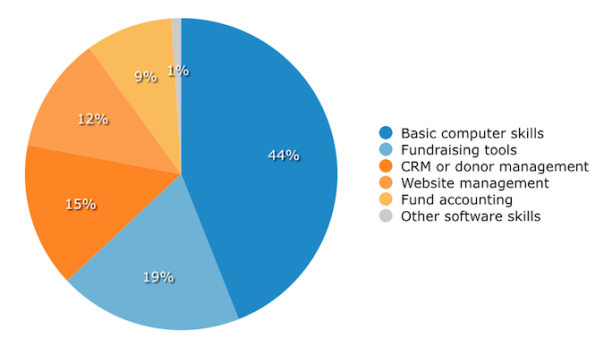

 If you haven’t heard
  I am a member of GenX, and this news made my heart sing. I was so excited to hear that my Baby Boomer board could be transformed into that type of board. I came home from that conference with renewed focus and determination to figure out how tech can help my board become more engaged and efficient in governance.
 When I read that only 25% of survey respondents identified “fundraising skills and experiences” as having a great impact on a board member’s success, I literally groaned and rolled by eyes.
 As you know, there is no such thing as a unicorn. It is a mythical creature and the inspiration for this morning’s post about various fundraising policies and procedures documents that everyone says are important but rarely exists on the front line of many (especially smaller) social services non-profit agencies. I thought it might be a good idea to name these “unicorns” and explain what they are and why they’re important.
 I ran across an old board development handout the other day, and it made me laugh. So, I decided to share its essence with you today and ask for your thoughts and opinions. The handout started off with the following two sentences (and I’ve changed the names to protect the innocent):
 When they are in (or starting to slide into) financial crisis
 My advice to those of you considering a strategic planning engagement is:
 I’ve been doing a lot of “board roles and responsibilities” training sessions in the last year. The curriculum breaks out responsibilities into group obligations and individual duties; however, in both lists there is verbiage such as:
 As someone with two degrees in planning, I catch myself all the time with my non-profit clients explaining that the solution to their problems is that they need a plan. It might be a strategic plan, resource development plan, or board development plan . . . but oftentimes I am amazed at how many times failing non-profit agencies just haven’t invested in creating plans. I mean, come on folks! Who hasn’t heard the old expression, “If you fail to plan, then you plan to fail“?
 Over the last few months, I’ve found myself doing a lot of boardroom trainings on the subject of “Board Roles & Responsibilities“. When facilitating this training, there are two different slides talking about the board’s collective responsibilities and the other illustrates individual board members’ responsibilities. Listed on both slides at the top of the list is the responsibility of “asking questions“.
 I tried to picture what a non-profit board might look like if it didn’t ask questions, and these words all came to mind:
 Sometimes I think the universe speaks to us, and lately it has been begging me to write this blog. Over the last few months, I’ve spoken with a good handful of non-profit professionals who have shared stories of scandal and crisis that would make your toes curl. These stories have ranged from incidents on the front line that made the local newspaper to outright embezzlement.
 For the record, I agree with my United Way friends. If you don’t know about
  You can probably spend the rest of your life writing policies, but let’s not get carried away. Here are a few questions I suggest you ask as you start going down this road:
 Boards meetings can quickly go from productive to destructive in any number of ways. The following are just a few lessons I’ve learned throughout the years and thought board volunteers might benefit from reading:
 When you don’t know where you’re going any road will get you there
 Time of Death: 2 hours after we started talking about this