
This certainly seems to be the topic of the month for non-profit people running in my circles. I’m not sure why this is the flavor of the month, but I’ve been asked this question so many times recently I took is as a sign from the universe (or the fundraising gods) that I should blog about it.
Why do board members quit on you?
 Oh, well let me count the reasons . . .
- They feel lost when it comes to asking for charitable contributions (aka lack of training)
- They feel uneasy about asking friends for money (aka they are asking inappropriately due to a lack of training which results in any number of FEARS and the feeling that they’re begging)
- They feel unsupported by staff (aka staff aren’t going out with them to help and model best practices)
- They sense there is a lack of organization behind their efforts (aka meetings are poorly attended or poorly organized, acknowledgement letters are sent late or sporadically, etc)
- Prospective donors are assigned to volunteers by staff without input from volunteers (aka they aren’t asking people with whom they are comfortable soliciting)
- They are busy people and there aren’t accountability tools being used by staff to keep everyone focused (e.g. report meetings, dashboards, scorecards, campaign reports, peer-to-peer phone calls)
- Fundraising efforts lack urgency (aka deadlines always seem to be extended, goals seem to shift/change, etc)
- They weren’t recruited appropriately and didn’t know what they were saying ‘YES’ to when joining the board (aka your board recruitment process lacks “expectation tools” like volunteer job descriptions, commitment pledges, etc)
I could go on and on and on with this list, but that wouldn’t be productive. Suffice it to say, if any of the aforementioned reasons describe your organization, you need to address it. Quickly! Otherwise, no matter how many new board members you recruit to replace the ones who quit on you, the problem will continue to recur.
All of this begs the question, “What can and should be done about board volunteers who quit on their fundraising responsibilities?”
Step One: Have a heart-to-heart discussion
 I have no idea why this is so scary for so many non-profit staff and board volunteers. It doesn’t have to be a confrontation. Here are a few talking points:
- Describe what you are observing (e.g. a reluctance to fundraise)
- Assure them that it happens in the case of many board volunteers
- Ask them what the trouble seems to be
- Listen – Listen – Listen (empathize where appropriate)
- Ask them how you can help
- If there is nothing you can do to help, then ask them how they’d like to move forward
Unfortunately, I’ve seen it too many times. Board members disengage and no one asks them if everything is OK and if they are in need of assistance.
It is troublesome when non-profit families start acting this way, which is why Step One is always to sit down and listen.
Step Two: Engage in cultivation & stewardship
 If the reasons given by your board volunteer aren’t things beyond anyone’s control (e.g. family member illness, work-related challenges, etc) and they simply don’t feel comfortable with solicitation, then ask them to get heavily involved in cultivation (e.g. engaging new prospective supporters) and stewardship (e.g. showing existing donors gratitude and return on investment) activities. (Note: don’t simply let them focus on other non-fundraising activities like programming or marketing)
The following is a partial list of things you can ask of reluctant fundraising volunteers:
- Host a house party with people who don’t currently support your organization (e.g. party where staff briefly talk about the organization and the host follows up with participants to see if they are interested in learning more)
- Invite people who don’t currently give to your organization to tour your facilities and see the mission in action
- Invite people who aren’t donors/supporters out for a cup of coffee and simply chat about the organization (e.g. it is important for the board volunteer to share reasons why they are involved and passionate about the organization)
- Hand write letters to donors to express gratitude for their support
- Make phone calls to donors in the middle of the organization’s range of gifts chart to express gratitude, engage in a discussion about their reasons for support, and share a piece of organizational good news
- Invite larger major gifts donors/supporters out for a cup of coffee, share a copy of the most recent annual report, share any recent pieces of good news or programmatic results, and talk passionately about the future
I’m not suggesting you ask a reluctant fundraising volunteer to do one of two of these things. I am suggesting you immerse them in these activities. You might try asking them to complete five handwritten letters, five phone calls AND five in-person contacts every month for the next year.
Why?
In my experience, there is something curative when board members have substantive encounters with others that focus on community need, mission, vision, and impact.
I’ve seen a heavy dose of this approach help many volunteers get over their cold feet or malaise when it comes to fundraising.
Step Three: Finding a New Seat on the Bus
 Sometimes we can’t fix the problem. Board members are people, too. Their parents get sick. Their marriages falter. They end up with a new boss who demands more from them.
When these things happen, the first order of business is empathy. This is what you’d do for a family member going through the same thing. Right? And board members are your non-profit family.
But whatever you do, you cannot make exceptions for individual board volunteers with regards to their fiduciary responsibilities. It is an all or nothing proposition.
I’ve seen it too often where one board member is given a pass (usually for good reason). It’s a slippery slope. Others board members start identifying reasons in their life why they can’t participate in fundraising. Worse yet, a schism materializes in the boardroom between “those who fundraise” and “those who don’t.” When this happens, resentment and ugliness aren’t far behind.
So, what does finding a new seat on the bus look like? It could be any number of things including (but not limited to):
- Taking a short sabbatical from the board
- Resigning from the board and moving into a new role (e.g. joining a committee, becoming a program volunteer, helping with small projects, remaining on as a donor, etc)
- Acting as an advisor (e.g. monthly, bi-monthly or quarterly coffee meetings with the CEO or development director)
- Becoming a community ambassador (e.g. speaking periodically at service clubs, etc)
We don’t banish or fire board members (unless of course it is a toxic/destructive situation). People who support our mission are valued and important. We keep them involved, but we do so in roles that are mutually beneficial and fulfilling.
How has your organization dealt with and addressed board members who quit fundraising (or maybe never really got started)? Please use the comment box below to share your thoughts and experiences. We can all learn from each other.
Here’s to your health!
Erik Anderson
Founder & President, The Healthy Non-Profit LLC
www.thehealthynonprofit.com
erik@thehealthynonprofit.com
http://twitter.com/#!/eanderson847
http://www.facebook.com/eanderson847
http://www.linkedin.com/in/erikanderson847
 Last week, British voters stunned the world in a number of different ways. First, they voted in a non-binding referendum to invoke
  Communications experts refer to this experience as “
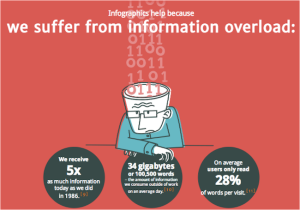 So, if you are still with me, you might be wondering what can be done to improve the likelihood that donors, board volunteers and staff are hearing (and understanding) what your organization needs them to know. While I am not a communications expert, here are a few thoughts:
 Anyone watching television or engaged in community conversations in recent months knows that our communities are entering into another period of time punctuated by values. Some people are talking about life, liberty and happiness. Others of us are focused on equality versus freedom (which are two values that are somewhat mutually exclusive). Perhaps, this elevated values debate is because our country is heading into a divisive Presidential election year. Or maybe it is because big policy debates are underway about LGBTQ and gun rights issues. Regardless, all of this talk has me thinking about the role of values and your non-profit organization’s resource development program.
 All of this gets me thinking about the countless discussions I’ve been a part of throughout the years with non-profit staff, boards and fundraising volunteers where difficult fundraising decisions were being made. The following are just a few examples:
 I’ve always taken the AFP ethics/values statement to heart, embraced my organization’s set of shared values, and superimposed my own set of individual values. As an Eagle Scout, my individual values have always been rooted in the 12-points of the Scout Law (e.g. trustworthy, loyal, helpful, friendly, courteous, kind, obedient, cheerful, thrifty, brave, clean and reverent).
 Earlier this week and last week, I started writing about the State of Illinois’ budget crisis and how it is impacting non-profit organizations. In
  Don’t want to take my word for it because you might have heard it from your grandfather or another beloved family member. No problem … I completely understand. Let me provide you with scientific proof. Simply
  Your board is likely made up of smart people. If they aren’t being used (at a minimum) as a “sounding board” on the issue of government funding and what to do about it, then my suggestions are:
 Of course, the more difficult question for most non-profit organizations is “What to do about it?”
 A few weeks ago I received a call from a friend who asked me (aka
  I am a lucky son because both my Mom and Dad are still married and living in the same community and same subdivision where I grew up (except they moved across the street when I went away to college). A few years ago, both of my parents retired and have been trying to figure out what to do with their new found time.
 I’ll keep this story short and sweet since this post is getting too long. Yesterday, I went to my doctor for my annual physical.
 Asking a small favor of you . . .
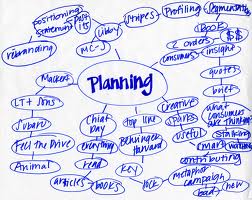 Welcome to the fifth and final part of this ongoing series of posts on how to write your non-profit organization’s annual resource development plan. As I’ve previously mentioned, this series was inspired by how many DonorDreams blog readers were clicking on the “
 Please keep in mind that “planning” is a key role/responsibility of your non-profit board. With this in mind, the task force / committee I suggested you recruit in the first blog post
  While most resource development plans are aligned exclusively with the organization’s annual budget, it is important not to forget about the strategic plan.
 Just a few quick words on this subject.
 How many times have your developed a plan, adopted it, put it on your organizational bookshelf, and watched it collect dust? Unfortunately, this is all too often a common occurrence.
 Do you know what is rattling around someone’s head during your non-profit board recruitment process? Knowing this could help you design a better process with better tools. This week and part of next week, we are focusing on a recent survey released by our friends at nonprofit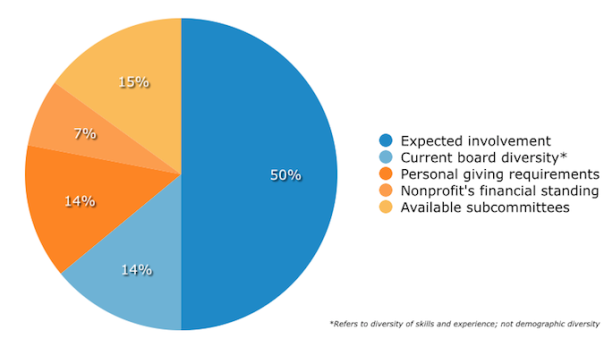

 Most non-profit organizations have a very clear understanding of what they need from their board members, but there is a better question that needs to be asked. “Do you know what your board volunteers need from you?” This week and part of next week, we are focusing on board development questions at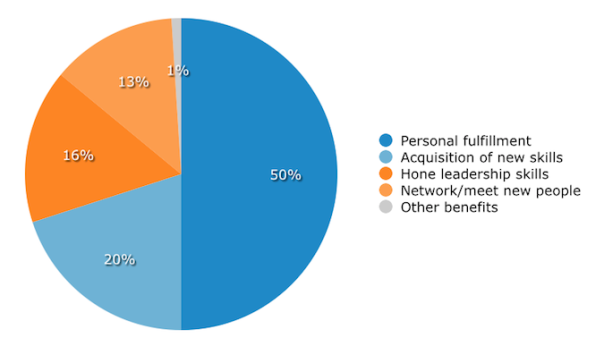
 I think Oprah wrapped all of this up best when she said:
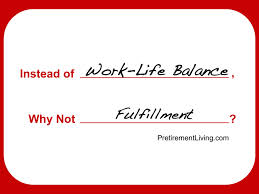 Structure your board development process in a manner that allows the following to occur:
 I cannot tell you how many boards I’ve worked with on board development and governance projects push back on the idea of year-end board member evaluations.
 I was on the phone yesterday talking with
  Our United Way friends totally get an A+ on this one because they’ve been running around for a decade now telling us to LIVE UNITED which encompasses the following ideas:
 My first Boys & Girls Club national conference was in New York City in 2001 literally months before the terror attacks.
 Fast forward to one of my first engagements as an external consultant. I was assisting with an organizational assessment and conducting interviews with board members, volunteers, collaborative partners, donors, former donors and various other stakeholders.
 I often find myself standing in parking lots after meeting “kicking stones” with staff, board members, volunteers, etc.
 A few weeks ago I facilitated a training session titled “2014 Finish Strong: Year-End Strategies” for a group of non-profit professionals in New Mexico. Long story short . . . there were LOTS of things that non-profits try to do in the fourth quarter. Participants shared with each other what they were doing back home at their agency and we collectively talked about best practices.