Benchmarking: The non-profit sector requests your assistance!

Last week a friend and non-profit consulting colleague of mine, Kirsten Bullock, sent an email asking me to encourage DonorDreams blog readers to participate in a study that “. . . is investigating charitable contributions, fundraising methods, donor retention, and how tactics have changed in these challenging financial times.”

This study is organized and run by Nonprofit Research Collaborative. If you are someone who is suspicious of things like this, then I encourage you to click the link that I just provided and check this organization out for yourself. However, if you don’t have a lot of time to scratch around the internet, take heart in the fact that this organization and the study are supported by:

  • Association of Fundraising Professionals
  • Giving USA
  • blackbaud
  • National Center for Charitable Statistics
  • Campbell Rinker

If you have 10 minutes, then please click this link and complete the questionnaire.

Still asking yourself . . . WHY?

If you are still reading, then I assume that you’re mulling things over and probably wondering why you should click that link.  So, let me try to make the case in one simple word:

Benchmarking

According to our friends at Wikipedia, “benchmarking is the process of comparing one’s business processes and performance metrics to industry bests or best practices from other industries.”

Let’s be honest for a moment. Few people who work in the non-profit sector have time to collect data and crunch industry numbers. We’re under-resourced, and we’re usually thankful when our workday comes in under 12 hours.

So, when an organization like Nonprofit Research Collaborative takes up the cause and only asks for 10 minutes of your time, all of us should really support the cause.

Still not convinced? OK, let me try this another way . . .

  • At the end of the year, some of you will report to your board of directors that your donor loyalty rate is 64.8% . . . and they are going to ask if that is good or bad.
  • At the end of your annual campaign, some of you will report to your board of directors that of the 100 prospects and donors who received face-to-face solicitation visits by staff and volunteers 78 of them decided to make a pledge or contribute . . . and they are going to ask if that is good or bad.
  • At the end of the year, some of you will report to your board that your private sector fundraising efforts brought in 1% fewer dollars this year than last year . . . and they are going to ask if that is good or bad.

In order to answer your board’s questions, you need to provide context and that is what benchmarking is all about.

Every organization should commit itself to benchmarking activities. You should do it with your program outcomes. You should do it with your resource development program. You should do it with board development and so many other things that you do.

Not doing so essentially means that you’re collecting data for the sake of collecting data.

I assume that you don’t have the time to independently do benchmarking of the non-profit sector for comparison purposes. So, come on . . . what do you say? How about taking 10 minutes out of your crazy busy schedule, click this link, and complete this important survey.

Pretty please?  🙂

Has your organization ever completed a benchmarking project with another non-profit organization? Or how about with another company from a different sector? If so, please tell us about it in the comment box below. We’d love to know what motivated you and what you found out.

Here’s to your health!

Erik Anderson
Founder & President, The Healthy Non-Profit LLC
www.thehealthynonprofit.com 
erik@thehealthynonprofit.com
http://twitter.com/#!/eanderson847
http://www.facebook.com/eanderson847
http://www.linkedin.com/in/erikanderson847
Non-profit organizations turn, turn, turn . . .

Welcome to O.D. Fridays at DonorDreams blog. Every Friday for the foreseeable future we will be looking more closely at a recent post from John Greco’s blog called “johnponders ~ about life at work, mostly” and applying his organizational development messages to the non-profit community.

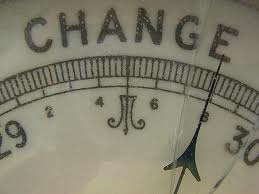
Today, I am focusing on a post that John wrote that was inspired by a baby crib mobile. He uses the mobile as an analogy for organizational change and equilibrium. Throughout his post he references both major and minor changes in the corporate landscape and talks about how those cultures balance and re-balance.

As I dwell on this post, I think about a number of non-profits who I’ve had the honor of working with throughout the years:

  • There is the organization who employed one of the most talented fundraising professionals I ever knew, and they decided not to re-hire the position after his departure. Needless to say, their resource development efforts are struggling.
  • There is the agency whose most influential and engaging board volunteer resigned due to “burn out,” and they decided to not find ways to keep him engaged. Needless to say, he faded away and isn’t even a donor anymore.
  • There is an executive director who freaked out after the economic crash in 2008, decided to lay off his grant writer and assumed on all of those responsibilities in addition to his regular responsibilities. Needless to say, someone is feeling overwhelmed and burned out.

I think the baby crib mobile is such a great analogy for what non-profits deal with on a daily basis. In fact, I think it is even more appropriate for non-profit organizations than for-profit corporations. Why? Simply look at how much juggling the average organization does because of significantly limited resources. Consider how much more important a board of directors is to the functioning of a non-profit organization compared to a for-profit corporation. So, when one talented employee or influential board volunteer leaves, then everything feels off off-kilter and the struggle for equilibrium feels like a roller coaster ride.

Looking at a non-profit through this mobile lens, I see a chaotic, whirling dance of people that’s bobbing and dipping and threatening to crash and burn.

The difference between a non-profit organization crashing and burning versus re-balancing to find a new equilibrium is huge and highly dependent on their approach to managing change. To some extent, I also believe that organizational cultures that embrace planning at their core and actually implement and adhere to those plans (e.g. succession plan) during times of change are the most successful at re-balancing in a graceful manner.

Those organizations, who don’t have very much capacity and make poor decisions during tumultuous times, end up in crisis. Sure, balance is ultimately achieved, but at what price?

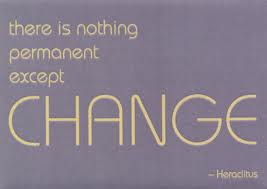
The bad news for these types of non-profits is that change is a constant in our world, and their baby crib mobile probably looks like the tangled and dysfunctional one that hung above my crib (because you know that I was the kid who could never leave anything well enough alone).  🙂

Looking back at the three examples that I described at the beginning of this post, I see a common thread . . . LEADERSHIP. I am talking about both board leadership as well as executive leadership. There is no doubt in my mind that the key to successfully keeping your organization from getting tangled and unbalanced is talented, engaged and committed leaders.

And isn’t that just the perfect cherry on top of the sundae when you look back of all of this week’s blog posts? Again, I want to thank my friend and colleague, Dani Robbins, for guest posting all week-long on board development and executive leadership. I am very happy that she will be contributing a board development post to DonorDreams blog every month.

After reading John’s blog post, I can’t get this song out of my head. So, I thought it would be appropriate to end this post with it.

[youtube=http://www.youtube.com/watch?v=fHvf20Y6eoM]

How chaotic is your organizational mobile? Do you have a story about how your agency managed “change” really well? Please scroll down and share it with the rest of us in the comment section.

Here’s to your health!

Erik Anderson
Founder & President, The Healthy Non-Profit LLC
www.thehealthynonprofit.com
erik@thehealthynonprofit.com
http://twitter.com/#!/eanderson847
http://www.facebook.com/eanderson847
http://www.linkedin.com/in/erikanderson847

A one page strategic plan in 60 minutes?

When it comes to strategic planning, many of my non-profit executive director friends tell me that it  is not one their favorite things to do. In fact, many of them told me they would rather have a root canal performed without novocaine than go through a strategic planning process.

I can sympathize with this mindset. Very few people like to wake up in the morning and take a good hard took at themselves in the mirror. Most planning models start with an assessment / evaluation phase, which sometimes feels very harsh and judgmental. If assessment isn’t the objection, then the consensus building process can feel tedious for some people and in some cases it can even become contentious if a few strong-willed individuals hijack the process.

Unfortunately, these objections to planning can erode organizational stability because planning gets put off sometimes forever. Without an organizational blueprint, everything becomes an organic process and decisions get made based upon the loudest voice in the boardroom.

This is not the best way to run a non-profit organization.

When talking to friends who are obviously anti-planning, I usually steer the conversation toward different planning models in an effort to find something that might work better for their circumstances. After all, one size doesn’t fit all . . . right?

Recently, I decided to expand the number of planning models in my consultant toolbox. So, I purchased the following two planning books and started reading:

To be honest, I was a skeptic before I started reading. Now, I am much less so.

If you are looking for a shortcut that results in a comprehensive strategic plan that addresses a variety of strategic issues all condensed down into a one page document, then you will be disappointed. This strategic planning model is interesting, but it cannot perform miracles.

However, if you have one (possibly two) things that need some attention, then this model will work for you. It will help focus your agency those issues into goals, measurable objectives and accountable actionable.

Perhaps, the most important thing to keep in mind is that regardless of the planning model your organization chooses for strategic planning, it still involves engaging a variety of different stakeholders and building consensus around the who-what-where-when-why-how. Most importantly, all planning models must get participants to focus on one key question:

Which parts of this plan am I so excited about that I’m willing to take responsibility for making it happen.”

After all, planning is not an event . . . planning is not about the resulting document . . . planning is an engagement activity.

No strategic planning model will ever change this basic idea.

On a side note, fundraising professionals should look at this planning model because I suspect it would be great to use with a special event fundraising committee or your annual campaign team.

Have you ever employed the 60 minute, one page planning model to anything at your agency? If so, how well did it work for you? What do you attribute to your success or lack of success?

Erik Anderson
Founder & President, The Healthy Non-Profit LLC
www.thehealthynonprofit.com
erik@thehealthynonprofit.com
http://twitter.com/#!/eanderson847
http://www.facebook.com/eanderson847
http://www.linkedin.com/in/erikanderson847

Advice for all non-profits: “It is time to talk human again!”

So, I was sitting in my living room watching television and trying to multitask last night when one of the commercials that I was trying to ignore jumped out of my television, grabbed me by my shirt collar and shook me hard. It was an advertisement by Skype and it was very cute.  You probably know which one I am talking about . . . it is the commercial with the middle school aged boy and girl passing notes in class. I’ve embedded it below if you want to view it again.

[youtube=http://www.youtube.com/watch?v=pCJAASK50lY]

I especially love the following line in this ad:

“Long before email threads, we turned to each other. It is when the spirit of collaboration meant more than an ‘FYI’ or ‘Reply All’. When messages were passed along by simple gestures, validated by an honest expression.”

Long after this commercial was over, my mind kept straying back to it. I must have re-played it over and over and over again in my head all night long. After a few hours, it dawned on me that there is something about this message that obviously resonates with me and my point of view about non-profit organizations.

For the last few years, I became more focused on using technology to engage people (e.g. non-profit clients, donors, board volunteers, etc) in a way that felt efficient and productive. Thinking back on it, I have tried all sorts of technology tools all in the name of saving time:

  • Email (Ugh . . . I can send wickedly long emails with lots of detail)
  • Google Docs
  • GoToMeeting
  • Conference call bridges
  • e-newsletters

I suspect this trend is rooted in the idea of being respectful of a donor and volunteer’s time. After all, life is so busy and very fast nowadays. However, are we really being more efficient? Are we really getting more done? Are we really simplifying things or do our efforts really just de-humanize the experience and end up doing more harm than good?

I think United Airlines hit the nail on the head more than 20 years ago when they run this iconic television ad:

[youtube=http://www.youtube.com/watch?v=mU2rpcAABbA]

Please don’t misunderstand what I am saying. I believe technology is here to stay, and we all better learn how to appropriately use it to keep our donors and volunteers informed and engaged.

I suspect that technology will also continue to creep into our lives and become a stronger fundraising solicitation tool over the next decade. I also suspect that more and more board and committee meetings will happen over Skype and other online video platforms.

Before you totally surrender your non-profit and its relationships to the “Technology Gods,” I encourage you to take the following advice from our friends at United Airlines and Skype:

  • Scale back your email and non-personal technology efforts with volunteers and donors.
  • Don’t make-up reasons for volunteers to attend a committee meeting or board meeting. Make sure that the agenda contains important stuff.
  • Don’t make-up reasons to sit down with a donor. Make sure every touch is engaging, enlightening, fulfilling, and fun for them. It is more about them and less about you. Right? Connecting people with your mission in an emotional way is a recipe for success! And technology is anti-emotional.
  • Visit people in-person, but do so in a way that feels important and not a waste of time.
  • Try your hand at online video conferencing. Of all the technology available to you, this one somewhat allows some sense of personal interaction. Start small with an individual or committee first.

I think we can embrace technology in a way that makes sense and is not de-humanizing. It will take a conscious effort on your part. Are you up to the challenge? Or are you just going to continue ‘forwarding’ that email thread with an attachment and clicking ‘reply all”? Please scroll down and share your thoughts about either commercial? Did either have an impact on your non-profit point of view? I would love to hear your thoughts and what you plan on doing about it.

Here’s to your health!

Erik Anderson
Founder & President, The Healthy Non-Profit LLC
www.thehealthynonprofit.com
erik@thehealthynonprofit.com
http://twitter.com/#!/eanderson847
http://www.facebook.com/eanderson847
http://www.linkedin.com/in/erikanderson847
Founding Fathers have the answer for today’s non-profit leadership deficit

It has been said more than once on this blog as well as in many other places on the internet that non-profit organizations are challenged from an executive leadership perspective. Compensation packages are poor. Boards make bad choices. Evaluation is the exception rather than the rule. Succession planning is more talk than anything else. Let’s face it . . . today’s non-profit executive leadership picture is less than rosy.

However, tomorrow’s executive leadership picture is likely going to get much worse according to The Bridgespan Group who recently carried out a study on executive leadership issues focused on non-profits with revenues greater than $250,000. Click here to read a copy of the executive summary.

The bottom line according to this study is:

  • The non-profit sector will need 80,000 new leaders in 2016;
  • Non-profit agencies lack the size and resources to develop its leaders from within;
  • The non-profit sector lacks robust management-education and executive-search capabilities.

By the way, Happy Fourth of July 2012. I decided writing about this subject today because it feels especially appropriate.

I’ve always looked at what the Founding Fathers did in Philadelphia in 1776 as an exercise in organizational development and leadership, and I’m convinced that non-profits can find lots of answers to their challenges just by studying history.

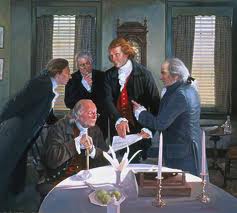
I can mentally picture George Washington, Thomas Jefferson and Ben Franklin sitting around after a tough day at Independence Hall working through issues dealing with how to sustain the country in the long-term.

If I were to guess, the idea of having both a federal government and 13 independent sovereign states bound together into one governance system had a lot to do with checks and balances and not trusting big government. However, I also suspect there was some thought given to how separate governance models at the state level would create a training ground and leadership engine for the executive, legislative and judicial branches of the federal government.

Even if this thought never crossed their minds, it still turns out to be genius!

As you go about celebrating Independence Day 2012, I encourage you to chew on the following questions:

  • Does your non-profit agency have a written succession plan? Is it real orjust something on paper?
  • What does your training and professional development program and budget look like?
  • What leadership opportunities are you providing staff members to help them gain the necessary experience to step-up and lead in the future?
  • Are there places (e.g. structures, committees, groups) inside your organization where people can “cut their teeth” and learn how to be a leader and develop skills?
  • If not, what does the constitutional convention look like for your agency to make those adjustments? Who is sitting around the table?
  • Much like the states interact with one another, are there other non-profits in your community who you can collaborate with around issues of succession and leadership?

Here’s to your health! And have a happy and safe Fourth of July!

Erik Anderson
Founder & President, The Healthy Non-Profit LLC
www.thehealthynonprofit.com
erik@thehealthynonprofit.com
http://twitter.com/#!/eanderson847
http://www.facebook.com/eanderson847
http://www.linkedin.com/in/erikanderson847

Questions every non-profit board member should be asking

Last week we featured two posts titled “Excuse me, but I have a few questions” and “Questions every non-profit executive director should be asking“. Today, we’re continuing this series of posts by looking at powerful questions that board members should be asking.

As I mentioned last week, Tony Stoltzfus explains in his book “Coaching Questions: A Coach’s Guide to Powerful Asking Questions” that there are many reasons why asking questions is important. The following are three reasons that I highlighted last week:

  1. Asking empowers
  2. Asking develops leadership capacity
  3. Asking creates authenticity

The third reason — “Asking creates authenticity” — is one of the biggest reasons board members need to get in the habit of asking questions.

How many times have I seen board volunteers telling their executive director and fundraising professional what they think should happen or what they are most concerned about?  Well, if I had a nickel for every time I’ve seen it, then I wouldn’t be writing this blog every day.  🙂

In Tony’s book, he explains that “asking” rather than “telling” creates a situation that fosters trust and transparency between people. In my experience, board members are more influential and effective when they ask more questions and seek to truly understand what is really going on and why staff are suggesting and doing certain things.

However, it is important that board members understand their roles and responsibilities first before they transform themselves into “questioning machines”. It would be perceived as “micro-management” by most non-profit staff members if board members started asking all sorts of detailed questions around programming and operation.

This doesn’t mean that asking programmatic and operational questions aren’t appropriate, but doing so in the appropriate context is very important.

When it comes to strategic direction, policy and business-related things, I believe that many board members need to do a better job of getting involved and engaged. Asking good questions inside and out of the boardroom will help accomplish this objective.

One of the biggest non-profit boardroom challenges occurs when conversations are started, people talk an issue to death, and nothing every seems to get resolved. Tony Stoltzfus talks about the importance of SMART Goals in his book and offers a number of great questions that can re-focus your conversations into something more goal-oriented and actionable.

SMART is obviously an acronym for the following:

  • Specific — You can state clearly where you are going
  • Measurable — You’ve included a way to measure progress
  • Attainable — It is within your capabilities
  • Relevant — You care enough about this goal to make it a priority
  • Time-Specific — It has a deadline

The following are a few questions that Tony suggests might help you craft a SMART Goal:

  • What will it look like when you reach your objective? What is the outcome that you want?
  • How can you quantify this goal so we’ll know when you’ve reached it?
  • Are there any barriers or circumstances that preclude reaching this goal?
  • Why is this important?
  • By when will you reach the goal?

One pitfall that I believe board members need to avoid when using this approach is using it to interrogate staff. After all, isn’t “board engagement” the goal here? If so, then these questions should be used by volunteers to engage their fellow volunteers. Or these questions can be used by staff to get board volunteers involved and focused on action.

Of course, these are NOT the only questions that board members should be asking in the boardroom. Click here to see a wonderful list titled “Questions Nonprofit Board Members Should Always Ask” that our friends at managementhelp.org put together.

How much “question asking” goes on inside of your boardroom? What have you found to be effective and engaging questions? What has been ineffective? Please use the comment box to share a few of your thoughts.

Erik Anderson
Founder & President, The Healthy Non-Profit LLC
www.thehealthynonprofit.com
erik@thehealthynonprofit.com
http://twitter.com/#!/eanderson847
http://www.facebook.com/eanderson847
http://www.linkedin.com/in/erikanderson847

Non-Profit Time Management: The Trick About Delegation

This week’s “Mondays with Marissa” post was titled “Non-Profit Time Management: Scheduling Social Media Updates“. After reading Marissa’s weekly pearl of wisdom, it got me thinking. During tough economic times, donors are asking non-profits to do more with less, which is leading to longer task lists for both executive directors and fundraising professionals. All of this contributes to a lot of stress in the workplace. In honor of Marissa’s awesome blog post, I am dedicating this week’s posts to the idea of looking more carefully at time-saving tips with regards to managing your agency and implementing your resource development program.

Let’s continue this conversation by looking at the difficult art of delegation.

It would be so simple to just say “delegate early and often” if you want to improve productivity at your non-profit organization; however, the truth of the matter is:  it is more complicated than that.

The Heaping Plate effect

Let’s think this through for a moment. Donors are telling non-profits to do more with less. From what I’ve seen in the last four years, non-profit boards did not respond by rolling up their sleeves and investing more time in serious fundraising. Instead, many of the boards I know circled the wagons and tried to “cut-cut-cut” their way out of crisis.

In the final analysis, those non-profit organizations are stretched very thin now, and they’re trying to run their pre-2008 program with a skeleton staff.

So, an executive director or fundraising professional might not be able to delegate their way to increased productivity because everyone’s plate is heaped too full of work.

This, of course, doesn’t mean that delegation can’t be effective; however, it will need to be done with volunteers (e.g. board volunteers, program volunteers, fundraising volunteers).

All hands on deck!

Trust But Verify

When I was an executive director, I learned that delegation is not a magic cure-all that made everything on my task list disappear. Unfortunately, I learned this the hard way.  🙁

For example, I would delegate a task to staff or volunteers and expect that it would get done on or before the agreed upon deadline. It never failed . . . the task would never get done on time and I usually ended up taking it back (while muttering under my breath something like “if you want it done right, you got to do it yourself“).

I really was wrong. In reality, I just didn’t know how to effectively delegate, and it wasn’t until someone share with me those immortal Ronald Reagan words — “Trust But Verify” — that I start getting better at delegation.

I learned to use my Microsoft Outlook task list to manage BOTH my tasks and the things I delegated. For example, if I delegated a grant compliance report to a staff person, then I would add it to Outlook with a digital reminder to check-in and see how things were going a few weeks before the deadline. I’d do the same thing with volunteers who agreed to do things for the agency.

Since opening my non-profit consulting practice, I’ve started using Basecamp, which is an online project management service to keep track of who is doing what and by when.

Have you used other tools other than Microsoft Outlook to track and manage things you’ve delegated to staff and volunteers? If so, please scroll down and share your best practice in the comment section of this blog. We can all learn from each other.

Here’s to your health!

Erik Anderson
Founder & President, The Healthy Non-Profit LLC
www.thehealthynonprofit.com
erik@thehealthynonprofit.com
http://twitter.com/#!/eanderson847
http://www.facebook.com/eanderson847
http://www.linkedin.com/in/erikanderson847
Non-Profit Time Management: Letting Go of It All

This week’s “Mondays with Marissa” post was titled “Non-Profit Time Management: Scheduling Social Media Updates“. After reading Marissa’s weekly pearl of wisdom, it got me thinking. During tough economic times, donors are asking non-profits to do more with less, which is leading to longer task lists for both executive directors and fundraising professionals. All of this contributes to a lot of stress in the workplace. In honor of Marissa’s awesome blog post, I am dedicating this week’s posts to the idea of looking more carefully at time-saving tips with regards to managing your agency and implementing your resource development program.

Let’s continue this conversation by looking at David Allen’s Mind-Sweep concept.

I don’t know about you, but when I’ve found myself “under the gun” to produce, I feel like something has a hold over me. I can best describe it as a “gripping feeling” or a “paralysis”.  When I feel this way, my productivity falls dramatically. I think this happens because I am concerned about all of the plates that I have spinning. I get too focused on all of the things I need to do and not focused enough on actually doing them.

A few years ago, when things were especially bad, I asked my employer to send me to a time management training that was based on David Allen’s national best-selling book “Getting Things Done” (GTD).

While I still fundamentally consider myself more of a Frankin-Covey guy, there were a number of interesting and effective tactics that I took away from the GTD training. One of those tactics was called the “Mind-Sweep” and here is how it works:

  • Secure a pen and stack of loose leaf note cards or a small pad of paper.
  • Search your mind for things that you need to do — both big and small.
  • Write down one task per note card and put it in your inbox.
  • Once you’ve cleared everything out of your head — everything from buying a gallon of milk to calling a specific donor — go back through your inbox and prioritize the tasks in their order of importance.

If you think this exercise seems elementary, I wouldn’t argue with you. However, there is something “freeing” about dumping all of the contents of your brain out onto small pieces of paper. Whenever I have done this, my mind seems to focus and that gripping feeling seems to melt away. Essentially, I am no longer consumed with the thought that I may forget to do something, and I am able to spend time “doing” stuff.

While I’ve done this during extremely busy and chaotic times, I’ve also modified this approach and used it to help me in a Moves Management type of way. Simply focus your mind on an individual donor and everything that you think needs to happen to move them from one gift level to another, and dump it all out on one sheet of paper. The contents of that exercise become all of the “moves” (e.g. cultivation activities) that need to occur to position a donor to the next solicitation. Add dates to that list and put it in a spreadsheet (or your donor database Moves Management relationship tab), and TA-DA you have an individual donor plan.

The same approach can be applied to building a project management plan for a special event fundraiser.

The “mind-sweep” is more than just an organizing tactic, it is a time-savings strategy that can help you stop dithering and start doing. “Getting out of neutral” can be one of the best feelings in the world and can make all the difference when it comes to time management.

Have you ever felt gripped by a similar feeling that I described earlier in this blog post? If so, how did you get “unstuck” and moving forward again? Please scroll down and share a quick thought in the comment section. We can all learn from each other.

Here’s to your health!

Erik Anderson
Founder & President, The Healthy Non-Profit LLC
www.thehealthynonprofit.com
erik@thehealthynonprofit.com
http://twitter.com/#!/eanderson847
http://www.facebook.com/eanderson847
http://www.linkedin.com/in/erikanderson847

Non-Profit Time Management: Managing Your Task List

Yesterday was Monday, which can only mean one thing at DonorDreams blog . . . it was “Mondays with Marissa” and her post was titled “Non-Profit Time Management: Scheduling Social Media Updates“. After reading Marissa’s post, it got me thinking. There has to be a million-and-one ways for non-profit professionals to improve upon managing their time. In honor of Marissa’s awesome blog post, I will take the next few days to look more carefully at time-saving tips with regards to managing your agency and implementing your resource development program.

Let’s start this conversation off by simply looking at your task list.

In the last seven days, I visited with two non-profit executive directors who both expressed utter frustration with how many things are currently on their “To Do List”. As you can imagine, not being able to get to the bottom of your task list every day adds stress to the average person’s life. This stress turns into chaos and panic when the list grows exponentially every day. Having been in the same situation, I  compare it to what I can only imagine drowning must feel like.

In an effort to help my friends, I pulled out and dusted off my old executive coaching textbooks. It was in a book titled “Coaching Questions” written by Tony Stoltzfus that I found the following nugget of good advice:

Make sure that EVERY item on that list adheres to the following four characteristics:

  • Clarity: I know exactly what to do
  • Datebook: This step can be scheduled at a specific time
  • Commitment: I know I will do this
  • Deadline: I’ve set a date for completion

I know this sounds simplistic, but when the item you’re adding to you task list doesn’t meet this four-part litmus test, then you have two options:

  1. Go back and secure the information you need in order to satisfy the test, or
  2. Don’t add it to your task list.

Tony also suggested that you re-think adding tasks to your To Do List when you hear yourself using language or phrases such as:

  • I could …
  • I might …
  • I’m thinking of …
  • If …

The reality is that times are chaotic for non-profit professionals. Donors are demanding that you do more with less. The simple prescription can be summed up in one word:

FOCUS

Good non-profit professionals, especially effective ones, know that they can’t do everything all at once. They seem to have mastered many of the simple aforementioned suggestions related to their task list.

How have you found focus at your non-profit agency as times have become more chaotic and demanding? Do you use a similar approach as described above? If so, how has that worked for you? What type of task list tools do you use?

Your time is in high demand and none of us should be re-creating the wheel every day. So, please scroll down the page and spend 60 seconds sharing a best practice or something that works for you with your fellow non-profit professionals.

Here’s to your health!

Erik Anderson
Founder & President, The Healthy Non-Profit LLC
www.thehealthynonprofit.com
erik@thehealthynonprofit.com
http://twitter.com/#!/eanderson847
http://www.facebook.com/eanderson847
http://www.linkedin.com/in/erikanderson847

Non-Profit Time Management: Scheduling Social Media Updates

The non-profit world moves fast. You walk-in at the start of the day, sit down, check-in, and before you know it the day is over. When time moves this fast, it can be hard to remember to update your social networks. Even if your job is solely dedicated to cultivating an online community, time can sometimes get away from even best time managers.

Today we are going to look at three tools that can help you schedule your social media updates and ensure your online presence is not neglected during the busy times in your life.

Plotting It All Out

When pressed for time, coming up with the perfect status update can be hard work. What do you want to say? Have you said something similar recently? Are you talking about an engaging topic? Planning what to say, when to say it, and where to post it, can save you time and make the whole process go a bit smoother.

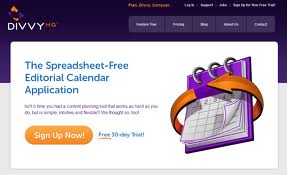
DivvyHQ is a great resource when you have multiple people in charge of updating your social networks. It allows you to create a calendar to plan out what type of posts you are going to put up and where you are going to post them. There also is a post approval option if you need that as well.

For example, if there is an upcoming event and you are not the right person to talk about it, then why not ask the person who is? With DivvyHQ you can create a task within the program which will notify them via email. This gives you a place to manage your social media calendar.

DivvyHQ does offer a limited free plan, but their best features are found in the paid options.

If you decide that paying for DivvyHQ is a too expensive, you can still accomplish the same things using tools like Google Calendar and a spreadsheet. Simply create a Google Calendar named “social media” and plan out your posts by creating events for each day. You can even put the time you’re going to post it and create a reminder. If you need help, then you can invite others to that event. A good old fashion Excel spreadsheet can also work much in the same way.

Whichever method you choose, sitting down to plan out your posts can save you lots of time in the long run.

Posting to The Future

After you have planned everything out in advance, you can write posts and schedule them for publication in the future. That’s right . . .  where we’re going, we don’t need roads. What’s nice about taking the time to do this is that your social networks will automatically be updated and you don’t have to freak out about not posting on the correct day if something comes up.

The best thing about scheduling your posts far in advance is that you can actually go on vacation.

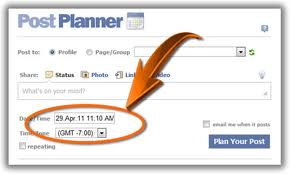
One tool that can help you with posting to Facebook is Post Planner. Post Planner is great because for a very low-cost ($4.95/month) you can post to your organization’s facebook page in a very organic way. Going beyond telling it what you want posted and when you want it posted, Post Planner allows you to upload photos to albums you already have on Facebook. You can post videos and links the same way. What’s nice is that it will look like you updating in real-time.

Another option to consider is HootSuite. HootSuite is a popular social media manager that allows you to schedule Facebook and Twitter updates in advance.

While HootSuite works well for many people as free social media tool, it isn’t something that works well for me because I have a number of photo albums that are updated on a weekly basis, which means all of my pictures go into a HootSuite album. So, I just use HootSuite to automate non-photo tweets and find it extremely helpful.

It should be noted that both Post Planner and HootSuite will email you when your scheduled post is posted.

Taking the time to come up with a calendar of when you post to your social networks will save you time in the long run and allow you to have a more structured social media plan. Using tools like Post Planner or HootSuite can help you schedule your posts so you don’t have to worry about posting at exactly the right time. What tools do you use to plan your social media message? I’d love to talk about it further in the comment section below!