Success
By John Greco
Originally published on July 26, 2012
Re-posted with permission from johnponders blog
 How do you measure success?
To laugh often and much;
To win the respect of intelligent people and the affection of children;
To earn the appreciation of honest critics and endure the betrayal of false friends;
To appreciate beauty;
To find the best in others;
To leave the world a bit better, whether by a healthy child, a garden patch, a redeemed social condition, or a job well done;
To know even one other life has breathed easier because you have lived —
This is to have succeeded.
— Ralph Waldo Emerson
I’ve been reading Emerson’s masterpiece for probably over thirty years now.
It has never disappointed. I don’t think it ever will. It seems to move with me over the years.
There are some phrases that I connected with right off — to win the respect of intelligent people; to leave the world a bit better by a job well done.
Then there are other phrases that, thirty years later, I’m just starting to get —to appreciate beauty; to leave the world a bit better by a garden patch.
Then there are the other phrases… which make this verse, I think — in addition to being extraordinary — enigmatic. It is both affirmative, and humbling, at the same time.

We can read those lines, each and every one of us, and think that, yes, we are indeed successful. It affirms.
And in other ways, we don’t measure up. It humbles.
Maybe that’s the point.
But there’s more to do. There’s work to do. There’s ground to cover.We have done much. We’re successful.
There are impacts to make. Probably immeasurable impacts.
How do you measure success?

 A Chinese woman had two large pots, each hung on the ends of a pole which she carried across her neck.. One of the pots had a crack in it while the other pot was perfect and always delivered a full portion of water.

 Thousands of spectators flooded into the Crystal Palace Exposition in New York City.
 But I under appreciate the downside risks. I, consequently, short change the risk mitigation section of the proposal. In fact, sometimes I omit it entirely.
 If you cry “Forward!” you must make clear the direction in which to go. Don’t you see that if you fail to do that and simply call out the word to a monk and a revolutionary, they will go in precisely the opposite directions.
 In this post I will be sharing one of the most profound and impactful lessons of my life.
 That’s quite a stretch you say? Okay, another possibility: because you are not so much concerned about the project now, you can devote some time and energy to researching twice a week home nursing visits for your mom. That concern just slid into your circle of influence…
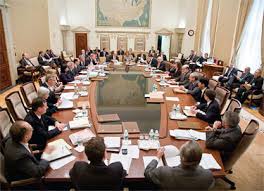 Appointed or elected community leaders govern an organization. As outlined in my favorite Board book
  The Finance Committee, chaired by Treasurer, works with the appropriate staff in examining the financial reports, understanding and monitoring the financial condition of the organization and preparing the annual budget. The Treasurer presents the monthly financial statements to the Board at each board meeting. This committee also selects an audit firm each year and reviews the audit plan, audit and 990, which should be signed by the Treasurer prior to submission.
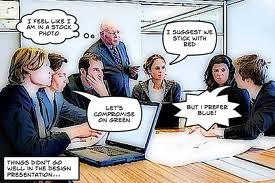 I recommend caution when creating committees to do the work of staff. It gets very confusing as to who is responsible for what and responsible to whom. If Board members are acting in staff roles, the Executive Director retains the authority for decision-making. If the Board members are operating within the scope of their roles, the Board has the authority for decision-making. Conversations had in advance can help you avoid role confusion and the overstepping of boundaries.

 A few short years ago, we couldn’t have even imagined such a scenario. In the past, proximity and commonality brought us together. We had family and close friends; help came from familiar places.
 And I already see that I’m not adapting fast enough to keep pace with the innovations. The technology school bus isn’t waiting for me!
 As I’m sure you aware by now, I like to reflect back on things that have occurred and create a plan to avoid their reoccurrence. As such, I’ve been thinking about things our field can do to be stronger.