
 As you know, there is no such thing as a unicorn. It is a mythical creature and the inspiration for this morning’s post about various fundraising policies and procedures documents that everyone says are important but rarely exists on the front line of many (especially smaller) social services non-profit agencies. I thought it might be a good idea to name these “unicorns” and explain what they are and why they’re important.
Before I begin, I want to give a shout out to my BFF — Michael Johnson — who is a planned giving consultant at H. Freeman Associates. He is the real motivation for this morning’s post because he posted the following comment on one of my blogs from last week titled “Your agency’s fundraising program is like an iceberg“:
“Great post, Erik! This speech underscores the importance of having good gift acceptance policies and an operating plan in place to back up our brilliant marketing. We always need to “Begin with the end in mind” and ask ourselves what we will do when our marketing campaign is successful and the prospective donor responds. Otherwise our donors may become frustrated.”
It was Mike’s reference to Gift Acceptance Policies that got my mind whirling and thinking about today’s topic. THANKS, MIKE! 🙂
Gift Acceptance Policies
Sometimes donors like to support your mission with things other than cash. In fact, I just sat through a training a few months ago where my friend Mike talked about how donors give more “stuff” than they do “cash“.
It is for this reason that gift acceptance policies are important. They spell out in advance “what you do and how you do it” with regards to gifts of stuff. In a sample policy that I recently reviewed, an agency included policies and procedures for the following types of donated “stuff“:
- publicly traded securities
- securities that aren’t publicly traded
- real estate
- tangible personal property like art, jewelry, etc
- insurnace
- in-kind gifts and pro bono services
- deferred gifts (e.g. charitable gift annuities, irrevocable charitable remainder trusts, etc)
- revocable gifts like bequests
I refer to this policy and procedures document as a “non-profit unicorn” because I very rarely see it, and when I do it is typically larger non-profits (e.g. universities and hospitals) who have taken the time to develop them.
If you are interested in more info on gift acceptance policies, the National Council of Nonprofits has done a nice job uploading resources and samples to their site. However, please remember that policy making is a a responsibility of the board of directors. So, make sure to include them in the discussion and development of your agencies policies and procedures before asking the board to approve them.
Named Gifts Policy
Sometimes donors like to put their names on stuff, and a Named Gift Policy helps non-profit organizations with the following:
- identifying what can be and can’t be named (e.g. buildings, rooms, endowments, scholarships, events, etc)
- identifying the process and rules associated with naming something
- identifying the process and rules associated with unnaming something
Our friends at the Association of Fundraising Professionals have done a very nice job making the case for why this type of policy is important and providing a number of samples and links to resources. This online article is definitely worth the click!
Again, I consider this a “non-profit unicorn” because I can count on one hand how many times I’ve seen a policy like this.
Donor database policy and procedures manual
Many non-profit organizations have donor databases, and very few of them have put into writing things such as:
- how to input a pledge
- how to input a gift
- how to run solicitor reports
- protect donor privacy (g. what can be shared and with whom)
- how to enter donor’s names (g. Mr & Mrs, etc)
- what information to collect and where to put it
- how to track soft gifts
- how to enter a new donor
- how to track volunteers and prospects
The biggest reason this policy and procedures manual is critical is because your agency won’t always have the same person entering donor information into the database. With turnover comes inconsistency and lost institutional knowledge. Long story short . . . the lack of a policy and procedures manual for your donor database typically results in a G.I.G.O. situation (garbage in, garbage out).
Want to avoid the feeling of wanting to throw your database out the window? I suggest developing your policy and procedures manual.
I know that I sound like a broken record, but I’ve only seen a few of these in all my years of working with non-profit organizations, which is why it is a “unicorn” in my book.
Our friends at Metafile (ResultsPlus donor database) published an awesome nine page white paper that speaks to this issue. Click here to view their sample template.
Does your organization have one of these policies? If so, what was your motivation for creating it? What samples/templates did you use to get started? Are there other “unicorn documents” that you’ve heard about but never seen? Please use the comment box below to share your thoughts and experiences.
Here’s to your health!
Erik Anderson
Founder & President, The Healthy Non-Profit LLC
www.thehealthynonprofit.com
erik@thehealthynonprofit.com
http://twitter.com/#!/eanderson847
http://www.facebook.com/eanderson847
http://www.linkedin.com/in/erikanderson847
 For those of you following the last few blog posts, you know that I’m reading “
 As I explained in last week’s post titled “
 I believe the answer is as simple as evaluating what “The Ant” would do if they were a member of your board of directors.
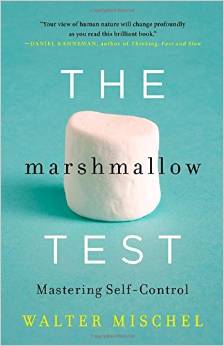 I’ve been on the road a lot lately. When this occurs, I typically look for eBooks to help pass the time during airport delays and other frustrating travel hiccups. Last week, I downloaded
  “I laughed at the Lorax, “You poor stupid guy!
 So, I guess Dr. Seuss is right again . . . “Business is business!” It must just be a function of human nature, right? Because I see corporate America constantly expanding. I see the non-profit sector doing the same thing. And I may just get sick if I hear one more person rant about the expanding size of government on my television (I probably just need to learn how to use my remote and change the channel.)
 I know that many people look at this list and immediately reject it, but if Dr. Seuss is right and “Business is business! And business must grow” then change is inevitable inside of our organizations. And if change is inevitable, then why put on a blindfold and take the proverbal steering wheel of your organization?
 Earlier this week, I found myself walking into a title company to interview a donor for a client. As I walked into the office building, I noticed the following things:
 I walked away from the conversation thinking this was a unique, fun and quirky business practice. I also came to understand that this business practice was a genius idea on so many different levels:
 Every time I hear a donor from a community’s “old guard” lament about no one taking their place and wishing organizations would start recruiting younger, up-and-coming professionals, I can’t help be smile. Why? Because in my experience, it is usually the same crowd who laments that a board of young professionals:
 The regional VP and I would fly into the district office. We would first meet with the district Director, and then over the course of the next two days the VP, the Director, and I would meet with each station manager in a series of rather intense “three-on-one” station review meetings.
 If the meeting were today, I’m quite sure he would have explained his situation with a matter of fact “it is what it is” but that phrase wasn’t in popular use back then…
 “Scott, can you speak more to why you think the drivers don’t respect you?”


 “Ah, but a man’s reach should exceed his grasp, else what’s a heaven for?”
 Now you might be thinking how in the world that notion would be relevant to share in a business strategic planning meeting. I don’t blame you, I would be thinking that too, if I intended to use that meaning.