Earlier this week and last week, I started writing about the State of Illinois’ budget crisis and how it is impacting non-profit organizations. In Part 1 of this series, I shared survey results provided by United Way of Illinois along with other insights and perspectives . In Part 2, I talked to a non-profit executive director whose organization lost significant funding as a result of Illinois’ budget impasse and shared some surprising developments. Today, I have a suggestion for Illinois non-profit leaders to mull over as the crisis deepens (and there is lots here for non-profit leaders from other states to chew on, too).
Frog in boiling water
We’ve all heard the story about frogs and boiling pots of water. Right?
Assuming that some of you haven’t any clue of what I’m talking about, here is a nice summary from Wikipedia:
“The boiling frog is an anecdote describing a frog slowly being boiled alive. The premise is that if a frog is placed in boiling water, it will jump out, but if it is placed in cold water that is slowly heated, it will not perceive the danger and will be cooked to death. The story is often used as a metaphor for the inability or unwillingness of people to react to or be aware of threats that occur gradually.”
I have no clue what the origins of this old story are, but I do know this . . .
IT IS A MYTH!
 Don’t want to take my word for it because you might have heard it from your grandfather or another beloved family member. No problem … I completely understand. Let me provide you with scientific proof. Simply click here, click here for more, and click here if you are in deep denial. If you clicked all three links, I’m guessing you probably also believe a number of other grossly inaccurate things about other animals and suggest you the Snopes.com article titled “Critter Country: Wild Inaccuracies”
So, what does any of this silliness have to do with non-profits and the Illinois budget impasse?
Your organization is like a frog!
In other words, your non-profit should (and likely will) jump out of the boiling waters of government funding if things get too hot. It is a simple matter of survival.
Question #1: When?
I’ve lamented too often — right here on this blog — that too many non-profit boards operate poorly. They don’t understand (and sometimes reject) their legally defined fiduciary responsibilities, focus their meetings obsessively on monitoring rather than governance, micromanage the organization and its staff, rubber stamp things (oftentimes very important things) that staff put in front of them, and my list can go on and on.
If anything in the last paragraph describes your organization’s board of directors, please hear me clearly . . .
You’re at risk!
In other words, you might just be on the road to proving all of the scientists, who said in the last section that “the boiling frog story is an urban legend,” are liars.
 Your board is likely made up of smart people. If they aren’t being used (at a minimum) as a “sounding board” on the issue of government funding and what to do about it, then my suggestions are:
- Stop business as usual in your boardroom
- Start adding a 45 minute “generative discussion” agenda item to every one of your monthly meetings for the foreseeable future
- Focus your discussions around various aspects of your government funding situation
- Bring in guest speakers who know more than you do about state funding and your grants
- Pose open ended questions and facilitate an engaging dialog where everyone is encouraged to share their thoughts and feelings
- Don’t just have theoretical conversations … also pose action oriented questions (e.g. what are our options? what should we be doing?)
If you and your board can make this adjustment in non-profit governance, I guarantee you that . . .
It will be clear when it is time to jump out of the boiling pot!
Question #2: What?
 Of course, the more difficult question for most non-profit organizations is “What to do about it?”
If your organization isn’t reliant on government funding, the answer is easy . . . carry on and try not to gloat too much around your non-profit friends. For those of you who rely on modest (or perhaps significant) government money, then you want to keep reading.
If you and your board have decided the water is getting a little too hot, then here are a few suggestions:
- Re-exam your non-profit revenue model
- Explore other models (refer to previous section about generative discussions in the boardroom)
- Make a group decision about which model (or hybrid model) is best for your organization at this time
- Don’t try to turn the battleship all at once … choose one (or a few) things to “try on for size” and experiment with small aspects of your new revenue model (e.g. write a private sector foundation grant, engage a corporate partner, identify prospective individual donors and start a conversation with them; write a business plan for a potential social enterprise, etc)
- Invest time, energy and effort in evaluation of every new thing you undertake and commit to nurturing a culture of improvement and excellence
- Celebrate every success from top-to-bottom and side-to-side of your organization (no matter how big or small it may be)
If you got this far and still find yourself scratching your head over the idea of different non-profit revenue models, then you need to click-through and read a Bridgespan white paper titled “Ten Nonprofit Funding Models“. I also highly suggest clicking on and reading every hyperlink embedded in the white paper.
If you don’t believe your organization can do this without help, then I have some good news. There are countless non-profit consultants (myself included) who are available for hire.
Stop listening to stupid people
 I’ve heard state funders (e.g. foundations, United Ways, etc) say loudly and clearly, “The state cannot expect funders to fill the gap created by the State“.
I do NOT believe foundation leaders and United Way professionals are “stupid people“. However . . .
I have heard some people (in fact some are even dear friends of mine), amplify the cautionary words of foundations and United Ways and then twist them by concluding “private sector philanthropy” cannot fill the gap. It is these folks to whom I urge you to please stop listening.
The reality is that foundations, corporations and United Ways only account for 20% of the $358 billion of charitable giving. The remainder of the pie (a huge whopping 80%) comes from individuals either directly or through bequests.
Moreover, charitable giving is only 2% of our country’s GDP.
The pie can be increased. There is room to expand and grow. Foundation leaders and United Way professionals never said private sector philanthropy couldn’t be the solution (or at least a big part of the solution). They were simply say that politicians need to stop telling voters their organizations will fill the gap.
Are you a doubting Thomas? If so, then I have a proposition for you . . .
Add this topic to your board agenda. I think it makes for an awesome generative discussion. If you’re an Illinois non-profit organization and you’re looking for someone to speak in your boardroom on this subject and facilitate a generative discussion, then please contact me because I would be willing to consider it.
Next up in this blog series?
I’ve sent emails to a handful of politicians and policymakers who I trust and respect. I’ve invited them to share their thoughts on this subject. If any of them respond, then I’ll publish those next week.
In the meantime, please use the comment box to share your thoughts and experiences on the Illinois budget impasse, the impact you’re seeing on the non-profit sector, your thoughts on what organizations should be doing about it, or anything else that is top of mind regarding the state of government funding (federal, state or local) and those trends. We can all learn from each other.
Here’s to your health!
Erik Anderson
Founder & President, The Healthy Non-Profit LLC
www.thehealthynonprofit.com
erik@thehealthynonprofit.com
http://twitter.com/#!/eanderson847
http://www.facebook.com/eanderson847
http://www.linkedin.com/in/erikanderson847
 For me, sometimes people speak the truth and it hits me in such a way that I have a hard time getting it out of my head. It rolls around like a pinball in my brain, and the only way for me to stop the experience is to write about it. Well, this happened again on January 28, 2016 at approximately 10:15 pm while I was watching a Special Edition of Hardball with Chris Matthews. It occurred during an interview with Mike Huckabee, when the former presidential candidate said something close to the following (and if memory serves me correctly, I think it was in response to a question about the primary election system):
 A few weeks ago I received a call from a friend who asked me (aka
  I am a lucky son because both my Mom and Dad are still married and living in the same community and same subdivision where I grew up (except they moved across the street when I went away to college). A few years ago, both of my parents retired and have been trying to figure out what to do with their new found time.
 I’ll keep this story short and sweet since this post is getting too long. Yesterday, I went to my doctor for my annual physical.
 Asking a small favor of you . . .
 Last night I met with a non-profit board of directors, and we spent an hour talking about the “Three Stories You Need To Tell“. I centered the discussion around the
  After the assessment phase of any planning process is over, it is common for boards to spend time developing a vision for the future. It is upon this vision that goals, strategies, tactics and metrics are all built.
 I belong to a professional association and recently agreed to join their nominating committee to help the board of directors fill a few expiring board terms. This volunteer experience has made “board recruitment” top of mind for me over the last few weeks. I also can’t stop thinking about the various organizational structures and strategies/approaches to board recruitment. When this happens to me, I know there must be a blog post brewing.

 Do you know which skills and experiences are most important for a new board volunteer to possess in order to succeed on your board? Knowing this could help your organization conduct better prospecting exercises and result in better prospect recruitment lists. Today’s post is the third in a three part non-profit board development series that started last week. During this time, we focused on a recent survey released by our friends at non-profit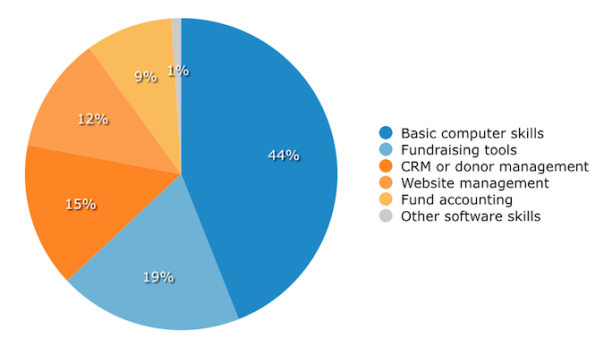

 If you haven’t heard
 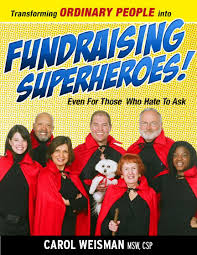 I am a member of GenX, and this news made my heart sing. I was so excited to hear that my Baby Boomer board could be transformed into that type of board. I came home from that conference with renewed focus and determination to figure out how tech can help my board become more engaged and efficient in governance.
 When I read that only 25% of survey respondents identified “fundraising skills and experiences” as having a great impact on a board member’s success, I literally groaned and rolled by eyes.
 Do you know what is rattling around someone’s head during your non-profit board recruitment process? Knowing this could help you design a better process with better tools. This week and part of next week, we are focusing on a recent survey released by our friends at nonprofit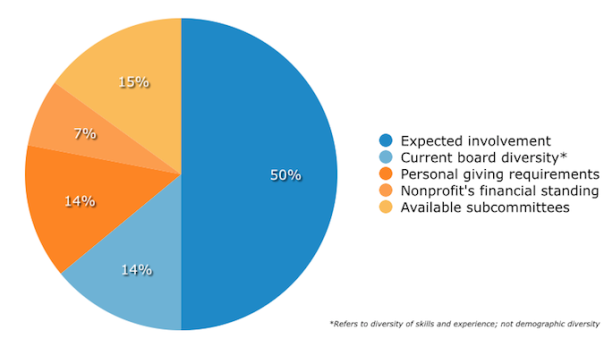

 Last night I had the privilege of being invited to a non-profit organization’s year-end holiday party stewardship event. In attendance were board members, capital campaign volunteers, auxiliary members, and various other stakeholders. There was no solicitation presentations, but there were a few powerful testimonials from alumni and lots of gratitude. The energy in the room was palpable, and I was reminded me of the old expression that “hope floats“. It was in this dynamic setting that I had an amazing conversation with someone about the power of leadership.
 The following is a list of competencies and skill sets the search committee reviewed during its search criteria conversations: