Cultivation and stewardship: Who’s on first? What’s on second?

Yesterday’s post titled “Time in the office versus time with donors” begged more questions than it answered. Today, we’re going to zoom in on one of those questions and examine it more closely.

Should the executive director be more responsible for relationship building than the development director?
I have always advocated that, regardless of how hard they try, a non-profit executive director cannot abdicate their role as their agency’s chief development officer. Even when an organization is lucky enough to have a fully staffed development department with talented fundraising professionals, the executive directors is ultimately the person who needs to provide vision and direction.

I think Harry Truman said it best when he said, “The buck stops here!”

Of course, this doesn’t mean that the executive director needs to be the person out on the street cultivating and stewarding relationships with every prospect and donor.

To answer the question posed at the beginning of this post, I believe it is as simple as taking an inventory of who does what well. While I firmly believe that prospects and donors prefer meeting the executive director and developing a relationship with him/her, there may be situations where the executive director doesn’t possess the requisite relationship building skills to cultivate and steward people to the extent necessary for a successful fundraising program. If this is the case, then the answer becomes simple . . . whoever is the natural “people-person” takes on the lion’s share of cultivation and stewardship.

It really can be that simple. Right?

How do you know if someone is a natural relationship builder? Here are a few things I lused to ook for when I interviewed fundraising professionals:

  • If their network is big, then there is a good likelihood that they are good at building relationships.
  • Do they keep in contact with their network? If so, then they are most likely someone who intuitively knows how to maintain relationships.
  • Have they ever “taken advantage of” someone and violated their trust? Trust is a foundational issue in building relationships, and it is something good fundraising professionals know how to navigate.
  • I always like to learn more about what is being talked about between a relationship builder and the person with whom they are trying to build a relationship. Why? Because good relationship builders are inquisitive and take an interest in the prospect or donor.

Again . . . while I personally prefer that the executive director takes on this role, it doesn’t always work that way and the fundraising professional might need to become the primary cultivation and stewardship person for the agency. It might also become something where certain board volunteers need to help step-in and help. Regardless, the executive director cannot abdicate this role completely and must find places where they are comfortable meeting prospects and donors.

In these circumstances, it is important to clarify roles and responsibilities and the executive director needs to take the initiative in doing this. Off the top of my head, the following are a few tools that can and should be used to achieve clarity:

  • written annual performance plan
  • weekly contact reports
  • written comprehensive resource development plan
  • weekly in-person checkpoint meetings
  • written cultivation & stewardship plan
  • Moves Management program

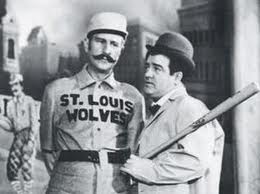
Doing an inventory of skill sets and assigning and managing roles and responsibilities for cultivation and stewardship activities will keep your agency from sounding like Abbott and Costello in their famous Who’s on First? comedy sketch. It will also likely help you answer the difficult question posed in yesterday’s blog post about how much time needs to be spent outside of the office compared to behind your desk.

Who is the person primarily responsible for cultivating prospects in your agency? Who stewards your donors? What tools and strategies are used to maintain clarity? Please scroll down and share your thoughts in the comment box below.

Here’s to your health!

Erik Anderson
Founder & President, The Healthy Non-Profit LLC
www.thehealthynonprofit.com
erik@thehealthynonprofit.com
http://twitter.com/#!/eanderson847
http://www.facebook.com/eanderson847
http://www.linkedin.com/in/erikanderson847

Stewarding donors this Memorial Day

Happy Memorial Day everyone!

I always feel funny saying that because this holiday doesn’t feel very happy. After all, it was created to honor Americans who died during war. For many Americans including me, this holiday has taken on additional meaning in that it provides an opportunity to say THANK YOU to all military service men and women for their service.

What can your non-profit organization do to turn Memorial Day into another donor stewardship opportunity? Here are a few ideas:

  • Send a card to those donors who are veterans and thank them for their service. Not only did they service their country, but they invest in their community by supporting your organization as well as many other agencies.
  • Write a letter to the newspaper editor about what Memorial Day means to you and your agency. Remind people that sacrifice is sometime essential to preserve values such as freedom and equality. While honoring the sacrifices made by soldiers for your agency and your community, you can also honor sacrifices of time and money given by volunteers and donors to your organization.
  • Host a patriotic themed stewardship event for your donors.

Non-profit professionals are typically stretched in too many directions because our agencies are under-resourced. It is for this reason that stewardship often becomes a “back burner issue” and low priority. So, why not use big holidays like Memorial Day as anchors in your organizational calendar to remind us to steward our donors?

Does your agency do anything special for Memorial Day? Please scroll down and share your ideas and thoughts.

Here’s to your health!

Erik Anderson
Founder & President, The Healthy Non-Profit LLC
www.thehealthynonprofit.com
erik@thehealthynonprofit.com
http://twitter.com/#!/eanderson847
http://www.facebook.com/eanderson847
http://www.linkedin.com/in/erikanderson847
Work-Life Balance for non-profit professionals? Ask a donor for help.

Welcome to O.D. Fridays at DonorDreams blog. Every Friday for the foreseeable future we will be looking more closely at a recent post from John Greco’s blog called “johnponders ~ about life at work, mostly” and applying his organizational development messages to the non-profit community.

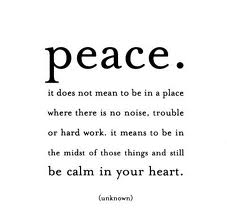
Today, we’re focusing on a post that John titled “At Peace“. In that post, he talks about two different pictures and uses those images to illustrate the point that there is a difference between “at peace” and “getting some peace”.

After reading this post, I couldn’t get my mind off of the idea of work-life balance. This topic of conversation comes up all the time when I’m talking to non-profit professionals. As I previously blogged about in a post titled “Kissing While Driving for Non-Profit Agencies,” non-profit organizations are typically under-resourced. As a result, almost all nof the on-profit professional who I know wear multiple hats, lack balance in their life, and appear to be on the brink of “going postal”.

At Peace? Definitely NOT!

Over the last 15 years, I’ve battled with the ideas that John eloquently lays out in his blog post. The following are just a few things that I’ve tried:

In hindsight, John is so right . . . I was “getting some peace” in most of those instances. So, what can non-profit professionals do to be “At Peace“????

I like John’s suggestion that re-evaluating and adjusting our expectations about what “peace” really means. In his post, he talks about the picture of a violent waterfall, jagged mountains and an angry sky being a picture of “peace”. Maybe accepting this idea rather than fighting against it is more than half the battle.

I also like John’s challenge at the end of his post where he asks the following question:

“Perhaps, when leaders disrupt our peace when making organizational changes, they should orchestrate efforts to enable us to adapt and change?”

As I contemplate this question, I struggle with what those efforts might look like.

So, I have a suggestion for all of you who find yourself struggling with the same question:

  • Open your donor database.
  • Run a report showing your agency’s top 50 lifetime donors.
  • Scan the list in search of a donor who owns their own business, has gone through some change initiatives in the last few years, and appears to be busy and yet peaceful.
  • Pick-up the phone and call that donor.
  • Invite them out to share a cup of coffee.
  • Tell them about John’s blog post topic.
  • Ask them to share their secrets to success with regards to being “at peace”.
  • Ask them what efforts they orchestrated at work to help their employees adapt and change and in effect putting their workplace “at peace”.

Not only will you most likely get some great advice, but this conversation will have a “stewardship effect” for that donor. It will deepen a relationship with someone who is already important to your organization.

I like this suggestion mostly because it reminds me of the fact that donors are not just ATMs that produce cash every time we ask for it. Donors are friends and part of our non-profit family. We can put this principle in action by asking them to donate their knowledge and experiences in addition to their financial contributions. In doing so, the relationship gets stronger and grows.

Do you struggle with work-life balance issues at your non-profit organization? What have you personally done to try to achieve balance? What has your agency done to help facilitate this idea of being “at peace”? Have you ever engaged donors in questions like this? How did it work out for you?

Please scroll down and share your thoughts in the comment box. We can all learn from each other.

Here’s to your health!

Erik Anderson
Founder & President, The Healthy Non-Profit LLC
www.thehealthynonprofit.com
erik@thehealthynonprofit.com
http://twitter.com/#!/eanderson847
http://www.facebook.com/eanderson847
http://www.linkedin.com/in/erikanderson847

Happy Birthday to ME! And what can non-profits do with THAT?

Yesterday, one of my favorite non-profit executive directors took the time to wish me an early happy birthday and surprised me with a bottle of wine — La Crema Pinot Noir. It was a thoughtful gesture because my partner and I are big “winos”.

The reason I bring it up today can be summarized in one simple word:

STEWARDSHIP

Over the last decade, my partner and I have personally contributed $40,000 to this non-profit organization. In addition to our money, we’ve both contributed our time by helping with special events and working pledge cards for their annual campaign. To say “we’ve drank the Kool-Aid” is probably an understatement.

While we both like to hear about this organization’s program outcomes and community impact, we really get more excited when we hear testimonials or success stories. In other words, numbers and stats are nice, but stories are the payday we crave more than anything.

While the bottle of wine was very thoughtful and much appreciated, a simple birthday card probably would’ve sufficed. A phone call would’ve been really nice, especially if the conversation would’ve included a recent fun success story. The bottom line is that the birthday wishes from this non-profit organization sends a clear message that I’m a valued part of their family. I’d be lying if I said I didn’t like being thought of that way.

As I bask in the after-glow of this stewardship touch, I find myself wondering what else could non-profit organizations do around a donor’s birthday? The following is a short, incomplete list representing just a few thoughts:

  • Send them a birthday card or call them . . . make sure to weave in a story about how their support makes a difference for your clients
  • If the donor doesn’t like “gift giving and receiving,” then this could be a tribute gift opportunity for your agency. This is, of course, where the donor tells their friends that in lieu of a birthday gift they’d appreciate contributions be made to your non-profit organization instead.
  • If your agency runs a “birthday club” for clients, then there might be an opportunity to fold donors into the same program using birthday recognition walls or inviting them to attend an organization-wide birthday party where they can interact with clients.
  • It could be an opportunity to turn a major donor’s birthday into a special event tribute party. The Elgin Symphony Orchestra is doing exactly this in a few weeks by inviting supporters to purchase tickets and attend a birthday bash for Harry Blizzard who is one of their biggest donors and supporters.

What does your non-profit organization do for donors around their birthdays? How do you go about capturing birth dates from donors? What systems do you use to remind yourself of this information? Please scroll down and use the comment box to answer a few of these questions.

Here’s to your health!  (Oh, and thanks for the wine, Rose!)

Erik Anderson
Founder & President, The Healthy Non-Profit LLC
www.thehealthynonprofit.com
erik@thehealthynonprofit.com
http://twitter.com/#!/eanderson847
http://www.facebook.com/eanderson847
http://www.linkedin.com/in/erikanderson847

Expounding upon the idea of “Quality Donor Touchpoints”

Yesterday’s post titled “Non-profit donors: “Should I stay or should I go?” built upon a recent post over at “The Agitator” blog about donor retention. One of the things they said was that retaining donors goes way beyond doing a good job of talking about your mission and your organization. They argued that every touchpoint needs to be quality and inspire a sense of satisfaction for donors.

To put this in context, let’s use a for-profit analogy.

When a consumer goes to Walmart to buy towels, their experience is affected by so much more than just the satisfaction of finding the towels they desire at the price they want to pay. While these are indeed two factors, the following things also influenced that experience and play into whether or not they come back to Walmart next week:

  • Was the store orderly and easy to navigate?
  • Was the store well-lit?
  • Was the physical environment too warm, too cold, or just right?
  • When they couldn’t find the towels that they were looking for, did the employee who helped them do so in a friendly and efficient manner?
  • Did the store smell nice?
  • Did the other customers behave and conform to the social norms of shopping?
  • Did the shopping cart wheels stick and make it difficult to use?
  • How much time did customer spend in the check-out line?
  • Was the cashier friendly and helpful?

There are countless other little details that when added together can result in a great experience which results in repeat business and customer loyalty. Or they can also add up to an unsatisfied customer who won’t return, but will likely bad mouth you to their friends and post horrible things about you on Facebook and Twitter.

The same holds true for your donors!

Non-profit donors need to hear more than just good news about your mission and programs. They also need to hear more than how efficient your organization operates.

Your non-profit organization’s goal needs to be “putting a smile on the donor’s face” every time you cultivate them . . . every time you solicit them . . . and every time you steward them.

Now that is a TALL ORDER when you start thinking about it because there are so many factors (just like in the Walmart example I used). Some factors are easy to influence, and others can be very difficult to impact.

The following are just a few ideas to keep in mind as you contemplate how to ratchet up your donor services:

  • Communicate with donors as often as they tell you they want to be communicated with.
  • Communicate only those things the donor has said they want to hear from you.
  • Only send fundraising volunteers and employees with whom the donor has a GREAT relationship (and this goes for cultivation, solicitation or stewardship activities).
  • Send donors( who give frequently and recently) a birthday card.
  • Celebrate anniversaries for “weddings” and “becoming a donor to your agency” (focus these activities on major gifts prospects and donors).
  • Include the donor’s spouse whenever possible and make the cultivation, solicitation or stewardship experience feel like “family experience” (as long as it feels appropriate).
  • Let the donor tell you where they are most comfortable being solicited and then solicit them there.
  • Train volunteer solicitors about the finer points of soliciting a charitable contribution by going beyond the 12-step process of “closing the gift”.

This approach is not intuitive for many non-profit organizations. So, my final suggestion to those of you are very serious about improving donor services is to invite a small group of customer service professionals to participate in a focus group. During the hour that you have them together, educate them about how you communicate and interact with your donors. Ask them how they would go about improving the experience. You might just be surprised at what you learn.

Let’s add to my list of suggestions. Please scroll down and use the comment box to share JUST ONE IDEA on how to improve donor services and increase the quality of donor touchpoints. We can all learn from each other.

By the way, thank you to all of you for helping DonorDreams blog exceed 10,000 page views in less than one year. This milestone is a testament to you and your thirst for engagement. The next big goal is to reach 300 subscribers by December 31st. In celebrating today’s accomplishment and looking forward to the next one, would you please reach out today to one friend, non-profit professional, volunteer or board member and tell them about DonorDreams and encourage them to subscribe? Thanks again for tuning in, and I hope you continue enjoying this online community that we’re building together.  🙂

Here’s to your health!

Erik Anderson
Founder & President, The Healthy Non-Profit LLC
www.thehealthynonprofit.com
erik@thehealthynonprofit.com
http://twitter.com/#!/eanderson847
http://www.facebook.com/eanderson847
http://www.linkedin.com/in/erikanderson847
Non-Profits Can Mobilize Slacktivists Using Social Media

Hi, my name is Marissa and I am a slacktivist. I admit to thinking I am politically active by sharing my thoughts on issues with my friends through social media without really taking any other political action. It is easier for me to “like”, “retweet”, “+1”, or “share” something than it is for me to write a letter to my Congressperson.

But is slacktivisim a bad thing? And how can you use this passive involvement of others to actually make something happen for your non-profit organization and mission?

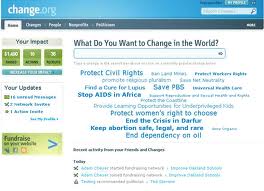
This past week, I caught an episode of my favorite news source, The Daily Show with Jon Stewart. His guest was Ben Rattray, founder of a website called change.org. As the interview went on, it became clear to me that Rattray had found a way to take the simple act of a person’s “like” or “retweet” and turn it into powerful political action.

The basics behind change.org are this: a user can create a petition about any issue and change.org will help the user reach out through social media to get people to sign the petition for free. Petitions are simply signed with the click of a button.

If the user decides to pay change.org for their services, they can export the list of people who have signed their petition. Change.org also offers organizations access to sponsored campaigns.

“Sponsored campaigns” are promoted to change.org users who would most likely support your cause. The community on change.org is growing everyday, and I can only imagine it growing even more after this week’s exposure on The Daily Show. Tapping into the already growing community of users could help your non-profit organization gain more exposure. It could also be a great way of generating a list of prospective donors who are interested in supporting your mission and issues.

Change.org also connects users with local and national media outlets. Remember when Bank of America was going to charge $5/month for using a debit card? It was a change.org user who created a petition that 300,000 people signed, which gained national media attention. This, of course, resulted in Bank of America deciding to drop the proposed fee hike.

So, what could change.org do for your organization? You could create  a petition connected to your mission and use change.org to engage individuals who sign your petition. A recent article on Mashable states:

“slacktivists are 2x as likely to volunteer, 2x+ as likely to ask for donations, and 4x as likely to ask others to get involved.”

If you’ve seen KONY 2012 or Bully, you know how quickly a message can spread through the internet. Projects like these have inspired many people to get involved.

Even if you choose to not use a platform such as change.org for your agency, there are still lessons to take away from the foundation they set-up.

Make it easy for people to get involved. If you have a blog on your site, make sure you have social media buttons at the bottom of each post to allow users to share your message with their friends.

Create a community. Peer pressure is a powerful thing. Use it for good. If you create a community on a social media site (e.g. Facebook, Twitter or even on your own blog), then make sure you take the time to reply back to those who leave comments as well as recognize those who are sharing your content with their social network.

Support a cause that supports yours. If there is a petition out there that helps your mission, then get involved and sign it. If people see that you care about an issue they also care about, they might take the time to visit your website to learn more.

It was exciting for me to see how change.org makes a difference in our communities with a tool as simple as a petition. And I guess that’s the big takeaway from it all; the easier you make for people to get involved, the more people will be.

Is change.org a network that your organization could benefit from? I’d love to hear why or why not in the comments below! Or are you using other providers or platforms to accomplish the same objectives? Please share.

Non-profits under fire: Measure this! Measure that!

Welcome to O.D. Fridays at DonorDreams blog. Every Friday for the foreseeable future we will be looking more closely at a recent post from John Greco’s blog called “johnponders ~ about life at work, mostly” and applying his organizational development messages to the non-profit community.

Today, we’re focusing on a post that John titled “How Much Do I Love Thee?“. In that post, he talks about the recent obsession in the workplace to measure EVERYTHING (e.g. SMART goals, Management by Objectives, etc) and pushes back on the idea that everything must be quantifiable. He starts his post with the following quotation from Albert Einstein:

“Not everything that can be counted counts, and not everything that counts can be counted.”

Every non-profit professional in the world knows that our sector is under extreme pressure to conform to the trends that John references in his blog post. Here are just a few examples:

  • measuring community impact,
  • program outcomes measurement,
  • employee performance (e.g. management by objective), and
  • measuring donor loyalty.

Neither John nor I (or Einstein) are saying that we must fight this trend; however, there are things that are not measurable that must be considered and brought in the equation.

More concerning to me is the impact that this trend seemingly has on fundraising practices. Specifically, I’ve heard more and more fundraising professionals talking about program outcomes and how it can be used to demonstrate “return on investment”.

Speaking as a donor, I love hearing that my local Boys & Girls Club’s homework assistance program resulted in 75% of kids either maintaining or improving their grades. However, I really want to hear the personal stories about little Jack and Jane; Jose and Irma; or LaShaunda and Xavier. There is something inspirational in those stories. More importantly, it helps me understand the impact of that program.

I think the Center of NonProfit Excellence stated it best in their marketing for a 2010 training titled “Narrative Philanthropy: Stories that Result in Gifts”:

“But the pendulum may have swung as far as it can in the direction of statistics and outcomes. Accountability is crucial, but cannot account for the fact of why people give.  What explains the emotional impulse to give?  Stories. One good story is worth at least 10,000 measurable outcomes.”

If you get a chance, I encourage you to click here and read more about Jim Grote and his ideas around Narrative Philanthropy.

I also like what Norma Cameron said a few weeks ago in her blog post titled “The Power of Legacy Stories: A Daughter’s Love“. You should check out an awesome template that Norma created to gather legacy stories from your donors. A link to this tool is embedded in her blog post.

Circling back to John’s blog post — “How Much Do I Love Thee?” — he drives home his point by posing a simple question: “How much do you love your spouse?”  Of course, there is no way to answer this question in a quantifiable manner.

The same holds true for the non-profit version of this same question:

How much do your donors love your organization?

While you may be able to look at your donor database LYBUNT reports and review the results from a recent donor survey, I suspect none of this data will ever truly answer the critical question that I just posed. Nevertheless, this doesn’t mean that you stop trying to answer the question.

So, what should donor-centered fundraising professionals do???

I suggest picking up your phone, calling that donor, and inviting them out for a cup of coffee or lunch. When you are sitting across the table from them, do what Jim Grote suggests . . . tell them stories (and pepper in a little outcomes and impact data). Make them smile. Make them feel good about their last donation. Once you get to this point, you may want to take Norma Cameron’s suggestion and ask the donor about collaborating on the creation of their “legacy story”.

Yes, I know how busy many of you are. I am not suggesting this approach with all of your donors or the folks who buy raffle tickets to support your mission. Surely, you know who your most important donors are. Right? For small organizations, this might be a great project for your Top 5, 10, or 25 donors. For large organizations, the sky is the limit. This might even be a great cultivation/stewardship project in which fundraising volunteers can be trained and included.

I suspect this is can be woven into all organization’s Major Gifts and Planned Giving programs.

Where is your organization at with all this “measurement” stuff? What are you doing to adjust to the trend and ensure that you’re not over compensating? Are you having success aligning with United Way’s “Community Impact” model? Do you employ any of Jim Grote’s or Norma Cameron’s Narrative Philanthropy suggestions in your resource development program? Please scroll down and use the comment box to share a little bit of your experiences. We can all learn from each other.

Here’s to your health!

Erik Anderson
Founder & President, The Healthy Non-Profit LLC
www.thehealthynonprofit.com
erik@thehealthynonprofit.com
http://twitter.com/#!/eanderson847
http://www.facebook.com/eanderson847
http://www.linkedin.com/in/erikanderson847
Wow . . . Non-Profit Donors are Naked!

Yesterday, I wrote about the power of donor database software in a post titled “What can’t your donor database do?”  In that post, I marveled at the availability of powerful tools such as WealthEngine and Blackbaud’s Target Analytics that have the capability of interfacing with your donor database systems. Of course, these service cost money and for a number of non-profit organizations with scarce resources, sophisticated prospect research can feel out-of-reach.

The reality is that it doesn’t have to be that way. Much of the information that data mining companies provide comes from public sources of data. All your organization has to do is dedicate a little staff time to this project, and you’ll be able to develop fairly complete prospect/donor profiles.

To test this hypothesis, I selected one donor from a local non-profit organization who I don’t know very well and used online resources to find out as much as I could on him. In order to protect the innocent, I will refer to this donor as “John Doe” throughout today’s blog post. In completing my prospecting work, I used a number of free resources that are available to everyone with an internet connection.

Google. It is amazing what you can find out about a person using Google. I typed in my prospect’s name using quotation marks and plus signs. It looked exactly like this:

“John Doe” + Elgin + Illinois

Using the quotation marks and plus signs helps narrow the Google search and improves the search results. With just that simple search, I found the following information on this prospect:

  • Place of employment
  • Address of workplace
  • Phone number of workplace
  • Work email address
  • Job title
  • Number of employees in workplace
  • Company sales volume
  • Last five employers
  • Other non-profit boards upon which they serve

Anywho.com or 411.com or Beenverified.com or Intellius.com. These types of sites can help you secure information like home address, phone number, estimated age, and names of relatives. You can also find information on previous home addresses, which gives you more to search on Google.

Zillow.com. Once I found this prospect’s home address, I went to zillow.com and found out what those people believe his house value. (If you are feeling brave, you can check on your house’s value. I am feeling a little ill after doing exactly that. Apparently, out house has dropped $92,000 in value since we purchased it six years ago. Ugh!)

Sec.gov/edgar.shtml. Publicly traded companies are required by the federal government to disclose a lot of information. I went to this site to learn more about the company for which my prospect works. I also clicked around to see if he is a significant investor or owns large chunks of any publicly traded companies. Unfortunately, he did not.

Guidestar.org. Non-profit charities are also required by the federal government to disclose a lot of information. So, I looked up the 990 forms of the non-profit organizations for which my prospect sits on their boards. I also did a search on my prospect’s name to see if there are any foundations that have been set-up in his name or his family’s name.

Facebook. Even though this prospect and I are not “Facebook friends,” many people don’t understand this social network’s privacy policies. As a result, a number of you have more personal information hanging out there than you care to know about. In this instance, I found out where my prospect graduated from high school. So, now I know where he grew up. I also found out where they went to college and what they studied.

LinkedIn. It is amazing to me what people post on their LinkedIn profiles. Unfortunately, I couldn’t find my prospect on this social network. However, if I had, then I probably would’ve had access to information such as: employer, past employers, job functions/responsibilities, interests/groups, and possibly even his birthday. If I was “linked” with the prospect, I would’ve likely been able to view their network of friends and business associates.

So, the point I am driving at is that you don’t need lots of money to afford the services of data mining companies because there is already a lot of information out there on your prospects and donors. All you need to do is find time to gather the information and enter it into your donor database.

Ohhhhhh . . . I can already hear many of you saying that your organization is too thinly stretched and don’t have time. OK, I get it. I’ve been there and done that. However, how many prospects and donors do you really need this level of detailed data on? For small and mid-size non-profit organizations, it might only be your Top 10, 25, 50 or 100 donors. If you set aside a few hours each week, you will have detailed donor profiles for your most important donors in a very short period of time.

Ohhhhhh . . . I can also hear many of you saying that this feels like an invasion of privacy. Or maybe stalking? I also know some of you doubt the need for this level of detail.

Let me simply end by saying, fundraising is all about relationships. The more you know about your prospects/donors, the more likely you are to deepen those relationships, connect with them, and raise money for your mission. While this might not be necessary for “transactional fundraising” programs that rely on special events and annual campaigns, it is an absolute necessity once you start moving toward donor-centered fundraising and development of a major gifts program.

Still not convinced? Birthday and age information impacts planned giving strategies. Home value is one data point that can contribute to assessing wealth and philanthropic capacity. Understanding a prospect/donor’s social network, friends, and professional relationships will help you with volunteer solicitor assignment strategies.

Online prospecting work will never replace good old fashion relationship building. It is amazing what people can and will share over a cup of coffee, but doing your homework by using free online tools or paying data mining companies certainly helps and it makes your resource development efforts a little easier.

Does your organization use fee-based data mining companies like WealthEngine to do donor screening or compilation of donor profiles? If so, what has been your experience? Have you used some of the aforementioned free online tools? If so, please share your experiences and thoughts by using the comment box below.

Here’s to your health!

Erik Anderson
Founder & President, The Healthy Non-Profit LLC
www.thehealthynonprofit.com
erik@thehealthynonprofit.com
http://twitter.com/#!/eanderson847
http://www.facebook.com/eanderson847
http://www.linkedin.com/in/erikanderson847
What can’t your donor database do?

I left the non-profit frontline back in 2006 for an internal consulting position with Boys & Girls Clubs of America. So, it has been a long time since a donor database has “run my life”. A few weeks ago, I participated in a webinar focused on the Results Plus database product produced by Metafile in Rochester, Minnesota. It was during that webinar that I was reminded about how powerful donor database software packages have become.

For the “average non-profit” out there, a donor database is the software package they capture the following data:

  • Donor name
  • Donor address
  • Donor phone number
  • Contributions (amount and to what campaign)

It is less common for non-profit organizations to capture other information such as: solicitor names, spousal information, occupation & employer, social networks, wealth indicators, interests, etc (and this list can go on and on and on because there are more than a hundred data fields in most database packages that can be filled with information).

What I’ve found to be common for many non-profit organizations is they purchase a donor database system, invest in training, and lose institutional knowledge as employee turnover naturally occurs. As new fundraising professionals are hired, the desire to throw the old database out the window is magnified because they weren’t involved in database set-up and the systems built around the database weren’t designed by them. Most commonly, new fundraising professionals come to the table with biases toward database systems with which they might be more familiar.

Naturally, the drums start to beat and the mantra becomes “Buy a New System” rather than: 1) invest in training, 2) clean and deepen the data, and 3) fix the systems built around the database.

While I participated in that “refresher webinar” hosted by Mark Gerber at Results Plus, I was awestruck with what some donor database can do nowadays.

Credit Cards processing. Many donor databases have built functionality into their products where you can swipe and store a donor’s encrypted credit card information. This can make events (esp. auctions) really easy. It also makes recurring contributions (e.g. monthly giving program) to your annual campaign really easy. I’ve seen some database companies (e.g. events.org) build credit card processing right into the services they provide their clients. Other databases like Results Plus allow you to hook-up to external merchant account companies like Moneris and credit card processing happens with just one keystroke.

Event Management.For a long time now, fundraising professionals have been able to do a lot associated with event planning from inside their donor database, but the functionality and features continue to multiply. The following is just a short list of what is possible: seating assignments, auction management, creating/sending invitations via snail-mail or email, budgeting, creating/managing project management task lists, tracking entrée selection, managing gift acknowledgement letters with appropriate IRS disclaimer information for the value of services received (e.g. quid pro quo gifts), and the list goes on and on and on and on.

Volunteer management. A recent study released by Fidelity Charitable Gift Fund and VolunteerMatch reports two big things: 1) 67% of survey respondents said they “generally make their financial donations to the same organizations where they volunteer” and 2) Volunteers tend to donate an average of 10-times more money to charity then people who don’t volunteer. This is why it is so very important for your non-profit organization to use your donor database to track and manage your volunteers. You can track and do all sorts of things such as: Who? What? Where? When? Why? How? Interests? Time volunteered . . . value of that time . . .  background check information . . . generate cultivation/stewardship letters . . . and the list goes on and on and on!

Prospect research. Third-party data mining companies have done a remarkable job integrating their services in such a way that you can run their applications from inside your donor database and even pull that data directly into your system. These services are costly, but it is amazing what you can find out about a prospect or donor from public records. Wow! And it can all easily be done from inside your donor database. If you have some cash to spend, talk to your database provider about whether or not information from WealthEngine or Blackbaud’s Target Analytics can be easily brought into your database system.

These were just a few functions and features that had me on the edge of my seat throughout that webinar. My best advice to all non-profit organizations with donor database systems is to:

  1. Call your database provider and ask a sales professional to provide you with their “nickel tour”. Even though you already own the system, you will likely learn a lot about what you already own. The sales pro will play along because they might just sell an upgrade or add-on module.
  2. Invest and continue re-investing in training. The donor database world is constantly evolving and you really need to stay on top of what your system can do.
  3. Pay attention to the systems you build around your database (e.g. staffing, contact reports, event registration forms, pledge cards, etc). These system have a lot more to do with the data you’re capturing than the software you’re using.

I wonder when the donor database companies will build enough functionality into their systems so all I need to do is press a button on my computer and the database will brush my teeth for me?  😉

Please scroll down and use the comment box below to share one of your favorite features or functions associated with your donor database.

Here’s to your health!

Erik Anderson
Founder & President, The Healthy Non-Profit LLC
www.thehealthynonprofit.com
erik@thehealthynonprofit.com
http://twitter.com/#!/eanderson847
http://www.facebook.com/eanderson847
http://www.linkedin.com/in/erikanderson847
If you want donors to be loyal, then be loyal to your donors!

I know, I know . . . I keep coming back to the issue of loyalty, but I think this is the biggest issue for this generation of non-profit organizations. In fact, I think it will determine who is going out-of-business or being forced into merger/acquisition talks in the upcoming years. It is just that transformative of an issue!

What set me off and down this path again, was an email I received in my inbox yesterday from Gail Perry titled: “Don’t Be a Fundraising Dinosaur: 5 Big Ideas to Adopt Right Now“. It was such a tantalizing and catchy title that I couldn’t resist clicking on it. In about 5 seconds, I felt just like Alice tumbling down the rabbit hole all over again. LOL

Gail’s second “big idea” was “Donor retention is more important than cash totals“. I read that header and thought to myself “DUH,” and then I read the following sentence:

“If you can only measure one thing in your fundraising program, then measure donor retention.”

Think about THIS for a moment . . . “only measure one thing” . . . isn’t she essentially saying donor retention is the MOST IMPORTANT thing to gauge how well your resource development program is succeeding or failing?

I think that is exactly what she is saying . . . and that is what got my attention.

It also begs the question: “What should non-profit and fundraising professionals focus on doing to encourage donor loyalty?”

Gail suggested the following few things:

  • ask your donors for video testimonials, and
  • ask your donors to do more than just write checks . . . get them involved through advocacy and volunteerism.

Both are great suggestions and you couldn’t go wrong if you decided to take those roads.

However, the words of Mahatma Gandhi keep ringing through my ears this morning as I read Gail’s blog post:

“Be the change you want to see in the world.”

Essentially, this translates into what I titled this blog post. If you want donors to be loyal to your mission, then you need to be loyal to your donors. What does THAT mean? Well, I turned to Adrian Sargaent for help in answering this question. In 2003, Professor Sargaent wrote an article in The NonProfit Times titled “Keeping Donors Loyal: How to Minimize Attrition on the Fundraising Database“.

In that article, Sargaent makes two great points:

  • one-third of lapsed donors surveyed said they stopped giving because they found other charities that were “more deserving,” and
  • engaging donors in HOW they are communicated with and WHEN they are communicated with and WHAT they want to hear is an effective and important strategy in the fight for a donor’s loyalty.

For those of you who read this and think: “We can’t do that. We’re too small. We don’t have the resources to pull-off that kind of donor communication strategy.” Sargaent cuts you off at the knees and suggests that even today’s smallest non-profit organizations can implement a strategy like this because donor database technology is very affordable and powerful.

I, too, was once an executive director of a very small non-profit organization. Back then, I am sure that I would’ve read that database-related comment and immediately come up with more reasons as to why he is wrong: staffing, budget, time, etc, etc, etc.

So, here is my challenge to you today. Rather than focus on the WHY NOT, I challenge you to focus on the HOW. I challenge you to engage board members in this discussion. I challenge you to engage donors in this discussion. While I won’t predict that it will get you to a specific place when it comes to donor-centered fundraising, I will dare say that it will get you closer to answering the question: “How can your organization demonstrate loyalty to donors so that they’ll be better positioned to reciprocate the gesture?

There must be a million ways for your non-profit organization to show its loyalty to donors. Please scroll down and share a few of the things you’re implementing from a donor loyalty perspective. We can and should be learning from each other. Please share just one idea today!

Oh yeah, I almost forgot. Gail Perry shared a link to a great resource . . . a sample dashboard that resource development teams could use to measure and capture important donor loyalty metrics. Click here and you will see the two slides by Peter Drury that Gail shared in her blog post. A good friend of mine at Boys & Girls Clubs of America used to say: “Inspect what you expect”.  (I suspect he borrowed this quote from someone more famous. LOL) However, the point is still valid . . . you need to have a monitoring and accountability strategy in place as you start heading down these roads that aren’t traveled often enough by non-profit organizations.

Good luck, and as I always: “Here’s to your health!”

Erik Anderson
Founder & President, The Healthy Non-Profit LLC
www.thehealthynonprofit.com
erik@thehealthynonprofit.com
http://twitter.com/#!/eanderson847
http://www.facebook.com/eanderson847
http://www.linkedin.com/in/erikanderson847