
 This morning, I was in my car driving down the interstate when National Public Radio (NPR) ran a story about UNICEF’s goal to raise $9 million to fight against the Zika virus. If you want to learn more about this new, you can click here and read more about it in the Washington Post. However, this isn’t really what today’s blog post is about . . . this morning I want to share with you my response to this story and how it applies to your non-profit organization.
In the three seconds after listening to this NPR story, here are the thoughts that raced through my mind:
- Ugh! Not another scary disease story (e.g. Swine flu, bird flu, SARS, Ebola, etc) to whip up public fear and motivate action on any number of fronts. Here we go again. 🙁
- Hmmmm, I wonder if little kids are still carrying UNICEF boxes collecting small change at Halloween? Is it possible for a simple “tin cup philanthropy” campaign to raise $9 million for this effort?
- Barf . . . I think some of the U.S. Presidential candidates who lost last night’s Iowa Caucus could probably fund this $9 million UNICEF goal many times over. (If you doubt me, then you may want to click here and make sure you’re near a toilet for the post-article queasiness)
You’re probably wondering what any of this has to do with you and your non-profit organization?
Simply . . .
Make sure that your fundraising goal matches the size of your case for support!
If you are trying to do something BIG and you need your donors to understand how BIG it is as well as rise to the BIG occasion, then your fundraising goal better also be BIG. If you don’t live by this rule, then it is likely that your campaign will:
- be seen as underwhelming
- lack traction and volunteer support
- attract fewer donors than anticipated
- result in smaller average size gifts
- run the risk of not meeting goal
I took a phone call the other day from a potential client wanting me to bid on a capital campaign. After asking a few questions, it was apparent they only wanted to set a six figure goal to do a little renovation. I encouraged them to go back to their boardroom, ask the following questions, and then we’ll talk again:
- What other needs do your clients face in your community? How much money do you need to address those needs?
- Are your physical plant issues perfect if you are successful with these small renovations? If not, then what more needs to occur and how much would that cost?
- Is your endowment satisfactorily large enough to inspire confidence in your donors that you have the question of long-term sustainability addressed?
- Look at this renovation campaign through the eyes of your donors. What do they see? What are their reactions?
- Does your organization possess the internal organizational capacity to sustain what you’re building? If not, can that be built into this campaign? If so, what would that cost? (e.g. endowing staff positions, etc)
Please use the comment box to share your thoughts and experiences with goal setting and building a B-HAG (e.g. big, hairy audacious goal) type of campaign and case for support. Have you been in this position before? If so, what did you do and what did you learn? We can all learn from each other.
Here’s to your health!
Erik Anderson
Founder & President, The Healthy Non-Profit LLC
www.thehealthynonprofit.com
erik@thehealthynonprofit.com
http://twitter.com/#!/eanderson847
http://www.facebook.com/eanderson847
http://www.linkedin.com/in/erikanderson847
![20160121_131831[1]](https://donordreams.files.wordpress.com/2016/01/20160121_1318311.jpg?w=300) Recently, I’ve been working with Boys & Girls Club of Watertown on a project, and a few months ago staff asked me if I wanted to schedule my January return trip around their
Recently, I’ve been working with Boys & Girls Club of Watertown on a project, and a few months ago staff asked me if I wanted to schedule my January return trip around their ![20160122_205458[1]](https://donordreams.files.wordpress.com/2016/01/20160122_2054581.jpg?w=169) In a nutshell, a camel race is a game of chance. It involves betting, dice rolling and moving decorated camels through a race course. Here are a few details:
In a nutshell, a camel race is a game of chance. It involves betting, dice rolling and moving decorated camels through a race course. Here are a few details:![20160122_205516[1]](https://donordreams.files.wordpress.com/2016/01/20160122_2055161.jpg?w=300) Two very large fuzzy dice are rolled and the numbers rolled move the camel with the corresponding number one space forward on the race course (e.g. if a two and six are rolled then camel #2 and camel #6 each move one space)
Two very large fuzzy dice are rolled and the numbers rolled move the camel with the corresponding number one space forward on the race course (e.g. if a two and six are rolled then camel #2 and camel #6 each move one space)![20160122_171636[1]](https://donordreams.files.wordpress.com/2016/01/20160122_1716361.jpg?w=169)
![20160122_171639[1]](https://donordreams.files.wordpress.com/2016/01/20160122_1716391.jpg?w=168)
![20160122_171644[1]](https://donordreams.files.wordpress.com/2016/01/20160122_17164411.jpg?w=169)
![20160122_171648[1]](https://donordreams.files.wordpress.com/2016/01/20160122_1716481.jpg?w=169)
![20160122_171652[1]](https://donordreams.files.wordpress.com/2016/01/20160122_1716521.jpg?w=169)
![20160122_171655[1]](https://donordreams.files.wordpress.com/2016/01/20160122_1716551.jpg?w=169)
![20160122_171700[1]](https://donordreams.files.wordpress.com/2016/01/20160122_1717001.jpg?w=168)
![20160122_171705[1]](https://donordreams.files.wordpress.com/2016/01/20160122_1717051.jpg?w=168)
![20160122_171707[1]](https://donordreams.files.wordpress.com/2016/01/20160122_1717071.jpg?w=169)
![20160122_171711[1]](https://donordreams.files.wordpress.com/2016/01/20160122_1717111.jpg?w=168)
![20160122_171717[1]](https://donordreams.files.wordpress.com/2016/01/20160122_1717171.jpg?w=169)
![20160122_171727[1]](https://donordreams.files.wordpress.com/2016/01/20160122_1717271.jpg?w=169)
![20160122_171732[1]](https://donordreams.files.wordpress.com/2016/01/20160122_1717321.jpg?w=168)
![20160122_171749[1]](https://donordreams.files.wordpress.com/2016/01/20160122_1717491.jpg?w=169)
![20160122_171814[1]](https://donordreams.files.wordpress.com/2016/01/20160122_1718141.jpg?w=168)
![20160122_205535[1]](https://donordreams.files.wordpress.com/2016/01/20160122_2055351.jpg?w=300) Special event fundraising is:
Special event fundraising is:![IMG_20151220_110543620[1]](https://donordreams.files.wordpress.com/2015/12/img_20151220_1105436201.jpg?w=169) Happy Holidays, DonorDreams readers! I am one of those people who procrastinates gift shopping until the last minute, which is why I was so relieved last night when I snagged the last Minecraft video game for Xbox 360 off the shelf at Target for my niece. Phew! That was a close call. I know that gift giving isn’t just on my mind because last week one of my clients gave me a pen and set of blank cards designed by their clients as small token of their appreciation (see picture to right).
Happy Holidays, DonorDreams readers! I am one of those people who procrastinates gift shopping until the last minute, which is why I was so relieved last night when I snagged the last Minecraft video game for Xbox 360 off the shelf at Target for my niece. Phew! That was a close call. I know that gift giving isn’t just on my mind because last week one of my clients gave me a pen and set of blank cards designed by their clients as small token of their appreciation (see picture to right). I had the privilege of interviewing a young fundraising professional yesterday for an online article that I am writing. In that interview, we talked for almost an hour about direct mail and her passion for learning as much as she can about that industry’s best practices and how to apply it to her non-profit fundraising work.
 OK . . . I have a confession to make. When I’m on the road and run down, sometimes I flop into bed and watch an episode or two of South Park on Comedy Central. While the show’s satire is often over the top, their social commentary on all sorts of current events is razor sharp. A few nights ago I found myself caught up in this “travel habit” and engaged in watching season 19 episode five, which was all about Internet Shaming and included a subplot about Charity Shaming.
 As most of you know, I’ve been traveling A LOT lately and I haven’t had the opportunity to watch a lot of television. However, it seems like every time I have the TV turned on, I’m seeing a television commercial from General Electric (GE) that talks about “ideas”.
 However, there is much, much more to leading change than the simple six step model that some organizational development consulting/training companies teach, and I suspect it has something to do with your organization’s culture. This is where I think all of us can learn from The Walt Disney Company, home of “Imagineering”. (Note: this term is trademarked by Disney)
 In terms of traditional types of giving, past donations are strong indicators of future giving. That trend logically carries over to planned giving.
  This factor is in reference to those whom your organization positively affected. The range is fairly broad here. A planned gift might be left to a university by a dedicated alumnus.
  Let me start by stating in no uncertain terms that planned giving prospects do not have to be wealthy.
  Factor four encompasses the large gift loophole for planned giving donors. Although they are often comparable in size, unlike major gifts, planned gifts do not inherently require wealth.
  You’ve probably noticed a theme among three of the traits listed above:
 Sarah
Sarah So you have your RSVP list. You know who is coming. What do you do with that information?
  Much like you can create a pre-event V.I.P. list, you can do the same after the event.
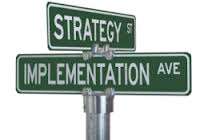 Albert Einstein defined insanity as doing the same thing over and over again and expecting different results.