
 I love Monday mornings! I wake up, feed the dog and cat, grab a cup of coffee, sit down at my computer and open my email, and most Monday mornings involves watching “Movie Mondays for Fundraising Professionals“. This morning’s video was an interview with Andrea McManus who is the President of The Development Group, a Canadian resource development consulting firm. Within the first 15 seconds of the interview Andrea poses a great question about whether your organization has a “philanthropic culture” or “fundraising culture“.
When I’m conducting a resource development assessment for a client who doesn’t have a strong fundraising program in place, it isn’t uncommon for me to make an observation about the agency lacking a “culture of philanthropy“. When I watched Andrea’s interview this morning, it dawned on me that some of those clients might not have understood what I was driving at.
I love the distinction that Andrea draws in the video. I love even more that she takes the time to share with viewers the nine signs of a strong philanthropic culture.
Do you know what those nine signs are? Does your organization exhibit those nine signs?
OK, I have a confession to make. When I look for philanthropic culture, I use the less formal “smell test,” which is akin to sniffing what is in a Tupperware container in the refrigerator to determine whether or not it is still safe to eat leftovers. Essentially, I knew it when I saw it and experienced it. So, when Andrea said she was going to share her nine signs of a philanthropic culture with viewers this morning, I settled in and prepared to watch the entire 15 minute video.
I highly recommend that you take a moment to watch “9 Signs of a Strong Philanthropic Culture“.
To help whet your appetite, here are three of Andrea’s nine signs:
- Your board and agency leadership know how to spell “philanthropy” (While her tongue is planted firmly in her cheek, she makes a great point when talking about this sign.)
- Organizational leadership (both board and staff) understand the difference between philanthropy, development, and fundraising.
- When a donor calls the main phone line, the person answering the phone knows exactly what to do with that call. They know where to send those calls. They also recognize the importance of that person and treats them as such.
There are six other even more amazing signs. Aren’t you even a little curious? Click here to check-out Andrea’s interview and discover those six other signs.
I’m going to end today’s blog with the same question Andrea poses at the end of her video. What other things (aka signs) do you look for when assessing whether or not a non-profit agency possesses a philanthropic culture? Even more important, how are you trying to instill these things into your organizational culture? Please share one or two of those things in the comment box below.
Here’s to your health!
Erik Anderson
Founder & President, The Healthy Non-Profit LLC
www.thehealthynonprofit.com
erik@thehealthynonprofit.com
http://twitter.com/#!/eanderson847
http://www.facebook.com/eanderson847
http://www.linkedin.com/in/erikanderson847
 Welcome to O.D. Fridays at DonorDreams blog. For the last few years, we’ve looked at posts from John Greco’s blog called “
 Here are just a few examples of what those situations looked like:
 The definition of the word “grace” according to a Google search is: “simple elegance or refinement of movement“.
 Just the other day a friend started talking with me about non-profit directors and officers (D&O) insurance. During the course of that conversation, all sorts of things were discussed and at one point I made a mental note to do a little research. Having just finished my homework, I honestly can say that I completely understand why people don’t like insurance companies — this stuff is complicated.
 The list is long, but the following things are typically excluded from the average D&O insurance policy:
 I shared some of my research with a group of amazing non-profit consultants tonight. The consensus of this group of very smart people was that board volunteers never ask the hard questions about their D&O insurance policies until it is too late.
 Last week I was in Reno, Nevada at Boys & Girls Clubs of America’s (BGCA) Pacific Leadership Conference. This week I am in Mashantucket, Connecticut at BGCA’s Northeast Leadership Conference. The common denominator is that I am helping organize and facilitate a training track for executive directors and school superintendents. One of the sessions in the training track addresses the issue of data sharing, and I thought it would be a good topic to discuss today with DonorDreams readers.
 The following are just a few key strategies identified by participants that will help any non-profit organization sustain data sharing agreements with its partners:
 When I was an internal consultant working for Boys & Girls Clubs of America (BGCA), my team was charged with helping local affiliates build their organizational capacity around resource development. In the beginning, there were two sides of our team — annual campaign support and planned giving support. As time passed, our team focused on creating a third vehicle of service — major gifts.
 Of course, there will likely be a HUGE difference between me making a recipe and the Barefoot Contessa (aka Ina Garten) making the same dish. I suspect there will be huge differences in results between small and large non-profit organizations. In my opinion, here are just a few things that will make a difference:
 I don’t know about you, but radio plays an important role in my life. I used to live in my car traveling from client-to-client throughout the Midwest when I was an internal consultant. After opening my own consulting practice, I now travel much shorter distances, but I still spend a decent amount of time in my car. So, the radio is where I turn for a decent amount of news and entertainment, especially when I’m on the road. However, when I’m at home I don’t listen as much because I don’t get very good reception in the house, which is why I was so elated the other day when I discovered the
  Welcome to O.D. Fridays at DonorDreams blog. Every Friday for the foreseeable future we will be looking at posts from John Greco’s blog called “
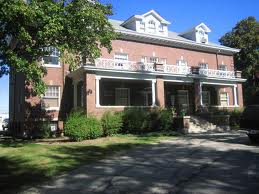 As the years passed, Larkin Center added more services including a school for children struggling with behavior disorders and counseling services for adults.
 There will be lots of news coverage about the “failure“. Many people will weigh-in with what they think went wrong and what could’ve and should’ve been done differently. There might even be a victory lap taken by a few Elgin city council members who openly fought with Larkin Center because they didn’t think “those kids” belonged in our community.
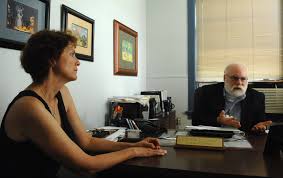 When I think about the donors who invested in efforts to save this organization in the final months and years of its life, I want to honor those efforts.
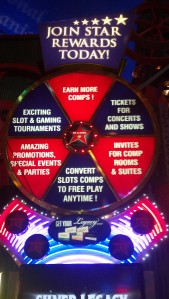 As I said in an earlier post this week, I am currently in Reno, Nevada at Boys & Girls Clubs of America’s Pacific Leadership Conference. The conference is being held at Silver Legacy Resort & Casino. Of course, in order to get from the hotel to the conference sessions, you need to walk through the casino where you are bombarded by all sorts of “shiny objects”.
 In an effort to make the time pass more quickly, I started making a list. Admittedly, I started thinking way outside of the box, but here is some of what I came up with:




 The month of October is brutal for me this year. On top of working with my existing client base, I am attending three different conferences in three different regions to help another client with implementation of a specific training track aimed at executive directors and school superintendents. As I attend these conferences, I see non-profit professionals hopping from session-to-session and find myself wondering, “What is their conference strategy?”
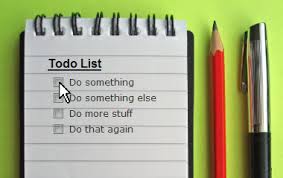 After a few years of proverbially eating popcorn on the couch after attending conferences and trainings, I decided to do something different. My strategy was simple. Rather than taking notes on what the trainer was saying, I only wrote down action items that came to mind while listening to the speaker.
 Welcome to O.D. Fridays at DonorDreams blog. Every Friday for the foreseeable future we will be looking at posts from John Greco’s blog called “