
 I graduated from the University of Illinois Urbana-Champaign with my graduate degree in Urban Planning in 1994. In the summer immediately following graduation, I received my first fundraising appeal from the university. So, this story started almost 20 years ago, and it ended last night in an Applebee’s restaurant in Roswell, NM. In my opinion, there are lots and lots of little lessons throughout this story that every fundraiser should internalize.
I graduated at the height of the Chief Illiniwek controversy. For those of you who don’t know the story, it is akin to what the Washington Redskins are currently going through. It is simply a question of whether or not a sports team mascot can be a racist and insensitive symbol.
I came down on the side of the argument that “racial stereotypes dehumanize people“.
So, when my first fundraising letter came in the mail, I responded with a letter asking the university to stop soliciting me until the board of trustees addressed the Chief Illiniwek issue.
Believe it or not, the letters stopped.
 Almost 13 years later, The Chief danced his last dance at a football or basketball game.
I couldn’t believe it when the fundraising letters started arriving in my mailbox again. Wow … 13 years later. I kinda thought they would’ve forgotten about me.
Not only did the letters start coming, but it felt like I got something every few months.
And then the phone calls started coming.
And then the email started coming.
I almost caved at first. After all, I kind of felt obligated to give to a fundraising solicitation that was 13 years in the making. Yet, I held off on making my first contribution. Our charitable giving budget was big back then and we had lots of charities we liked to support.
I decided that my alma mater would have to earn it just like the other charities did.
On September 17th of this year, I blogged about the Urban & Regional Planning Department at the University of Illinois and their 100th anniversary. I used their event to talk about how your agency should use anniversaries to engage donors as well as do some fundraising.
In that post, I shared some of the activities and communication strategies being employed by the university. I openly wondered if I would attend the big weekend celebration or make a contribution.
Fast forwarding to last night . . .
I am on the road for business and find myself in Roswell, NM. Across the street from my Holiday Inn Express is an Applebee’s restaurant, which is where I found myself for dinner eating alone and reading a white paper on monthly giving campaign best practices. (LOL . . . isn’t my life glamorous?)
While I’m on the road, I forward my home phone to my cell phone because I hate weeding through tons of voicemail upon returning from the road.
In the middle of my wedge salad, my phone rings. I didn’t recognize the number, but I answered it anyway. Of course, it was a student from the university asking if I would like to make a contribution to contribute to a scholarship fund as a tribute to the Urban Planning Department’s 100th anniversary.
Six years of countless mail . . . a steady stream of email . . . and diligent phone calls from students . . . and it finally happened last night.
She asked me specifically for $300. I declined, but countered with my first $100 contribution to the University of Illinois. It is perhaps the hardest earned $100 contribution any non-profit organization has ever received.
Why last night? I have no idea. The spirit moved me? The ambiance of Applebee’s set the stage? The case for support language included support of a scholarship fund and had a tribute angle? Who knows!
I think this story is ripe with lessons for fundraising professions. Here are just a few
- Persistence is an important element for a successful fundraising program
- Donor databases (when used appropriately) are powerful tools
- Multi-channel communication is the wave of the future (e.g. mail, email, phone, etc)
- The case for support is important
- What your agency does on the front line impacts donor perceptions (e.g. Chief Illiniwek impacted my charitable giving; whereas, bad press or not offering certain programs may impact your donors’ appetite for giving)
For the record, I am excited to now see how the university stewards its donors. Stay tuned! 😉
Are there other lessons that you see from this story. Please use the comment box below to share. We can all learn from each other.
Here’s to your health! (And congrats to the university for a job well done)
Erik Anderson
Founder & President, The Healthy Non-Profit LLC
www.thehealthynonprofit.com
erik@thehealthynonprofit.com
http://twitter.com/#!/eanderson847
http://www.facebook.com/eanderson847
http://www.linkedin.com/in/erikanderson847
 I once heard a local Executive Director say that fundraising in a non-profit was like a new restaurant looking for investors by asking people to pay for forks. That’s exactly right! It’s illogical, yet it’s exactly right.
 Donors and funding institutions absolutely and unequivocally have the right to support whatever they want in whatever method they choose.
 As they say, the proof is in the pudding which is what inspired today’s blog post. The pudding, of course, is an article that washed into my email inbox from LinkedIn on November 30, 2013. The author was John Wasik and the article was titled “
 The most important question in all marketing is one we broached in
  As you work to perfect your strategies, it is important to take some time to test it through what Safko calls segmenting.
 I was very new to the company.
 Wow! We have lots of money in our community.
 Here is a recipe I suggest you consider when it comes to your prospect identification strategy:
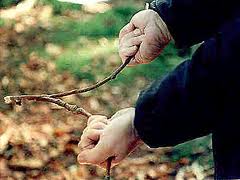
 Oh heck . . . if you don’t want to follow this simple, sound and proven advice, then hire me. I am happy to be your water witch. Just give me a moment to run out back and pick a fresh Y-shaped stick off of my magic fundraising tree.
 I was having breakfast this week with a friend and fellow consultant and we were discussing resource development efforts, including events and grants. By now I’m sure you are well aware, I’m not a huge fan of organizations hosting multiple events. Events are expensive, labor intensive and don’t usually generate a lot of income.
 Grants, which are often 30% to 50% of an agency’s budget, more if they receive United Way funding, are one way. Yet, they too come with a cost. Most agencies get somewhere between 50% to 80% of the grants they submit. That means that the time spent on writing the 20% to 50% of the grants that don’t get funded is time lost. For the grants that are secured, there are reports to be written, dollars to be tracked, objectives to reach and programming to introduce. All of which is as it should be, and none of which is without cost.
 The turkey has been consumed (and so have the leftovers). Black Friday came and went with only a few bumps and bruises for Americans. Cyber Monday also came and went with consumer dollars flying all over the information super highway. Are you ready for one last hurdle? Today, is
 I read this and imagine my organization with engaged donors engaged in open communication, positive feedback, while building a better organization. Ahhhh, nirvana, but wait . . . did he say negative feedback, too?
 David was a tenured college professor. While an expert in his field, he knew very little about computers; just enough in fact to get on a network and ask for help. Fortunately, a more experienced user came to his aid, never failing to give just the right advice.
 A few short years ago, we couldn’t have even imagined such a scenario. In the past, proximity and commonality brought us together. We had family and close friends; help came from familiar places.
 And I already see that I’m not adapting fast enough to keep pace with the innovations. The technology school bus isn’t waiting for me!