
 Good morning everyone! Yesterday was New Years Day and I spent the first day of 2014 in a car trying to make it half way back to the Dallas-Fort Worth metroplex. As many of you know, I am still working on a contract temporarily providing technical assistance and organizational services to 20 organizations in New Mexico and West Texas.
During the first leg of my drive yesterday, I spent lots of time thinking about New Years resolutions, which is the focus of today’s post.
To resolve or not to resolve?
 Let me first address the question of whether or not resolutions are meaningful.
There is lots and lots of talk about whether or not New Years resolutions are helpful or just a waste of time. The way I look at it, resolutions are akin to goal setting. And an individual or organization without goals is rudderless. Right? So, where is the harm in setting a few realistic resolutions.
While driving yesterday, I came up with a few goals for improvement that I’d like to tackle in 2014. Of course, there is my annual re-commitment to health and weight loss, but I’m not going down that path with you today.
There are two other resolutions that I am very excited about and thought you might want to consider adopting for your agency.
Technology
 When I opened my non-profit consulting practice 2.5 years ago — The Healthy Non-Profit LLC — I did so on the cheap. I used $15,000 of savings to get everything off the ground including: branding, marketing materials, website, home office set-up, and technology.
Needless to say, I ended up making some tough decisions around technology. Case in point, I’m typing this mornings blog on a small Netbook laptop-ish looking computer that operates with an Itel Atom processor (which I think is akin to having a gerbil power the engine of my car).
One of my 2014 New Years resolutions is to invest in technology in a way where I will straddle a 3-way fence.
What I mean is that I will combine the power of the technology world’s three biggest players:
- Microsoft
- Apple
When I opened my business, I sold my soul to Google. I primarily did this because there was lots and lots of free stuff to be had.
I also didn’t have money to purchase Microsoft products and ended up using free productivity software like Apache OpenOffice, which is really good public domain free software that mimics Microsoft products.
However, the world is changing and technology is progressing along faster than ever. Microsoft is racing to the cloud and challenging Google for market share. Have you seen the new Microsoft Surface computers? What about Microsoft 365? These questions don’t even touch the issues associated with Google purchasing Motorola and getting into the smart phone business. Ugh!
My New Years resolution to move closer to the cutting edge of technology by purchasing a Surface tablet/laptop, subscribing to Microsoft 365, and integrating an iPad into my Google and Microsoft new world order is ambitious. But the timing feels right to me.
For your non-profit agency, I suggest you take a good hard look at technology. I suspect there there might be a New Years resolution waiting there for you.
I cannot tell you how many times I’ve walked into a client’s office and their technology is biting them in the butt.
Many non-profit organizations are “resource poor” by definition. In environments like these, technology is typically basic and under-maintained.
Since tech has a short shelf life, most non-profits live with severely outdated hardware, software, networks, and systems.
I can almost hear you moaning and yelling into your computer: “But we don’t have the money, Erik!”
OK, OK, OK . . . 2014 doesn’t necessarily have to be about buying technology for your agency. Your resolution could be all about getting the right group of volunteers around the table to help you develop a written technology plan addressing issues such as:
- How will your organization upgrade its tech over the next three years?
- What should your agency’s tech policies look like?
- What does your agency want to look like from a tech perspective (e.g. network, cloud, Apple, Google, Microsoft, desktop, laptop, tablet, phone, website, blog, ePhilanthropy, databases etc)? And how will all of this capacity be maintained?
- What is the funding model to attain and maintain what you build?
Tackling this issue is the right thing to do.
Non-profit leaders need to break out of this “starvation cycle” in which they find themselves. It isn’t healthy to under-invest in organizational capacity building because you weaken yourself and plant the seeds of your your own demise.
Communication
 One of the features on my company’s website offers viewers the opportunity to subscribe to a free monthly eNewsletter.
I must confess that I’ve been woeful at keeping this promise. Over the last two years, I’ve published just a handful of newsletters.
My other New Years resolution for 2014 is to do a better job of getting my eNewsletter situation figured out and in working order.
While zipping down the interstate yesterday, I started wondering if this might also be a good goal for your organization?
Too many of my clients seem to be in the same boat as I am when it comes to finding time to publish a newsletter.
However, the reality is that you are going to put yourself out of business if you don’t get this thing figured out. That’s right . . . you heard me correcting — “out of business“!!!
Donors need to hear three big things before they make another contribution to your organization:
- Thank you . . . we appreciate your investment
- We are using your contribution in the manner in which we told you we would
- Your donation is having an impact and making good things happen
Your newsletter or eNewsletter strategy is focused on communicating these three things. Your inability to find the time to communicate these things drives your donor turnover rate sky high, which in turn makes raising money arduous and expensive.
Tackling this issue is the right thing to do.
As I said earlier in this post, non-profit leaders need to break out of this “starvation cycle” in which they find themselves. It isn’t healthy to under-invest in organizational capacity building because you weaken yourself and plant the seeds of your your own demise.
What are your New Years resolutions for 2014? Please use the comment box below to share. Let’s inspire each other today.
Here’s to your health!
Erik Anderson
Founder & President, The Healthy Non-Profit LLC
www.thehealthynonprofit.com
erik@thehealthynonprofit.com
http://twitter.com/#!/eanderson847
http://www.facebook.com/eanderson847
http://www.linkedin.com/in/erikanderson847
 It happened again yesterday. A non-profit friend of mine called and we talked for an hour about their revenue model and fundraising issues. Questions included:
 “I regard it in fact as the great advantage of the mathematical technique that it allows us to describe, by means of algebraic equations, the general character of a pattern even where we are ignorant of the numerical values which will determine its particular manifestation.”
 (I feel compelled to counter a possible negative perception of this last point by noting that isn’t it a very good thing if a manager sees when an associate or team is struggling, and at the right time and in the right way enters the picture and provides just the right amount of help to get back on the right track? Less freedom is not always a bad thing!)
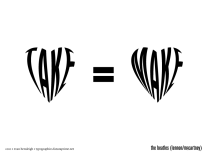 I look forward to seeing the ones that you’ve run across!
 I was running a Boys & Girls Club in Texas, when I was offered the Executive Director position for the Boys & Girls Clubs in Akron, Ohio. I knew the President of the Akron Community Foundation and not another soul in town. Thankfully, my Board had a plan.
 Program officers of foundations are incredibly generous with their time and are interested in learning about your organization. Community leaders, by definition, care about the community. Go talk to them. You will be pleasantly surprised by the number of people who say yes to your request for a meeting.
 Figure out the “must attend” event in town, and attend. And when you do, walk around and greet everyone, introduce yourself to people you haven’t been able to get in front of and ask if you can call them for a meeting. Again, you’ll be surprised at the number of people who say yes.
 Sometimes I think the universe speaks to us, and lately it has been begging me to write this blog. Over the last few months, I’ve spoken with a good handful of non-profit professionals who have shared stories of scandal and crisis that would make your toes curl. These stories have ranged from incidents on the front line that made the local newspaper to outright embezzlement.
 For the record, I agree with my United Way friends. If you don’t know about
  You can probably spend the rest of your life writing policies, but let’s not get carried away. Here are a few questions I suggest you ask as you start going down this road:
 That July afternoon in Coleman, Texas was particularly hot — 104 degrees according to the Walgreen’s Rexall’s thermometer. In addition, the wind was blowing fine-grained Texas topsoil through the house. But the afternoon was still tolerable; even potentially enjoyable. A fan was stirring the air on the back porch; there was cold lemonade; and finally, there was entertainment. Dominoes. Perfect for the conditions. The game requires little more physical exertion than an occasional mumbled comment, “Shuffle ‘em,” and an unhurried movement of the arm to place the tiles in their appropriate positions on the table. All in all, it had the makings of an agreeable Sunday afternoon in Coleman. That is, until my father-in-law suddenly said, “Let’s get in the car and go to Abilene and have dinner at the cafeteria.”
 My first exposure to this story was as I was unknowingly about to experience it…
 As they say, the proof is in the pudding which is what inspired today’s blog post. The pudding, of course, is an article that washed into my email inbox from LinkedIn on November 30, 2013. The author was John Wasik and the article was titled “
 I was very new to the company.
 The new normal has forced a lot of nonprofit leaders to rethink the way they do business. Crises, as unpleasant as they are to experience, allow for growth. I love Rahm Emanuel’s quote “Never let a good crisis go to waste.”
 Let’s get those people together and brain storm: Where are we today? Where do we want to go? How can we get there?
 I know that this may sound silly, but I think it needs to be said for the record. Non-profit executive directors (e.g. CEOs) are not the undead. They do not live forever. They will leave your agency some day. And every board should be preparing for that eventuality.