
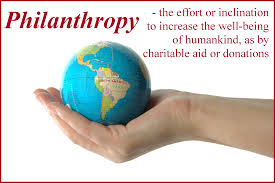
 I was on the phone yesterday talking with Pamela Grow over at The Grow Report about a toolbox project I’m currently work on. During that call, she shared an emotional donor story, and my response was simply “philanthropy is emotional“. For whatever reason, I haven’t been able to get neither Pamela’s story nor my simply conclusion out of my head. Whenever something like this happens, I always take it as a sign from the “blogger gods” that I need to write about it.
So, that’s what you’re getting this morning . . . a handful of stories and examples from my life to prove the point that philanthropy is emotional and ask what you’re doing about it. Hopefully, you can share a few stories and examples of your own.
What exactly is philanthropy?
I know that when I think of “philanthropy” my mind immediately wanders to non-profit organizations and charitable giving. However, the concept of philanthropy is much more expansive than just money being donated to agencies. The following is a simple definition that Google spit out at me when I asked:
“Philanthropy is the desire to promote the welfare of others, expressed especially by the generous donation of money to good causes.“
When you take a step back and look at the bigger picture, “promoting the welfare of others” includes volunteerism, advocacy in addition to charitable giving.
 Our United Way friends totally get an A+ on this one because they’ve been running around for a decade now telling us to LIVE UNITED which encompasses the following ideas:
- Give
- Advocate
- Volunteer
I guess when I step back and look at the bigger picture of philanthropy, I can’t help but wonder how it can’t be an emotional activity. After all, the act of reaching out to help someone else and expecting nothing in return is a selfless activity that is rooted in love and caring. Both of which are emotional. Right?
My first tearful national conference
 My first Boys & Girls Club national conference was in New York City in 2001 literally months before the terror attacks.
During one of the general sessions, the 2001 National Youth of the Year stepped to the big stage and told his story, which included:
- a father who had died
- a mother who was addicted, in prison and infect with HIV
- a Boys & Girls Club that became home
- hope and inspiration
There wasn’t a dry eye in the room.
His story illustrates the power of philanthropy and demonstrates how emotional it is for people.
A donor’s tears
 Fast forward to one of my first engagements as an external consultant. I was assisting with an organizational assessment and conducting interviews with board members, volunteers, collaborative partners, donors, former donors and various other stakeholders.
The organization was experiencing a number of pain points and found itself under scrutiny by the newspaper, television stations, and its supporters. As if this wasn’t bad enough, those who the agency served were starting to organize and protest.
I had the privilege of interviewing someone who had “done it all” including:
- program volunteer
- fundraising volunteer
- board member (I believe two different stints on the board)
- donor
There she sat, sharing her perspective on the current state and desired future state of the agency, and there were lots of tears.
Why was she crying?
Simply said, she understood the importance of the agency. She had witnessed and participated in the transformational gift this organization provides its clients. Her tears were rooted in frustration and fear.
- Frustration that the current issues haunting the agency were getting in the way of fulfilling its mission.
- Fear that the current issues might permanently close the doors and impact clients.
Her story illustrates the power of philanthropy and demonstrates how emotional it is for people.
An executive director’s tears
 I often find myself standing in parking lots after meeting “kicking stones” with staff, board members, volunteers, etc.
After one meeting, there I was in the parking lot with the executive director and their eyes started to pool with tears. It would be simple for me to chalk those tears up to:
- being “sideways” with the board president
- tight cash flow
- inability to expand services
- pressures being brought by partners to build organizational capacity
- powerlessness to be able to give hard-working staff a raise
In reality, this executive director was thinking about opening up a job search and leaving the agency because they weren’t sure that they were the right leader to solve these challenges The stress was eating them up.
The tears stemmed from the fact that they saw program staff, volunteers, and clients as part of their extended family, and the thought of leaving was akin to divorce or death.
Non-profit staff dedicate their lives to promoting the welfare of others. They are usually donors. They typically work for a lot less than what they could earn in the for-profit sector (by choice). They see, touch, hear, and feel “mission” on a daily basis.
This executive director’s story illustrates the power of philanthropy and demonstrates how emotional it is for people.
What are you doing?
Are you on the same page with me now? Do you believe that philanthropy is emotional? If so, then what are you doing to infuse emotion into the following functions at your non-profit agency:
- marketing and PR?
- resource development and fundraising?
- board governance?
- staffing?
- programming?
One of my favorite non-profit PSA commercials is the one featuring Denzel Washington talking from his heart about the roots of his philanthropic spirit. Every time I see this commercial it brings tears to my eyes. Click the video or YouTube link to view this iconic public service announcement and bear witness to another emotional example.
Please take a minute or two to scroll down and share your thoughts and experiences about an emotional philanthropy story. It is the holiday season and a time to give. So, why not give the gift of inspiration to your fellow non-profit colleagues?
Here’s to your health!
Erik Anderson
Founder & President, The Healthy Non-Profit LLC
www.thehealthynonprofit.com
erik@thehealthynonprofit.com
http://twitter.com/#!/eanderson847
http://www.facebook.com/eanderson847
http://www.linkedin.com/in/erikanderson847
 Sorry about not posting something this morning, but I got to my hotel late last night (around midnight) and I was up five hours later for a 6:00 prospect identification/evaluation meeting. My request of Santa this year is more time added to the day and a few more weeks added on to the year. 🙂
 Successful #GivingTuesday solicitations probably utilize some of the same strategies that for-profits use to create the conditions for an impulse buy. Now it all makes sense. (I might not be quick, but I usually get there.) 🙂
 We are just a few days away from Thanksgiving, and I’m getting in touch with my gratitude muscles this week. If you’re anything like me then you’re probably a “lifelong learner” and love to read about bigger and better ways to engage donors and practice the art of resource development. One of the ways I feed my need to learn is reading other non-profit bloggers. Today’s post is dedicated to some of my absolute favs.
 Thanksgiving is a time when many non-profit organizations give thanks to their donors who support their mission with their time and money. Over the years, I’ve received Thanksgiving cards, thank-a-thon phone calls, and even a small little gift of gratitude from my favorite charities. However, the ALS #IceBucketChallenge has changed everything and set the bar higher for all resource development activities. So, I’ve spent days (if not weeks) thinking about how to use social media to steward donors during this time of the year. This morning I think I had my best idea yet. Let’s see what you think.
 AND THEN IT HAPPENS . . .
 If there is one thing all of us should’ve learned from the ALS #IceBucketChallenge, it is that social media is a powerful tool in our resource development toolbox. While we’re all still learning how to use this tool, those who innovate and try new things will surely reap the rewards.
 A few weeks ago I facilitated a training session titled “2014 Finish Strong: Year-End Strategies” for a group of non-profit professionals in New Mexico. Long story short . . . there were LOTS of things that non-profits try to do in the fourth quarter. Participants shared with each other what they were doing back home at their agency and we collectively talked about best practices.
 As you know, there is no such thing as a unicorn. It is a mythical creature and the inspiration for this morning’s post about various fundraising policies and procedures documents that everyone says are important but rarely exists on the front line of many (especially smaller) social services non-profit agencies. I thought it might be a good idea to name these “unicorns” and explain what they are and why they’re important.
 One of the many projects I’m currently working on involves cataloging a resource development toolbox for a client. The things I’m finding in that toolbox are amazing and include: samples,templates, whitepapers, training curricula, calculators, and even an online wizard to help with resource development planning. (Cool stuff!)
 I was on the phone with an old friend a few days ago, and our conversation turned to two naming opportunities with which he was struggling. One situation dealt with naming his agency’s golf outing after an aging volunteer who is the central organizing force behind the event. The other situation pertained to a planned giving prospect who is contemplating the possibility of leaving a very large legacy gift.
 Finally, have you thought about the permanent nature of putting someone’s name on something and what happens when life throws your agency a curveball? If I’m being too cryptic at this time in the morning, I want you to think about what you would’ve done if you had accepted large donations with naming opportunities from either of these infamous gentlemen:
 One of my many jobs in this world is being the webmaster and community manager for a large national organization’s resource development website, which essentially acts as a fundraising toolbox for their local affiliates. One of the many functions of the website is an “Ask the Expert” service where front line staff can ask resource development questions and receive an answer in approximately 24 hours. A few weeks ago a question was asked about donor databases and QuickBooks Online. While I’m happy with our answer, I’m wondering if there isn’t more advice that could’ve been provided.
 OK . . . you’ve had a chance to read the question and answer. What additional advice would you have provided? Do you use QuickBooks Online and a donor database with a data integration bridge? If so, what can you tell us about the data bridge and the database (or CRM)?