
 Last week, I wrote a blog titled “How do you network?” which was based on a conversation I had with Henry Freeman, the owner of H.Freeman Associates LLC. That post was well-received by many of you, and afterward Henry followed up with a nice email thanking me for his “15 minutes of internet fame.” LOL Of course, in that correspondence, Henry said something that struck me as interesting, which got me wondering about face-to-face solicitation techniques and the future of fundraising.
Here is what Henry wrote that got me thinking:
“One of the things that scares me about the vast amount of technology that enters children’s lives at a very early age is the impact it may have on their ability to grasp the deeply important human skills involved in simple face-to-face communication that involves far more than the words we speak and the facts we share.”
This paragraph formed a mental image in my head of my nephew and niece with their faces buries in their smartphones during a recent family holiday gathering. There were adults everywhere and none of the conversations were kid-friendly. So, they were bored and their phones were entertaining and full of interesting things like texting, emails, Snapchat, etc.
What got me thinking even more about Henry’s concern was a “Tech Shift” radio story I heard on Chicago’s WBEZ 91.5 FM today while driving to Indiana for a site visit with a client.
The interview was with Nick Bilton, who is a tech columnist at NYTimes.com. He recently engaged in a social experiment that yielded an interesting conversation about smartphones. Click here to listen to that interview. It is definitely worth the click.
In doing a little research for today’s blog post, I stumbled across another post “Picture or it didn’t happen” from Leah Pickett at WBEZ. In this article, she talked about her generation being brought up exclusively on technology and social media and the social behavioral changes that have ensued. This is also definitely worth a click.
As these things rolled around the inside of my head, the Illinois and Indiana snow-covered landscape passed by in one white blur, but the one thing my mind kept wandering back to was this simple question:
 I wonder if these influences on the next generation of donors and fundraising volunteers will have an impact on the art of face-to-face solicitation and the future of philanthropy?
The reason why this question is so important is because (as Henry so aptly points out all the time in his trainings) face-to-face solicitation is the most effective way to engage a donor. Good fundraising professionals know there are no other solicitation techniques (e.g. mail, email, telephone, etc) that come close to the level of effectiveness as a face-to-face visit with donor.
I honestly don’t have any answers today, but I think it is something worth thinking about because the answer could impact your organization’s approach to fundraising.
How? Here are just a few ideas:
- re-investment in face-to-face solicitation training
- investment in online “personal page” solicitation
- inclusion of a variety of ePhilanthropy strategies (e.g. email, website, social media, crowdfunding, etc) in your annual resource development plan
I really don’t know. Maybe I’m just showing my age? But I think this is an important enough idea to spend a little time contemplating and asking the simple question of “What if?”
What are your thoughts? Do you think the upcoming generation of fundraising volunteers could be impacted by the tech they’ve grown up with? If so, then what do you think the effect could be on resource development? Please scroll down and share your thoughts and experiences in the comment box below.
On a different subject, I’m pleased to announce to the DonorDreams blog community that Henry Freeman is letting me share his fundraising videos with you. My plan is to share one video per month throughout 2015. If there is good viewership, then I’ll continue sharing even more of his videos in 2016. Henry is one heck of a great fundraising professional, and I suspect you’re gonna love his training videos.
Thanks for being so awesome, Henry!
Here’s to your health!
Erik Anderson
Founder & President, The Healthy Non-Profit LLC
www.thehealthynonprofit.com
erik@thehealthynonprofit.com
http://twitter.com/#!/eanderson847
http://www.facebook.com/eanderson847
http://www.linkedin.com/in/erikanderson847
 A few days ago, I was Skyping with Henry Freeman, the owner of
  When I was a child, I loved watching cartoons. I was especially a fan of cartoons that featured superheros such as Spiderman, Superman, Batman, etc. I oftentimes found myself daydreaming about having a superpower and what kind of good things I could accomplish with such a power. Yesterday, I went to lunch with an old friend, which got me thinking again about the concept of superpowers and how that idea might apply to your non-profit organization.
 Of course, the real question is whether or not you’ve learned how to unlock and use your superpower? If you are interested in exploring this question, I suggest you ask yourself the following questions:
 I believe that sometimes the universe speaks to you, and over the last two days I’ve been beat over the head with reminders that your non-profit organization’s donor recognition must be meaningful. While there is a time and place for computer generated gift acknowledgement letters and donor gifts, you need to know your donor and appreciate them in a way that speaks to their inner philanthropic soul.
 To sum up the results of yesterday’s discussion, the volunteers decided that donor recognition and gifts should be personal, mission-focused and meaningful.

 In my last two blog posts, I talked about a USA Today article from John Waggoner titled “
 A few days ago, I reviewed a PowerPoint training on a fundraising website that I run for a client. I stumbled across the following startling statistics pertaining to volunteer management:
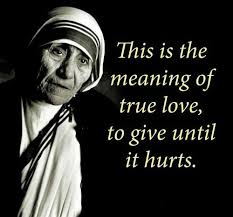 Then, he launched into a story about the importance of what he called “sacrificial giving” and “giving until you can feel a little pinch in your wallet.” The following are just a few of the reasons I recall from that conversation why it is important to give until it hurts:
 Your strategy doesn’t have to be complicated. In fact, the following is a simple upgrade strategy that one of my former employers put together:
 As a donor, I discovered long ago that if I want to make a large contribution to a non-profit organization it probably won’t happen by writing one large check. While some people on this planet have that capacity, my bank account balance isn’t fat enough to do something like Bill Gates or Warren Buffet. However, “large contribution” is a relative term, and I made my first meaningful, sacrificial gift at the age of 27 when I pledged $1,000 to a local Boy Scout council while earning $27,000 working for that same organization.
 The United Way figured this one out a long time ago, didn’t they?
 Since the Great Recession of 2008, many non-profit organizations have explored and developed monthly giving programs. This strategy has been very popular with European charities, and it is akin to the “set it and forget it” mentality of our society.
 On Saturday, I attended the funeral of my father’s aunt —
 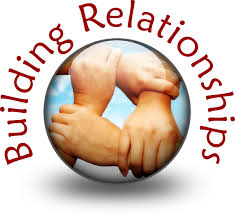 He first started looking for people who had once been loyal supporters but for whatever reason stopped donating. Then he found mutual friends (e.g. board members, former board members, volunteers, donors, etc) and asked them to assist with a re-introduction. On a go-forward basis he simply engaged in relationship building.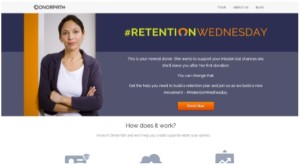
 So, I guess I’m feeling a little bah-humbug about the entire idea of #RetentionWednesday. If I were king for a day (a scary thought), I would decree 2015 “The Year of Retention“.