
 As you know, there is no such thing as a unicorn. It is a mythical creature and the inspiration for this morning’s post about various fundraising policies and procedures documents that everyone says are important but rarely exists on the front line of many (especially smaller) social services non-profit agencies. I thought it might be a good idea to name these “unicorns” and explain what they are and why they’re important.
Before I begin, I want to give a shout out to my BFF — Michael Johnson — who is a planned giving consultant at H. Freeman Associates. He is the real motivation for this morning’s post because he posted the following comment on one of my blogs from last week titled “Your agency’s fundraising program is like an iceberg“:
“Great post, Erik! This speech underscores the importance of having good gift acceptance policies and an operating plan in place to back up our brilliant marketing. We always need to “Begin with the end in mind” and ask ourselves what we will do when our marketing campaign is successful and the prospective donor responds. Otherwise our donors may become frustrated.”
It was Mike’s reference to Gift Acceptance Policies that got my mind whirling and thinking about today’s topic. THANKS, MIKE! 🙂
Gift Acceptance Policies
Sometimes donors like to support your mission with things other than cash. In fact, I just sat through a training a few months ago where my friend Mike talked about how donors give more “stuff” than they do “cash“.
It is for this reason that gift acceptance policies are important. They spell out in advance “what you do and how you do it” with regards to gifts of stuff. In a sample policy that I recently reviewed, an agency included policies and procedures for the following types of donated “stuff“:
- publicly traded securities
- securities that aren’t publicly traded
- real estate
- tangible personal property like art, jewelry, etc
- insurnace
- in-kind gifts and pro bono services
- deferred gifts (e.g. charitable gift annuities, irrevocable charitable remainder trusts, etc)
- revocable gifts like bequests
I refer to this policy and procedures document as a “non-profit unicorn” because I very rarely see it, and when I do it is typically larger non-profits (e.g. universities and hospitals) who have taken the time to develop them.
If you are interested in more info on gift acceptance policies, the National Council of Nonprofits has done a nice job uploading resources and samples to their site. However, please remember that policy making is a a responsibility of the board of directors. So, make sure to include them in the discussion and development of your agencies policies and procedures before asking the board to approve them.
Named Gifts Policy
Sometimes donors like to put their names on stuff, and a Named Gift Policy helps non-profit organizations with the following:
- identifying what can be and can’t be named (e.g. buildings, rooms, endowments, scholarships, events, etc)
- identifying the process and rules associated with naming something
- identifying the process and rules associated with unnaming something
Our friends at the Association of Fundraising Professionals have done a very nice job making the case for why this type of policy is important and providing a number of samples and links to resources. This online article is definitely worth the click!
Again, I consider this a “non-profit unicorn” because I can count on one hand how many times I’ve seen a policy like this.
Donor database policy and procedures manual
Many non-profit organizations have donor databases, and very few of them have put into writing things such as:
- how to input a pledge
- how to input a gift
- how to run solicitor reports
- protect donor privacy (g. what can be shared and with whom)
- how to enter donor’s names (g. Mr & Mrs, etc)
- what information to collect and where to put it
- how to track soft gifts
- how to enter a new donor
- how to track volunteers and prospects
The biggest reason this policy and procedures manual is critical is because your agency won’t always have the same person entering donor information into the database. With turnover comes inconsistency and lost institutional knowledge. Long story short . . . the lack of a policy and procedures manual for your donor database typically results in a G.I.G.O. situation (garbage in, garbage out).
Want to avoid the feeling of wanting to throw your database out the window? I suggest developing your policy and procedures manual.
I know that I sound like a broken record, but I’ve only seen a few of these in all my years of working with non-profit organizations, which is why it is a “unicorn” in my book.
Our friends at Metafile (ResultsPlus donor database) published an awesome nine page white paper that speaks to this issue. Click here to view their sample template.
Does your organization have one of these policies? If so, what was your motivation for creating it? What samples/templates did you use to get started? Are there other “unicorn documents” that you’ve heard about but never seen? Please use the comment box below to share your thoughts and experiences.
Here’s to your health!
Erik Anderson
Founder & President, The Healthy Non-Profit LLC
www.thehealthynonprofit.com
erik@thehealthynonprofit.com
http://twitter.com/#!/eanderson847
http://www.facebook.com/eanderson847
http://www.linkedin.com/in/erikanderson847
 As I explained in last week’s post titled “
 I believe the answer is as simple as evaluating what “The Ant” would do if they were a member of your board of directors.
 If you Google the definition of “Pandora’s Box,” the all-knowing internet oracle says the term means: “a process that generates many complicated problems as the result of unwise interference in something.” I love this expression, and I used it a few months ago when talking to the board president of a non-profit organization who was describing to me how they were handling a complaint about the agency’s executive director.
 I ran across an old board development handout the other day, and it made me laugh. So, I decided to share its essence with you today and ask for your thoughts and opinions. The handout started off with the following two sentences (and I’ve changed the names to protect the innocent):
 When they are in (or starting to slide into) financial crisis
 My advice to those of you considering a strategic planning engagement is:
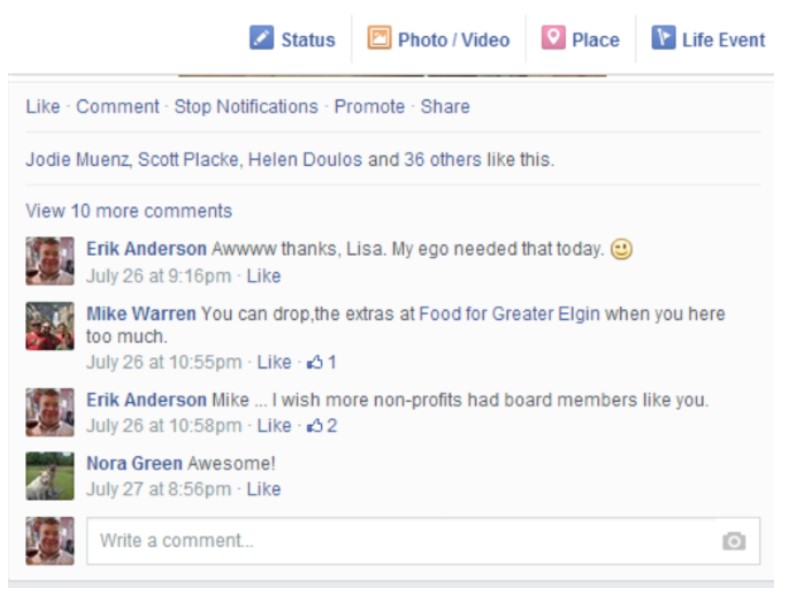
 As many of you know from previous blog posts, I’ve facilitated a ton of “board roles and responsibilities” trainings this year. So, the curriculum is fresh in my mind, which is why what happened on my Facebook page a few days ago struck me as awesome. Before I tell you about what happened, let’s quickly recap the following key points with regard to board roles and responsibilities:
![IMG_20140726_162802596[1]](https://donordreams.files.wordpress.com/2014/07/img_20140726_1628025961.jpg?w=576)
 I received a call from a old friend (we used to be real close 🙂 ) who served on the board of a very prominent organization. This is the story she told me. I share it with you to both illustrate how easy it is to disengage good board members and how important it is to institute and follow good process.
 Welcome to May! While this month represents lots of things to lots of people (e.g. rain, flowers, planting gardens, non-profit conferences, etc), May is an anniversary month for
  More than a decade ago, I attended a BoardSource conference/workshop at Sears’ corporate offices in Hoffman Estates, Illinois. During one of the sessions, the trainer shared her teachable point of view on how often boards should go into executive session, which she explained was at the end of every meeting. I’m dedicating today’s post as a counter-weight to that practice.
 After attending the BoardSource workshops at Sears as a young and naive executive director, I brought a ton of good ideas back home with me and shared them with the Board Development Committee. One of those ideas was for the board to go into executive session as a regular practice at the end of every meeting.
 In a recent conversation with a friend about their non-profit board, it came to light that board members used email to take an important vote because scheduling a special board meeting was too difficult with everyone’s busy schedules.
 The following are just a few suggestions you may want to consider: