
 When I engage non-profit organizations in board development related issues, it can be like simultaneously operating in two parallel and polar opposite universes. One universe exists where everyone is talking about how things are “supposed to be” done. This is described in the agency’s written board development plan. In the other universe, there are board members and staff sitting around a table talking about “some guy” they know without any discussion about board composition gap assessment, prospect lists, prospect evaluation or anything that sounds like process.
Growing the capacity of your non-profit board is a complicated formula that includes you doing the following:
- Understanding the holes you need to fill.
- Successfully identifying prospects who fill those gaps.
- Thoughtfully evaluating and factoring in a prospect’s skill sets/talents and experiences so a smart determination can be made about moving forward with recruitment.
- Developing and using a recruitment process that sets expectations and helps a potential prospect see what they are potentially say ‘YES‘ to doing before making that commitment.
- Employing a thorough new board member orientation program and ongoing boardroom training calendar.
- Developing and using tools (e.g. performance plans, dashboards, scorecards, etc) to show board members where they’re at and what they still need to do.
- Engaging in year-end evaluation discussions focused on recognition and deeper engagement.
Your board governance and board development program will be “top shelf” if you do ALL of these things. Just having it in writing doesn’t count. You need to practice what you preach.
Not doing even one or two of these things is akin to skipping ingredients in a recipe. Following this analogy through to its logical conclusion, I ask you to imagine what a bread recipe looks like if you forget to add the yeast or the flour.
I often hear board development committee volunteers and staff openly complain about how hard it is to:
- identify good prospects
- ascertain skill sets and experiences
- complete prospect evaluation exercises in a satisfying manner
 With this in mind, I am reminded of an old “Mondays with Marissa” post from a year ago titled “How Nonprofits Can Maximize LinkedIn to Grow Their Community“. In that post, Marissa talked briefly about LinkedIn’s new Board Member Connect connect service. This was a new service launched in 2012, and it was just getting off the ground.
In the last few days, I was poked by LinkedIn about this fee-based service for non-profit organizations. They’re organizing another informational webinar on Wednesday, September 4, 2013 at 1:00 pm (Central Time). Click here to learn more and register.
In the meantime, I thought I would take a look around the blogosphere to see what others were saying about LinkedIn’s Board Member Connect service. The following are just a few of the more interesting articles I decided to share with DonorDreams blog readers who might be interested in learning more:
- Organizational Solutions blog: “Can LinkedIn Board Member Connect Revolutionize Nonprofit Board Recruitment?“
- Beth’s Blog: “5 Ways to Make LinkedIn Board Connect Work for Your Nonprofit“
- Take Two blog: “How LinkedIn Can Boost Your Board“
What I found most interesting is that I didn’t come across any web reviews from non-profit leaders who’ve used LinkedIn’s Board Member Connect service. It makes me wonder if . . . a) no one is really using this service or b) everyone is so happy that there isn’t even one random web review complaint?
I suppose the only way for your agency to find out is to attend the webinar and ask around.
Have you used LinkedIn’s Board Member Connect service? What was your experience? If not, how else is your board development committee identifying good prospects for your board? Please scroll down and share your thought, ideas and practices in the comment box below. We can all learn from each other.
Here’s to your health!
Erik Anderson
Founder & President, The Healthy Non-Profit LLC
www.thehealthynonprofit.com
erik@thehealthynonprofit.com
http://twitter.com/#!/eanderson847
http://www.facebook.com/eanderson847
http://www.linkedin.com/in/erikanderson847
 More than a year ago, I stumbled upon a fun article published in the Stanford Social Innovation Review (SSIR) titled “
 So, the conversations I’ve been referencing throughout this post have to do with board development and not the actual revenue models.
 Welcome to O.D. Fridays at DonorDreams blog. Every Friday for the foreseeable future we will be looking at posts from John Greco’s blog called “
 Do you see it? Culture eats strategy!
 Hmmmm … looking back at that meeting, I think he was cooking up a hearty breakfast for me.
 Once your hire an Executive Director, s/he needs to be supported. Supporting an Executive Director is where the rubber meets the road.

 I suspect many of you are nodding your heads right now. However, stop and think about your last week and where you spent your time. I suspect that many of you focused lots of time, energy and resources on the pebbles, sand and liquid in your non-profit jar such as:
 These five bullet points are just the tip of the iceberg. The fact of the matter is that we started planning next year’s Duck Race in the immediate days and weeks after wrapping one up. This special event raffle was a year-round affair.
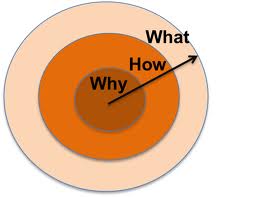 Those organizations that excel at strategic planning have a very clear understanding of what they do, how they do it, and why they exist. However, those organizations that are little fuzzy on these ideas do a lot of wrestling with themselves. Sometimes countless hours are spent at the 50,000 foot view talking about these issues . . . and for good reason! Without clarity on What-How-Why, there is no way you can set goals, develop objectives and write action plans that are meaningful in any way, shape or form.
 When I used to work at Boys & Girls Clubs of America (BGCA), my colleagues were responsible for the existence of something called theFUNDRAI$INGbank, which is a special webpage embedded inside of the intranet accessible to local affiliates. We outsourced maintenance of this page to FundRaisingInfo.com. There were many different resources located on “The Bank” including a free service called “Ask The Expert“.
 September 15, 2008 . . . do you remember where you were and what you were doing? It was the day the world changed. It was what some people have called an “economic 9-11″. Regardless of how you characterize the day that Lehman Brothers filed for bankruptcy and the stock market started its crash, it is hard to argue the following: 1) the economic paradigm we all used to live in shifted and 2) nothing will ever be the same again.
 Mentally take a look around your board room and see if you can identify how many Dorothy-like volunteers occupy chairs. They are kind folks (dare I say friends) who look and sound like the following:
 Don’t get me wrong. I am not suggesting a “witch hunt” to root out these folks and fire them. Dorothy serves an important role on your board. She is that cautious voice that keeps you from getting into trouble. She will stop you from pulling the plug on your annual campaign and direct mail appeals and “going all in” on ePhilanthropy efforts. Valuable? YES! However, what happens when you have too many Dorothy-like board members? Or what if you have those well-intentioned people serving in the wrong roles (e.g. board president, annual campaign chair, strategic planning committee, etc)?
 Last month I wrote on post entitled
  The alternative is this with the same beginning:
 Here’s the rub . . . Board strength isn’t just an internal issue that is invisible to the community. It is visible. Here’s what it looks like: