Working for boards is tough stuff

We all have friends who work for bosses who are absolute nightmares. As a matter of fact, I was on a business trip a few months ago driving in my rental car  listening to a call-in  radio program all about horrible boss stories. While I sympathize with friends in those situations, I can honestly say they have no idea what real workplace pain is like until they’ve had to work for a cantankerous non-profit board of directors.

I believe in my heart of hearts that working for a board has got to be one of the most difficult things I’ve ever had to do in my life. Here are just a few reasons I’ve come to this conclusion:

  • If a board has 15 members, then the non-profit CEO is working for 15 different people.
  • 15 different board volunteers have 15 different personalities.
  • 15 different board volunteers can have 15 different ways of wanting to do something.
  • Have you ever tried to appease 15 different egos? OMG

Don’t get me wrong . . . working directly for a board has also yielded some of the best experiences in my life. However, I’ve seen too many of my non-profit friends reduced to a puddle of tears recently as a result of “politics” in the board room and “personal agendas” run amok.

So what is the solution? Where is the silver bullet? What can a non-profit professional do to make working with a board of directors less difficult?

Let me start by saying: not everyone is cut out for this kind of work. So, get your feet wet early in your career possibly by helping your agency’s CEO with a board project. Take this time to assess whether or not you like it not. If it doesn’t feel right, then chalk it up to a learning experience and decline future opportunities to interview for non-profit executive leadership jobs.
If you currently sit in the big chair and are looking for tips on how to work with boards more effectively, then here are just a few quick thoughts:

  1. Get in front of your board volunteers regularly. If you are just seeing your board members at monthly board meetings, then you’re doing yourself a tremendous disservice. Set a goal of being in front of every board member at least once in between board meetings (and I go back on forth on whether or not committee meetings count). During these meetings, do more listening than you do talking. Gandhi told us to be the change we want to see in the world. So, if you want the board to listen to you, then you better listen to them.
  2. Respect boundaries. Too many of us want to befriend our board members, and I think this blurs boundaries. These people are your boss. Being social is one thing, but partying all night with them might cross a line. Establishing boundaries is tough stuff, but they always need to see you as a classy professional. These people can become part of your “extended non-profit family,” but never forget how dysfunctional families can get. Are you sure you want to bring “dysfunction” into your employment situation? Carefully thinking through boundaries makes a lot of sense to me and it will probably look different for each of you.
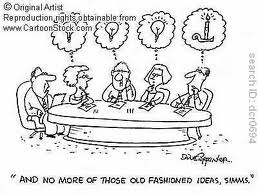
  3. Use planning tools to build consensus. There is nothing more challenging than having to work with 15 people who have 15 different ideas about how to do something. So, a good non-profit leader needs to possess “consensus building” and “facilitating” skill sets. If these are things they are good at doing, then their leadership toolbox needs to include planning strategies and tactics. Guiding a divided board through a strategic planning, resource development planning or marketing plan process can produce consensus and direction. Ahhhhh . . . happy days!
  4. Get serious about every part of your board development process. Approach board building like you would a chemistry experiment.

What do you believe is the most difficult thing about working for a board of directors? What strategies do you use to help make this a little easier?

Please share your thoughts using the comment box below because we can all learn from each other.

Here is to your health!

Erik Anderson
Founder & President, The Healthy Non-Profit LLC
www.thehealthynonprofit.com
erik@thehealthynonprofit.com
http://twitter.com/#!/eanderson847
http://www.facebook.com/eanderson847| http://www.linkedin.com/in/erikanderson847
Don’t blame the donor for the “crowding out” effect of govt funding

Yesterday’s blog post — “Does Government Funding Destroy Philanthropy” — was about the University of Notre Dame’s “Science of Generosity” initiative and the concept of “Crowding Out” when it comes to government funding and its effect on non-profit organization’s resource development programs. Since I posed more questions than I stated opinions, I’ve had this topic on my mind for the last 24 hours and engaged a number of people in this discussion. Not surprisingly, I’ve also been combing through the internet looking for some answers. Here is what the question boils down to :

Does accepting government funding impact a non-profit organization’s resource development program because: a) donors don’t see the need to contribute to an agency that appears to have adequate resource via federal, state or local government grants OR b) non-profit staff and board volunteers relax their efforts once these dollars are added to their revenue budget?

Joshua Benton wrote a great post at the Nieman Journalism Lab blog that examined this question by looking at a study done by Jame Andreoni and A. Abigail Payne.  Joshua Benton did a great job boiling it all down when he wrote this:

“The paper finds that for every $1,000 given through a government grant, nonprofits reduce their spending on fundraising by an average of $137. But that decrease leads to a drop of $772 in donor gifts. (The paper found that, contrary to the fears of some, government grants encourage outside donors to give instead of discouraging them — but the impact is small, only about $45 per $1,000 in government grants. In other words, adding it all together, $1,000 in government money only nets out to $410 in the end, on average.”

At first, I read this and thought . . . “Oh, the return on investment is still on the positive side and not something non-profits should worry about.” However, after thinking about it for two seconds, I believe non-profits SHOULD BE concerned.

I believe non-profit folks need to think about it this way:

  • $1,000 of government dollars really isn’t adding $1,000 to your revenue budget when you look at what you end up losing. So, for every $1,000 you are only “up” by $410.
  • The donors that stop contributing do so because non-profits (probably subconsciously) reduce their financial investment and focus on engaging donors.
  • Once these donors stop contributing and disengage, they can’t be easily “reactivated” once they’ve lapsed for 12 to 24 months. This essentially means the financial investment to reactivate a lapsed donor starts to look like the investment a non-profit makes to cultivate cold prospects.
  • When the government money dries up (which happens during tough economic times), a non-profit who has been dependant on public sector funding and under-invested in their resource development program is poorly positioned to survive. I liken this phenomenon to a human being who turned into a couch potato, stopped exercising, lost muscle mass and is suddenly called upon to run a marathon.

The bottom line is that non-profits cannot blame donors for the position they’re in today . . . many non-profit professionals and board volunteers took their foot off the accelerator and eased up on their fundraising efforts.

While assigning fault and blame is a common human reaction, the better question is what should non-profits who find themselves in this position start doing today if they want to survive this current economic downturn and the impact associated with shrinking government funding? Here are just a few of my thoughts:

  • STOP applying for “new” government funds as a strategy to make up for what you are losing from other government revenue streams.
  • START engaging board volunteers and donors in a conversation around how to reduce dependency on government funding and boost revenue from foundations, corporations and most importantly individuals. Make sure it isn’t just talk because talk is cheap. Put it down in writing and make sure action plans answer tactical questions pertaining to who, what, where, when, why, and how.
  • ENGAGE your current government funding agencies is honest conversations around the state of the funding programs your non-profit organization currently participates in. Do they anticipate cuts? If so, how large do they project those cuts to be. BE PROACTIVE.
  • RE-INVEST in board development efforts and start building a board with amazing “fundraising acumen”.

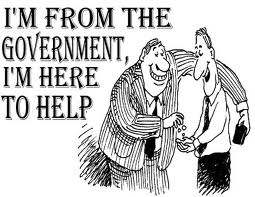
I believe government funding is damaging to your non-profit mission and suggest you get out of it as soon as possible. If you want help, you know how to get a hold of me.    😉

Have you done an analysis of your non-profit organization’s government funding trends and compared it to your investment in fundraising efforts and systems? If so, what do you see? What is the state of your government funding? Do you feel comfortable with where you are or do you have that infamous “knot in your stomach”? Where are you steering your agency’s resource development efforts as you look ahead to the next 3-years?

Please share your thoughts to one or more of these questions by using the comment box found below. We can all learn from each other!

Here is to your health!

Erik Anderson
Founder & President, The Healthy Non-Profit LLC
www.thehealthynonprofit.com
erik@thehealthynonprofit.com
http://twitter.com/#!/eanderson847
http://www.facebook.com/eanderson847|
http://www.linkedin.com/in/erikanderson847

Calling all wing nuts! Want to join my board of directors?

A few weeks ago I received an odd email in my inbox. It was so foreign to me that I marked it “unopened” and let it sit there as I marinated on it.  It wasn’t until just today that I felt willing to re-open it and share its contents with you. Here is how the first paragraph of this jarring email started (and I’ve changed the names to protect the innocent):

The board of directors of the XYZ non-profit agency is looking for leaders to help drive our further development. If interested, please contact John Doe, Board Secretary jdoe@gmail.com to receive an application /board questionnaire which is due by November 4, 2011; for terms that will run from January 1, 2012, through December 31, 2013 (2-year term limits).

The email went on to provide details about this organization’s goals and advertise its upcoming conference in downtown Chicago.

At first, I was flattered to be asked and then I realized that it was a eBlast and I was not special. So, I closed the email and went into “stewing mode” and here is what has been coming together in my head over the last few weeks:

  • Why is there a “general call for applications”? Why not target supporters and donors?
  • How did I get on this email list in the first place?
  • How desperate must this group be for quality board members?
  • Can they possibly learn enough about me from a paper application that would help them conclude whether or not I’d be a quality board member?

While many people will tell you there is a right way for a non-profit organization to set-up its board development process, I know that I’ve seen many different variations throughout the years. However, every process regardless of how it is set-up should probably include elements of the following: prospect identification, prospect evaluation, prospect ranking, prospect recruiting, orientation, training, annual evaluation, and celebration/recognition. There are many different ways to do each of these steps, and I suppose a “general cattle call” could be one way. Needless to say, I am skeptical.

Building your non-profit organization’s board of directors is like building a family. Perhaps, a better analogy would be it is like baking a soufflé. You need to be deliberate and careful. Here are just a few considerations I suggest your board development committee look at during the prospecting phase:

  • What does the prospect’s social network look like? Does it overlap too much with existing board volunteer’s circle of friends and influence?
  • Does the prospect’s network provide fertile ground for new fundraising efforts and provide opportunity for the organization to expand its donor base?
  • Does the prospect have the skill sets and experiences that you are looking for to fill gaps on your board to be an effective fundraisers?
  • Is the prospect a “wing nut” whose personality will upset the balance of personalities who already sit around your board room table?
  • What general skills sets and interests does this person bring to the table? How are they willing to leverage those things on behalf of the organization? What committee, task force or project(s) will the prospect bring value and are they willing to do so?
  • Is the prospect a donor? If not, are they willing to be a donor who is open-minded to “sacrificial giving” every year to your organization?
  • How many other boards does the prospect serve on? If they have other board commitments, do they have a firm grasp on the concepts of “fiduciary responsibility” and “conflict of interest”? How do they plan on mitigating their conflicts and how have they done so in the past?

If you’re not careful from the very beginning of your board development process with identification, evaluation, and ranking, then you run the very real risk of your board soufflé falling. In real world terms, this typically means dysfunction and the worst case scenario using ends with some sort of board room conflict (with “someone” possibly getting fired).

If you want to read more about board development, please read my recent blog post titled: “Don’t put Dorothy on your board of directors“.

What does your non-profit organization’s board development process look like? How do you keep the conversation from naturally drifting to: “I know this person who would just be great on our board. Let’s just go ask them before someone else grabs them!”? Do you use a committee to do your board development work? If so, what does that committee look like? What are your thoughts about the aforementioned non-profit’s “cattle call” application process? Are you skeptical like me or am I missing something?

It only takes 30 seconds to scroll down your computer screen and weigh-in with a quick comment to one of these questions. Please take a moment to do so because we can and should all learn from each other.

Here is to your health!

Erik Anderson
Founder & President, The Healthy Non-Profit LLC
www.thehealthynonprofit.com
erik@thehealthynonprofit.com
http://twitter.com/#!/eanderson847
http://www.facebook.com/eanderson847|
http://www.linkedin.com/in/erikanderson847

Don’t put Dorothy on your board of directors

September 15, 2008 . . . do you remember where you were and what you were doing? It was the day the world changed. It was what some people have called an “economic 9-11”. Regardless of how you characterize the day that Lehman Brothers filed for bankruptcy and the stock market started its crash, it is hard to argue the following: 1) the economic paradigm we all used to live in shifted and 2) nothing will ever be the same again.

This week I have used characters from “The Wizard of Oz” to talk about current challenges facing the non-profit sector. Today, we will spend a moment talking about Dorothy.

Dorothy is an iconic character who has been described as a “level-headed, plucky, resourceful, determined, all-American, populist”.  However, I’ve always seen her as a traditional “conservative”. Don’t believe me? Refresh your memory with this quick YouTube clip. Of course, I don’t mean this in any kind of political way, but more of the traditional meaning of “holding to traditional attitudes and values and cautious about change or innovation”.

You cannot afford to have Dorothy on your board of directors during these tough and turbulent economic times!

Mentally take a look around your board room and see if you can identify how many Dorothy-like volunteers occupy chairs. They are kind folks (dare I say friends) who look and sound like the following:

  • They are frightened by the economic “tornado” whirling throughout the world. They talk about economic news constantly.
  • They wish for yesteryear and reminisce about times when your non-profit was facing a different set of circumstances. They fixate on making things better . . . just like they “used to be”. They’re focused on making that formerly kick-butt special event awesome again. They’re insistent that you can hold onto all of your government grants if you just tried a little harder. After all, there is no place like home.
  • They are visibly closed to new and innovative ideas that have not been tried. They believe ePhilanthropy is a passing fad. They won’t entertain ideas around merger, acquisition, or strategic alliances that share back office functions. After all, that is not the Kansas they so fondly remember.

Don’t get me wrong. I am not suggesting a “witch hunt” to root out these folks and fire them. Dorothy serves an important role on your board. She is that cautious voice that keeps you from getting into trouble. She will stop you from pulling the plug on your annual campaign and direct mail appeals and “going all in” on ePhilanthropy efforts. Valuable? YES! However, what happens when you have too many Dorothy-like board members? Or what if you have those well-intentioned people serving in the wrong roles (e.g. board president, annual campaign chair, strategic planning committee, etc)?

My best two pieces of advice for non-profit staff and board volunteers this morning are:

  1. Be especially strategic and thoughtful about where you ask these people to serve in your organization. This means that you need to: a) identify who these folks are and b) have a clear understanding of which volunteer opportunities are acceptable for conservative personalities.
  2. Focus your board development efforts over the next year on recruiting people in your community who don’t resemble Dorothy to serve on your board. This is not the time to pine for Kansas! This means your board development committee needs to double down on the “prospect identification” and “prospect evaluation” elements of the board recruitment process. Gone are the days when everyone sits around a table and tosses out names of good, kind and resourceful people. BE STRATEGIC!

I suggest that the type of people your board development committee should look for exhibit some of the following characteristics:

  • They don’t appear to be “personally” economically impacted by the Great Recession
  • Their business or line of work seems to be doing fine
  • They are naturally positive and have a decent outlook on the future
  • They seem to be open to new ideas (as evidenced in their personal and professional lives)
  • They are “outside-of-the-box thinkers (as evidenced in their personal and professional lives)

Remember, if you want to keep the flying monkeys away from your non-profit agency, STAY AWAY FROM DOROTHY.

OK — if you aren’t buying into my cheesy “Wizard of Oz” analogy, then please go to the library and borrow the book “Who Moved My Cheese“. You’ll thank me later.

How has your agency adapted to the new realities? Have you changed your resource development model or are you still trying to do things the old way? Do you see your board development efforts changing or focusing on different types of prospects? Please use the comment box below and weigh-in. Please remember that we can all learn from each other. In fact, it is probably the most effective way many of us learn.

Here is to your health!

Erik Anderson
Founder & President, The Healthy Non-Profit LLC
www.thehealthynonprofit.com
erik@thehealthynonprofit.com
http://twitter.com/#!/eanderson847
http://www.facebook.com/eanderson847|
http://www.linkedin.com/in/erikanderson847
If I only had a heart . . .

There are 9-keys to “inspiring and managing yours board for fundraising success”. In fact, the reality is that these 9-keys are the same nine things you need to do to “engage” anyone in anything. However, I believe that these nine concepts are not all equal. While all are important, I have come to realize that the most important and most difficult engagement tool was best summed up by the “Wizard of Oz’s” Tim Man in this YouTube video.

The most important engagement tool in your nonprofit toolbox in my humble opinion is “MISSION-FOCUS”.

I personally learned this lesson more than 7-years ago when one of my more influential board volunteers (I’ll omit his name for privacy purposes, but let’s just say he was really good with other people’s money) resigned from the Boys & Girls Club of Elgin’s board of directors. While he resigned for personal reasons and still supported the Club, I didn’t see the train wreck coming until it was too late.

This board volunteer was infamous for taking 15+ prospects’ pledge cards as part of the annual campaign every year. His reasoning seemed sound: 1) they were clients of his, 2) they were friends of his, and 3) he had always solicited these donors. I’d be lying if I tried to tell you that I ever tried to talk him out of being such an overachiever. However, in hindsight I wish that I had.

The first year this individual wasn’t on our board, we tried to redistribute his annual campaign prospects to other volunteers. I finally understood how big of a fool I had been when my phone rang a few weeks after our annual campaign kickoff meeting. The call came in from one of our more steady donors who had always been solicited by this former board volunteer.

The call started off nice enough. “Hi . . . how are you . . . how are things down at the Club?” However, pleasant conversation quickly turned into a cross-examination: “why is so-and-so calling me for my annual campaign pledge this year . . . what happened to he-who-I-loved-to-get-solicited-by . . . is there something wrong at the Club whereby he just walked away from your board of directors?” And as if that wasn’t enough to cause me to run to the restroom and vomit, most of the calls ended with the donor talking to me like I was a kindergartener and telling me that they didn’t donate to the Club because of our mission but because of who had been asking.

The lesson I painfully learned was that stewardship was very important in the resource development process. Successful stewardship and relationship building meant transitioning a donor-relationship from their the volunteer-solicitor connection to a love affair with the organization’s mission. While it might not happen overnight, working on it symbolized a commitment to sustainability and a donor-centered paradigm. The Tin Man was 100% correct when he sang about the value of his heart.

Being “MISSION-FOCUSED” goes beyond stewardship . . . here are just a few ideas for infusing mission in everything you do at your non-profit organization:

  1. Host your board meetings, committee meetings and fundraising meeting at your service facility as a way of reminding everyone what their volunteer time commitments are all about.
  2. Focus newsletter content on return on investment messaging and all things related to your agency’s mission. Skip the boring advertisements for the next opportunity to make a contribution.
  3. Don’t let your annual campaign volunteer solicitors go on important solicitations by themselves. Staff should do everything possible to get invited on important solicitations and ensure: 1) the ask is not being done in a “quid pro quo” manner and 2) mission-oriented reasons are infused throughout the solicitation call.
  4. Find ways to bring the idea of your clients into important meetings. For example, ask agency clients to participate in an essay contest about what they value most about your organization, its programs and mission. Share those essays with board volunteers, fundraising volunteers and donors.
  5. Incorporate a “mission moment” into ALL MEETINGS as a way to keep the focus on why you’re asking others to do what they do.

Failure to inject “MISSION-FOCUS” into all of your meetings and fundraising campaigns can be disastrous. It can lead to volunteer-fatigue and donor turnover. It can create a sense of disengagement that results in staff doing everything. Do I need to go on? Come on  . . . if a Tim Man can get it, then surely we all understand the importance of this concept. Right?

I can go on and on, but I’d rather you share with your fellow DonorDreams blog subscribers what you do to maintain a healthy dose of “MISSION-FOCUS” in everything you do. Please use the comment box below to share your example because we can all learn from each other. There are no right or wrong answers. Please jump in.

Here is to your health!

Erik Anderson
Founder & President, The Healthy Non-Profit LLC
www.thehealthynonprofit.com
erik@thehealthynonprofit.com
http://twitter.com/#!/eanderson847
http://www.facebook.com/eanderson847|
http://www.linkedin.com/in/erikanderson847

If I only had a brain . . .

So, last week was an amazing week for my blog. It appears that I struck upon a topic of interest for the non-profit community when I focused on special events and how some agencies make poor decisions around return on investment (ROI) decisions and volunteer utilization. While I promised myself that I would end that discussion thread about zombies, I decided this morning over coffee to continue down “the yellow brick road” a little further by changing metaphors.  It is Halloween season after all.  LOL

Interestingly, approximately 97-percent of all the emails, comments and discussions last week were very supportive of the positions I staked out in the blog. However, in spite of the support I still periodically heard things like this:

  • Erik, I totally agree with you that non-profit leaders too often invest money and energy into special events that provide a poor ROI. We really need to do a better job. However, my agency runs this one event that has a bad ROI but we just LOVE IT. We just need to give it a little more time and it will be one of this community’s signature events. What do you think?
  • Erik, as a board member I am not an expert on non-profit operations and fundraising. I rely on our agency’s staff to make good decisions, and I do as I am told. I agree with everything you’ve written and would never run my business that way, but it just isn’t my call.
  • Erik, we knew this event wasn’t a good idea for non-profits, but what were we supposed to do? Non-profit agencies pushed us to include them in our event plans.

Again . . . let me attach this disclaimer before saying anything else. 1) Not all special events are bad. 2) Some special events can have a decent ROI. 3) There are non-monetary objectives and benefits to planning and running a special event (e.g. awareness, prospect cultivation, volunteer engagement, etc). 4) I believe all non-profit organizations should include one or two well-oiled special events in their annual written resource development plan.

With that being said, I found this iconic song from the Wizard of Oz’s Scarecrow running through my head after each of the aforementioned comments. I am not sure how you feel, but here were a few of my reactions and conclusions:

  • It is probably common for agency staff and board volunteers to “fall in love with” their own special event ideas. Finding perspective is not an easy thing to do with anything in life including evaluating events and resource development programs. With this in mind, I recommend that non-profits involve external people in their evaluation process. What is so wrong with recruiting local business people to volunteer for a critique meeting or evaluation session? Ask donors to participate. Heck . . . spend a few dollars and engage an external consultant to help.
  • The mysterious world of “non-profit” business models probably seems a bit strange to board volunteers who live in the for-profit world, but fiduciary responsibility is the same on both sides of the fence. I have a few thoughts here: 1) board volunteers must be engaged and cannot abdicate oversight and evaluation to staff, 2) while there are differences between for-profit and non-profit corporations, you should stop and think hard about something your agency is doing if you find yourself thinking “huh, I would never do that back at my shop,” 3) we don’t need zombies serving on our boards . . . we need leaders, and 4) non-profit staff really need to do a better job supporting their board development committees throughout the prospect identification, evaluation, recruitment, and orientation processes or they will get what they deserve which is a board room full of “yes men (and women)” who serve in an echo chamber.
  • Eeeeeek! You knew it was a “bad idea,” but you did it because they asked for it? This comment almost sent me into orbit. So, answer me this question please: would you hand an addict a crack pipe? Or even better . . . do you give your kids everything they ask for? Now, please don’t get upset. I don’t mean to say that non-profits are addicts or children, but I make these analogies to get your attention. The answer is OF COURSE NOT! If you love someone (or in this case that someone is a non-profit agency and its mission), then you don’t enable them to do harm to themselves.

I believe that donors are more than just ATMs. I believe donors are leaders and accountability agents for the non-profit organizations they support. However, non-profit CEOs and fundraising professionals need to play a major role in empowering donors and volunteers. In the movie, “the wizard” bestows a diploma upon the Scarecrow as proof that he has a brain. What can agency staff bestow upon volunteers, donors and board members that will help them suddenly realize that their thoughts and wisdom are so desperately needed as part of the process?

Non-profit staff — Do you engage donors and external volunteers in the evaluation process? What about engaging them in the planning process? Do you have any examples of where you stopped doing something or changed it because of feedback from donors?

Donors — What stops you from sharing your thoughts and opinions about questionable things you see your favorite non-profits doing? Have you ever just stopped contributing to a charity as a result of a poor business decision that you saw a non-profit undertaking?

Board members — What can agency staff do to better empower you to speak-up and engage?

Please use the comment box below to share your thoughts and opinions because we can all learn from each other.

Here is to your health!

Erik Anderson
Founder & President, The Healthy Non-Profit LLC
www.thehealthynonprofit.com
erik@thehealthynonprofit.com
http://twitter.com/#!/eanderson847
http://www.facebook.com/eanderson847|
http://www.linkedin.com/in/erikanderson847
Boards Gone Wild: Part Two

Last Friday my post titled “Boards Gone Wild” appeared to garner a lot of attention. If you didn’t get a chance to read it, I encourage you to go back and do so. For those of you without much time this morning, the quick synopsis is: the Elgin Symphony Orchestra (ESO) is in crisis and four major board members (also are major donors) have resigned.

Since last Friday, my local newspaper — The Courier-News — ran another article about the situation. I am re-visiting this issue today because Courier-News columnist Jeff Ward is a former director of fundraising and raises a new set of questions worth discussing. The following section from Ward’s column is what got me motivated to do this:

“As for you, Mr. Cain — fix this. You’re the leader, so start acting like one. Stop making excuses. Using contingency funds to pay operating expenses, a mass exodus of staff and board members, and disappearing donors are all really bad signs. And this kind of thing always starts at the top.

If for some reason you can’t lead the ESO out of this, then step aside in favor of someone who can. The fact that you can so easily ‘dis’ your former staff while Roeser continues to contribute to the ESO after his departure speaks volumes.”

In a nutshell, Ward is saying that holding staff accountable for the situation is only part of solution. He suggests that the board president, Jerry Cain, also needs to be held accountable.

Well, let me go a step farther and ask . . . “shouldn’t the entire board be held accountable?”

The problem with this idea is that outside of the local newspaper, the only other stakeholder group that can bring any sense of accountability to the situation is LOCAL DONORS.

So, what do you suppose would happen if the ESO’s top 50 donors decided to flex their “investor muscles” by organizing an impromptu donors conference focusing solely on solving the problems at hand? I’ll bet that every ESO board volunteer and staff person would be there taking notes and asking how high should they jump.

Of course, the problem with this idea is that donors don’t typically organize themselves into groups and instead only act individually. However, in this instance, there is a person with the charisma and chutzpah to pull this off. I can almost hear that intermission announcer saying: “Paging Mr. Seigle. Please report to the donor services desk.”

(Note: For those non-Elgin readers, Mark Seigle is one of the AWOL board members mentioned in the two Courier-News stories and one of the most charismatic and feisty donors in our town. According to the Courier-News, he is also our local “lumber magnate”. LOL)

So, if anyone out there in cyberspace is listening (or cares), here are two additional suggestions to what I put out there in last Friday’s blog post:

  1. Go back to the written board development plan and policies, sharpen your pencils, and start adding accountability policies and practices to that document such as: a) annual board member evaluations, b) scorecards/dashboard focused on ‘organizational health’ metrics published and update monthly on your website for all donor-investors to see, and c) an expanded finance committee and a resource development committee that includes donor participation (not just board volunteers). More ideas and metrics are available in the “BoardSource Nonprofit Governance Index 2010
  2. Don’t just look at going down the typical strategic planning road. Use an organic planning model such as the Search Conference. Click here to learn more about the book that is a blueprint for this approach. Click here for a synopsis and an impressive list of corporations who have benefitted from this approach. I love this planning model because it is inclusive of all organizational stakeholders (e.g. board, staff, donors, ticket holders, community leaders, etc).

I know you are all very busy people, but would you please take a moment this morning to weigh-in using the comment box below.

How does your organization add accountability elements to your board development efforts? Have you ever seen major donors spontaneously organize into a donor summit? What do you think about the Search Conference planning model and its potential for bringing other stakeholders (e.g. donors) to the table to help plan and solve problems? What is your prescription to fix the situation that the ESO finds itself in?

We can all learn from each other. Please weigh-in with your thoughts.

Here is to your health!

Erik Anderson
Owner, The Healthy Non-Profit LLC
eanderson847@gmail.com
http://twitter.com/#!/eanderson847
http://www.facebook.com/eanderson847
http://www.linkedin.com/in/erikanderson847

Beware of vampire staff

There is an invisible line that exists in the board-staff as well as the donor-staff relationship. Unfortunately, it is a blurry line that gets stepped over from time-to-time. Sometimes it is innocent, and other times it is malicious. Today’s blog post focuses on those not-so-innocent times and offers a few suggestions to both board and staff on how to handle these situations.

First let me start by stating the obvious: “The board of directors has ONLY one employee, and that person is the CEO (aka Executive Director) of the organization.” If this truism is not clear to everyone, then please know that trouble lies ahead on your journey, and it is preparing to ambush your organization.

While the CEO is the board’s only employee (and all other staff work for the CEO), there are times that the CEO finds it necessary to create an environment where their employees interact directly with the board. For example, agencies that are lucky enough to employ resource development professionals need to let that person(s) work directly with board volunteers to plan, implement and evaluate the comprehensive resource development plan. It is in situations like this that the “line” I referenced earlier can get trampled.

Here are a few real life examples that I’ve seen in my travels and work with non-profit organizations:

  • The RD professional was friendly with the COO. Unfortunately, the COO wasn’t performing at a high level and was on a corrective action plan and on the verge of termination. The RD professional didn’t agree with their CEO’s management decisions, started actively engaging the board president, and lobbied for the CEO’s termination (and implying that they should be named the CEO instead).
  • An employee who had been receiving poor evaluations for a few years sensed they were on thin ice. In an effort to undercut the CEO, they befriended key board volunteers and constantly chatted with them about non-work related issues (e.g. health problems, family problems, etc). It was obvious this strategy was an attempt to create sympathy and make it next to impossible for the CEO to terminate them without dealing with potential political blow-back from the board.
  • A special events coordinator hadn’t been making goal, and the CEO was starting to turn up the heat. Suddenly, the staff person initiated an extramarital affair with a married board volunteer who carried a lot of weight on the board and in the community. Oh, did I mention the volunteer was also a fairly substantial donor? <<Gulp>> Needless to say, terminating this employee suddenly came with many complications for the CEO.
  • A VP of Development decided they didn’t like the CEO’s management decisions (or the ‘tone’ they took with staff) and decided they would make a better CEO. Not only did they start openly lobbying for the CEO’s termination with the board president (who was a very good personal friend), but they did so with other key board volunteers and even donors.

Here are a few tips that should help when “the line” gets stepped over (and unfortunately it happens more often than you think even if it isn’t in such egregious ways as I’ve highlighted above):

  • Board volunteer tip #1: Don’t let staff (including the CEO) get too close and blur the line between professional and personal. When conversations shift to personal things, be polite and redirect the conversation at your earliest convenience.
  • Board volunteer tip #2: Be very familiar (and review annually) what your agency’s written policies say about how staff should register complaints about your only employee (aka CEO). So, when a staff person crosses that line you can quickly redirect them to that policy and urge them to follow it. Remember — not following written policies can put you in a legal position at a later date if the board finds that it needs to terminate a CEO’s employment.
  • Board volunteer tip #3: Similar to tip #2, make sure your agency has adopted written “Whistleblower policies” (this is above and beyond complaint policies in your employee handbook). Make sure the law is being followed with regards to posting and implementing that policy. Click here to read a really good blog post from Thomas Silk at Blue Avocado on this subject.
  • CEO tip #1: Don’t foolishly give your staff unfettered access to the board of directors. Be smart about it, and supervise the situation like a hawk. Remember — “You reap what you sow”.
  • CEO tip #2: Be proactive and upfront with your staff. Tell them during their orientation as well as periodically throughout their employment that there is a “line” that exists between board-staff and staff-donors. Be gentle yet firm and upfront about what will happen if that line is crossed.
  • CEO tip #3: Don’t be soft on staff who step over this line. Once a staff person violates the trust you have placed in them, it is almost impossible to regain it. Be prepared to terminate those employees who lack boundaries, and be prepared to do it swiftly regardless of the consequences. If they lack boundaries when it comes to this, then they lack boundaries all over the place.  Cut your losses quickly!

So, am I being too harsh? Do you think these vampire staff who prey on a board volunteer’s or donor’s good nature can be rehabilitated? Have you ever witnessed examples of similar situations? If so, how did the situation play out? Was there ever a ‘happy ending’ or does it always end up messy? Please use the comment box below to weigh-in because we can all learn from each other.

Here is to your health!

Erik Anderson
Owner, The Healthy Non-Profit LLC
eanderson847@gmail.com
http://twitter.com/#!/eanderson847
http://www.facebook.com/eanderson847
http://www.linkedin.com/in/erikanderson847

Boards Gone Wild

A week or so ago I saw a very bizarre tweet from my local newspaper float through my Twitter feed. The tweet included a link to an article about Elgin Symphony Orchestra’s board of directors and what I’d characterize as a “board revolt”. Suddenly, I felt like one of those people standing in a grocery store check-out line staring at “The Inquirer” and unable to resist taking that ‘rag’ off the newsstand to see if aliens really did help Oprah lose 100-pounds. Have I piqued your curiosity yet? to read the article from Dave Gathman of The Courier News.

It certainly seems like there is a lot going on beneath the surface, but this is what it looks like to this outside observer:

  • Key board volunteers who are also former board presidents and major donors are pissed off about a multitude of things and resigned out of frustration.
  • There is obviously conflict over rising deficits and debt.
  • There seems to be disagreement over the strategic direction of the organization.
  • There appears to be many fingers getting pointed in many directions and the resource development/fundraising department is in someone’s crosshairs.
  • I smell personality conflicts all around the table, especially between the CEO and certain board volunteers.
  • Is it just me or is the current board president kind of stirring the pot when he tells the newspaper that donations and ticket sales have picked up since these people resigned? Perhaps, there was even a schism among volunteers on the board of directors.

WOW!!! This is the stuff that Hollywood movies are made of.  OK . . . maybe I’m getting carried away, but it is at least what after-school, made-for-television movies are made of. Right?

I find myself fixated on a number of thoughts and questions such as: What should the CEO do in this situation? How does this board move forward? What do you say to your donors when your dirty laundry spills over into the local newspaper? Who is getting fired?

However, the thing that weighs most on my mind is: “Who are these people who claim to be board volunteers?” I’ve worked with between 50 – 75 different boards across a 13 state region over the last 5-years, and this isn’t a familiar sight to me. More oftentimes than not, I found boards who would rather sustain pain from medieval torture devices rather than engage in discussion and dialog that “might” possibly lead to disagreement.

So, I’d like to thank the Elgin Symphony Orchestra for renewing my faith in board governance. While the outcome might not have been desirable, I believe once again that there are passionate, mission-focused volunteers who serve on non-profit boards.

As for where to go from here, I can’t stop thinking about Chicago’s new mayor, Rahm Emanuel, who famously said, “You never want a serious crisis to go to waste.” Here are just a few things I might be thinking about if I were in the CEO’s hot seat:

  • Organize a ton of donor focus groups to engage supporters in how they think the organization’s issues could be addressed
  • Develop a donor survey to secure similar input from smaller donors
  • Commission a resource development audit to dissect revenue streams and look critically at all resource development systems
  • Start down a strategic planning road and make sure the planning model you choose is very “organic”and engages ALL stakeholder groups
  • Target other influential community leaders who you’ve always wanted on your board but couldn’t (or didn’t), go talk to them about your planned response, and ask them to get involved

Regardless of the path chosen, they better do something soon or their non-profit board room might start to look something like this Saturday Night Live sketch.

What would you do if you were the CEO? Board president? Was your faith in boards “renewed” as it was in my case? Have you ever been faced with a similar situation? If so, how was your example handled? Please use the comment box to weigh-in with your thoughts. We can all learn from each other.

Here is to your health!

Erik Anderson
Owner, The Healthy Non-Profit LLC
eanderson847@gmail.com
http://twitter.com/#!/eanderson847
http://www.facebook.com/eanderson847
http://www.linkedin.com/in/erikanderson847

Can a non-profit board contract out its management to a for-profit company?

An old childhood friend of mine reached out to me this morning with an interesting question:

“Do you think there is a conflict with a non-profit’s status if they contract with a for-profit company to manage the organization?”

She asked this question because her company is starting to investigate the possibility of offering a service whereby it would get into this line of work. So, I promised that 1) I would do a little research on the subject and 2) pose the question to subscribers of this blog to get your thoughts. While I will share some of my thoughts below, please use the comment box to weigh-in.

As I swirled this question around in my head, I ultimately came to the conclusion that my answer is “I don’t advise it, but IT DEPENDS“.

  • The IRS is very specific about 501(c)(3) organizations needing to focus their efforts on the “greater good”. I can see potential conflicts in a relationship like this because the main focus of a for-profit corporation is “profit;” whereas, the main focus of a non-profit organization is achieving its “mission“. While not necessarily mutually exclusive, I do worry about the potential for conflict when making management decisions. I can see many different kinds of decisions pertaining to managing money and raising funds that could create conflicts of interest.
  • I’ve seen it way too often where non-profit boards develop a feeling of hopelessness and want to abdicate their fiduciary responsibilities to anyone who they think can fix their dysfunction. In situations like this, contracting management of the agency to a for-profit corporation might be a recipe for disaster. In my opinion, partnering with a for-profit organization requires a highly engaged non-profit board of directors who can and will provide more direction and oversight to their for-profit partners than they might otherwise have done for an Executive Director and agency staff.
  • The resource development and fundraising functions of a non-profit organization are complex and not something that makes much sense to many for-profit leaders. Cultivating & stewarding donor relationships as well as raising money isn’t as easy as hosting an event or writing a grant. It is a comprehensive program that requires knowledgable staff and engaged & committed board volunteers. A non-profit board cannot wash its hands of its resource development responsibilities and expect its for-profit partners to make it rain money. I also wonder how many donors might view such a partnership and how that might affect their financial support?
  • Board development is very different for non-profits compared to for-profit corporations. In the non-profit world, there can be no compensation for sitting on a board. Additionally, it appears to me that the process of identification, recruitment, orientation, recognition and annual evaluation has a different feel for non-profits compared to corporate boards. While board development is the responsibility of board volunteers, it typically evolves into a partnership between board and the executive director (with staff providing support and expertise). I can see many conflicts around this governance function when non-profits and for-profits partner around agency management.

In a nutshell, I am skeptical about any board turning complete and total management control of its non-profit agency’s management over to a for-profit company. However, I can see a non-profit board contracting with a for-profit corporation for specific management services, such as:

  • executive search
  • temporary staffing
  • accounting and payroll
  • marketing
  • market research & feasibility studies
  • facilitating planning processes (e.g. strategic planning, business plans, etc)
  • general consulting work around any number of topics

However, even in these circumstances, I don’t think it is wise for a non-profit board or Executive Director to contract out any back office function in a way that feels like they are “washing their hands” of their responsibilities. Significant oversight is required in these circumstances. If this oversight isn’t possible, then the partnership shouldn’t be consummated. Additionally, these arrangements should be spelled out in a contract (or a letter of agreement) that also clearly identifies potential conflicts of interest and indicates how they will be handled.

The one final thought I cannot get my head around is the idea of “non-profit receivership”. What if a board and staff are so dysfunctional, know it, don’t want to dissolve the agency, but they all agree to quit and give the organization a ‘new start’ . . . can they do so by temporarily (and contractually) putting their agency into a state of receivership with a for-profit organization? I suspect it cannot legally be done without a board of directors in place providing intense direction. I also suspect that receivership might best be done with another non-profit organization playing the role of “receiver”.

What are your thoughts on my friend’s question? I know we have some lawyers who subscribe to this blog . . . and I’d love to hear what they think. I know that my friend and her company will be monitoring this blog for comments to this post for the next day or two. PLEASE JUMP IN WITH YOUR OPINION. I suspect they will have to engage legal counsel to flesh out many of these questions, but your input can help them frame that engagement with their legal counsel.

I will end today’s post by sharing some of the research I found when trying to respond to my friend’s answer:

Here is to your health!      (Sorry for the long post . . . this is a complex topic)

Erik Anderson
Owner, The Healthy Non-Profit LLC
eanderson847@gmail.com
http://twitter.com/#!/eanderson847
http://www.facebook.com/eanderson847
http://www.linkedin.com/in/erikanderson847