
 When adjusted for inflation, the current federal minimum wage is smaller than it was when President Reagan was the President of the United States. Democrats in Congress have been making the case to raise the minimum wage to $10.10 for the past year. Ten states in 2013 raised their minimum wage laws, and President Obama is signing an executive order increasing the minimum wage to $10.10 for all government contracts.
Here is what the White House said in a statement it issued prior to the State of the Union:
“Hardworking Americans — including janitors and construction workers — working on new federal contracts will benefit from the Executive Order (EO). Some examples of the hardworking people who would benefit from an EO include military base workers who wash dishes, serve food and do laundry.”
Of course, all of this got me thinking about non-profits who take government money and sign those contracts. Are they included in this executive action?
After doing some research . . . I’m still not sure, but I believe the answer is “NO”.
However, there is a bigger question here . . . What should your agency be doing to get ready for a prospective increase?
Now some of you probably read this question and think, “Oh Erik … you’re such a worry wart. This is just pre-election season chatter. Nothing is going to happen. This is all posturing.”
While I know you are right, the facts are still the facts, and the trend arrow is pointing in the direction of $10.10/hour. I say this because we can look at state governments and use them as a barometer, and 10 states increased their minimum wage in 2013.
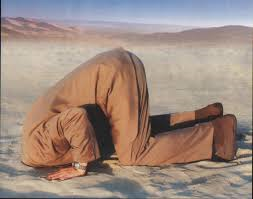 In my humble opinion, non-profit professionals have two choices:
- You can put your head in the sand, cross your fingers and hope the minimum wage does go up (and what does that say about your feelings for your employees and clients???)
- Or you can be proactive and start making plans today for what will likely happen at some point (if not next year then some time in the next few years)
As a planner, I like option two. It is like my mother always said, “It is better to be safe than sorry.”
So, what does planning and preparation look like? Here are just a few preliminary thoughts:
- Start talking about what this looks like with your agency’s HR committee
- Dust off you Salary & Compensation Plan (or revise those salary scales) and assess where your employees currently are and what a potential law change would change that picture
- Start budgeting and funding small wage increases NOW because going from $8.00 or $9.00 to $10.10 is easier than going from $7.25 to $10.10
- Engage your resource development committee in constructing a fundraising plan for 2015 focused on increasing your organization’s revenue
I believe focusing on revenue increases is the biggest thing you should be focused on right now. Too many non-profits cut-cut-cut after the economic recession hit in 2008. Of course, this means there is no more fat to cut and all future expense budget adjustments will be cuts to organization muscle and decreases in service.
It really boils down to one question in my opinion:
Don’t your clients deserve better than program cuts and staff layoffs?
Let’s get proactive and focused on the future again!
What is your agency doing to prepare for a possible minimum wage increase? Who are you engaging? What plans are you making? Please use the comment box below to share your thoughts and plans. We can all learn from each other.
Here’s to your health!
Erik Anderson
Founder & President, The Healthy Non-Profit LLC
www.thehealthynonprofit.com
erik@thehealthynonprofit.com
http://twitter.com/#!/eanderson847
http://www.facebook.com/eanderson847
http://www.linkedin.com/in/erikanderson847
 As I’m sure you aware by now, I like to reflect back on things that have occurred and create a plan to avoid their reoccurrence. As such, I’ve been thinking about things our field can do to be stronger.
 Sometimes you just got nothing. It is late at night, and I have to catch a plane in the early morning. If there is going to be a Tuesday morning DonorDreams blog, then it has to happen right now. Sigh … sometimes you just got nothing! So, during times like this, I look for real experiences to share. So, I thought I’d share a conversation I had last week with a fundraising professional in New Mexico.



 Over the last few months, I’ve found myself doing a lot of boardroom trainings on the subject of “Board Roles & Responsibilities“. When facilitating this training, there are two different slides talking about the board’s collective responsibilities and the other illustrates individual board members’ responsibilities. Listed on both slides at the top of the list is the responsibility of “asking questions“.
 Of course, we aren’t talking about asking questions that lend themselves to micro-management of staff. Here are just a few important questions that good boards ask:
 I tried to picture what a non-profit board might look like if it didn’t ask questions, and these words all came to mind:
 These steps are pretty obvious and easy to follow. Because of the growing popularity of podcasts, it is often included in various software publishing wizards. You can also utilize tools like
  “Grab a piece of paper. Make your best paper airplane.”
 Often in these sessions, after one or two unsuccessful flights I see the “pilot” start adjusting the paper plane: a different fold there, a bending of the wings, sharper folds at the point… When I see this, I react —“Whoa!” What are you doing?”
 On Tuesday evening I found myself sitting in front of a group of board volunteers as well as prospects who were contemplating joining the board. What started off as a routine training about basic board roles and responsibilities morphed into a discussion about what makes an exceptional board.