
 My online friend, Marc Pitman is hosting this month’s Nonprofit Blog Carnival and asks his fellow non-profit bloggers to write an open letter to executive directors in honor of President’s Day. For those of you who don’t know of Marc, he is well-known to friends and business associates as “The Fundraising Coach“. As the coach describes in his call for submissions post, he runs into CEOs who think hiring a development director gets them out of their fundraising responsibilities.
I have run into the same situation many times, and this open letter is my President’s Day gift to those executive directors.
Dear Non-Profit President / CEO / Executive Director:
Congratulations on making an important investment in your agency’s resource development program. Hiring the right fundraising professional should help take you to bigger and better things. You’re embarking on what is surely a fun and exciting organizational journey. Enjoy it!
However, the road ahead is full of potholes and obstacles.
First, please know that you can never abdicate your role as the agency’s “Chief Development Officer“. Sure, you’ve just hired someone to take on that role, but Harry Truman said it best when he said “The buck stops here.” Your fundraising role may look different now, but you will likely still be involved in some capacity with:
- Cultivating prospects & stewarding donors
- Soliciting donors
- Supporting fundraising volunteers
Your focus may shift from more annual fund activities involving pledge drives and special events and move more towards major gifts and cultivating long-term donor relationships.
What is most obvious is that you’re role as “fundraising visionary” is more important now than ever before.
Why? Simply because there are more chef in the kitchen.
As you open your executive director toolbox, you will find many different tools that you need to become proficient at using, including:
- written resource development plan
- fundraising dashboards and scorecards
- donor database (or CRM)
- staff and volunteer job descriptions
However, one of the most powerful tools that you need to master is the annual performance plan for your new employee — the development director.
If I’ve seen it once, I’ve seen it too many times, where an executive director fails to provide the newly hired fundraising professional with a written performance plan. Instead, they simply say: “Go raise some money. Chop-Chop!”
Please don’t be one of those Non-Profit Presidents. You are better than that. Besides, not providing your new employee with a written annual performance plan is akin to setting them up for failure. How? Why? Because they don’t know what success looks like at the end of the year. They aren’t mind readers and don’t know what you’ll be grading them on other than raw dollars and cents.
For those of you who are new to annual performance plans, here are a few tips:
- Make sure each objective is measurable
- Make it clear what it will take for the employee to go from a “meets expectation” to “exceeds expectation” for each objective
- Link the performance plan back to the agency’s written resource development plan or strategic plan
- Ask for feedback and input from your new fundraising partner and make any necessary adjustments
Finally, once you’ve cemented a performance plan in place, sit down with the new development director and engage in a clear discussion around what your new role could and should be with regard to resource development and fundraising.
Well, I hope your President’s Day was awesome and best of luck on your fundraising journey.
As always, I raise my glass to you and say, “Here’s to your health!“
Erik Anderson
Founder & President, The Healthy Non-Profit LLC
www.thehealthynonprofit.com
erik@thehealthynonprofit.com
http://twitter.com/#!/eanderson847
http://www.facebook.com/eanderson847
http://www.linkedin.com/in/erikanderson847
 Good morning! Last week we discussed chapter 14 of
 If you cry “Forward!” you must make clear the direction in which to go. Don’t you see that if you fail to do that and simply call out the word to a monk and a revolutionary, they will go in precisely the opposite directions.

 Work-Life balance is about dividing your time between work and life. Work stays there and your life is over here. The idea of balance looks like the scales of justice, and the two sides (representing work and life) are in perfect balance.
 I used to look at work-life balance through the same lens as my mother-in-law, but a friend of mine helped me change the way I look at these competing things in my life.
 As I stewed about this morning’s conversation with my mother-in-law, I started thinking about all of my non-profit friends. I couldn’t think of anyone with perfectly balanced scales, but I could think of lots of non-profit friends who appear happy and fulfilled.
 At my previous agency, their national office made tremendous investments in webinars (aka distance learning). The following are just a few of the training titles I saw them offering:
 Many people have discovered Slacker radio, but online radio isn’t just about streaming music while you workout.
 In this post I will be sharing one of the most profound and impactful lessons of my life.
 That’s quite a stretch you say? Okay, another possibility: because you are not so much concerned about the project now, you can devote some time and energy to researching twice a week home nursing visits for your mom. That concern just slid into your circle of influence…
 Appointed or elected community leaders govern an organization. As outlined in my favorite Board book
  The Finance Committee, chaired by Treasurer, works with the appropriate staff in examining the financial reports, understanding and monitoring the financial condition of the organization and preparing the annual budget. The Treasurer presents the monthly financial statements to the Board at each board meeting. This committee also selects an audit firm each year and reviews the audit plan, audit and 990, which should be signed by the Treasurer prior to submission.
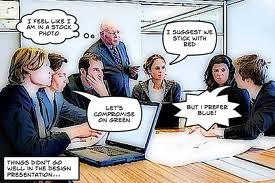 I recommend caution when creating committees to do the work of staff. It gets very confusing as to who is responsible for what and responsible to whom. If Board members are acting in staff roles, the Executive Director retains the authority for decision-making. If the Board members are operating within the scope of their roles, the Board has the authority for decision-making. Conversations had in advance can help you avoid role confusion and the overstepping of boundaries.
 As someone with two degrees in planning, I catch myself all the time with my non-profit clients explaining that the solution to their problems is that they need a plan. It might be a strategic plan, resource development plan, or board development plan . . . but oftentimes I am amazed at how many times failing non-profit agencies just haven’t invested in creating plans. I mean, come on folks! Who hasn’t heard the old expression, “If you fail to plan, then you plan to fail“?
 How does Twestival work?
 A few short years ago, we couldn’t have even imagined such a scenario. In the past, proximity and commonality brought us together. We had family and close friends; help came from familiar places.
 And I already see that I’m not adapting fast enough to keep pace with the innovations. The technology school bus isn’t waiting for me!