
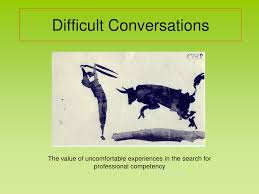
 From time-to-time, we all need to have a difficult conversation with someone. It could be an employee, board volunteer, donor, collaborative partner, or even a spouse or loved-one. I was in such a position a few days ago, and needless to say it didn’t go very well. In the subsequent days, I spent a lot of time licking my wounds and thinking about what I could’ve done differently. So, I’ve decided to share some of my thoughts with the readers at DonorDreams blog and hope you’ll also share your thoughts and experiences.
Setting the stage
Let’s make sure we’re on the same page. The following are just a few examples of difficult conversations I see non-profit professionals having every day:
- correcting poor performance or disciplinary action with an employee
- engaging a board member in a discussion about poor attendance at meetings or following through on things they’ve committed to do for the agency
- speaking with a donor who spontaneously donated — before your fundraising volunteers could schedule an appointment to visit — and made a contribution of less than what you were planning to ask them to give
- talking with a funder about a set of grant deliverables that your agency agreed to achieve but might now be having difficulty achieving
I’m sure we could identify many more of these types of conversations without even trying very hard. Won’t you please share?
What not to do
As I look back upon the many difficult conversations I’ve had in my professional life, I’ve made many mistakes and some of those mistakes I continue to make over and over again for some dumb reason. Here are just a few of those missteps:
- I procrastinate and put off having those conversations
- I obsess and over-think those conversations, essentially having different version of those conversations in my head prior to the actual conversation
- I try to set the stage with a pre-discussion email outlining the issues that need to be discussed
- I get emotional and take things personally
- I wear my emotions on my sleeve
- I get entrenched in my opinions and don’t leave any room for alternate viewpoints
I could also go on and on with developing this list of mistakes. I’ve made so many of them throughout the years. I know you probably have a few things to add here. Won’t you please share?
Best practices
 I’ve done some research into how I can do better in the future with engaging others in these type of conversations. Here are just a few of the best practices that resonate with me:
- Don’t have this conversation in your head before having it in-person because over-thinking creates anxiety and frames issues that might not even come up
- Stay away from email because people read tone into written communications that you may not intend . . . but perception is reality
- Go into the discussion prepared to: a) hear the other person and b) possibly change your mind
- Encourage questions to promote understanding
- Restate what you hear the other person saying in order to make sure you’re hearing them correctly
As with the previous section of this post, I know there are many more best practices. Won’t you please share your best practices?
Resources
When you Google the search words “having difficult conversations,” there are a ton of great resources. Here are just a few that I’ve found helpful:
- Judy Ringer: We Have To Talk: A Step-By-Step Checklist For Difficult Conversations
- Harvard Business Review: Tips On Having Difficult Conversations
- Lean In: Managing Difficult Conversations
Without sharing the ugly details about one of your difficult conversations, please use the comment box below to share your thoughts and experiences. Share resources that you’ve found useful. Share things that you’ve learned not to do. Share things that you always try to do. Life is too short . . . we can all learn from each other.
Here’s to your health!
Erik Anderson
Founder & President, The Healthy Non-Profit LLC
www.thehealthynonprofit.com
erik@thehealthynonprofit.com
http://twitter.com/#!/eanderson847
http://www.facebook.com/eanderson847
http://www.linkedin.com/in/erikanderson847
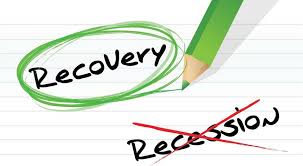 That is it . . . I am fed up and can’t stop myself from saying something that has been on my mind for a little while now. Can non-profit organizations please stop running around and telling anyone who will listen that the economy is bad and the recession is hurting their agency?
 A Chinese woman had two large pots, each hung on the ends of a pole which she carried across her neck.. One of the pots had a crack in it while the other pot was perfect and always delivered a full portion of water.

 Did you read
  My community had a paltry 10% of eligible voters turn out to vote on Election Day. My neighbor said that any vote that didn’t have at least 40% of the eligible voters voting should be thrown out. But, of course and for good reason, it doesn’t work like that. Elections – and most other things – are decided by those who show up.
 Thousands of spectators flooded into the Crystal Palace Exposition in New York City.
 But I under appreciate the downside risks. I, consequently, short change the risk mitigation section of the proposal. In fact, sometimes I omit it entirely.
 Yesterday, I had the opportunity to spend a little time with a professional grant writer, and I walked away from the encounter wondering if there isn’t a new trend afoot in the world of non-profit grants. During our time together, I got the sense that the winds of change are blowing. So, I thought I’d blog about it this morning and see if you are encountering some of the same things.
 I’m always fascinated by the number of things people do that are in direct conflict with their goals. My dog does a perfect illustration of this: He gets so excited when we have visitors that he acts inappropriately and gets put outside or crated, which prevents him from meeting his goal of being loved by our visitors. He is not alone. Leaders and organizations do the same thing!
 Let me be very clear, I absolutely and unequivocally believe that leaders must set expectations for staff and also evaluate those staff based on the expectations set. I also believe that the job of the exec is to implement the strategic plan which doubles as their goals. In the absence of a plan, it is the board’s job to work with the exec to set the expectations by which they will evaluate that exec’s performance at the year’s end. Those expectations (call them goals if you must) should not be set to motivate your exec. They should be set to align the work of the organization, ensure everyone is on the same page and provide a process for evaluation. If you have to set goals to motivate your exec, you have the wrong exec.