
A Bias for Failing?
By John Greco
Originally published on August 19, 2013
Re-posted with permission from johnponders blog
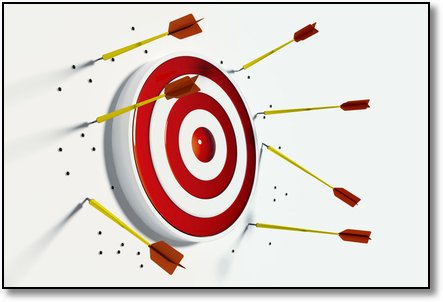 Ready, fire, aim.
Measure twice, cut once.
Uh oh. Wildly conflicting approaches.
What to do?
Measure twice cut once urges us to plan our work before we act. Plan, and then work the plan. Check our measurements before we cut. Don’t vary from the tried-and-true process. Make sure all i’s are dotted and all t’s crossed.
The implied consequence if we don’t? — wasted time, material, and effort when we have to cut again … and if we don’t have time to cut again? Poor quality.
This makes very good sense, and I’ll bet resonates with you.
So what then do we make of ready-fire-aim? What a stark contrast! Take action! then aim?
There’s a couple of ways I make sense of that instruction.
First, I imagine “aim” here is used more to suggest learning. Take action, and then learn from the result that the action produced. Self-correct. Get ready again, and fire again. And learn again. Adjust. Fire again.
Clearly, this approach actually builds in rework. How is that efficient?
In a very real sense, it’s not.
But, in some cases (and more than we think I would propose) it is moreeffective.
How can that be?
Seems to me that if the task at hand is to converge on a distinct future outcome that is known in advance, say, like building a cabinet, then the carpenter’s measure twice cut once is the right approach. If we know what we want; we know what we need to do, and we know what we have to work with, we can position our processes and resources, and
The measure twice cut once approach is slow, deliberate, methodical. Temporary inaction to produce eventual precision action. It places primary importance on the avoidance of error. And, therefore, on quality, and efficiency.
But what if things are changing all the time — objectives, policies and processes, technologies, people — and the “measuring twice” approach morphs into constant remeasuring? Error avoidance can become paralysis … we so fear missing the shot that we don’t ever take the shot …
Time for ready-fire-aim. And time for my second way of sense-making from those three out-of-order words.
Perhaps ready-fire-aim is not meant to be taken literally. Perhaps it is only to invoke a certain mindset.
A bias for action.
Take action, learn, adjust; take action, learn, adjust; take action and learn, and adjust, again …
It is an acceptance of the fact that we’re not going to get it right no matter how cautious, deliberate, and planful we are…
There can be no denying that there’s a whole lot of change happening in our lives these days, personally, professionally, in our communities, in our relationships …
Measure twice cut once might need to increasingly give way to ready-fire-aim. Because the complexity of all that change can become debilitating; immobilizing; stopping us in our tracks.
And I’m thinking that acting is what opens up the possibility of learning; because acting opens up the possibility of failing.
(Now I understand that inaction might be a great strategy given a certain set of conditions, but I’m thinking it is more the exception than the rule…)
Ready-fire-aim suggests we should have a bias for action.
Acting creates opportunities for learning.
From failure; because, clearly, acting in dynamic, changing environments is risky; we risk failing …
Our success will depend on our ability to learn from failing …
We can’t be afraid of that!
We must have a bias for action.

And trust and confidence that we will learn when we fail.
So, in an odd, yet fundamental way … a bias for failing?

 On Tuesday of this week, my blog post titled “
 Now this didn’t happen because I smelled bad or people disliked me (at least I don’t think so). It happened because of how I approached my individual meetings with board members. Here is what was on my agenda:
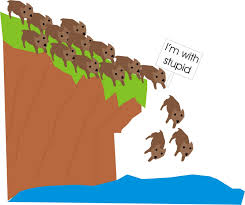 There have been multiple things that have happened in the past week that have made me re-consider the phrase “Don’t drink the Kool-Aid.”
 “Silent Starts — Set aside 2 minutes for each trustee to anonymously write on an index card the most important question relevant to the issue at hand.”
 Bright eyed and bushy-tailed. I love those two descriptions because they perfect describe most newly minted non-profit executive directors. They are eager, optimistic, and ready to change the world when they walk through your agency’s door on their first day of work.
 Exhausted yet?
 OK, Erik is back from baseball Spring Training, today is Opening Day and DonorDreams blog is back. Since it is Monday, we’re looking at Chapter 17 of Lon Safko’s “

 “Ah, but a man’s reach should exceed his grasp, else what’s a heaven for?”
 Now you might be thinking how in the world that notion would be relevant to share in a business strategic planning meeting. I don’t blame you, I would be thinking that too, if I intended to use that meaning.
 The two questions I get asked on a regular basis are “What is the right number of board members?” and “How often should our board meet?” The answer to both is the same: whatever it takes. You should have the number of board members you need who meet as often as necessary to get the job done.
 There has been some movement in recent years toward boards meeting less often with committee meetings in between. Some boards meet every other month. Some boards (mine obviously) meet monthly and their committees do as well. Some boards meet quarterly.
 Still, as I stated at the beginning, only you can decide what the best model is for your organization. I offer some questions for you as you consider the right number of meetings:
 Again, only you can decide what the best model is for your organization. I offer some questions as you consider the right number of members:
 Last week we paused for a recap of how far we have come in Lon Safko’s book “
 How do you measure success?