 I may not be the sharpest knife in the drawer, but when I get beat over the head with something enough times over the course of a year it becomes obvious that I’m staring at a trend. LOL! In this case, I am referencing an increasingly popular activity sprouting up all over the place — Giving Day.
I was first introduced to the idea of a concentrated one day push while working with a client in Valparaiso, Indiana. Their local community foundation had organized a day where local donors could make an online contribution and designate it to any number of local non-profit organizations. Of course, there were incentives such matching dollars and contests.
As many of you know, I’ve spent the last five months in West Texas and New Mexico working with 18 different agencies on a variety of organizational capacity building activities. While I was down south avoiding a brutal Midwest winter, I was once again introduced to another statewide Giving Day in New Mexico. Like the one in Valparaiso, it was being sponsored by a handful of different community foundations.
Finally, last week I returned home from my temporary assignment and started wading through a ton of mail that was waiting for me. While sifting through that pile, I came across a letter from another agency promoting their community’s Giving Day and they were asking me to make an online contribution.
As I clicked around on Google, I discovered there is a national Giving Day initiative called “Give Local America!” being sponsored by communities, non-profit organizations and an online giving portal company called Kimbia.
As I said earlier, I may not be the brightest or the quickest, but I suspect that I’m looking at a trend in the non-profit sector. 🙂
The Knight Foundation defines a community Giving Day as follows:
“A Giving Day is a powerful 24-hour online fundraising competition that unites a community around local causes. Hosted by the area’s community foundation, the Giving Day raises money through a single online donation platform. A Giving Day is a great way to build community, connect donors to local nonprofits, teach organizations to use digital tools and generate excitement about your community foundation.”
The foundation developed an online “playbook” for people who want to organize one of these events in their community. If you’re interested, click here to check it out.
 As I started playing around with these ideas in my head, I’ve come to the conclusion that this doesn’t necessarily have to be a community-wide event sponsored by a community foundation or a United Way. (However, I do think a community-wide approach organized by a foundation or United Way is preferable)
I believe individual non-profit organizations can take these same principles and develop a focused day of giving for themselves. Perhaps, it is something at the end of your Spring annual campaign pledge drive focused on smaller donors. Or maybe it is a year-end giving strategy with a Thanksgiving theme done in conjunction with #GivingTuesday.
Regardless of whether it is community-focused or agency-focused, there are a few simple best practices that power the successes associated with planning these events. You can find those best practices at the other end of the Knight Foundation link (see link above). If you aren’t planning such an event, but you’re participating in one, then here are a few tips for engaging the most number of people in making a contribution in your agency’s name:
- challenge gifts are an important part of the call to action (don’t just rely on the challenge being offered by the organizer . . . additional matching gifts from your major donors will drive even more traffic on your behalf to the online giving portal)
- pre-event publicity is crucial to raise awareness among your donors (e.g. targeted mail, email, etc)
- day-of-event solicitation (e.g. emails, blog posts, Facebook/Twitter/LinkedIn chatter, etc) are important strategies to drive online traffic to the giving page
- post-event recognition and stewardship for an entire year leading up to your next Giving Day build loyalty and a strong base of sustainable giving
Does your agency participate in a community-wide Giving Day? If so, what best practices have you used and found work well? Please use the comment box below to share your thoughts and experiences.
Here’s to your health!
Erik Anderson
Founder & President, The Healthy Non-Profit LLC
www.thehealthynonprofit.com
erik@thehealthynonprofit.com
http://twitter.com/#!/eanderson847
http://www.facebook.com/eanderson847
http://www.linkedin.com/in/erikanderson847
 The regional VP and I would fly into the district office. We would first meet with the district Director, and then over the course of the next two days the VP, the Director, and I would meet with each station manager in a series of rather intense “three-on-one” station review meetings.
 If the meeting were today, I’m quite sure he would have explained his situation with a matter of fact “it is what it is” but that phrase wasn’t in popular use back then…
 “Scott, can you speak more to why you think the drivers don’t respect you?”
 More than a decade ago, I attended a BoardSource conference/workshop at Sears’ corporate offices in Hoffman Estates, Illinois. During one of the sessions, the trainer shared her teachable point of view on how often boards should go into executive session, which she explained was at the end of every meeting. I’m dedicating today’s post as a counter-weight to that practice.
 After attending the BoardSource workshops at Sears as a young and naive executive director, I brought a ton of good ideas back home with me and shared them with the Board Development Committee. One of those ideas was for the board to go into executive session as a regular practice at the end of every meeting.
 Yesterday, I attended my first
  I’ve been blogging regularly since May 2011, which makes DonorDreams blog three years old next month. As with everything in life, there have been ups and there have been downs with things such as readership, content, and tech issues. I’m sure those of you who know me well, won’t be surprised to read that I tend to obsess over questions such as: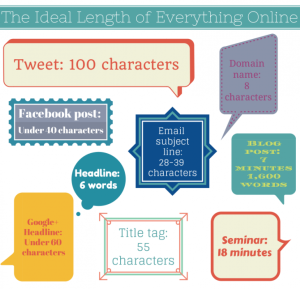

 One great suggestion I found in this resource was to think about ways to turn your charity projects into brands (e.g. the Tap Project). It helps if the brand is descriptive, as opposed to abstract, because people tend to search for generic terms. For example, “CureBlindnessNow” could be both a brand and a search term i.e. “cure for blindness”, “how to cure blindness”, etc.
 “You don’t manage people; you manage things. You lead people.”
 In a recent conversation with a friend about their non-profit board, it came to light that board members used email to take an important vote because scheduling a special board meeting was too difficult with everyone’s busy schedules.
 The following are just a few suggestions you may want to consider:
 I always joke that I went to the School of Worst Case Scenarios, because when presented with any decision, I try to figure out the worst thing that could happen. It amuses my clients, yet it’s a helpful exercise. Once you know the worst case, you can roll of the dice, create a plan to avoid it or decide it’s not worth it.