 I was chatting the other day with a newly elected board president. He was lamenting the fact that his fellow board volunteers don’t respond to his emails very well, and he wanted a little advice on how to change this dynamic. If this is a problem for your organization, then please keep reading.
There are any number of ways to look at this situation:
- This could be a “people” issue
- This could be an “organization“ issue
- This could be a “process or tools” issue
Let’s take a look at these possibilities one at a time.
People issue
 Within this broad category, there are many considerations.
- Are your board volunteers tech savvy?
- Do board members understand their roles and responsibilities?
- Do these individuals have the appropriate experiences and skills to deal with whatever is being sent to them in these emails? (aka do you have the right people around the table)
- Do these people care? Are they mission focused?
- Does the culture of your organization embrace technology? Or is the way it has always been done more personal and in-person meeting oriented?
In my experience, most of us jump to the conclusion that email unresponsiveness is a people issue (e.g. they don’t care, they’re too busy, etc). However, there might be other issues. Let’s take a look at organization and tools issues in the next two sections.
Organization issue
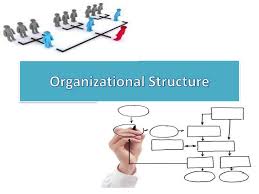 Believe it or not, how you are structured can greatly effect how people decide to use email as it relates to your organization.
- Does your organization cover a large geographic territory? And do board members live far and wide thus making in-person meetings more difficult?
- How often does the board or committee meet in-person? If it is often, then some individuals may simply put off responding to emails because they see an opportunity to share their thoughts in-person.
- How many standing committees and work groups exist in your organization? Are these organizational silos? If so, then how do they communicate with each other and with the governing board? Is this spelled out in the bylaws or committee charter? (e.g. they must report at board meetings, etc)
- From a board governance perspective, has your organization made changes to its bylaws to allow for the use of newer technology to make decisions? (e.g. electronic/email voting)
I know it can be hard to believe, but how we structure our organizations (and even the internal design of our workplaces) and teams can impact our email usage (and even more broadly how we use tech).
Five years ago, I was working for a national non-profit organization on a team that was scattered all over the country and in four different time zones. This organizational dynamic drove all sorts of decisions including monthly conference calls, the need for in-person staff meetings two or three times per year, optimal times for conference calls, use of email to distribute materials and collect feedback, shared document storage/access, etc.
“Structure” . . . it is an invisible force that drives human behavior more than any of us think.
Tools issue
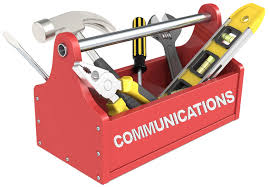 Email is simply a communication tool. Here is an inventory of tools/processes/approaches that you may find in your communications toolbox:
- Telephone (individual one-on-one or conference call)
- In-person meetings (individual one-on-one or group)
- Webcam (individual one-on-one or group)
- Online project management collaboration services (e.g. Basecamp)
- Private, group messaging and chat tools
- Social media
- Online groups and discussion forums
I’m sure that I’ve missed a number of other communications tools. You are welcome to add those in the comment box of this blog post.
Each of these tools is designed to do something very well, but of course they all have their shortcomings. The best question to ask yourself when confronted by a situation that doesn’t seem to be working (e.g. people aren’t responding to email) is . . .
Am I using the right tool for what I want to accomplish?
My final thoughts?
We all have our “points of view” on things. It doesn’t mean that we’re necessarily right or wrong. Here is what I believe about email:
- It is a great information sharing tool (e.g. distribution of agendas, meetings notes, materials, etc)
- It is a poor discussion tool (e.g. asking for feedback, advice, anything conversational)
- It is used differently by every generation
- It is easy to ignore and many people have developed user habits around this tool (e.g. deleting habits, reading habits, etc)
The advice I gave to my board president friend was . . .
Pick-up the phone if they aren’t responding to your email!
I also asked additional questions about which volunteer engagement strategies he was using and which ones were lacking. Each of the nine volunteer engagement strategies (e.g. urgency, accountability, planning, setting expectations, etc) come with a number of tools (e.g. goals, dashboards/scorecards, action item memos / task lists, project management punch lists, written volunteer job descriptions, committee charter, committee work plan, etc).
In other words, the choice of communication tool might not be the problem. It could be the organization isn’t using best practices associated with volunteer engagement, which is resulting in email unresponsiveness.
The morale to today’s post?
Simple problems may not be as simple as they seem, especially when we’re talking about groups of people under one organizational umbrella. So, my advice is . . .
Don’t jump to conclusions. Do the hard work in thinking it through!
Here’s to your health!
Erik Anderson
Founder & President, The Healthy Non-Profit LLC
www.thehealthynonprofit.com
erik@thehealthynonprofit.com
http://twitter.com/#!/eanderson847
http://www.facebook.com/eanderson847
http://www.linkedin.com/in/erikanderson847
 Oh, well let me count the reasons . . .
 I have no idea why this is so scary for so many non-profit staff and board volunteers. It doesn’t have to be a confrontation. Here are a few talking points:
 If the reasons given by your board volunteer aren’t things beyond anyone’s control (e.g. family member illness, work-related challenges, etc) and they simply don’t feel comfortable with solicitation, then ask them to get heavily involved in cultivation (e.g. engaging new prospective supporters) and stewardship (e.g. showing existing donors gratitude and return on investment) activities. (Note: don’t simply let them focus on other non-fundraising activities like programming or marketing)
 Sometimes we can’t fix the problem. Board members are people, too. Their parents get sick. Their marriages falter. They end up with a new boss who demands more from them.
 If I’ve seen it once, I’ve seen it over and over again. An organization puts the right people around the table and engages everyone in developing the right written plan for their fundraising campaign or event. They recruit the right people in the right way to work pledge cards or solicit event participants or secure sponsorships. They even go about assigning prospects/donors to volunteer solicitors very effectively. And then it happens . . . solicitation materials are distributed and everything comes to a screeching halt.
 A report meeting is simply a face-to-face meeting of volunteer solicitors, who come together to report their progress to each other.
 If you’ve recruited the right volunteers with the right skill sets and experiences to work on your fundraising campaign, then these people are likely very busy.
 We need to keep in mind that no one likes fundraising just for the sake of getting their friends to give them money. The reason volunteers sign-up to do what many people consider difficult and intimidating is because they are truly bought into your mission.

 This month DonorDreams is hosting the nationally acclaimed
  As many readers know, I was once an executive director for a non-profit organization that ran a Duck Race fundraiser. For those of you who don’t know what a Duck Race is, it is simply a raffle where serial numbers on the bottom of little rubber ducks correspond to numbered adoption papers sold to donors. The first 10 ducks that cross a water raceway finish line win prizes. The challenge from a revenue perspective is essentially two-fold:
 In the 1986 box office flop
  Ahhhh, yes. I remember this embarrassing lesson very well. It occurred in the late 1990s when I was a young Boy Scout professional who was responsible for membership management, district-wide programming, local unit support and fundraising for a small suburban district in the Northwest Chicago suburbs. It was the 20th Century and the idea of email was new and evolving as a way to communicate with non-profit volunteers.
 To better understand what I just said, I will use a simple analogy . . .
 Sometimes, when I’m daydreaming, I imagine myself in a time machine going back to 1999 to have a serious conversation about email usage with my younger-fundraising-self. I also sometimes wonder if it would be helpful to take a page out of the Arnold Shwarzenegger Terminator movies by traveling back in time to sabotage the work of the person who created email. 😉
 Not too long ago, I was sitting in an introductory orientation meeting with a group of volunteers. As the consultant, I was ticking through all of the things our little group was about to undertake. And then it happened. One of the volunteers raised their hand and said, “I didn’t realize this was what I was being asked to do. I’m really busy and I don’t think I can do those things.”
 As I suggest in the headline for this post, there is a recipe for how to recruit a volunteer appropriately and it is as follows:
 If you’re seeking to expand your volunteer base, you may not need to look very far.
![IMG_20151124_165228090[1]](https://donordreams.files.wordpress.com/2015/11/img_20151124_1652280901.jpg?w=169) First, let me start by wishing you and your non-profit organizations a very Happy Thanksgiving! My plane landed at a crazy, busy O’Hare airport yesterday and now I have the luxury of three straight days at home with family and friends (and let’s not forget the turkey and trimmings . . . Mmmmmm!) Since it is Thanksgiving Day, I was going to simply re-post an old blog such as:
First, let me start by wishing you and your non-profit organizations a very Happy Thanksgiving! My plane landed at a crazy, busy O’Hare airport yesterday and now I have the luxury of three straight days at home with family and friends (and let’s not forget the turkey and trimmings . . . Mmmmmm!) Since it is Thanksgiving Day, I was going to simply re-post an old blog such as:![IMG_20151124_165234801[1]](https://donordreams.files.wordpress.com/2015/11/img_20151124_1652348011.jpg?w=300) Bob’s gift to me this Thanksgiving (and he didn’t even know he was giving me this gift) is a reminder about how special and important volunteers are to all of our organizations in spite of our human imperfections.
Bob’s gift to me this Thanksgiving (and he didn’t even know he was giving me this gift) is a reminder about how special and important volunteers are to all of our organizations in spite of our human imperfections. I belong to a professional association and recently agreed to join their nominating committee to help the board of directors fill a few expiring board terms. This volunteer experience has made “board recruitment” top of mind for me over the last few weeks. I also can’t stop thinking about the various organizational structures and strategies/approaches to board recruitment. When this happens to me, I know there must be a blog post brewing.
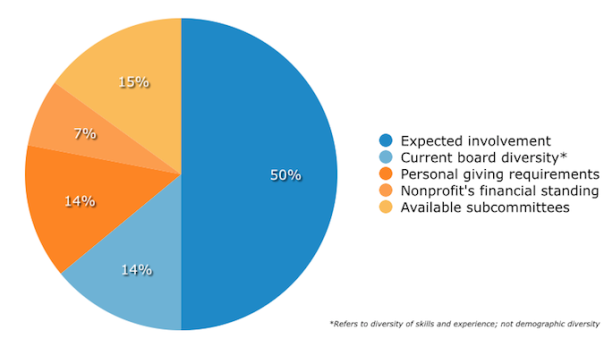
 Do you know what is rattling around someone’s head during your non-profit board recruitment process? Knowing this could help you design a better process with better tools. This week and part of next week, we are focusing on a recent survey released by our friends at nonprofit