Every non-profit fundraising event needs clowns

Clown_chili_peppersI’ve seen it happen way too often. A fundraising professional or the executive director says to a group of people — using at a board meeting — something like this: “We need volunteers to help with our special event fundraiser. Who can help?” At first, there is an awkward silence and no hands go up. Then there are a few reluctant hands. Whenever I see this happen, I’m always left wondering if those were the right people for the job and how many of those people are clowns?

Before starting this post, let me just say that my point of view on this issue is obvious . . . stop using group recruiting techniques to recruit people for tasks that require specific skill sets. You are only setting yourself up for lots of grief and possibly failure.

With this being said, the following is a traditional list of characteristics for special event volunteers:

  • Familiar with and passionate about your mission, vision and programs
  • Possess time and willing to use that time to plan and execute the event
  • Have large networks (hopefully ones that don’t overlap too much with the other volunteers on the committee)
  • Willing to ask others for money (e.g. selling sponsorships and tickets)
  • Works well with others (e.g. good listen, not abrasive, demonstrates teamwork)
  • Has a track record of following through on what they commit to doing
  • Well organized

I’ve rolled with this short list for years and it hasn’t failed me.

I use the aforementioned list to identify and target prospective volunteers. I also use the list to develop written volunteer job descriptions. I’ve shares it with volunteers on the recruitment call because I commonly get asked “Why are you asking me to do this?” and I simply tell them that they possess all of these characteristics.

However, I’ve had this nagging feeling for years that something is missing from this list, and I put my finger on it just the other day.

bleachersI was sitting in the bleachers at Wrigley Field. I was there with my father and my partner. The quality of baseball on the field was terrible, there was a constant drizzle of rain falling from the sky, and the fans were obviously getting antsy. Suddenly, one of the fans got to his feet and yelled at the top of his lungs:

“Hey everybody!
Right field sucks!”

He started chanting over and over again “Right field sucks! Right field sucks!” until other fans joined in.

As this played out in front of me, my first thought was “Hey, sit down! Some of us are trying to watch some bad baseball here!” but then it dawned on me. It was a big AH-HA moment.

There are people like this is every crowd. They love attention. They need to be at the center of the action. In grade school, they were the class clown. As adults, they are just clowns.

I don’t mean this in a bad way. These people are outgoing, love being around other people (aka well-networked) and love a good party (regardless of whether it is a baseball game or your agency’s special event fundraiser).

So, on a go-forward basis I plan on amending my special event volunteer list of characteristics to include: “clown“.

bleachers2I’m sure some of you are probably skeptical and for good reason. I mean how crazy and distracting would it be to have a committee of people who all want to be the center of attention. Crazy . . . I’m sure! However, I can’t help but dream about the type of event those folks would build in the name of securing more recognition and attention all to benefit my agency.

I suspect that with a little guidance (and after all isn’t guidance your role as a non-profit professional) this strategy could pay off in a big way.

Regardless, anything will be better than asking people to put their hands up and volunteer.

What characteristics and skill sets do you look for when recruiting volunteers to help plan and implement your agency’s special event fundraisers? What has been your experience with recruiting clowns? Please scroll down and share your experiences in the comment box below because we can all learn from each other.

Here’s to your health!

Erik Anderson
Founder & President, The Healthy Non-Profit LLC
www.thehealthynonprofit.com 
erik@thehealthynonprofit.com
http://twitter.com/#!/eanderson847
http://www.facebook.com/eanderson847
http://www.linkedin.com/in/erikanderson847

Audit committee or no audit committee? That is the question.

auditWhen it comes to financial management, I’ve run into two types of non-profit organizations. There are those organizations who struggle with financial management and don’t have a strong and independent Finance committee in place. Then there are agencies whose Finance committee is the strongest voice in the boardroom. For the latter type of organization, the question about whether or not to form an audit committee always seems to linger in the air with a diversity of opinions spinning around it.
In my experience, strong finance committees have had a difficult time accepting the case for support for forming another standing committee focused on finance. After all, it is hard to argue with the “Why fix something that isn’t broken?” argument. Moreover, the “Our agency should stay ahead of Sarbanes-Oxley legislation” also seems to fall flat.

I fought these battles a decade ago when I was on the front line leading a local non-profit organization. I was successful in my quest to form an audit committee, and it allowed us to relieve the Finance Committee of the following roles and responsibilities:

  • Selecting the audit and periodically putting the audit work out for bid.
  • Reviewing the work of the auditor and making recommendations to the board based on this work.
  • Providing board oversight of the auditor so that management hasn’t his/her only point of contact.
  • Review and assessment of the agencies internal controls.

In hindsight, I loved this move for two big reasons:

  1. It got some stuff off of the Finance Committee’s plate and allowed them to focus on important stuff.
  2. It gave me another committee opportunity to engage board volunteers and recruit influential finance-minded non-board volunteers.

I must admit that in the beginning many people (including myself) still had a difficult time with the blurry line between these two committees. This issue recently reared its head at an agency where I am doing some work, and I really like the clarity that came out of the conversation. So, I thought I’d share it with you this morning.

  • Finance Committee – develops and monitors financial practice
  • Audit Committee – monitors the process in which financial practices are carried out

Are you still not feeling it? OK, the following is a list of resources that I really like and hopefully provide you with the answers for which you’re looking:

I hope you find these links helpful.

Has your organization formed an audit committee? What was your experience? Did you develop two different committee charters with two different committee work plans? If so, how did you divide things up? How have things worked since you made the change? Does your audit committee feel like a superficial after-thought that you only did because people were telling you it was a best practice?

Please scroll down and share your thoughts and experiences in the comment box below. This is an important board governance question that always seems to fly under the radar. Let’s talk about it.

Here’s to your health!

Erik Anderson
Founder & President, The Healthy Non-Profit LLC
www.thehealthynonprofit.com 
erik@thehealthynonprofit.com
http://twitter.com/#!/eanderson847
http://www.facebook.com/eanderson847
http://www.linkedin.com/in/erikanderson847

Is your non-profit only living for today? Then you need Picasso!

picasso1Welcome to O.D. Fridays at DonorDreams blog. Every Friday for the foreseeable future we will be looking at posts from John Greco’s blog called “johnponders ~ about life at work, mostly” and applying his organizational development messages to the non-profit community.

In a post titled “Not Pretty,” John talks about Pablo Picasso’s painting of Gertrude Stein and how it was a portrait of what he thought she would look like as an older woman. John used this story to springboard off into organizational development and change management themes. It was the following passage from his post that really got me thinking:

First off, how the organization performs in the future may hardly resemble how the organization is performing today … Time — aging — will have its way.  Things will change. Without the critical development of structure, process, culture, and talent, time — and change — will wreak havoc.  Capabilities will erode.  New capabilities will be needed.”

When I read this, I visualized rocks being pounded by ocean waves. In real-time, the rocks seem to win because waves disperse and scatter into mist and foam. However, the reality of the situation is the absolute opposite. The waves are actually winning. Right? Because in the long run those rocks turn into sand as a result of the pounding they take.

In this analogy, your non-profit agency is the rock and you’re more than likely eroding.

picasso2As time passes, the waves of change crash against your seemingly rock solid organizational exterior, but change is slowly occurring. Here are just a few examples:

  • You lose employees
  • You lose board volunteers
  • Your strategic plan is aging (in fact, all of your plans are aging)
  • Your technology systems are becoming outdated and old
  • Your base of donors gets older and their individual capacities change
  • Best practices and cutting edge practices morph and refine themselves (e.g. who saw online giving as an option 50 years ago?)
  • Your community’s economic foundation is eroding and changing (e.g. industrialization to information, local to global, etc)

Whether you feel it or not, your non-profit organization is being pounded into one big pile of sand.

And you are more than likely making things worse!

In recent years, there has been a lot written about “The Nonprofit Starvation Cycle” by folks like Dan Pallotta (via his books Uncharitable and Charity Case) as well as the recent open letter titled “The Overhead Myth” from GuideStar, Charity Navigator and Better Business Bureau.

I think an article by Ann Goggins Gregory and Don Howard in Stanford Social Innovation sums up the mistake many of us are making very well:

“A vicious cycle is leaving nonprofits so hungry for decent infrastructure that they can barely function as organizations—let alone serve their beneficiaries. The cycle starts with funders’ unrealistic expectations about how much running a nonprofit costs, and results in nonprofits’ misrepresenting their costs while skimping on vital systems—acts that feed funders’ skewed beliefs. To break the nonprofit starvation cycle, funders must take the lead.”

Is this you? Are you skimping? Are you living for today and ignoring tomorrow?

picasso4I really like the last sentence in this previous passage because it dovetails with John’s organizational development blog post about Pablo Picasso so very well.

In a previous post titled “Ending the ‘Overhead Myth’ is everywhere,” I was skeptical. I honestly don’t think an open letter to donors or a ton of online chatter will change donor perceptions about the value of investing in what John describes as “…structure, process, culture, and talent…”

If you’re going to engage your donors in this discussion because they are the key to allowing you to invest in what they perceive as “overhead,then you’re going to need someone like Pablo Picasso to help you assess what your organization will look like in the future. This information will help you develop your case for support, which is what you need before engaging your donors in this conversation.

Is this way too much work for you to consider? No problem . . . I’ll see you at the beach!  😉

What is your agency doing to engage donors and win their hearts and minds when it comes to “The Overhead Myth” and the “Nonprofit Starvation Cycle”?  Who is your Pablo Picasso helping you with organizational assessment (both present and future)? If you’re thinking about using an external consultant to help you with all of this . . . I think I know someone who wants to help you!  😉

Here’s to your health!

Erik Anderson
Founder & President, The Healthy Non-Profit LLC
www.thehealthynonprofit.com 
erik@thehealthynonprofit.com
http://twitter.com/#!/eanderson847
http://www.facebook.com/eanderson847
http://www.linkedin.com/in/erikanderson847

Don’t put Dorothy on your board of directors

On Monday, I shared with you a few observations from The Wizard of Oz and Oz: The Great and Powerful as I think it pertains to non-profit work. At the end of Monday’s post I promised to take you further down the Yellow Brick Road by revisiting a series of Oz-inspired posts from two years ago. Today’s post is about board composition and board development. Enjoy . . . here’s to your health!  ~Erik

Don’t put Dorothy on your board of directors

Originally published on October 27, 2011

dorothySeptember 15, 2008 . . . do you remember where you were and what you were doing? It was the day the world changed. It was what some people have called an “economic 9-11″. Regardless of how you characterize the day that Lehman Brothers filed for bankruptcy and the stock market started its crash, it is hard to argue the following: 1) the economic paradigm we all used to live in shifted and 2) nothing will ever be the same again.
This week I have used characters from “The Wizard of Oz” to talk about current challenges facing the non-profit sector. Today, we will spend a moment talking about Dorothy.

Dorothy is an iconic character who has been described as a “level-headed, plucky, resourceful, determined, all-American, populist”.  However, I’ve always seen her as a traditional “conservative”. Don’t believe me? Refresh your memory with this quick YouTube clip. Of course, I don’t mean this in any kind of political way, but more of the traditional meaning of “holding to traditional attitudes and values and cautious about change or innovation”.

You cannot afford to have Dorothy on your board of directors during these tough and turbulent economic times!

Mentally take a look around your board room and see if you can identify how many Dorothy-like volunteers occupy chairs. They are kind folks (dare I say friends) who look and sound like the following:

  • They are frightened by the economic “tornado” whirling throughout the world. They talk about economic news constantly.
  • They wish for yesteryear and reminisce about times when your non-profit was facing a different set of circumstances. They fixate on making things better . . . just like they “used to be”. They’re focused on making that formerly kick-butt special event awesome again. They’re insistent that you can hold onto all of your government grants if you just tried a little harder. After all, there is no place like home.
  • They are visibly closed to new and innovative ideas that have not been tried. They believe ePhilanthropy is a passing fad. They won’t entertain ideas around merger, acquisition, or strategic alliances that share back office functions. After all, that is not the Kansas they so fondly remember.

Don’t get me wrong. I am not suggesting a “witch hunt” to root out these folks and fire them. Dorothy serves an important role on your board. She is that cautious voice that keeps you from getting into trouble. She will stop you from pulling the plug on your annual campaign and direct mail appeals and “going all in” on ePhilanthropy efforts. Valuable? YES! However, what happens when you have too many Dorothy-like board members? Or what if you have those well-intentioned people serving in the wrong roles (e.g. board president, annual campaign chair, strategic planning committee, etc)?
My best two pieces of advice for non-profit staff and board volunteers this morning are:

  1. Be especially strategic and thoughtful about where you ask these people to serve in your organization. This means that you need to: a) identify who these folks are and b) have a clear understanding of which volunteer opportunities are acceptable for conservative personalities.
  2. Focus your board development efforts over the next year on recruiting people in your community who don’t resemble Dorothy to serve on your board. This is not the time to pine for Kansas! This means your board development committee needs to double down on the “prospect identification” and “prospect evaluation” elements of the board recruitment process. Gone are the days when everyone sits around a table and tosses out names of good, kind and resourceful people. BE STRATEGIC!

I suggest that the type of people your board development committee should look for exhibit some of the following characteristics:

  • They don’t appear to be “personally” economically impacted by the Great Recession
  • Their business or line of work seems to be doing fine
  • They are naturally positive and have a decent outlook on the future
  • They seem to be open to new ideas (as evidenced in their personal and professional lives)
  • They are “outside-of-the-box thinkers (as evidenced in their personal and professional lives)

Remember, if you want to keep the flying monkeys away from your non-profit agency, STAY AWAY FROM DOROTHY.

OK — if you aren’t buying into my cheesy “Wizard of Oz” analogy, then please go to the library and borrow the book “Who Moved My Cheese“. You’ll thank me later.

How has your agency adapted to the new realities? Have you changed your resource development model or are you still trying to do things the old way? Do you see your board development efforts changing or focusing on different types of prospects? Please use the comment box below and weigh-in. Please remember that we can all learn from each other. In fact, it is probably the most effective way many of us learn.

Here is to your health!

Erik Anderson
Founder & President, The Healthy Non-Profit LLC
www.thehealthynonprofit.com
erik@thehealthynonprofit.com
http://twitter.com/#!/eanderson847
http://www.facebook.com/eanderson847|
http://www.linkedin.com/in/erikanderson847

Board Development Done ….. Less Effectively

Dani Robbins is the Founder & Principal Strategist at Non Profit Evolution located in Columbus, Ohio. I’ve invited my good friend and fellow non-profit consultant to the first Wednesday of each month about board development related topics. Dani also recently co-authored a book titled “Innovative Leadership Workbook for Nonprofit Executives” that you can find on Amazon.com. 

process1Last month I wrote on post entitled Board Development Done Right. Let’s talk today about the other side of board development: what it looks like when it’s done less effectively.

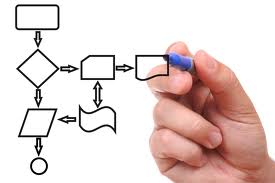
In the absence of a board development plan that is being followed, most organizations do some combination of the following:

  • A board member or member of the senior staff meets someone in the community who they think might be good for the board.
  • They pass the name on to the Board Chair or the CEO who later meets with the prospect and may or may not invite them to join the board.
  • If they do, and the person says yes, they bring the name up at the next board meeting, and that person is voted upon and becomes a board member.
  • Usually, but not always, the new board member is brought on board without an orientation as to what the expectations and requirements are of board leadership.

It’s a process. It’s not great, but it is the process that is  fairly consistently followed by many organizations.

Will that process build a great board? Probably not, but it works — to a degree — and it’s much better than the alternative.

process3The alternative is this with the same beginning:
  • a board member or senior staff meets someone in the community who they think might be good for the board and asks them to join the board.
  • They say yes.
  • That person shows up at the next board meeting and is voted upon while in the room and voila! They are a board member.

Lest you think I am exaggerating . . . I attended a luncheon not too long ago where I was seated next to a nonprofit CEO. He asked what I did for a living, and I shared that I was a non-profit management consultant, who primarily works with organizations on board governance, executive couching, system development and planning. He immediately asked me to join his board.

As I’ve written before, strong boards beget strong organizations. It works the other way too. Less effective boards beget less effective organizations. Those boards hire less talented CEOs (or the wrong CEOs), for whom they don’t set goals and whom they don’t evaluate. They do not have a written strategic plan or a board development plan (or many other plans for that matter). There is no orientation process, no education and no board evaluation.

transparencyHere’s the rub . . . Board strength isn’t just an internal issue that is invisible to the community. It is visible. Here’s what it looks like:
  • The organization has a revolving door of CEOs.
  • The CEO has a revolving door of senior staff.
  • The CEO has a very strong personality and does the work of the board, which the board allows either because: 1) they don’t know they shouldn’t, OR 2) they are afraid that if they challenge the CEO s/he will leave, and they don’t have the time, the inclination, the ability, or a plan to deal with.
  • The Board Chair has a very strong personality (and may also be a big donor) and other board members are afraid to alienate him/her.
  • There are quorum issues.
  • Board members tend to stay only one term.

Just because it’s like this today, don’t mean it has to stay like this.

Organizational transformation is possible and even probable with the right plan and the emotional fortitude to implement that plan. Like any other challenge in life, if you don’t like the path you’re on, pick a new path! Get your board together (or at least your executive or nominating committee) and come up with a plan.

Start by answering these questions:

  • Who do you have around the table?
  • Does everyone look the same?
  • Is everyone, in fact, the same?
  • Are there gaps in skill set, faith, race, capacity, interest, thought, ability, orientation, age, and gender?
  • Are there leaders in your community who can fill those gaps?
  • Who can get in front of those people, introduce and engage them in your organization?
  • How will you decide when and to whom to offer board seats?
  • When will you vote on new members?
  • What will you include in your orientation?
  • What type of evaluation will the board conduct of itself and how often?
  • What type of education does the board need and want?

Board development is the intentional process by which the board is perpetuated, evaluated, and educated. Let’s get to it!

What’s been your experience? How have you built a board? As always, I welcome your experience and insight.
dani sig

What are you doing with your non-profit data?

286709039If you are collecting data on your non-profit organization’s performance and doing nothing with it, then you should be tarred and feathered. You are too busy to be doing things that don’t get you a return on investment on your time. Unfortunately, data collection can be time-consuming if you haven’t built good systems to make collection easy, and there are too many small non-profit organizations who are under-resourced and haven’t built those systems.

So, why do so many agencies still invest the time to collect data when it is difficult to do and so incredibly time-consuming? In almost every instance that I’ve seen, it is simply because a donor is requiring it or they are affiliated with a national organization that makes it mandatory.

Here is a thought . . . if you are going through the effort, then why not benefit from it?

What should you measure?

The “WHAT” is hard to answer unless you know the “WHY”. In other words, you should measure things relating to board engagement and performance if you want to improve those things. You should measure things relating to money and donor behavior if you want to improve your resource development.

One national organization with whom I am very familiar (wink, wink), developed an entire organizational scorecard full of key performance indicators (KPIs) that breakdown into the following five ares:

  • strategic growth
  • increased impact
  • financial health
  • resource development
  • board of directors

2964298027I know that a number of subscribers to this blog aren’t members of this “unnamed national organization,” and you are probably wondering what are some of the KPIs listed under these categories. While I don’t think I’d be violating any major trade secrets in sharing those KPIs with you, I want to be respectful of their work. So, I’ll only share a few of those KPIs to give you an idea and a start:

  • net change in number of clients service
  • average days cash on hand
  • net change in total income
  • percent of board volunteers that attended 75% of meetings
  • percent of board volunteers who make a personal unrestricted financial gift
  • percent of board volunteers who make a face-to-face solicitation on behalf of the agency

If you are interested in developing KPIs and a scorecard for your non-profit organization, here are a few resources I’ve found online that may help you:

What next?

4775722590I point you back to my inflammatory opening sentence:

If you are collecting data on your non-profit organization’s performance and doing nothing with it, then you should be tarred and feathered.”

Collecting this data isn’t rocket science, but it is time-consuming and you’re too busy to invest that time and get nothing back in return. Right?

If you are measuring program-related KPIs (e.g. outcomes data, impact data, etc), then you should share that info with the staff responsible for those programs. If you are measuring fundraising-related KPIs, then you should share that info with your fundraising staff and fundraising volunteers. If you are measuring board engagement related KPIs, then you should share that info with board volunteers.

I believe all KPIs should be shared with all board members in all instances (but at the appropriate time and setting) so they understand whether or not the organization is healthy or unhealthy. I also believe that where possibly, KPIs should be directly tied to performance management systems and evaluation tools.

The big idea here is that collecting this type of data, sharing this type of data, and integrating this type of data into systems like employee performance appraisal and board evaluation will drive change because it creates urgency, accountability and the assessment information necessary upon which organizational plans can be built.

Has your agency developed KPIs? If so, how do you use them? With whom do you share your data? What has been the result? Please use the comment box below to share your experiences.

Here’s to your health!

Erik Anderson
Founder & President, The Healthy Non-Profit LLC
www.thehealthynonprofit.com 
erik@thehealthynonprofit.com
http://twitter.com/#!/eanderson847
http://www.facebook.com/eanderson847
http://www.linkedin.com/in/erikanderson847

Unhappy non-profit situation? Don’t worry! Be happy!

happy1Welcome to O.D. Fridays at DonorDreams blog. Every Friday for the foreseeable future we will be looking at posts from John Greco’s blog called “johnponders ~ about life at work, mostly” and applying his organizational development messages to the non-profit community.

In a post titled “Don’t Worry. Be Happy,” John pays tribute to his wife on their 35th wedding anniversary and makes a great point about change management and unhappy employees in the workplace. Specifically, John’s point (which he backed up with research) was:

It seems once we stop worrying/doubting/resisting and start accepting and committing; we work — subconsciously if not consciously — to be happy.

When I read this, it made me think about all of my non-profit friends who keep telling me how unhappy they are with their work situation.

  • The board isn’t committed to fundraising.
  • The staff is unhappy and it shows in their work.
  • Our donors seem more reluctant than ever to support our programs.
  • We’re losing a few major grants, and we don’t have a sustainability plan in place.

Every once in a while, I come across a study like the one reported in the Chronicle of Philanthropy on October 24, 2011 that says:

  • 70% of non-profit employees are either somewhat fulfilled or outright dissatisfied with their job.
  • 60% of employees said they don’t feel valued.
  • 40% said the following important factors that aren’t being exhibited at their agency are: respect, trust, support, and a compelling mission.

So, what is an executive director or senior manager supposed to do when faced with stuff like this? Simple . . .

  1. Don’t worry. Be happy. In other words, stop worrying and obsessing about it. Accept it as your reality. Worrying and doubting and resisting are a waste of time. A better use of your time will be to focus on solutions and what you’re going to do about it.
  2. Figure out a way to teach others how to do the same thing (aka Don’t worry. Be happy.) If you can help board volunteers and employees adopt the same approach to whatever is bothering them, then you’ll be well on your way to changing culture and addressing the challenge.

So, let’s use a real non-profit example to illustrate this suggestion.

happy2Your board volunteers are afraid of all things related to fundraising. They are frozen with fear and the result is inaction and lots of red ink on your financial statements.

Don’t worry! Be happy! Try to employ the following approach:

  • Stop blaming board members.
  • Stop asking them to do the same thing but in different ways.
  • Accept the fact that fundraising isn’t the easiest thing in the world to do.
  • Try to empathize and put yourself in their shoes.
  • Schedule a series of one-on-one meetings with board volunteers. Focus those meetings around the questions: “What are you willing to do in the area of fundraising (if anything)? What can I do to support you?
  • Work with your board development team to do a better job with identifying and recruiting additional board volunteers who have a proven track record with fundraising at other organizations.

I have a confession to make. I am as guilty as anyone else when it comes to obsessing about problems and challenges. I will wring my hands. I will look at the situation from every angle. I will keep asking the same questions over and over again, which of course are “Why? Why? Why?

Don’t worry. Be happy. This solution is easier said than done. However, when I look at the last six bullet points that illustrate how this change management approach can be practiced, it certainly seems logical and a lot more effective than focusing on: “Why? Why? Why?”

Have you ever tried using this approach? What was your experience? Please share your thoughts in the comment box below.

On a side note, congratulations to John and Jamie Greco for 35 years of marriage. This is a true testament to Jamie’s patience and perseverance.  LOL  Just kidding, John. It is a testament to your compatibility and love for each other.  HAPPY ANNIVERSARY!

Here’s to your health!

Erik Anderson
Founder & President, The Healthy Non-Profit LLC
www.thehealthynonprofit.com 
erik@thehealthynonprofit.com
http://twitter.com/#!/eanderson847
http://www.facebook.com/eanderson847
http://www.linkedin.com/in/erikanderson847

Nonprofit board development is a process when done right

Dani Robbins is the Founder & Principal Strategist at Non Profit Evolution located in Columbus, Ohio. I’ve invited my good friend and fellow non-profit consultant to the first Wednesday of each month about board development related topics. Dani also recently co-authored a book titled “Innovative Leadership Workbook for Nonprofit Executives” that you can find on Amazon.com. 

board of directors3The single most important thing an organization can do to ensure its sustainability is develop its board. You may be thinking — “No Dani, it’s staff, leadership, programming, impact or fundraising” — and all of those things are important, but none of them can happen the way they should without a strong board. Everything flows from a strong board of directors.

Strong boards set the mission, vision and values for an organization; they hire the talented and effective CEO and hold that CEO accountable for ensuring and implementing the strategic plan; they raise money, act as the fiduciary responsible agent over the finance and the programming; and they set policy. When it’s done right — like all good leadership — it looks like nothing.

Don’t be fooled, it’s not nothing and it’s not easy.

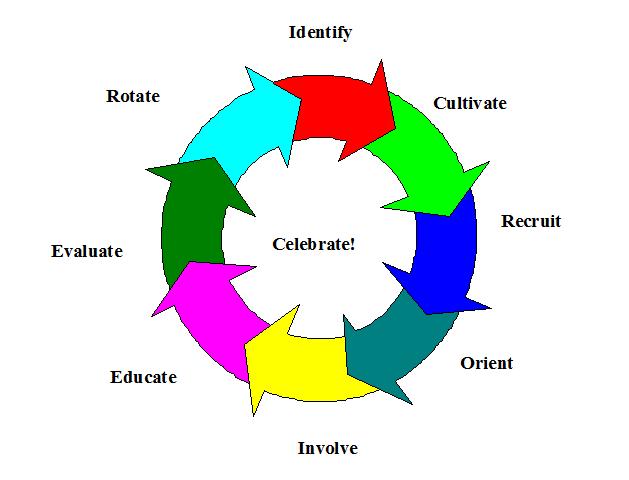
Board development is the intentional process by which the board is perpetuated, evaluated, and educated. It is usually stewarded by a committee that may be called Governance, Nominating, Administrative or Board Development, and it helps develop an effective board through its two main functions:

  • board building cycleBoard Building: A diverse board of directors (thought, skill, race, faith, ability, orientation, age, and gender) that is passionate about the mission of the organization is created through a board building process. That process includes an assessment of the current board and needed skill sets, identification of prospective members, and recruitment and nomination of new board members.
  • Board Education: Board members will fully understand and can effectively fulfill their commitments to the board of directors when a comprehensive orientation, continuing education, and annual evaluation process is in place.

The Board Development Committee outlines what the organization is looking for in a board member by analyzing current board make-up and identifying future needs, and finding the very best person(s) to meet those needs. In this identification process, the Board Development Committee informs the entire board of what the expectations are for board service.

The Committee reviews the prospects and sets a target number and priority listing of those they wish to bring on at the annual meeting. This list is presented to the board of directors for their comments. Any concerns are directed to the Board Development Committee.

In the absence of concerns, or after such concerns have been addressed, the prospective board member is contacted, preferably by a board member, a committee volunteer, or the person with whom the prospect is most closely affiliated, who requests a time to introduce the prospect to the mission of the organization.

I do not recommend you start the conversation inviting someone to join your board, or even share that you are calling to discuss potential board seats. I recommend you say that you are aware of their interest in the population your organization serves and you’d like to share some of your successes in positively impacting that population. (It may be necessary to assure them you are not setting up the meeting to ask for a gift.) You can decide once you are at the meeting if they are good fit for your board and if you should open the door to discussing a board seat; if not, you can find another way to engage them.

board recruitment

If you decide that you would like to invite them to be considered for a board seat, I recommend you communicate the time, financial obligation and effort expected of all board members before they agree to join.

Time is the principal commitment. Board members should be available at the time the board meets and be prepared to meet as often as is necessary to complete the business of the board during their term of service. They should also be prepared to attend fundraising events and to participate as fully as possible in developing and implementing the resource development plan.

I recommend you do not add someone to your board who cannot attend the meetings; either move the meetings or have them serve in another capacity. Organizations can only carry so many members who cannot attend meetings and most organizations already have a few people who fulfill that role.

Another primary responsibility of the Board of Directors is to ensure financial stability. Therefore, board members are expected to assist with fundraising efforts, as well as personally contribute. The financial health of the organization depends upon people-to-people contact, and prospective board members should understand that identifying and cultivating potential donors is part of their job.

Prospective board members are voted onto the board of directors in accordance with procedures laid out in the organization’s by-laws, which in Ohio are called Codes of Regulation.

Once voted upon, new board members should be oriented. I like to orient board member after they’ve been voted upon but before they’ve been seated. The orientation, either individually or as a group, should be conducted by the Board President, CEO, or Committee Chair. By the conclusion of the orientation, new board members should have a sense of the mission and programs, finances, fundraising initiatives, strategic goals, structure of the board of directors and staff, and their own roles and responsibilities as a member of the Board of Directors. They should also be invited to consider their own goals for service.

Once the Board has been appointed, the Board Development committee moves into its other two roles evaluation and education.

board evaluation

Evaluation is the process of assessing the progress of the board and identifying changes that will bring greater achievement of the organization’s mission. Evaluation is a developmental process, not a report card.

The Board Development Committee will ask individual board members to complete an annual self-assessment, including a section evaluating board process, which the committee will use to complete the board assessment. When a board assessment takes place, the Board Development Committee will compare the board’s individual assessments, identify areas of consensus, and develop a plan of action for strengthening the board.

This process can also include an opportunity for Board members to request trainings. Annual board education is integral to a successful board. There are a variety of training options, an example of some include:

  • The Art of the Ask
  • Board Process – agendas setting, committee, topics, strategy, structure, engagement
  • Basic Board responsibilities (fiduciary and legal)
  • Board vs Staff roles
  • Best Practices of Effective Boards
  • Governance as Leadership: Fiduciary, Strategic and Generative Modes of Governance

I encourage every organization to create a formal plan to annually assess, develop and grow their board. Strength begets strength and strong boards ensure strong, sustainable organizations.

As always, I welcome your experience and insight.
dani sig

How much money should your non-profit have in reserve?

operating reservesIdentifying blog topics can be hard. Sometimes you find a comfort zone and ideas flow freely. Other times, it is next to impossible and the writers block is crippling. So, I love it when readers sometimes email me on the side and suggest topics.
Yesterday, a reader did exactly that when she emailed me with the following request:

“Do you take requests?  If so,  I would love to hear your take on social service agencies that have more than 6 months of money on hand and the impact of that on fundraising.”

When I first read that email, I planned on squirreling the topic away for one of those days when topic ideas are difficult to come by. However, there was something about this topic that possessed me. I opened up a few Google searches, read a few white papers and blog posts, and found myself whipping out this post.

First, let me start with a very direct response to the question posed by the reader.

I have worked with a disproportionately large number of small non-profit organizations. Organizational capacity for these agencies is always an issue and the amount of cash on hand is typically very small. So, I’ve always advocated to CEOs and their boards that they put plans in place to build operating reserves equal to three to six months.

Only one client to my recollection every worked with more than a six month operating reserve, and I don’t think it impacted their fundraising efforts. If I were to speculate as to why that was, I think the explanation is simple . . . that agency did an excellent job with donor communications and made their case as to why operating reserves of that size were important.

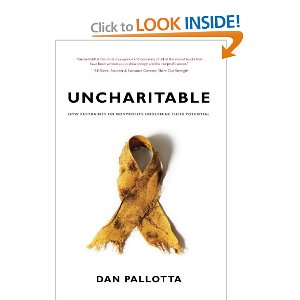
uncharitableSetting this one example aside, I do generally believe that building large operating reserves larger than 6 months or one year causes problems with donors. I say this because of everything Dan Pallotta writes in his book Uncharitable and how donors hold the non-profit sector to a different standard than the for-profit sector.

In his book, Pallotta talks eloquently about how for-profit corporations are rewarded by investors for generating profits, banking cash and growing organizational capacity. He contrasts this point with how donors punish non-profit organizations for doing the same thing.

For actual examples and a better explanation, I encourage you to read his book. I promise that it will be an eye opening experience. Additionally, you’ll likely walk away from the exercise and find yourself muttering the words: “Damn Puritans!”

In my clicking around and Googling, I found a number of interesting facts including:

  • Charity Navigator reserves its top ratings for organizations with 12 or more months of working capital.
  • The Nonprofit Finance Fund reported in its 2012 State of the Sector Survey that only one-fifth of survey respondents said they felt their donors were comfortable talking about operating reserves.
  • In 2011, more than three-quarters of non-profit organizations had less than 4 months of expenses in operating reserves (60% reported less than 4 months and 28% reported one month or less).

I strongly urge you to click-through and read more startling statistics on this and similar subjects at:

I want to thank the reader who suggested this blog topic because they have caused me to change my thinking on this topic. From now on, when agencies ask my advice on what they should strive towards with regards to building an operating reserve, I plan on telling them . . .

12 months or more! ! ! !

With this Big Harry Audacious Goal (BHAG), the next words out of my mouth will be . . .

“Create a strong case for support or prepare to incur the wrath of donors.”

For those of you who don’t think this is possible, please take a moment to think about why that much cash on hand is important to your organization.

  • Many agencies are using their operating reserves as cash flow cushions as they wait for their accounts receivable from government grants. (Believe it or not some states are six to 12 months late in paying their bills.)
  • It is a sign of financial health to have operating reserves of this size.
  • One of the lessons learned from the recent economic recession is that larger rainy day funds are a necessity and not a luxury.
  • Stuff breaks and your organization needs to be in a position to fix the roof or replace a HVAC unit without running off to donors with an urgent case for support that sounds like a crisis or fire drill.

My advice to anyone who cares to hear it is:

  1. Set a goal to increase your operating reserves to 12+ months
  2. Work with the Finance Committee to develop a plan to achieve this goal (Yes, it will likely be a plan that spans many years). Perhaps, include in your plans to use a portion of your operating reserves to invest in organizational capacity building once certain targets are achieved.
  3. Work with the Resource Development Committee to write a case for support that supports these actions.
  4. Don’t hide from donors. Get out there and start talking to them. Weave the talking points from this new case for support focused on increasing reserve levels into your stewardship efforts. Donor engagement and education is the key to success.

So, I’m curious how many of you think I’m crazy? How big are your reserves? How big would you like them? What do your donors say about your reserves? Please use the comment box below to weigh-in on this discussion.

Here’s to your health!

Erik Anderson
Founder & President, The Healthy Non-Profit LLC
www.thehealthynonprofit.com 
erik@thehealthynonprofit.com
http://twitter.com/#!/eanderson847
http://www.facebook.com/eanderson847
http://www.linkedin.com/in/erikanderson847

There are BIG BUTS to consider when planning for change in your workplace

leading2Welcome to O.D. Fridays at DonorDreams blog. Every Friday for the foreseeable future we will be looking at posts from John Greco’s blog called “johnponders ~ about life at work, mostly” and applying his organizational development messages to the non-profit community.

In a post titled “Big Buts,” John talks about leadership and how changing the culture at your agency starts at the top. I just love the Chinese proverb with which John starts his post: “The people follow the example of those above them.”

I cannot tell you how many times I’ve walked in the front door of an agency because they need help changing something.

Something being . . .

  • We’re not raising enough money.
  • We’re not hitting our goals.
  • No one is on the same page.
  • The agency is adrift.
  • The programs aren’t achieving the necessary impact.
  • Donors are abandoning ship.
  • The board is disengaged.

In these initial conversations, I’m always asked to help fix the situation, but the fix is always something like:

  • Help us write a strategic plan, board development plan, resource development plan, annual campaign plan. Plan! Plan! Plan!
  • Conduct a program assessment.
  • Facilitate a training.

leading1Please don’t misunderstand me. I am not suggesting that assessments, plans and trainings aren’t important. They are crucial! However, there are questions that must be asked first. Those questions are:

  • Is the leader (or leaders in the case of a non-profit organization) willing to lead the change?
  • Is the current leader the right leader to lead this change? Or are they part of what needs to be “changed”?
  • Is the current leader willing to lead by example after the training, assessing or planning is completed?
  • Is the current leader willing to do whatever it takes to get everyone else (e.g. middle management, board members, etc) aligned and on the same page?
  • Is the current leader willing to advocate and lead on issues pertaining to policies, procedures and practices (e.g. budget practices, fundraising policies, HR policies, board practices especially around creating accountability in the boardroom, etc).

Again, please don’t misunderstand me. I am not just talking about the executive director of a non-profit organization. Depending on the circumstances and requisite change, these questions can also pertain to:

  • board president
  • board volunteers who serve as committee chairs
  • fundraising professionals
  • program leaders

All I am saying is that step one to any change initiative at your agency needs to involve taking a good hard look in the mirror and asking some tough leadership questions. To John’s point in his post “Big Buts,” the issue goes beyond just “Do we have the right person(s) sitting in the right seat(s)?” It includes a lot of BIG BUTS.

Only after those questions are asked and answered can planning or training efforts take root and spark the cultural change you seek in your non-profit agency.

An old friend of mine is famous for saying: “Non-profit success starts and ends with leadership.

To channel Jim Collins this morning . . . Does your agency have the right people on the bus? Are they all in the right seats? How do you know? What tools do you use to answer these questions? Annual performance plans? Committee work plans? Year-end individual board member evaluation tools? Written annual personal performance plans for individual board members? If it is change you seek, are those individuals willing to lead by example?

Lots to ponder on a Friday morning. Once you have some answers, please share a few of your thoughts in the comment box below.

Here’s to your health!

Erik Anderson
Founder & President, The Healthy Non-Profit LLC
www.thehealthynonprofit.com 
erik@thehealthynonprofit.com
http://twitter.com/#!/eanderson847
http://www.facebook.com/eanderson847
http://www.linkedin.com/in/erikanderson847