
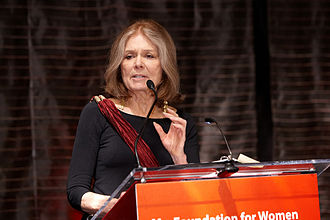
 It was a bleary-eyed late night dash in a rental car to position myself for a morning meeting, and I was listening to National Public Radio (NPR) in an effort to stay awake. At one point, someone was interviewing iconic feminist leader Gloria Steinem. While I cannot remember the big reason for the interview (e.g. new book, rally, election analysis, court ruling, etc), there was one thing that stuck with me, and I just had to share with you because I think it is a great allegory for how your non-profit should interact with donors.
After listening to the NPR interview, I went online and Googled around for the text of what Steinem calls her “Always Ask The Turtle” story in her own words. Luckily, I found it in a number of different places so I feel OK with sharing it with you here:
I took geology because I thought it was the least scientific of the sciences.
On a field trip, while everyone else was off looking at the meandering Connecticut River, I was paying no attention whatsoever. Instead, I had a found a giant, GIANT turtle that had climbed out of the river, crawled up a dirt road, and was in the mud on the embankment of another road, seemingly about to crawl up on it and get squashed by a car.
So, being a good codependent with the world, I tugged and pushed and pulled until I managed to carry this huge, heavy, angry snapping turtle off the embankment and down the road.
I was just putting it back into the river when my geology professor arrived and said, ‘You know, that turtle probably spent a month crawling up that dirt road to lay its eggs in the mud by the side of the road, and you just put it back in the river.’
Well, I felt terrible. But in later years, I realized that this was the most important political lesson I learned, one that cautioned me about the authoritarian impulse of both left and right.
Always ask the turtle.
After hearing Steinem share this story, the first person I thought of was Penelope Burk, who is the famous CEO of Cygnus Applied Research and author of Donor Centered Fundraising. The more I thought about it, the more I was convinced non-profit organizations should adopt Steinem’s turtle story as a moral compass for how to work with donors.
Here are just a few comparisons I came up:
- Like the turtle, donors spend lots of time struggling to crawl up a dirt path called a career path
- Like the turtle, donors build a nest egg of money (e.g. net worth)
- Like the turtle, donors behave in certain ways for certain reasons (e.g. they didn’t just crawl up the path for no reason at all ... they saved their money for a reason … they donate to certain charities for a reason)
OK, I’ll stop beating this dead horse.
The point I’m obviously driving at is simple, but one I think every fundraising professional should live by.
Don’t assume the following:
- Don’t assume you know why individual donors support your mission
- Don’t assume you know what a donor’s capacity to give or willingness to give
- Don’t assume you know which programs/activities a donor is passionate about
- Don’t assume you know the best way (e.g. via event, pledge drive, major gift agreement, planned gift, etc) for a donor to give to your organization
The bottom line is DON’T ASSUME . . . “Always ask the donor”.
Thanks to Gloria Steinem for inspiring this morning’s blog post and sharing her amazing story with the world.
How does your organization engage its donors? What activities do you consider “donor-centered“? Do you have a fun story to share where engaging with a donor resulted in an ah-ha moment and something beautiful for both your organization and the donor? Please share your thoughts and experiences in the comment box below. We can all learn from each other.
Here’s to your health!
Erik Anderson
Founder & President, The Healthy Non-Profit LLC
www.thehealthynonprofit.com
erik@thehealthynonprofit.com
http://twitter.com/#!/eanderson847
http://www.facebook.com/eanderson847
http://www.linkedin.com/in/erikanderson847
 I believe that sometimes the universe speaks to you, and over the last two days I’ve been beat over the head with reminders that your non-profit organization’s donor recognition must be meaningful. While there is a time and place for computer generated gift acknowledgement letters and donor gifts, you need to know your donor and appreciate them in a way that speaks to their inner philanthropic soul.
 To sum up the results of yesterday’s discussion, the volunteers decided that donor recognition and gifts should be personal, mission-focused and meaningful.
 On Saturday, I attended the funeral of my father’s aunt —
  He first started looking for people who had once been loyal supporters but for whatever reason stopped donating. Then he found mutual friends (e.g. board members, former board members, volunteers, donors, etc) and asked them to assist with a re-introduction. On a go-forward basis he simply engaged in relationship building.
 So, I guess I’m feeling a little bah-humbug about the entire idea of #RetentionWednesday. If I were king for a day (a scary thought), I would decree 2015 “The Year of Retention“.
 “I laughed at the Lorax, “You poor stupid guy!
 Other stewardship activities definitely get you a little closer to building that relationship and understanding your donors’ rationale for making a charitable contribution:
 Those of you who regularly follow this blog know that every post in May 2014 was dedicated to the idea of how non-profit organizations build loyalty among various stakeholder groups (e.g. donors, board members, staff, volunteers, clients, etc). All of those posts culminated yesterday when DonorDreams blog hosted this month’s
  Enjoy the reading!
 “It all ties together,” explains Jaime. “The big challenge is creating a culture that appreciates and strives to create loyalty.”
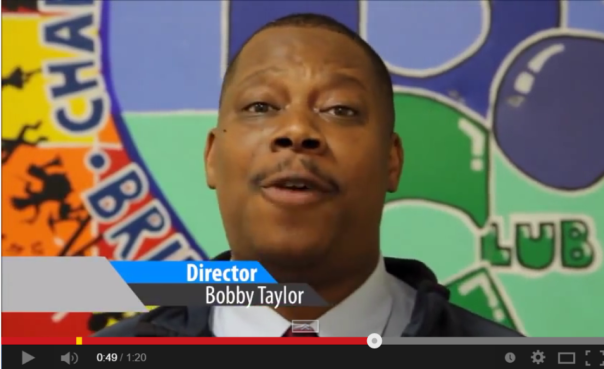
 “It is all about relationships,” explained
  In addition to these individualized sit down meetings with the executive director, the Club invests time and resources in a variety of other donor stewardship activities including: