
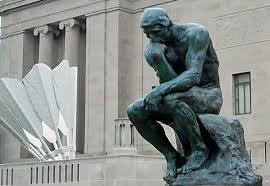
 Sometimes I hear something that hits me just right, and it takes days to get it out of my head. This happened on Tuesday during the Fox West Philanthropic Network’s Philanthropy Day luncheon. The keynote speaker, Dani Robbins, was talking about the different modes of board governance and the importance of facilitating more strategic and generative discussions in the boardroom. Doing so will result in a more engaged board.
Easy as that! Right?
Well, that little voice inside my head started screaming at me. It was saying, “Whoaaaaa! Can strategic and generative discussions be done with any old board members? Or does it take a certain type of board volunteer?”
So, I raised my hand and interrupted Dani’s keynote address. (Sorry, Dani!)
I was half expecting her to say that everyone is capable of engaging in these higher order discussions. I was also expecting her to put the responsibility back on the person(s) who facilitate those boardroom discussions to get the most out of the diversity of people sitting around the table.
However, I got an unexpected answer.
 Dani suggested that board volunteers who are “strategic thinkers” will have an easier time making the transition from traditional fiduciary modes of governance to more strategic and generative modes.
I suspect this means for many non-profit organizations, who want to make this adjustment to governance, that some thought needs to be put into adding more strategic thinkers to their board recruitment prospects lists.
Once I arrived at this conclusion, I got a mental picture of a committee meeting with board governance volunteers going through their prospect identification and evaluation exercises focused on finding strategic thinkers. As this mental picture became clearer, lots of questions flooded into my head including:
- What does a strategic thinker look and sound like?
- Where do strategic thinkers live, work and play?
- How easy will it be for board governance committees to do this work, especially when most committees (in my experience) shortcut the cultivation and evaluation process and go straight from identification to recruitment?
As I normally do when issues like this start bothering me, I open up my internet browser and go to Google. 😉
I quickly found myself reading a post on CEB Blogs titled “5 Characteristics of Strategic Thinkers“. Here are those characteristics:
- Open yourself to perspectives from multiple sources
- Incorporate both logic and emotion into your thinking
- Seek options beyond today’s reality
- Question both the familiar and the to-be-determined
- Accept open issues
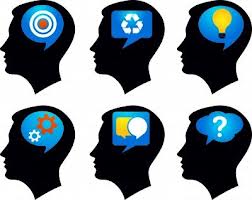 If you’re scratching your head while reading this list and asking “what does THAT mean,” then click the link and read the CEB Blog post. It really is quite good. If you want to learn more, then I suggest you start Googling around. 😉 You also might want to click here and start with this interesting Wikipedia page on strategic thinking.
Let me bottom line what I’m thinking for you this morning.
- This isn’t as simple as changing some of the criteria in your gap assessment tool
- These characteristics are more subtle than questions of age, gender, ethnicity, occupation, fundraising experience, etc
- Only people who know or work closely with board prospects know whether or not they are strategic thinkers, which puts a spotlight on who is serving on your board governance committee
- Identifying strategic thinkers for your board recruitment process will require more time spent cultivating and evaluating prospects and less jumping straight from identification to recruitment
What is standing in your agency’s way of transforming its boardroom discussions from fiduciary to more strategic and generative modes of governance? What are you doing to over come those obstacles? Is your board governance committee approaching its job differently when it considers this question? If so, how?
Please use the comment box below to share your thought and experiences. We can all learn from each other.
Here’s to your health!
Erik Anderson
Founder & President, The Healthy Non-Profit LLC
www.thehealthynonprofit.com
erik@thehealthynonprofit.com
http://twitter.com/#!/eanderson847
http://www.facebook.com/eanderson847
http://www.linkedin.com/in/erikanderson847
 Boards meetings can quickly go from productive to destructive in any number of ways. The following are just a few lessons I’ve learned throughout the years and thought board volunteers might benefit from reading:
 When you don’t know where you’re going any road will get you there
 Time of Death: 2 hours after we started talking about this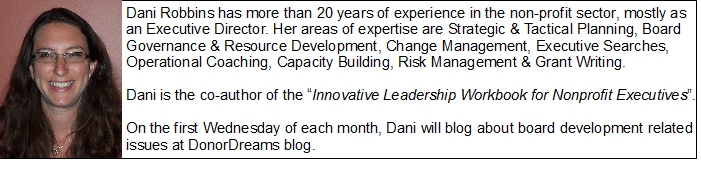
 It seems like I’ve been on the road a lot this month, and this allows me to interact with all sorts of talented and amazing non-profit professionals. In fact, just last night I was at dinner with another non-profit consultant who shared with me his “formula” for a successful board volunteer.
 The human element
 I was reviewing some old non-profit board governance material this morning and came across a document talking about “trends in non-profit governance“. In other words, the person who wrote that paper thought s/he was able to predict the future. Of course, this document was written more than 10 years ago, which got me thinking it might be fun to review some of their trends and determine where they were right or wrong.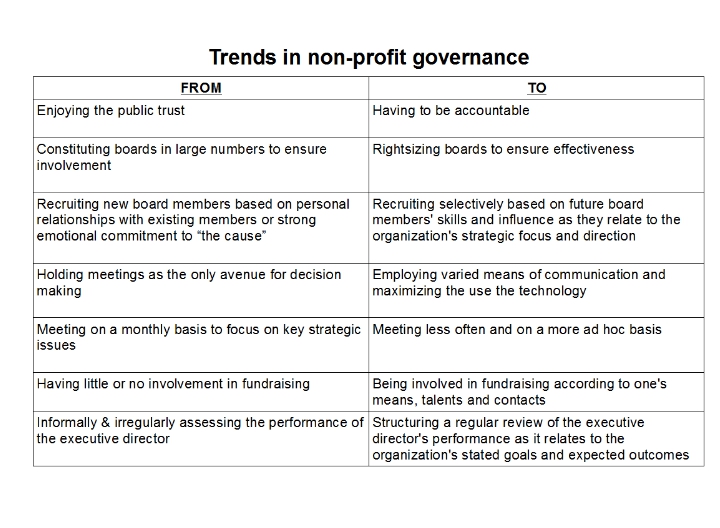
 Over the years, I’ve met non-profit board volunteers who didn’t see value or the need for staff. Likewise, I’ve met countless numbers of staff who complain about their board members. I’ve also met executive directors who deliberately do things to disengage their board volunteers (e.g. taking on fundraising responsibilities, reducing the number of board meetings, etc).
 Board member engagement is a common thread running through many of my blog posts. This isn’t because I’m a broken record. The fact of the matter is that so many of the things that plague non-profits are simply “symptoms” of a bigger problem. Yep, you guessed it . . . the root cause of many of our challenges in the can be traced back to our boards.
 Last week a dear non-profit friend of mine from California couldn’t sleep. She tossed and she turned. Ultimately, she got out of bed, turned on her computer and started talking into a microphone. When I woke up in the morning in my bed in Elgin, Illinois, there was an email sitting in my inbox with a voice file attachment. Her words have tumbled around in my head for a week, and I’ve decided to enlist your support in dissecting them.
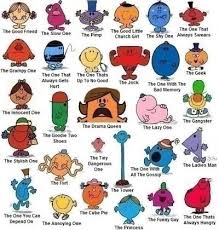 After listening to my friend’s recording, I started Googling around and searching for anything that anyone might have written about characteristics and traits of effective boards. I was especially intrigued by her question about incorporating personality testing into the board development process. After all, many workplaces are incorporating this type of assessment into their employee hiring process.
 Competencies
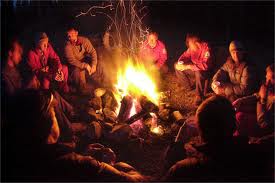 Recently, I’ve been doing a lot of what I consider “Nonprofit 101” trainings focused on board roles and responsibilities. After talking with board members about their fiduciary responsibilities, they often push back on their role in fundraising. I’m becoming really good at giving them the “sympathetic smile,” which communicates that I’m hearing their fear but not giving them permission to wash their hands of their role in resource development.
 After all, how scary can it be to “tell stories,” right?
 When I engage non-profit organizations in board development related issues, it can be like simultaneously operating in two parallel and polar opposite universes. One universe exists where everyone is talking about how things are “supposed to be” done. This is described in the agency’s written board development plan. In the other universe, there are board members and staff sitting around a table talking about “some guy” they know without any discussion about board composition gap assessment, prospect lists, prospect evaluation or anything that sounds like process.
 With this in mind, I am reminded of an old “Mondays with Marissa” post from a year ago titled “