
![20160121_131831[1]](https://donordreams.files.wordpress.com/2016/01/20160121_1318311.jpg?w=300) Recently, I’ve been working with Boys & Girls Club of Watertown on a project, and a few months ago staff asked me if I wanted to schedule my January return trip around their Camel Race fundraising event. Of course my answer was “Heck yeah!” I’ve been doing resource development and non-profit work for almost two decades, and I have never seen a camel race to raise money for charity. It was an opportunity I couldn’t pass up. So, today’s post is all about my experience, and it is an opportunity to share picture.
Recently, I’ve been working with Boys & Girls Club of Watertown on a project, and a few months ago staff asked me if I wanted to schedule my January return trip around their Camel Race fundraising event. Of course my answer was “Heck yeah!” I’ve been doing resource development and non-profit work for almost two decades, and I have never seen a camel race to raise money for charity. It was an opportunity I couldn’t pass up. So, today’s post is all about my experience, and it is an opportunity to share picture.
Spoiler alert . . . my camel won (I named her Carmen, after the somba singer dancer of Chiquita Banana fame, and you can see her pictured to the right)! 🙂
What is a camel race?
![20160122_205458[1]](https://donordreams.files.wordpress.com/2016/01/20160122_2054581.jpg?w=169) In a nutshell, a camel race is a game of chance. It involves betting, dice rolling and moving decorated camels through a race course. Here are a few details:
In a nutshell, a camel race is a game of chance. It involves betting, dice rolling and moving decorated camels through a race course. Here are a few details:
- Event sponsorships are sold to area businesses
- While different sponsor levels come with different benefits, every sponsor is asked to decorate a camel shaped piece of plywood
- Participants purchase tickets to attend the event (in addition to the camel races dinner is provided)
- Before dinner, there is a social hour where attendees are asked to vote for the best decorated camel (of course people vote by placing dollars in ballot boxes in front of each camel)
- There are also opportunities to purchase raffle tickets before dinner
- Camels are segmented into different races (there weren’t more than six camels per race because there aren’t more than six sides to a dice) and each camel is assigned a number between one and six
![20160122_205516[1]](https://donordreams.files.wordpress.com/2016/01/20160122_2055161.jpg?w=300) Two very large fuzzy dice are rolled and the numbers rolled move the camel with the corresponding number one space forward on the race course (e.g. if a two and six are rolled then camel #2 and camel #6 each move one space)
Two very large fuzzy dice are rolled and the numbers rolled move the camel with the corresponding number one space forward on the race course (e.g. if a two and six are rolled then camel #2 and camel #6 each move one space)- The winner of each race competes in a championship race at the end of the evening
- Event attendees place bets on which camel will win each race
- There is software that determines the odds and payout ratios based upon what people bet
If you are still scratching your head and unsure of how this event works, then here is how the organization describes the event in their FAQ document:
“How does the race work? Camels will move a space along the racetrack when their assigned number is called out as a result of a throw of two really large dice. Every time your Camels number is called out, they get to move a space. First Camel to move 10 spaces wins the Race. Attendees are allowed to bet on each heat using their camel bucks.”
While this event was unique, I walked away thinking it was kind of like a cross between a casino night and Duck Race fundraising event.
For the record, I LOVED this fundraising event. I give it a big gold star for fun and creativity. 🙂
What did the camels look like?
I love how excited and creative event sponsors got with their camels. The following are a few thumbnail snapshots I took with my cell phone (there were at least 30 camels and I just don’t have the space to share all of them . . . my apologies).
![20160122_171636[1]](https://donordreams.files.wordpress.com/2016/01/20160122_1716361.jpg?w=169)
![20160122_171639[1]](https://donordreams.files.wordpress.com/2016/01/20160122_1716391.jpg?w=168)
![20160122_171644[1]](https://donordreams.files.wordpress.com/2016/01/20160122_17164411.jpg?w=169)
![20160122_171648[1]](https://donordreams.files.wordpress.com/2016/01/20160122_1716481.jpg?w=169)
![20160122_171652[1]](https://donordreams.files.wordpress.com/2016/01/20160122_1716521.jpg?w=169)
![20160122_171655[1]](https://donordreams.files.wordpress.com/2016/01/20160122_1716551.jpg?w=169)
![20160122_171700[1]](https://donordreams.files.wordpress.com/2016/01/20160122_1717001.jpg?w=168)
![20160122_171705[1]](https://donordreams.files.wordpress.com/2016/01/20160122_1717051.jpg?w=168)
![20160122_171707[1]](https://donordreams.files.wordpress.com/2016/01/20160122_1717071.jpg?w=169)
![20160122_171711[1]](https://donordreams.files.wordpress.com/2016/01/20160122_1717111.jpg?w=168)
![20160122_171717[1]](https://donordreams.files.wordpress.com/2016/01/20160122_1717171.jpg?w=169)
![20160122_171727[1]](https://donordreams.files.wordpress.com/2016/01/20160122_1717271.jpg?w=169)
![20160122_171732[1]](https://donordreams.files.wordpress.com/2016/01/20160122_1717321.jpg?w=168)
![20160122_171749[1]](https://donordreams.files.wordpress.com/2016/01/20160122_1717491.jpg?w=169)
![20160122_171814[1]](https://donordreams.files.wordpress.com/2016/01/20160122_1718141.jpg?w=168)
Is a camel race the answer to ALL of your fundraising challenges?
The short answer is . . . NO.
![20160122_205535[1]](https://donordreams.files.wordpress.com/2016/01/20160122_2055351.jpg?w=300) Special event fundraising is:
Special event fundraising is:
- time consuming
- volunteer intense
- costly (e.g. it will cost your organization between 50 cents and $1.30 to raise $1.00 when you consider both direct and indirect costs)
This doesn’t mean your organization shouldn’t host a handful of (read this as one, two or possibly three) well planned and executed special events through the year. Because you should! However, it needs to be done in conjunction with a diversified resource development plan that also includes an annual campaign, private foundation grants, government funding, corporate giving, family foundation support, major gift strategy as well as periodic efforts focused on capital, endowment and special project initiatives.
For more information about developing your organization’s annual resource develop plan, here are a few links you should check out:
- Writing your resource development plan in steps: Step One
- Writing your resource development plan in steps: Step Two
- Writing your resource development plan in steps: Step Three
- Writing your resource development plan in steps: Step Four
- Writing your resource development plan in steps: Final Words
In addition to folding your special events into a well thought out RD Plan, your organization should always be looking at the “return on investment” (ROI) associated with your special events. Keep in mind the Association of Fundraising Professionals advocates that you keep your cost per dollar raised to under 50 cents.
Click here to access an awesome ROI measurement tool developed by Boys & Girls Clubs of America (BGCA) for its local affiliates.
What is the most unique special event fundraiser you’ve ever seen? How does your organization integrate special event fundraising into its fundraising program? How reliant are you on funding that comes from your events? How do you assess ROI? Please use the comment box to share your thoughts and experiences?
Here’s to your health!
Erik Anderson
Founder & President, The Healthy Non-Profit LLC
www.thehealthynonprofit.com
erik@thehealthynonprofit.com
http://twitter.com/#!/eanderson847
http://www.facebook.com/eanderson847
http://www.linkedin.com/in/erikanderson847
 Not too long ago, I was sitting in an introductory orientation meeting with a group of volunteers. As the consultant, I was ticking through all of the things our little group was about to undertake. And then it happened. One of the volunteers raised their hand and said, “I didn’t realize this was what I was being asked to do. I’m really busy and I don’t think I can do those things.”
 As I suggest in the headline for this post, there is a recipe for how to recruit a volunteer appropriately and it is as follows:
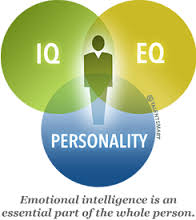 Some of you might be wondering, “What is the world is emotional intelligence?” and the answer is somewhat complex because it involves brain science.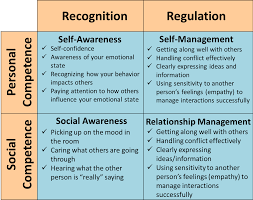
 Welcome to a new year everyone, which for many people typically means making resolutions and goals. For me, I’ve been telling friends and family for the last few months that I plan on taking the first quarter of 2016 do a little soul searching. I anticipate a few personal and business decisions stemming from my assessment efforts.
 As the curtain falls on 2015 and a new year bursts onto the stage, I can’t help getting excited for countless non-profit organizations across this great land of ours. As many of you know, I am a planner by training with both a BAUP and MUP from the University of Illinois Urbana-Champaign. Embedded in every planner’s soul are ideas such as:
 Like so many other people, I am a sucker for year-end predictions. I suspect it has something to do with being uncomfortable with an uncertain future. So, for each of the last few years, I’ve blogged about non-profit predictions and trends during the final few days of the year. Needless to say, I can’t resist doing it again as 2015 comes to a close. Drum roll please? I predict non-profit organization in 2016 will . . .
 My plane landed at O’Hare yesterday afternoon, which symbolized the end of a very long year for me. I am now ready to work from my home office for the last few weeks of 2015 and take a little time off to celebrate the holidays with family and friends.
![IMG_20151220_110543620[1]](https://donordreams.files.wordpress.com/2015/12/img_20151220_1105436201.jpg?w=169) Happy Holidays, DonorDreams readers! I am one of those people who procrastinates gift shopping until the last minute, which is why I was so relieved last night when I snagged the last Minecraft video game for Xbox 360 off the shelf at Target for my niece. Phew! That was a close call. I know that gift giving isn’t just on my mind because last week one of my clients gave me a pen and set of blank cards designed by their clients as small token of their appreciation (see picture to right).
Happy Holidays, DonorDreams readers! I am one of those people who procrastinates gift shopping until the last minute, which is why I was so relieved last night when I snagged the last Minecraft video game for Xbox 360 off the shelf at Target for my niece. Phew! That was a close call. I know that gift giving isn’t just on my mind because last week one of my clients gave me a pen and set of blank cards designed by their clients as small token of their appreciation (see picture to right). I had the privilege of interviewing a young fundraising professional yesterday for an online article that I am writing. In that interview, we talked for almost an hour about direct mail and her passion for learning as much as she can about that industry’s best practices and how to apply it to her non-profit fundraising work.