
 I was chatting the other day with a newly elected board president. He was lamenting the fact that his fellow board volunteers don’t respond to his emails very well, and he wanted a little advice on how to change this dynamic. If this is a problem for your organization, then please keep reading.
There are any number of ways to look at this situation:
- This could be a “people” issue
- This could be an “organization“ issue
- This could be a “process or tools” issue
Let’s take a look at these possibilities one at a time.
People issue
 Within this broad category, there are many considerations.
- Are your board volunteers tech savvy?
- Do board members understand their roles and responsibilities?
- Do these individuals have the appropriate experiences and skills to deal with whatever is being sent to them in these emails? (aka do you have the right people around the table)
- Do these people care? Are they mission focused?
- Does the culture of your organization embrace technology? Or is the way it has always been done more personal and in-person meeting oriented?
In my experience, most of us jump to the conclusion that email unresponsiveness is a people issue (e.g. they don’t care, they’re too busy, etc). However, there might be other issues. Let’s take a look at organization and tools issues in the next two sections.
Organization issue
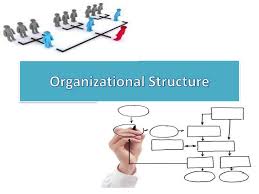 Believe it or not, how you are structured can greatly effect how people decide to use email as it relates to your organization.
- Does your organization cover a large geographic territory? And do board members live far and wide thus making in-person meetings more difficult?
- How often does the board or committee meet in-person? If it is often, then some individuals may simply put off responding to emails because they see an opportunity to share their thoughts in-person.
- How many standing committees and work groups exist in your organization? Are these organizational silos? If so, then how do they communicate with each other and with the governing board? Is this spelled out in the bylaws or committee charter? (e.g. they must report at board meetings, etc)
- From a board governance perspective, has your organization made changes to its bylaws to allow for the use of newer technology to make decisions? (e.g. electronic/email voting)
I know it can be hard to believe, but how we structure our organizations (and even the internal design of our workplaces) and teams can impact our email usage (and even more broadly how we use tech).
Five years ago, I was working for a national non-profit organization on a team that was scattered all over the country and in four different time zones. This organizational dynamic drove all sorts of decisions including monthly conference calls, the need for in-person staff meetings two or three times per year, optimal times for conference calls, use of email to distribute materials and collect feedback, shared document storage/access, etc.
“Structure” . . . it is an invisible force that drives human behavior more than any of us think.
Tools issue
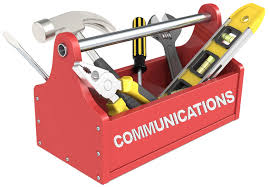 Email is simply a communication tool. Here is an inventory of tools/processes/approaches that you may find in your communications toolbox:
- Telephone (individual one-on-one or conference call)
- In-person meetings (individual one-on-one or group)
- Webcam (individual one-on-one or group)
- Online project management collaboration services (e.g. Basecamp)
- Private, group messaging and chat tools
- Social media
- Online groups and discussion forums
I’m sure that I’ve missed a number of other communications tools. You are welcome to add those in the comment box of this blog post.
Each of these tools is designed to do something very well, but of course they all have their shortcomings. The best question to ask yourself when confronted by a situation that doesn’t seem to be working (e.g. people aren’t responding to email) is . . .
Am I using the right tool for what I want to accomplish?
My final thoughts?
We all have our “points of view” on things. It doesn’t mean that we’re necessarily right or wrong. Here is what I believe about email:
- It is a great information sharing tool (e.g. distribution of agendas, meetings notes, materials, etc)
- It is a poor discussion tool (e.g. asking for feedback, advice, anything conversational)
- It is used differently by every generation
- It is easy to ignore and many people have developed user habits around this tool (e.g. deleting habits, reading habits, etc)
The advice I gave to my board president friend was . . .
Pick-up the phone if they aren’t responding to your email!
I also asked additional questions about which volunteer engagement strategies he was using and which ones were lacking. Each of the nine volunteer engagement strategies (e.g. urgency, accountability, planning, setting expectations, etc) come with a number of tools (e.g. goals, dashboards/scorecards, action item memos / task lists, project management punch lists, written volunteer job descriptions, committee charter, committee work plan, etc).
In other words, the choice of communication tool might not be the problem. It could be the organization isn’t using best practices associated with volunteer engagement, which is resulting in email unresponsiveness.
The morale to today’s post?
Simple problems may not be as simple as they seem, especially when we’re talking about groups of people under one organizational umbrella. So, my advice is . . .
Don’t jump to conclusions. Do the hard work in thinking it through!
Here’s to your health!
Erik Anderson
Founder & President, The Healthy Non-Profit LLC
www.thehealthynonprofit.com
erik@thehealthynonprofit.com
http://twitter.com/#!/eanderson847
http://www.facebook.com/eanderson847
http://www.linkedin.com/in/erikanderson847
 If your board is resistant to the idea of fundraising, I encourage you to first take a good hard look in the mirror and ask yourself the following questions:
 Let’s face it. Our government is broke. We The People have accumulated almost $20 trillion in debt. As government leaders wrestle with this issue, the non-profit sector continues to rally from time-to-time insisting every other sacred cow in the tax code should be scrutinized except for our own. Putting aside the fairness and hypocrisy questions, I’m left wondering: 1) why do we cling to this entitlement so strongly, 2) what is the real effect of this tax policy on our sector and 3) what would really happen if lost this tax status?
 I don’t want to muddle this point. So, let me be clear. I’ve spoke with many donors (both large and small) who mention the word “tax deduction.” It is usually in reference to needing documentation for their accountant. Only one donor actually pushed the pencil and said he needed to make a donation of a certain size to
  I am not a fortune teller. I cannot predict the impact of such a policy change. However, I can confidently say a few obvious things:
 As a young non-profit professional, who was just learning his craft, I was first introduced to the idea of a “house party” event format as a fundraising technique. The idea was simple. Ask someone to host a small party in their home. Work with them to identify a guest list of potential donors from their list of friends and colleagues. Make a group ask during the get together and collect pledge cards. My former employer used to call these “leadership circle” events.
 Last week’s experience helped me see house parties in a whole new light. No longer was this strategy simply a tool in a non-profit person’s resource development toolbox. The more I thought about it, the opportunities seemed to be endless. Here are just a few of my thoughts:
 A few years ago, I wrote a post titled “
 Oh, well let me count the reasons . . .
 I have no idea why this is so scary for so many non-profit staff and board volunteers. It doesn’t have to be a confrontation. Here are a few talking points:
 If the reasons given by your board volunteer aren’t things beyond anyone’s control (e.g. family member illness, work-related challenges, etc) and they simply don’t feel comfortable with solicitation, then ask them to get heavily involved in cultivation (e.g. engaging new prospective supporters) and stewardship (e.g. showing existing donors gratitude and return on investment) activities. (Note: don’t simply let them focus on other non-fundraising activities like programming or marketing)
 Sometimes we can’t fix the problem. Board members are people, too. Their parents get sick. Their marriages falter. They end up with a new boss who demands more from them.
 Have you ever stopped whatever you doing, took a deep breath, and observed the world around you? (And I mean really take a deep look.) I did this just the other day, and what I saw kind of surprised me. Everywhere I looked I saw
 If I’ve seen it once, I’ve seen it over and over again. An organization puts the right people around the table and engages everyone in developing the right written plan for their fundraising campaign or event. They recruit the right people in the right way to work pledge cards or solicit event participants or secure sponsorships. They even go about assigning prospects/donors to volunteer solicitors very effectively. And then it happens . . . solicitation materials are distributed and everything comes to a screeching halt.
 A report meeting is simply a face-to-face meeting of volunteer solicitors, who come together to report their progress to each other.
 If you’ve recruited the right volunteers with the right skill sets and experiences to work on your fundraising campaign, then these people are likely very busy.
 We need to keep in mind that no one likes fundraising just for the sake of getting their friends to give them money. The reason volunteers sign-up to do what many people consider difficult and intimidating is because they are truly bought into your mission.

 Last week, British voters stunned the world in a number of different ways. First, they voted in a non-binding referendum to invoke
  Communications experts refer to this experience as “
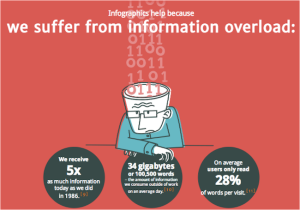 So, if you are still with me, you might be wondering what can be done to improve the likelihood that donors, board volunteers and staff are hearing (and understanding) what your organization needs them to know. While I am not a communications expert, here are a few thoughts:
 Anyone watching television or engaged in community conversations in recent months knows that our communities are entering into another period of time punctuated by values. Some people are talking about life, liberty and happiness. Others of us are focused on equality versus freedom (which are two values that are somewhat mutually exclusive). Perhaps, this elevated values debate is because our country is heading into a divisive Presidential election year. Or maybe it is because big policy debates are underway about LGBTQ and gun rights issues. Regardless, all of this talk has me thinking about the role of values and your non-profit organization’s resource development program.
 All of this gets me thinking about the countless discussions I’ve been a part of throughout the years with non-profit staff, boards and fundraising volunteers where difficult fundraising decisions were being made. The following are just a few examples:
 I’ve always taken the AFP ethics/values statement to heart, embraced my organization’s set of shared values, and superimposed my own set of individual values. As an Eagle Scout, my individual values have always been rooted in the 12-points of the Scout Law (e.g. trustworthy, loyal, helpful, friendly, courteous, kind, obedient, cheerful, thrifty, brave, clean and reverent).