
 A few years ago I noticed some of the letters being sent to me by non-profit organizations were getting less wordy. In fact, these next generation donor communications pieces were mostly featuring a big photograph of someone/something that was supposedly mission-focused.
At first, I really didn’t like this new approach to donor communications. Don’t get me wrong . . . I disliked the blah-blah-blah letters. Like most readers, I would read the old solicitation letters like this:
- Salutation (e.g. did they spell my name right?)
- First few sentences (e.g. how much do they want and what’s the case for support this time?)
- Skip to the signature (e.g. do I know the person who signed the letter?)
- Post script (e.g. don’t know why, but I always read the P.S.)
- If this five second review hooks me, then I’ll go back to the beginning and start skimming (honestly probably paying more attention to bullets, highlighted text and anything in bold/italics)
It was even worse with gift acknowledgement letters, which I would read like this:
- Salutation (e.g. did they spell my name right?)
- Did they get my pledge or gift amount right? (e.g. this is for the IRS and I can’t afford an error)
- Is there a personal notation on the letter (e.g. did my gift merit a little love or was this just a transaction?)
- Is the boilerplate IRS verbiage about the value of any goods or services being received by me from the non-profit as part of my contribution correctly listed (e.g. as I said earlier . . . I don’t wanna tangle with the IRS)
The first few times I received what I am describing as “next generation donor communication pieces,” I simply didn’t like it because it represented change. It threw me off my reading routine, which is silly reason to dislike something. Right?
However, the first time one of these letters was used to acknowledge my contribution by a local non-profit organization, I was upset for a few reasons:
- In their haste to use as few words as possible, they got wrong the boilerplate IRS verbiage about the value of any goods or services being received (this was a technical error)
- I felt slighted because it was as if “my gift didn’t even rise to the level of deserving a handful of kind words” (by the way, the letter couldn’t have been more than three or four sentences with a giant cute picture of a client)
And then . . . I changed my mind after recently receiving the following year-end solicitation letter from my alma mater
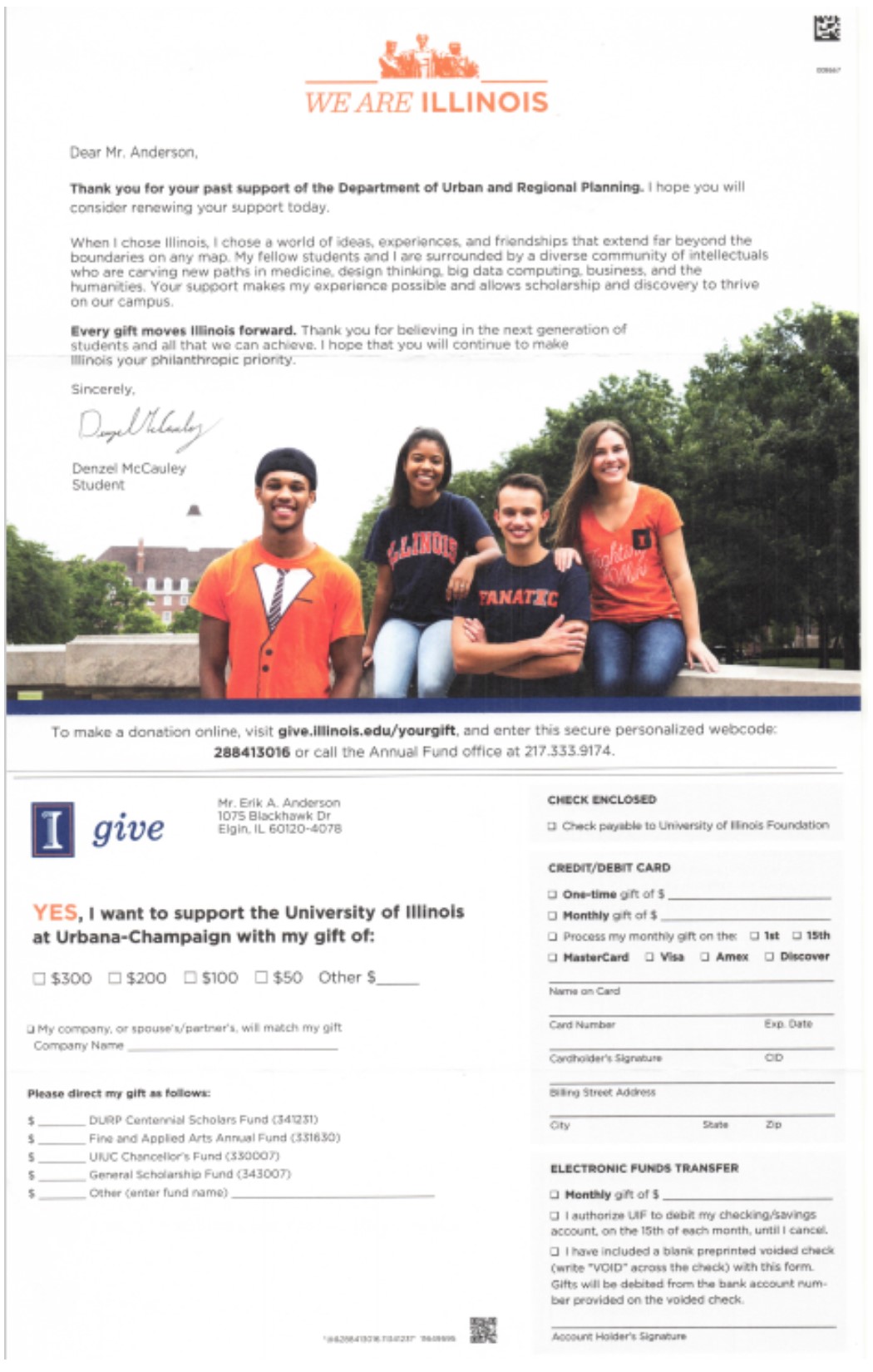
Three short paragraphs. One large picture. Lots of wonky ways to give my money.
Here is what appealed to me and changed my mind about this style of donor communications:
- The picture took me back to my college years. I know exactly where those four students are standing. I’ve stood there before. I suspect that I felt that same way they appear to be feeling. This picture created an immediate emotional connection for me in a way that words never have.
- The logo at the top of the letter also created an immediate emotional connection. It is a picture of the iconic Alma Mater statue. For many students, this artwork at the entrance to the Quad symbolizes many things (e.g. a sense of welcoming, nurturing, school pride, etc). Many students have fond memories attached to this statue.
- The shortened fundraising verbiage cut to the bottom line and the three most important things to me and most other donors: a) the university is grateful for my last contribution; b) my gift made a difference in the life of a student; and c) they want me to continue my support. All three of these messages are emotional in natural (e.g. they love me, they flatter me, they want me back).
- The multitude of choices is appealing (e.g. cash, credit, EFT/ACH, monthly giving options, gift restriction options). This makes me feel “in charge” and not like I’m giving money to a large, faceless organization that is going to do whatever it pleases with my financial contribution. Again, another emotional message (e.g. providing choice implies trust and respect in our society)
I’ve been a fan of Tom Ahern for years. I think he is one of the smartest donor communications experts in the field. In his videos and e-newsletters he often takes about the the six most powerful emotional triggers that marketers use to get people to do “something” like purchase a product, vote for a candidate, make a charitable contribution, etc.
Just in case you’re wondering, here are those six emotional triggers:
- anger
- exclusivity
- fear
- flattery
- greed
- guilt
Tom also talks about the 13 strongest words used by marketing professionals. Here is a list of those words:
- discovery
- results
- proven
- early
- safety
- free
- save
- guarantee
- new
- money
- health
- YOU
I love Tom, but I do cheat on him from time-to-time by reading other donor communications and direct mail experts like Mal Warwick. 😉
The following are five positive triggers that marketers use to emotionally move us to do something:
- hope
- love
- compassion
- duty
- faith
As you review these lists of emotional triggers and powerful words offered by some of the smartest thought-leaders on this topic, can you identify which trigger the University of Illinois wove throughout its letter? Can you see how they did it? If you look really hard, you’ll be surprised at how much more is actually going on in this very short and powerful letter.
Please use the comment box to share your thoughts and observations. We can all learn from each other.
Here’s to your health!
Erik Anderson
Founder & President, The Healthy Non-Profit LLC
www.thehealthynonprofit.com
erik@thehealthynonprofit.com
http://twitter.com/#!/eanderson847
http://www.facebook.com/eanderson847
http://www.linkedin.com/in/erikanderson847
 A few weeks ago I was reading my friend Jay Love’s Bloomerang blog post titled “
 Just the other day, I found myself in a boardroom facilitating a training on how to make a textbook-perfect, face-to-face solicitation. Discussion topics focused on all the usual suspects including fears, begging, best practices for getting on someone’s calendar, the 12-step process for making the actual ask, etc etc etc. However, at the end of the training and facilitated discussion, one board volunteer asked the following question:
 Over the years, I’ve heard volunteers say all of the following things when trying to fundraise:
 Let me start by being transparent. The idea for this post grew out of the fact that I haven’t posted a new blog for a few weeks.
 Last week in a post titled “
 There is an old expression that says, “You need to dance with the person who brought you to the prom.” It essentially means you need to work with the person who got you where you’re at today in spite of the circumstances. When I think of this in terms of volunteer management (e.g. your board members and fundraising volunteers), it means you need to get the job done with those who you recruited.
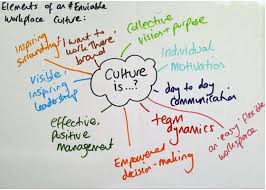 Let’s pick-up where we left off a few days ago from my post titled “
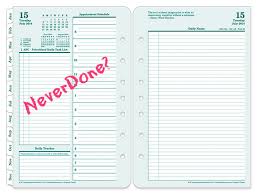 When I worked for the Boy Scouts of America (BSA) in the late-1990s, there was a focused effort to stave off the tyranny of the urgent through the following strategies:
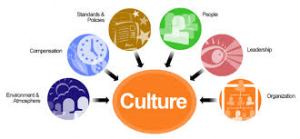 Changing your organizational culture (or at the very least rooting out tyranny of the urgent) will also likely require some combination of the following:
 Simply, this idea is rooted in the idea that urgent tasks trump important things, which results in consequences for individuals and organizations.
 I looked around for diagnostic and evaluation tools failed to find anything. Perhaps, I’m using the wrong internet search words or maybe I’m looking in the wrong places. If anyone has seen anything, please share using the comment box on this blog. I’m very interested.
 Again, I go back to what Hummel tells us in his writings. The consequence is simple … “We have done those things which we ought not to have done, and we have left undone those things which we ought to have done.”
 Once upon a time, there was a young girl by the name of Alice.
 Upon signing an offer sheet, Alice found herself tumbling down a rabbit hole. At the bottom of this hole, Alice was disoriented but determined. As she turned to the White Rabbit for advice and her next steps, she saw him running away and heard him saying over his shoulder, “Hello, Goodbye. I’m late, I’m late, I’m late.”
 One of the first characters Alice encounters, after the White Rabbit ran away, was a hookah smoking caterpillar. As it turned out, the caterpillar worked at the organization. Needless to say, this encounter didn’t go well. My friend Lewis Carroll does a better job recalling the conversation:
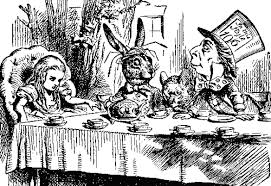 Without much effort, Alice came across a Tea Party with a wide range of characters. There was a Mad Hatter, March Hare and Dormouse. These three donors couldn’t seem to get along, nor did they seem to agree on why people supported the organization. When Alice weighed into the conversation by saying she had a good guess as to why the average donor supported the organization, the following weird discussion ensued:
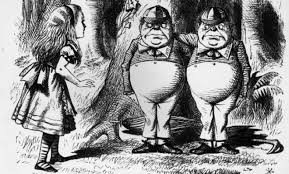 At a gathering of her peers, Alice was approached by two identical looking individuals. She attempted to strike up a conversation about resource development, asking about which families are part of the community’s core philanthropic circle. She prattled on about the importance of individual giving and even tried to impress them with her knowledge about private sector fundraising trends. Instead of finding comrades-in-arms, Tweedledee and Tweedledum bark back at her and said, “Contrariwise, if it was so, it might be; and if it were so, it would be; but as it isn’t, it ain’t. That’s logic.”
 In her first encounter with The Queen of Hearts, Alice had lots of questions to ask.