
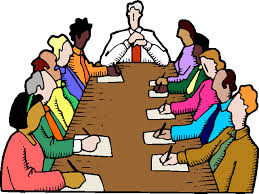
 There is an old expression that says, “You need to dance with the person who brought you to the prom.” It essentially means you need to work with the person who got you where you’re at today in spite of the circumstances. When I think of this in terms of volunteer management (e.g. your board members and fundraising volunteers), it means you need to get the job done with those who you recruited.
The implication of this interpretation is that your organization is only as effective as those who you recruited to do the work that needs to be accomplished (e.g. raising the necessary funds, governing the organization, etc). So, you need to be very careful at the beginning of any recruitment process and pay special attention during the identification and recruitment process to the traits, characteristics, skills and experiences that an effective volunteer will need for the organization to be successful in whatever it is trying to accomplish.
This begs the question . . . what is the difference between traits, characteristics, skills and experiences?
- A trait is something someone inherits or is born with
- A characteristic (e.g. quality) is something that describes someone
- A skill is something that someone has learned
- An experience is something someone has experienced
When I think of traits I’ve seen effective non-profit board members exhibit, I think of things such as:
- Detailed-oriented
- Focus
- Collaborative / Team-oriented
- Confident
- Communicator
- Decision-oriented
- Optimistic
- Accountable
Characteristics of effective board members in my opinion include someone who is:
- Mission-focused and passionate about what you do
- Eager to participate and ask questions
- A life-long learner
- Willing to contribute their time, talent and financial resources to your organization
- Socially engaged in the community with a large circle of friends and influence
When I think about skill sets, there are are many different ones that need to be present around your boardroom table, which is why diversity is so important. In other words, you won’t find people who possess ALL of the skills you need. The following are some of the skills you need to make sure find their way into your boardroom:
- Accounting & financial management
- Marketing & promotion
- Planning
- Sales, resource development, fundraising
- Insurance & risk management
- Facility management
- Assessment and evaluation
- Human resources
- Organizational development
- Management
Experience is a tricky consideration because you should be looking for individuals who have had successful experiences not just any experience. When I was in the business of identifying board volunteers, I looked for people who had successfully:
- Served on other boards
- Participated in fundraising activities
- Worked well with other people in team environments
- Managed other people
- Thrived in situations with deadlines and urgency
- Managed their time
- Been entrepreneurial and grown their own business
If I’ve seen it once, I’ve seen it often where non-profit volunteers look at their social networks and asked others to get involved based on the likelihood of getting a YES regardless of whether that person possessed many of the traits, characteristics, skills and experiences necessary for success.
This is usually a recipe for disaster because “you need to dance with the person who brought you.” Essentially, if you recruit the people lacking what you need to help govern your organization or raise money to operationalize your mission, it is next to impossible to make quick wholesale changes, which likely locks you into an undesirable outcome.
How does your organization integrate the aforementioned traits, characteristics, skills and experiences into a prospect identification, evaluation and recruitment process? What specific tools have you used that you found helpful? Are their any specific traits, characteristics, skills and experiences that I missed that you would add to the list?
Please use the comment box below to share your thoughts and experiences. We can all learn from each other.
Here’s to your health!
Erik Anderson
Founder & President, The Healthy Non-Profit LLC
www.thehealthynonprofit.com
erik@thehealthynonprofit.com
http://twitter.com/#!/eanderson847
http://www.facebook.com/eanderson847
http://www.linkedin.com/in/erikanderson847
 This month DonorDreams is hosting the nationally acclaimed
  As a young Boy Scout professional in the 1990s, I was just starting to learn may way around fundraising principles and best practices. While I previously had helped out with a few special events and written a grant proposal for another organization, I never helped plan-organize-implement an annual campaign pledge drive, which is what I was being asked to do with a group of Friends of Scouting (FOS) volunteer within my district.
 Fast forward a number of years into the future when I was a first-time executive director for a Boys & Girls Club.
 Sometimes when I daydream, I see myself standing outside my house in the street with Dr. Emmitt Brown (aka Christopher Lloyd’s character in Back to the Future), waiting for the lighting storm so I can jump into that
 Do you know which skills and experiences are most important for a new board volunteer to possess in order to succeed on your board? Knowing this could help your organization conduct better prospecting exercises and result in better prospect recruitment lists. Today’s post is the third in a three part non-profit board development series that started last week. During this time, we focused on a recent survey released by our friends at non-profit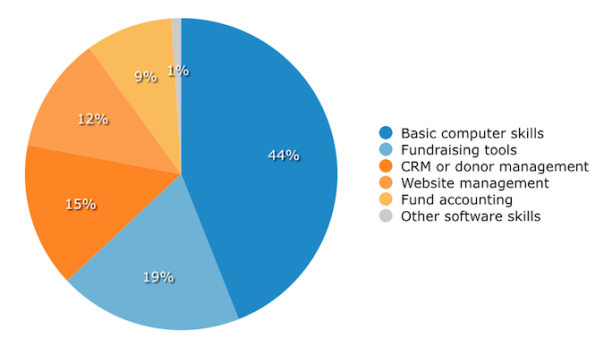

 If you haven’t heard
  I am a member of GenX, and this news made my heart sing. I was so excited to hear that my Baby Boomer board could be transformed into that type of board. I came home from that conference with renewed focus and determination to figure out how tech can help my board become more engaged and efficient in governance.
 When I read that only 25% of survey respondents identified “fundraising skills and experiences” as having a great impact on a board member’s success, I literally groaned and rolled by eyes.
 I believe it is a basic truism that you can’t make people do anything they don’t want to do. Every example I can think of ends up not working.
 Board Development
 Resource Development Plan
 From time-to-time, we all need to have a difficult conversation with someone. It could be an employee, board volunteer, donor, collaborative partner, or even a spouse or loved-one. I was in such a position a few days ago, and needless to say it didn’t go very well. In the subsequent days, I spent a lot of time licking my wounds and thinking about what I could’ve done differently. So, I’ve decided to share some of my thoughts with the readers at DonorDreams blog and hope you’ll also share your thoughts and experiences.
 I’ve done some research into how I can do better in the future with engaging others in these type of conversations. Here are just a few of the best practices that resonate with me:
 That July afternoon in Coleman, Texas was particularly hot — 104 degrees according to the Walgreen’s Rexall’s thermometer. In addition, the wind was blowing fine-grained Texas topsoil through the house. But the afternoon was still tolerable; even potentially enjoyable. A fan was stirring the air on the back porch; there was cold lemonade; and finally, there was entertainment. Dominoes. Perfect for the conditions. The game requires little more physical exertion than an occasional mumbled comment, “Shuffle ‘em,” and an unhurried movement of the arm to place the tiles in their appropriate positions on the table. All in all, it had the makings of an agreeable Sunday afternoon in Coleman. That is, until my father-in-law suddenly said, “Let’s get in the car and go to Abilene and have dinner at the cafeteria.”
 My first exposure to this story was as I was unknowingly about to experience it…
 Welcome to O.D. Fridays at DonorDreams blog. Every Friday for the foreseeable future we will be looking at posts from John Greco’s blog called “
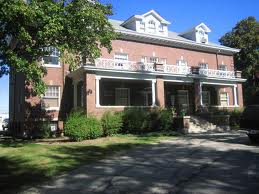 As the years passed, Larkin Center added more services including a school for children struggling with behavior disorders and counseling services for adults.
 There will be lots of news coverage about the “failure“. Many people will weigh-in with what they think went wrong and what could’ve and should’ve been done differently. There might even be a victory lap taken by a few Elgin city council members who openly fought with Larkin Center because they didn’t think “those kids” belonged in our community.
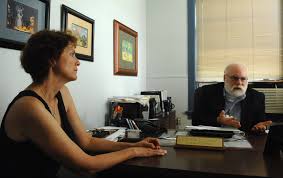 When I think about the donors who invested in efforts to save this organization in the final months and years of its life, I want to honor those efforts.
 Board member engagement is a common thread running through many of my blog posts. This isn’t because I’m a broken record. The fact of the matter is that so many of the things that plague non-profits are simply “symptoms” of a bigger problem. Yep, you guessed it . . . the root cause of many of our challenges in the can be traced back to our boards.