
 It has been called a crisis, scandal, controversy, and problem by journalists. If you are remotely plugged into the world around you, then you’ve probably heard or read something about Hillary Clinton’s decision to use a private server located in her private residence which stored tons of personal and governmental emails during the time she was Secretary of State. This news story is layered and smells as bad an onion, but there is a silver lining to this story, which is:
You and your non-profit organization can learn a valuable lesson from Hillary’s “situation”
I was in Hillary’s shoes (kinda)
It was April 1, 2006, and it was my last day as the executive director of my local Boys & Girls Club. I was packing up my office and trying to get out-of-the-way of the interim executive director, who the board had hired to keep the organization stable durning the executive search process and impending transition.
As I was taping up my last box, I realized that I had an email situation that needed to be dealt with.
Over my six years as executive director, I had:
- never deleted any of my sent or received emails
- blurred the lines between my personal and business email accounts
 None of this was malicious. It was always done out of a frantic sense of convenience and lack of time (or so I told myself).
So, I spent my final hours pouring over emails and deleting everything I didn’t consider a business-related correspondence. Ugh . . . and the things I found in those emails:
- There were all sorts of emails to my mother and sister pertaining to family gatherings
- There were emails to my then-partner and current spouse regarding social plans
- There were correspondence to people in my Rotary Club
Frankly, I was surprised at how many non-business related emails existed. None of it was inappropriate, but so much of it was garbage. In the moment, I had the following questions running through my head:
- Why wasn’t I more careful about segmenting my email by using my personal email account for personal things and my business account for business things?
- Why didn’t I clean out my email inbox every day?
- Who owned these emails? Am I allowed to delete all of these emails on my last day?
The reality is that my non-profit organization didn’t have any policies in place to help me answer these questions. Unlike Hillary Clinton, I didn’t have to deal with:
- government transparency issues balanced against state secrets and delicate diplomacy discussions
- executive orders and regulations from the President of the United States
- congressional legislation (e.g. Freedom of Information Act)
The silly thing is that we’re just talking about email, and the tech challenges to your non-profit organization are so much bigger.
Since my last day on the job at my local Boys & Girls Club in 2006, our technological world has only gotten more complicated. Right? It isn’t just email anymore. Now there are social media questions that government agencies, for-profit businesses and non-profit organization must grapple with.
So what lessons can be learned?
Establish clear policies on technology usage
 Most non-profit organizations are stretched too thin. I know, I know. But this is something you need to make time for because it is important.
It is a great opportunity to engage technology volunteers in a meaningful project that can benefit and protect your organization. It is also an important project that can help manage your organization’s legal risks and public exposure.
The following are just a few questions your policies should address:
- What is appropriate vs. inappropriate content?
- Can employees use organizational email for personal communications?
- When is it appropriate for an employee delete email? What should be saved? How should all of this be archived?
- In a social media environment, what is inappropriate and what will the organization do if the employee is caught violating the policy? (e.g. should an employee be Facebook friends with clients or supervisors or board volunteers? what if an employee is vocalize a political view on a social media site that adversely impacts how donors view the organization?)
- Should every organizational email possess a “legal disclaimer” as part of the signature block?
- Is it OK for employees to create and store documents of a personal nature on your organization’s server?
The following are a few resources you might want to check out to help you with this project:
- Book by Nancy Flynn: “The ePolicy Handbook: Designing and Implementing Effective Email, Internet and Software Policies“
- Minnesota Council of Nonprofits: “Information Technology“
- EmailDisclaimers.com: “Email Disclaimers“
- OneOC Nonprofit Toolkit: “Technology Management“
- National Council of Nonprofits: “Document Retention Policies for Nonprofits“
- Next Mile Project: “Nonprofit Social Media Policy“
 Create separation and segment your life
I’m a member of the GenX generation, and separating my personal and work lives is difficult. Much has been written about my generation’s blurring of these boundaries, and I have to admit that I resemble those remarks.
But segmenting email communication shouldn’t be horribly difficult. Right?
When I think about my email situation, I have four different accounts (and many people have multiple email accounts):
- My sbcglobal.net account is what I use for eCommerce and junk. (this is the account I give companies because I know they are going to spam me)
- My gmail.com account is what I use for personal emails (this is the account I use with my friends and family and for all things non-business related)
- My heathynonprofit.com account is what I use for business communication (I try to limit to only communicate with my clients using this account)
- My acb-inc.com account is only used to communicate with capital campaign clients with whom I work as a subcontractor to American City Bureau to provide service
Do I goof up and accidentally blur the lines between these accounts? Of course! To err is human, right?
But that shouldn’t be an excuse not to try.
Moreover, you can now segment your email accounts on your smart phone. I have different buttons on my phone for each of my different email accounts.
I recognize this doesn’t come naturally to some people, but our changing world demands that we change our systems and practices or risk being left behind (or risk looking like Hillary Clinton does right now).
A side not about Hillary’s “crisis-scandal-controversy-situation-etc
 It hasn’t been talked about much, but the Hillary Clinton email story is a “Non-Profit Story“. Think about it for a minute.
Hillary blended her emails. She likely had emails in her blended account pertaining to:
- State Department business
- Chelsea’s wedding
- Funeral arrangements for Hillary’s mother
- Personal stuff (e.g. yoga class)
- The Clinton Foundation and the Clinton Global Initiative
The Clinton Foundation is a non-profit organization.
In fact, The Clinton Foundation is a nonprofit organization that politicians and news media outlets continue to question about overseas donors and if/how those contributions influence family members who still operate in the public sector (e.g. Hillary’s time as Secretary of State and her alleged desire to be our next President).
This email story raises all sorts of non-profit questions including:
- What level of privacy should donors expect when electronically communicating with your organization?
- What legal impact can a donor’s email have on their charitable gift or pledge (e.g. restricted vs. unrestricted donations)
- If your non-profit organization accepts large quantities of government funding, are your records governed by transparency laws like the Freedom of Information Act?
Does your organization have an email policy? Tech policy? Social media policy? What resources did you find useful when developing these policies? Do you find enforcing these policies difficult? If so, how? Please scroll down and use the space below to share your thoughts and experiences. We can all learn from each other.
Here’s to your health!
Erik Anderson
Founder & President, The Healthy Non-Profit LLC
www.thehealthynonprofit.com
erik@thehealthynonprofit.com
http://twitter.com/#!/eanderson847
http://www.facebook.com/eanderson847
http://www.linkedin.com/in/erikanderson847
 Thanksgiving is a time when many non-profit organizations give thanks to their donors who support their mission with their time and money. Over the years, I’ve received Thanksgiving cards, thank-a-thon phone calls, and even a small little gift of gratitude from my favorite charities. However, the ALS #IceBucketChallenge has changed everything and set the bar higher for all resource development activities. So, I’ve spent days (if not weeks) thinking about how to use social media to steward donors during this time of the year. This morning I think I had my best idea yet. Let’s see what you think.
 AND THEN IT HAPPENS . . .
 If there is one thing all of us should’ve learned from the ALS #IceBucketChallenge, it is that social media is a powerful tool in our resource development toolbox. While we’re all still learning how to use this tool, those who innovate and try new things will surely reap the rewards.
 I woke up this morning with the words of Samuel Jackson echoing through my head. While this actor has played a number of different roles in Hollywood, the words in my head were from his Capital One credit card commercials . . . “What’s in your wallet?” As I shuffled around my hotel room trying to wake up, I started reviewing all of the possible reasons why I woke up with this popular commercial on my mind. After a little thinking, I’ve decided that my subconscious mind is still wrestling with an email I received yesterday morning from a non-profit organization asking me not to delete any reference to them in a blog I posted last week.
 I think there are a number of “lessons learned” associated with this situation. Here are the one’s I can identify:
 Jeff Foxworthy has made a career out of answering a simple question: “You know you’re a redneck when . . .” This morning I thought I’d do something similar with: “You know you’re fundraising campaign has gone viral when . . .” by describing how last week unfolded for me as it relates to the
  Fellow blogger and fundraising genius — Jeff Brooks — publishes a blog post titled “
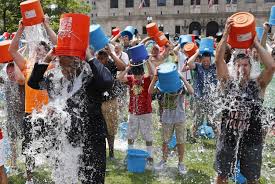 The day is winding down. The television is on, we’re into what will likely be the last show of the evening before going to bed, and my phone starts to blow-up. Needless to say, one of my former Boys & Girls Club of Elgin board presidents and good friend, Tim Williams, just completed the

 At my previous agency, their national office made tremendous investments in webinars (aka distance learning). The following are just a few of the training titles I saw them offering:
 Many people have discovered Slacker radio, but online radio isn’t just about streaming music while you workout.
 I just loved their Facebook page that was filled with various images. What I loved was how they branded each message with their colors and their logo.
 This group really understands how images can impact and catch the viewer’s eye. With every post on Facebook, St. Jude Children’s Research Hospital included an image.
 Of course, when I looked at WWF’s Face book page I expected to see tons of pictures of animals. I was surprised, however, to see even more.
 I read this and imagine my organization with engaged donors engaged in open communication, positive feedback, while building a better organization. Ahhhh, nirvana, but wait . . . did he say negative feedback, too?
 Safko explains that social media marketing is like going to a networking event, a party, a trade show, church, or anywhere large groups of people gather.