
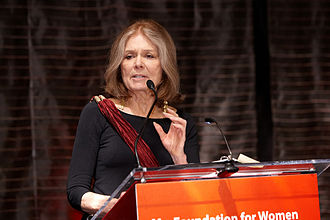
 It was a bleary-eyed late night dash in a rental car to position myself for a morning meeting, and I was listening to National Public Radio (NPR) in an effort to stay awake. At one point, someone was interviewing iconic feminist leader Gloria Steinem. While I cannot remember the big reason for the interview (e.g. new book, rally, election analysis, court ruling, etc), there was one thing that stuck with me, and I just had to share with you because I think it is a great allegory for how your non-profit should interact with donors.
After listening to the NPR interview, I went online and Googled around for the text of what Steinem calls her “Always Ask The Turtle” story in her own words. Luckily, I found it in a number of different places so I feel OK with sharing it with you here:
I took geology because I thought it was the least scientific of the sciences.
On a field trip, while everyone else was off looking at the meandering Connecticut River, I was paying no attention whatsoever. Instead, I had a found a giant, GIANT turtle that had climbed out of the river, crawled up a dirt road, and was in the mud on the embankment of another road, seemingly about to crawl up on it and get squashed by a car.
So, being a good codependent with the world, I tugged and pushed and pulled until I managed to carry this huge, heavy, angry snapping turtle off the embankment and down the road.
I was just putting it back into the river when my geology professor arrived and said, ‘You know, that turtle probably spent a month crawling up that dirt road to lay its eggs in the mud by the side of the road, and you just put it back in the river.’
Well, I felt terrible. But in later years, I realized that this was the most important political lesson I learned, one that cautioned me about the authoritarian impulse of both left and right.
Always ask the turtle.
After hearing Steinem share this story, the first person I thought of was Penelope Burk, who is the famous CEO of Cygnus Applied Research and author of Donor Centered Fundraising. The more I thought about it, the more I was convinced non-profit organizations should adopt Steinem’s turtle story as a moral compass for how to work with donors.
Here are just a few comparisons I came up:
- Like the turtle, donors spend lots of time struggling to crawl up a dirt path called a career path
- Like the turtle, donors build a nest egg of money (e.g. net worth)
- Like the turtle, donors behave in certain ways for certain reasons (e.g. they didn’t just crawl up the path for no reason at all ... they saved their money for a reason … they donate to certain charities for a reason)
OK, I’ll stop beating this dead horse.
The point I’m obviously driving at is simple, but one I think every fundraising professional should live by.
Don’t assume the following:
- Don’t assume you know why individual donors support your mission
- Don’t assume you know what a donor’s capacity to give or willingness to give
- Don’t assume you know which programs/activities a donor is passionate about
- Don’t assume you know the best way (e.g. via event, pledge drive, major gift agreement, planned gift, etc) for a donor to give to your organization
The bottom line is DON’T ASSUME . . . “Always ask the donor”.
Thanks to Gloria Steinem for inspiring this morning’s blog post and sharing her amazing story with the world.
How does your organization engage its donors? What activities do you consider “donor-centered“? Do you have a fun story to share where engaging with a donor resulted in an ah-ha moment and something beautiful for both your organization and the donor? Please share your thoughts and experiences in the comment box below. We can all learn from each other.
Here’s to your health!
Erik Anderson
Founder & President, The Healthy Non-Profit LLC
www.thehealthynonprofit.com
erik@thehealthynonprofit.com
http://twitter.com/#!/eanderson847
http://www.facebook.com/eanderson847
http://www.linkedin.com/in/erikanderson847
 For me, sometimes people speak the truth and it hits me in such a way that I have a hard time getting it out of my head. It rolls around like a pinball in my brain, and the only way for me to stop the experience is to write about it. Well, this happened again on January 28, 2016 at approximately 10:15 pm while I was watching a Special Edition of Hardball with Chris Matthews. It occurred during an interview with Mike Huckabee, when the former presidential candidate said something close to the following (and if memory serves me correctly, I think it was in response to a question about the primary election system):
 This morning, I was in my car driving down the interstate when National Public Radio (NPR) ran a story about UNICEF’s goal to raise $9 million to fight against the Zika virus. If you want to learn more about this new, you can
 ![20160121_131831[1]](https://donordreams.files.wordpress.com/2016/01/20160121_1318311.jpg?w=300) Recently, I’ve been working with Boys & Girls Club of Watertown on a project, and a few months ago staff asked me if I wanted to schedule my January return trip around their
Recently, I’ve been working with Boys & Girls Club of Watertown on a project, and a few months ago staff asked me if I wanted to schedule my January return trip around their ![20160122_205458[1]](https://donordreams.files.wordpress.com/2016/01/20160122_2054581.jpg?w=169) In a nutshell, a camel race is a game of chance. It involves betting, dice rolling and moving decorated camels through a race course. Here are a few details:
In a nutshell, a camel race is a game of chance. It involves betting, dice rolling and moving decorated camels through a race course. Here are a few details:![20160122_205516[1]](https://donordreams.files.wordpress.com/2016/01/20160122_2055161.jpg?w=300) Two very large fuzzy dice are rolled and the numbers rolled move the camel with the corresponding number one space forward on the race course (e.g. if a two and six are rolled then camel #2 and camel #6 each move one space)
Two very large fuzzy dice are rolled and the numbers rolled move the camel with the corresponding number one space forward on the race course (e.g. if a two and six are rolled then camel #2 and camel #6 each move one space)![20160122_171636[1]](https://donordreams.files.wordpress.com/2016/01/20160122_1716361.jpg?w=169)
![20160122_171639[1]](https://donordreams.files.wordpress.com/2016/01/20160122_1716391.jpg?w=168)
![20160122_171644[1]](https://donordreams.files.wordpress.com/2016/01/20160122_17164411.jpg?w=169)
![20160122_171648[1]](https://donordreams.files.wordpress.com/2016/01/20160122_1716481.jpg?w=169)
![20160122_171652[1]](https://donordreams.files.wordpress.com/2016/01/20160122_1716521.jpg?w=169)
![20160122_171655[1]](https://donordreams.files.wordpress.com/2016/01/20160122_1716551.jpg?w=169)
![20160122_171700[1]](https://donordreams.files.wordpress.com/2016/01/20160122_1717001.jpg?w=168)
![20160122_171705[1]](https://donordreams.files.wordpress.com/2016/01/20160122_1717051.jpg?w=168)
![20160122_171707[1]](https://donordreams.files.wordpress.com/2016/01/20160122_1717071.jpg?w=169)
![20160122_171711[1]](https://donordreams.files.wordpress.com/2016/01/20160122_1717111.jpg?w=168)
![20160122_171717[1]](https://donordreams.files.wordpress.com/2016/01/20160122_1717171.jpg?w=169)
![20160122_171727[1]](https://donordreams.files.wordpress.com/2016/01/20160122_1717271.jpg?w=169)
![20160122_171732[1]](https://donordreams.files.wordpress.com/2016/01/20160122_1717321.jpg?w=168)
![20160122_171749[1]](https://donordreams.files.wordpress.com/2016/01/20160122_1717491.jpg?w=169)
![20160122_171814[1]](https://donordreams.files.wordpress.com/2016/01/20160122_1718141.jpg?w=168)
![20160122_205535[1]](https://donordreams.files.wordpress.com/2016/01/20160122_2055351.jpg?w=300) Special event fundraising is:
Special event fundraising is:![IMG_20151220_110543620[1]](https://donordreams.files.wordpress.com/2015/12/img_20151220_1105436201.jpg?w=169) Happy Holidays, DonorDreams readers! I am one of those people who procrastinates gift shopping until the last minute, which is why I was so relieved last night when I snagged the last Minecraft video game for Xbox 360 off the shelf at Target for my niece. Phew! That was a close call. I know that gift giving isn’t just on my mind because last week one of my clients gave me a pen and set of blank cards designed by their clients as small token of their appreciation (see picture to right).
Happy Holidays, DonorDreams readers! I am one of those people who procrastinates gift shopping until the last minute, which is why I was so relieved last night when I snagged the last Minecraft video game for Xbox 360 off the shelf at Target for my niece. Phew! That was a close call. I know that gift giving isn’t just on my mind because last week one of my clients gave me a pen and set of blank cards designed by their clients as small token of their appreciation (see picture to right). I had the privilege of interviewing a young fundraising professional yesterday for an online article that I am writing. In that interview, we talked for almost an hour about direct mail and her passion for learning as much as she can about that industry’s best practices and how to apply it to her non-profit fundraising work.
 In terms of traditional types of giving, past donations are strong indicators of future giving. That trend logically carries over to planned giving.
  This factor is in reference to those whom your organization positively affected. The range is fairly broad here. A planned gift might be left to a university by a dedicated alumnus.
  Let me start by stating in no uncertain terms that planned giving prospects do not have to be wealthy.
  Factor four encompasses the large gift loophole for planned giving donors. Although they are often comparable in size, unlike major gifts, planned gifts do not inherently require wealth.
  You’ve probably noticed a theme among three of the traits listed above:
 Sarah
Sarah So you have your RSVP list. You know who is coming. What do you do with that information?
 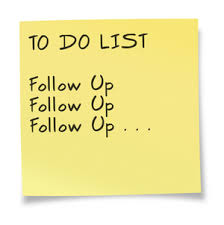 Much like you can create a pre-event V.I.P. list, you can do the same after the event.
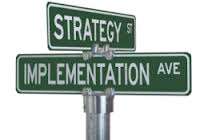 Albert Einstein defined insanity as doing the same thing over and over again and expecting different results.