
Dani Robbins is the Founder & Principal Strategist at Non Profit Evolution located in Columbus, Ohio. Dani typically blogs about board development and governance related topics on the first Wednesday of each month, but I just couldn’t resist publishing this awesome piece that she wrote about fundraising. Dani also recently co-authored a book titled “Innovative Leadership Workbook for Nonprofit Executives” that you can find on Amazon.com.
Raising money — one, unproductive $5 sale at a time
By Dani Robbins
Originally published at Akron Beacon Journal and Ohio.com

My daughter recently has been asked to raise money for three organizations: our school PTA, our Temple and Girl Scouts. Last year, she raised money for the American Heart Association’s Jump-A-Thon. She is an amazing fund-raiser. I am incredibly proud of her. She’s 7.
We get a weekly fund-raising request from one organization or another – Market Days, sign up your grocery card, click this website — once a day. Can this really be our plan?
I do not want to go to our friends and family three different times (or more) this season alone to ask for $1 to $30 each time. They do not want to buy nuts, a magazine or an entertainment book. (OK, they may want to buy that.) They will buy whatever my daughter is selling to support her, just as I will buy whatever their children are selling to support them.
When I was a kid, we took our UNICEF cans along with us as we went trick or treating. I walked in the MS Walk-A-Thon, and I probably would have sold Girl Scout cookies had I stuck around long enough. My parents gave blood, supported a variety of charities and taught my brother and me that we each had an obligation to work to make the world a better place. I teach my children the same thing. Yet, even so, I keep thinking: “What are we doing?”
People give to people. I know it well. I’ve lived it. I teach it professionally.
Seventy-five percent of all giving in the United States in 2009 was individual giving. That’s giving, not buying. That may be why this makes me so crazy. lt’s because I know that selling things to raise money $5 at a time is not a good use of anyone’s time or precious resources.
Wouldn’t it be easier if the institution’s leader, or whomever you know the best, said: “We need this much money at a minimum, can you please invest in us – volunteer or support us financially or better yet, both?”
Some people don’t readily have an extra few bucks but have some time and are very willing to work to support institutions they believe in. Others have a few extra bucks they are willing to share, but no time. Some, who are a blessing to their communities, share freely of their time, and also their resources.
 There are exceptions to my general rule of “no selling”. The Girl Scouts and Boy Scouts sell cookies and popcorn very well. Their troops, which are volunteer-led, rely on those sales for most of their troop activities. Good for them! There are also
people who buy things who would never think to write a check to an organization. (To those people, I ask you to please find an organization that you believe in and write a check. Why should you? Because you can — and they need your help.)
The main reason that I advocate against selling things, in addition to the significant safety issues for our children, is the minimal return for the organization. Our community’s organizations have to raise money. They can spend time figuring out what to sell, coordinating the sale, selling and collecting money from the sale. Or they can spend time creating a plan to ask individuals for money, asking, thanking people and telling them what they did with their money.
Which is a better use of our time and energy? Which is a better return for the organization? Hands down, I advocate the latter.
Other than Scouting, let’s stop selling things or, at a minimum, asking our children to sell things. Let’s build our ability to ask for money. Let’s thank people for their money. Let’s tell them what we did with their money. Let’s keep them engaged. Let’s talk more about what our institutions contribute to our community and what they truly need to be viable. When our community’s institutions are viable, we are all better off.
This post was originally published at Akron Beacon Journal and Ohio.com and is republished with the permission of Dani Robbins. You can find this article at: http://www.ohio. com/editorial/commentary/’l 04925649. html

 I am of the opinion that those of us who still use the economy to explain our shortcomings are simply making excuses. In fact, let me take it a step further. Invoking the economy to explain your poor fundraising performance is nothing short of excuse making.
 Empathize . . . they are grieving the lack of results from their collective efforts
 Jeff Bezos has been on my mind lately. Of course, he is the 49-year-old owner of Amazon.com, and this internet pioneer recently purchased one of the iconic old media newspapers — The Washington Post — for $250 million. It was no more than a few days after this announcement that I was talking to a non-profit board volunteer about fundraising when I was reminded of this famous Jeff Bazos quotation: “A company shouldn’t get addicted to being shiny, because shiny doesn’t last.”
 I am a huge proponent of using technology and integrating it into your non-profit organization’s fundraising program, but it shouldn’t be introduced in a way that undercuts the other best practices embedded in your resource development plan.
 More than a year ago, I stumbled upon a fun article published in the Stanford Social Innovation Review (SSIR) titled “
 So, the conversations I’ve been referencing throughout this post have to do with board development and not the actual revenue models.
 As many of you know, I subscribe to many different blogs and eNewsletters, and I do a lot of reading. A few weeks ago, I received an eNewsletter called theInsider in my email inbox. It is a connection back to my Boys & Girls Club family. I’ve always loved this publication because there has never been a time after reading it that I didn’t have something to mentally chew on. The July 29th edition planted the following one very powerful thought in my head:
 This is the short list I’ve managed to come up with:
 Welcome to O.D. Fridays at DonorDreams blog. Every Friday for the foreseeable future we will be looking at posts from John Greco’s blog called “
 Do you see it? Culture eats strategy!
 Hmmmm … looking back at that meeting, I think he was cooking up a hearty breakfast for me.
 I suspect many of you are nodding your heads right now. However, stop and think about your last week and where you spent your time. I suspect that many of you focused lots of time, energy and resources on the pebbles, sand and liquid in your non-profit jar such as:
 As you can probably imagine, I subscribe to a lot of things — everything from eNewsletters to blogs — and I do a lot of reading. It helps me be a better non-profit consultant, and equally important it helps me be a better thought-leader / blogger. This brings me to an article written by Cody Switzer in The Chronicle of Philanthropy titled “
 Cody’s article about the
 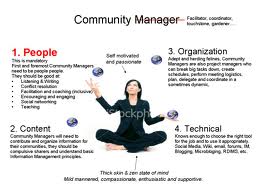 This person isn’t a “technology person” working in your IT department. In fact, they don’t need to have many of those skill sets because you either already have an a) IT person on your payroll, b) relationship with an IT consulting firm or c) utilize “in-the-box” technology (e.g. Press Publisher, 1and1.com, etc) that comes with a toll-free help desk when things get dicey.
 I’ve seen it happen way too often. A fundraising professional or the executive director says to a group of people — using at a board meeting — something like this: “We need volunteers to help with our special event fundraiser. Who can help?” At first, there is an awkward silence and no hands go up. Then there are a few reluctant hands. Whenever I see this happen, I’m always left wondering if those were the right people for the job and how many of those people are clowns?
 I was sitting in the bleachers at Wrigley Field. I was there with my father and my partner. The quality of baseball on the field was terrible, there was a constant drizzle of rain falling from the sky, and the fans were obviously getting antsy. Suddenly, one of the fans got to his feet and yelled at the top of his lungs:
 I’m sure some of you are probably skeptical and for good reason. I mean how crazy and distracting would it be to have a committee of people who all want to be the center of attention. Crazy . . . I’m sure! However, I can’t help but dream about the type of event those folks would build in the name of securing more recognition and attention all to benefit my agency.