
 Not too long ago, I was sitting in an introductory orientation meeting with a group of volunteers. As the consultant, I was ticking through all of the things our little group was about to undertake. And then it happened. One of the volunteers raised their hand and said, “I didn’t realize this was what I was being asked to do. I’m really busy and I don’t think I can do those things.”
Truthfully, I was shocked.
I’ve never had a volunteer openly admit this in the middle of a meeting. Normally, these individuals keep quiet and simply disengage.
Of course, this is dangerous to the goals of whatever project you’re working on. Because if many people are quietly disengaging as they conclude “This isn’t what I signed up for,” then the team you built won’t likely accomplish what you need and won’t succeed.
So, what is the answer?
Simply, we need to stop “soft selling” people and playing down what we need them to do.
 As I suggest in the headline for this post, there is a recipe for how to recruit a volunteer appropriately and it is as follows:
- call the prospect and ask for a face-to-face meeting (no telephone recruitment)
- talk about the volunteer opportunity in broad terms, how it advances the organization’s mission and how it helps clients
- share specifics about what you are asking them to do (e.g. specific tasks, process involved in accomplishing those tasks, time involved, number of meetings required, etc)
- provide them with a timeline (e.g. when will this commitment start, when will this commitment end, etc)
- provide them with a written volunteer job description
- do NOT undercut your ask by saying things like “whatever you can do will be OK“
- do not press them for an immediate answer . . . if they need time, encourage them to take the written job description home and think about it for a few days, but make sure to set a time to follow-up with them
This recipe for volunteer recruitment is all about one thing . . .
SETTING EXPECTATIONS
Of course, setting expectations is done at other times and not just during the first recruitment meeting. And there are other strategies involved than a simple job description and clear discussion. The following are a few additional ways to go about it:
- use your first meeting to provide an orientation and affirm with everyone what they signed up for
- training opportunities can reinforce expectations
- goal setting and planning exercises with the group also will help reinforce expectations
- report meetings and accountability calls can provide opportunities to ask: “How is it going? Is this what you thought it would be? Can we help?“
Whenever I talk with non-profit professionals and volunteers about “setting expectations,” they seem to get squeamish. Here is some of what I hear:
- “These people aren’t employees. We aren’t paying them.“
- “Setting expectations feels pushy and presumptuous.“
- “They might say NO if they really knew what they were signing up for.“
As non-profit professionals and volunteers, we need to teach ourselves to push past these irrational objections.
I encourage you to think of it this way . . .
Why would you put people you know, love and respect in a difficult position?
I oftentimes think back to a time when this happened to me whenever I’m tempted to “soft sell” someone on a volunteer opportunity. Here is what happened in a nutshell:
- I was asked to join a committee
- I realized at the first meeting that I said YES to something that I didn’t immediately understand and definitely didn’t have time to do
- I bit my tongue and said nothing because the person who recruited me was a friend and I didn’t want to let them down (and I felt like I owed them)
- I agreed to do things that I knew I couldn’t realistically do
- I got some of it done, but not all of it
- In the end, I had to admit that I couldn’t accomplish everything I said I would
- I felt like a failure
- I blamed myself, but I also resented my friend for not being honest with me from the beginning. We are still friends, but since this experience I now find ways to politely say NO to everything they ask me to get involved in
Review the last few bullets, and again ask yourself this simple question: “Why would you put people you know, love and respect in a difficult position?”
How does your non-profit organization set expectations with prospective volunteers? Please use the comment box below to share your thoughts and experiences. We can all learn from each other.
Here’s to your health!
Erik Anderson
Founder & President, The Healthy Non-Profit LLC
www.thehealthynonprofit.com
erik@thehealthynonprofit.com
http://twitter.com/#!/eanderson847
http://www.facebook.com/eanderson847
http://www.linkedin.com/in/erikanderson847

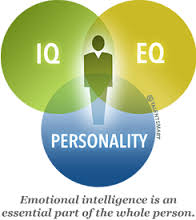 Some of you might be wondering, “What is the world is emotional intelligence?” and the answer is somewhat complex because it involves brain science.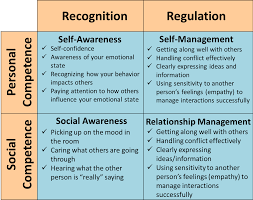

 As the curtain falls on 2015 and a new year bursts onto the stage, I can’t help getting excited for countless non-profit organizations across this great land of ours. As many of you know, I am a planner by training with both a BAUP and MUP from the University of Illinois Urbana-Champaign. Embedded in every planner’s soul are ideas such as:
 Like so many other people, I am a sucker for year-end predictions. I suspect it has something to do with being uncomfortable with an uncertain future. So, for each of the last few years, I’ve blogged about non-profit predictions and trends during the final few days of the year. Needless to say, I can’t resist doing it again as 2015 comes to a close. Drum roll please? I predict non-profit organization in 2016 will . . .
![IMG_20151220_110543620[1]](https://donordreams.files.wordpress.com/2015/12/img_20151220_1105436201.jpg?w=169) Happy Holidays, DonorDreams readers! I am one of those people who procrastinates gift shopping until the last minute, which is why I was so relieved last night when I snagged the last Minecraft video game for Xbox 360 off the shelf at Target for my niece. Phew! That was a close call. I know that gift giving isn’t just on my mind because last week one of my clients gave me a pen and set of blank cards designed by their clients as small token of their appreciation (see picture to right).
Happy Holidays, DonorDreams readers! I am one of those people who procrastinates gift shopping until the last minute, which is why I was so relieved last night when I snagged the last Minecraft video game for Xbox 360 off the shelf at Target for my niece. Phew! That was a close call. I know that gift giving isn’t just on my mind because last week one of my clients gave me a pen and set of blank cards designed by their clients as small token of their appreciation (see picture to right). I had the privilege of interviewing a young fundraising professional yesterday for an online article that I am writing. In that interview, we talked for almost an hour about direct mail and her passion for learning as much as she can about that industry’s best practices and how to apply it to her non-profit fundraising work.
 OK . . . I have a confession to make. When I’m on the road and run down, sometimes I flop into bed and watch an episode or two of South Park on Comedy Central. While the show’s satire is often over the top, their social commentary on all sorts of current events is razor sharp. A few nights ago I found myself caught up in this “travel habit” and engaged in watching season 19 episode five, which was all about Internet Shaming and included a subplot about Charity Shaming.
 If you’re seeking to expand your volunteer base, you may not need to look very far.