
 Last week I had the privilege of attending a Fox West Philanthropy Network meeting where Jack Kaplan, Director of Public Policy & Advocacy for United Way of Illinois (UWI), reported on survey findings about the impact of the state’s budget impasse on the non-profit community. It should come as no surprise to anyone the longer this budget crisis drags on the worse it becomes for the state’s non-profit sector.
If you have time to read the white paper summarizing UWI’s survey, then click here. If you’re on the run today, here are a few of the highlights (or should we say “low-lights“):
- The number of organizations that have made cuts to clients served as a result of the state’s budget impasses has more than doubled since July 2015
- Nearly half of respondents reported making cuts to services, programs or operations as a result of the budget impasse
- The number of respondent that reported making cuts to services increased dramatically from the survey conducted in July 2015 to the one conducted in January 2016
- Of those agencies responding, 49% said they’ve tapped into their cash reserves
- Of those agencies responding, 26% said they’ve had to access their line of credit
- Of those agencies responding, 27% said they’ve laid off staff
- Of those agencies responding, 5% have “skipped” a payroll
As I soaked in all of this survey data, I came to the following conclusions:
- The longer this budget impasse lasts, the more programs are likely to be cut
- The longer this budget impasse lasts, the more staff are likely to be laid off
- The longer this budget impasse lasts, the more likely it is that agencies will cannibalize themselves — undercutting their organizational capacity — and do long term damage to their infrastructure and ability to come back from this crisis (read more about the Nonprofit Starvation Cycle in the Stanford Social Innovation Review)
- The longer this budget impasse lasts, the more likely organizations will lose their most valuable and talented staff, who I suspect are currently looking for alternative employment
- The more programs that are cut, the more clients will go without necessary services, which will have a long term effect on our communities (e.g. increased homelessness, increased crime, decreased student test scores, etc), which ultimately always leads to increased public expenditures down the road (e.g. increased taxes for policing, increased taxes for prisons, increased taxes re-open state institutions that were closed for cost savings when those services were shifted to the non-profit sector decades ago, etc)
I admit all of these conclusions are “my opinion” and none of us will know the real truth until the damage is done and smarter people that I are doing research years from now on the impact of the Illinois budget impasse. However, my intuition tells me I’m not too far off with these thoughts.
In addition to these thoughts, I’m also left with a number of questions such as:
- When did so many Illinois non-profit organizations get so reliant on state government funding? And how can we avoid this from happening again in the future?
- As is the case with most crises, there are really bad things that happen but there are usually unexpected good thing that come from the experience. I wonder what may rise from the ashes?
- When will the budget impasse finally get resolved? (Note: I’ve heard some people predict Illinois won’t have its next budget until November 2016 or possibly even the beginning of 2017. Just for the sake of perspective, the last budget expired on June 30, 2015.)
- What will happen to FY 2016 state contracts that were issued to non-profits “in lieu of appropriation” if the state never passes a FY 2016 budget and simply skips to passing a FY 2017 budget?
Lots of opinions and many more questions. I suspect many of you are in the same boat. Please use the comment box to share your thoughts and experiences.
If you want to learn more about the Illinois budget impasse and its potential impact on non-profit organizations, then I suggest the following:
- If you are interested in diving into the survey data, I encourage you to click the link I provided earlier in this post to the United Way of Illinois survey summary.
- If you want to review the PowerPoint slides that Jack Kaplan used for his presentation to the Fox West Philanthropy Network (FWPN), I uploaded them to one of my cloud drives and you can see them by clicking here.
- Carol Gieske, who is the President of the Elgin Area Chamber of Commerce, shared an easy to understand infographic she secured from Illinois Comptroller Leslie Geissler Munger that illustrates the severity of the Illinois budget crisis. The infographic explains the budget issues as if your home finances were in the same position as the State of Illinois. I also uploaded this document to one of my cloud drives and you can see it by clicking here.
Next week I plan on publishing two more blog posts on this subject. While they are still coming together, one of the posts will summarize a discussion I had with an organization who has been significantly impacted by this crisis (of course, names will be changed to protect the innocent). The other post will likely focus on what organizations might consider doing to weather the storm. Who knows … there may even be a fourth post if things get too long. Stay tuned! 😉
Here’s to your health!
Erik Anderson
Founder & President, The Healthy Non-Profit LLC
www.thehealthynonprofit.com
erik@thehealthynonprofit.com
http://twitter.com/#!/eanderson847
http://www.facebook.com/eanderson847
http://www.linkedin.com/in/erikanderson847
 One of my favorite movie scenes is at the
  You have lots of short-term options that will help bridge your organization through a cash flow crisis. The following is a short list of some of those options:
 If I’ve seen it once, I’ve seen it a number of times . . . board volunteers want to hold someone accountable after the crisis passes. In my opinion, the best way to survive this dynamic is to be able to point to:
 Now that you’ve made it through the crisis and have a firm understanding of what caused it, it is important have a new long-term plan that keeps you from ending up back from where you just came.
 Your nonprofit is constantly trying to improve. Whether you’re developing an efficiency hack for your staff members or trying new fundraising events, openness to change is what allows your organization to grow, acquire more donors, and raise more money for your cause.
 Abby Jarvis is a blogger, marketer, and communications coordinator for
  Well, it happened to me and my husband again just the other day. We were asked to dinner by a non-profit friend. It was a simple dinner invitation, and one that we’ve been working on setting up for more than a year. We weren’t in the restaurant for more than 15 minutes and the pre-meal cocktails had just arrived, when our friend was asking us to give some consideration to making a contribution to their organization’s endowment fund.
 Simply, I believe soliciting unsuspecting prospects and donors is detrimental to your organization (and to everyone else in non-profit sector) for the following reasons:
 In an effort to do may part to help eradicate the “ambush” tactic from our non-profit toolbox, I will share with you some of the tips from this video.
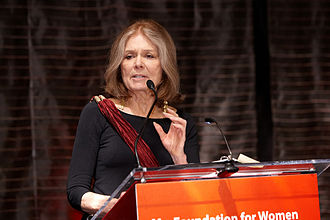 It was a bleary-eyed late night dash in a rental car to position myself for a morning meeting, and I was listening to National Public Radio (NPR) in an effort to stay awake. At one point, someone was interviewing iconic feminist leader Gloria Steinem. While I cannot remember the big reason for the interview (e.g. new book, rally, election analysis, court ruling, etc), there was one thing that stuck with me, and I just had to share with you because I think it is a great allegory for how your non-profit should interact with donors.
 For me, sometimes people speak the truth and it hits me in such a way that I have a hard time getting it out of my head. It rolls around like a pinball in my brain, and the only way for me to stop the experience is to write about it. Well, this happened again on January 28, 2016 at approximately 10:15 pm while I was watching a Special Edition of Hardball with Chris Matthews. It occurred during an interview with Mike Huckabee, when the former presidential candidate said something close to the following (and if memory serves me correctly, I think it was in response to a question about the primary election system):
 This morning, I was in my car driving down the interstate when National Public Radio (NPR) ran a story about UNICEF’s goal to raise $9 million to fight against the Zika virus. If you want to learn more about this new, you can
  I am a lucky son because both my Mom and Dad are still married and living in the same community and same subdivision where I grew up (except they moved across the street when I went away to college). A few years ago, both of my parents retired and have been trying to figure out what to do with their new found time.
 I’ll keep this story short and sweet since this post is getting too long. Yesterday, I went to my doctor for my annual physical.
 Asking a small favor of you . . .