
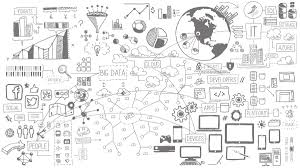
 For the last few decades, the non-profit sector has been focused on data in an effort to convince donors to continue their philanthropic support. I still remember being a new executive director sitting in my first United Way meeting and learning about constructing logic models and differentiating between inputs, outputs, outcomes and pre- and post-test survey tools. All of this was piled on top of a slew of other data metrics my national office was asking for such as:
- overall organizational membership
- average daily attendance
- member demographics (e.g. gender, age, ethnicity, zip code, household income, etc)
- employee turnover
- how many members attended 52 days or more per year compared to 105 days
- And on and on and on (seriously, the report was 35 pages long)
While I understood information was powerful, especially with regards to management and decision-making, it was mind-numbing to me the first time I heard someone advocate for total transparency by sharing all of this data with donors.
My immediate reaction was:
- Of course, donors have the right to see what their investment is producing!
- But seriously . . . isn’t a data dump via the annual report, website, newsletter, impact reports, etc. counterproductive and confusing for donors?
From that starting point in the Spring of 2000, I began my journey and life-long struggle with becoming a donor-centered fundraising professional.
I must confess this quest for the holy grail of perfect donor communications is ongoing.
For the last few days, I’ve been preparing for next week’s Boys & Girls Clubs of America National Conference in New Orleans. In addition to beautifying my exhibitor booth, I’m refreshing The Healthy Non-Profit‘s marketing materials. In the process of doing this, I decided to take a stab at producing a few infographics related to some of the services I am trying to highlight.
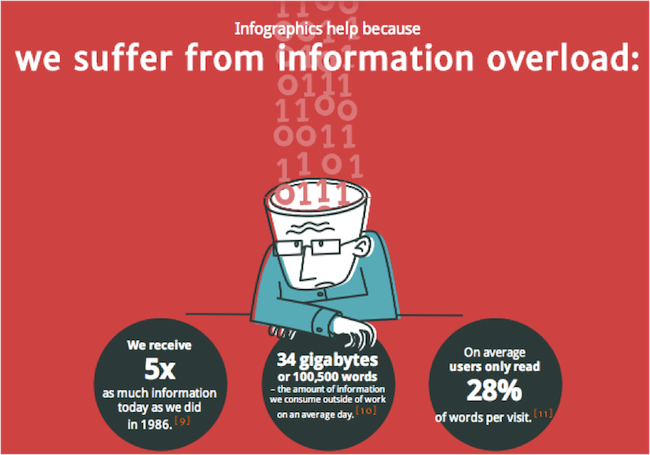
I recently got bit by the infographic bug because two of my capital campaign clients are really good at using these tools. I just love how easy they make it look. I also became a fan after I started researching why these communication tools are so effective.
Check out the following cute infographic that helps make the case (Source: CopyBlogger post titled “25 Ideas to Transform Ho-Hum Infographics into Something Extraordinary,” written by Barry Feldman):
As I set out to create my first few infographic handouts for my conference booth, I must admit it wasn’t easy. However, I found a few great online resources that helped me get over those first few hurdles. In the spirit of collaboration, I thought I should share:
- Donna Moritz’ blog post titled “7 Super Tips for Creating Powerful Infographics” on the Entrepreneur blog
- Wick Marketing’s “The Power of Infographics“
- Allison Gauss’ “10 Nonprofit Infographics that Inspire and Inform” on Classy Blog
- Picktochart, which is an online infographic generation tool (Note: I subscribed to the free version and liked this site’s intuitiveness. I might even upgrade into one of their pay-packages.)
It has been a while since I’ve served on the front line of a non-profit organization. I’m sure online tools like these are now more common. What does your organization use to distill its data and information into easy-to-digest, bite-size donor communications pieces? Please scroll down to the comment box and share your thoughts and experiences. We can all learn from each other.
Oh wait . . . before you leave . . . it is important to note that there are some very smart fundraising professionals and bloggers who are NOT on the bus when it comes to sharing data with donors during the solicitation stage of the resource development process. While they typically agree on the importance of collecting data for data-driven decision-making, they stop short of sharing it with donors because philanthropy is an “emotional” act and not “logical.” I find these arguments compelling and lean towards storytelling as a fundraising tactic, but I still see infographics as powerful stewardship tools.
<sigh>
Heck, I tend to waffle on this issue. So, I’m interested to hear what you think.
Here’s to your health!
Erik Anderson
Founder & President, The Healthy Non-Profit LLC
www.thehealthynonprofit.com
erik@thehealthynonprofit.com
http://twitter.com/#!/eanderson847
http://www.facebook.com/eanderson847
http://www.linkedin.com/in/erikanderson847
 I’m so honored to be hosting the April 2016 Nonprofit Blog Carnival. When announcing April’s carnival theme in my April 4th
  Joe Garecht at The Fundraising Authority blog reached out to some of the non-profit sector’s best consultants, speakers and authors and asked them to answer this month’s carnival question in his post
  I love the fact that Bill Murray makes a cameo appearance in this month’s Nonprofit Blog Carnival thanks to Empower Nonprofits‘ Jeremy Koch. Jeremy will tell you everything Bill Murray taught him about how to
  This month DonorDreams is hosting the nationally acclaimed
  Recruit a handful of volunteers who don’t mind calling people and asking for money
 I sometimes wish those cool phones used by the characters from the Matrix movies could be used today for time travel. Because if that was an option, I would totally go back in time to my first phone-a-thon in the late 1990s. I would tell my younger-fundraising-self the following:
 As many readers know, I was once an executive director for a non-profit organization that ran a Duck Race fundraiser. For those of you who don’t know what a Duck Race is, it is simply a raffle where serial numbers on the bottom of little rubber ducks correspond to numbered adoption papers sold to donors. The first 10 ducks that cross a water raceway finish line win prizes. The challenge from a revenue perspective is essentially two-fold:
 In the 1986 box office flop
  As a young Boy Scout professional in the 1990s, I was just starting to learn may way around fundraising principles and best practices. While I previously had helped out with a few special events and written a grant proposal for another organization, I never helped plan-organize-implement an annual campaign pledge drive, which is what I was being asked to do with a group of Friends of Scouting (FOS) volunteer within my district.
 Fast forward a number of years into the future when I was a first-time executive director for a Boys & Girls Club.
 Sometimes when I daydream, I see myself standing outside my house in the street with Dr. Emmitt Brown (aka Christopher Lloyd’s character in Back to the Future), waiting for the lighting storm so I can jump into that
  Ahhhh, yes. I remember this embarrassing lesson very well. It occurred in the late 1990s when I was a young Boy Scout professional who was responsible for membership management, district-wide programming, local unit support and fundraising for a small suburban district in the Northwest Chicago suburbs. It was the 20th Century and the idea of email was new and evolving as a way to communicate with non-profit volunteers.
 To better understand what I just said, I will use a simple analogy . . .
 Sometimes, when I’m daydreaming, I imagine myself in a time machine going back to 1999 to have a serious conversation about email usage with my younger-fundraising-self. I also sometimes wonder if it would be helpful to take a page out of the Arnold Shwarzenegger Terminator movies by traveling back in time to sabotage the work of the person who created email. 😉
 Is your nonprofit organization trying to break into the millennial space in order acquire and retain more millennial donors?
 Zach Hagopian is the co-founder and COO of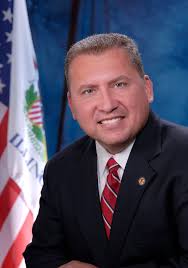
 Earlier this week and last week, I started writing about the State of Illinois’ budget crisis and how it is impacting non-profit organizations. In
  Don’t want to take my word for it because you might have heard it from your grandfather or another beloved family member. No problem … I completely understand. Let me provide you with scientific proof. Simply
  Your board is likely made up of smart people. If they aren’t being used (at a minimum) as a “sounding board” on the issue of government funding and what to do about it, then my suggestions are:
 Of course, the more difficult question for most non-profit organizations is “What to do about it?”
 Here is what I didn’t expect to hear:
 Believe it or not, this phenomenon has a name. It is called the