
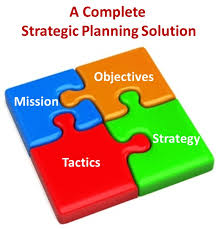
 I believe there is a misconception out there about strategic planning because I keep running into executive directors who think just because the current plan is expiring that is must be time to begin work on a new strategic plan. I also oftentimes run into folks who believe it is a perfect time to start planning when their agency is experiencing instability, blurriness, and confusion. In my humble opinion, there is a time and place for strategic planning and embarking on this journey at the wrong time can be at best frustrating and at worst damaging.
Readiness questions
Just the other day, I was talking with a friend about this issue, and they asked the obvious question, “How do you know when the conditions are right?” I started off saying something stupid like: “You’ll know when the time is right.” I knew it was dumb advice as it was coming out of my mouth.
So, I went home and started digging through my library of planning materials. I came across an old strategic planning document from a previous employer who had partnered with BoardSource to create the manual. So, you know it is good stuff. 😉
 As I had hoped, I found a section titled “Key Questions to Assess Readiness and Capacity”. Here are those questions:
- Do your regular board meetings (apart from retreats) include at least one strategic, or “Big Picture,” issue on the agenda?
- Is your current strategic plan based on realistic and comprehensive assumptions about the agency and its external environment? What considerations are missing?
- How might changing demographics and other economic, social, and political trends affect a constituent, client, or membership base that provides a primary revenue stream?
- What goal should the agency strive to achieve for financial reserves (for example, at least one-half of the operating budget)? Are there some potential revenue streams to consider?
- Are new priorities clear and the proposed means of paying for them realistic? Which programs should be self-supporting? Which might be operated at a loss in order to fulfill the agency’s mission?
- What metrics do you use to monitor organizational effectiveness?
- Have you considered all the options and chosen a planning method (aka planning model) that works best for the agency? Are you flexible enough to combine approaches if that suits our culture?
- How do you include board members who are not on the planning committee as participants in the process?
- What performance measures should be included in your strategic plan?
- How do you keep our strategic plan active and visible within and outside the agency?
- How often do you conduct strategic planning? Does that cycle make sense for the agency?
- When you are ready to undertake a planning process, are you clear about why you are planning?
- Are you clear about the roles of the board, executive director, and staff in strategic planning? Do you honor the distinctions?
- Have you used consultants in the most effective ways possible? If you have never used a consultant, should you consider doing so?
I’m not thrilled with these questions because I think they blend together two different issues — capacity and readiness. So, if you’re just trying to decide whether or not your agency is ready to start down the strategic planning road, I suggest you and your board governance committee spend some time chewing on questions 7, 8, 11, 12, and 13.
The other questions are important, too. I just think the five question I just highlighted cut to the heart of the matter.
 We’re not ready, but we still need a plan!
If your board governance committee determines that you’re not ready, but you see difficulty down the road and think you need a plan to guide your efforts, you may not be out-of-luck.
You should look into developing a short-term tactical plan focused on the next 12 months.
Perhaps, a business plan or a something addressing a specific agency function (e.g. resource development, program, facilities, etc) might be a better use of time for you and your volunteers.
Did you mention consequences?
Earlier in this post I said, “. . . there is a time and place for strategic planning and embarking on this journey at the wrong time can be at best frustrating and at worst damaging.”
I been down this path many times, and I encourage you to please learn from my mistakes.
If you start down a strategic planning road when you aren’t ready to do so, I’ve seen the following things happen:
- It feels like you’re spinning your wheels, and you end up spending LOTS of time of stuff that you thought were obvious.
- Volunteers get frustrated. They feel like they’re going nowhere fast. Some even express that it is a waste of their time.
- I’ve seen board members resign in the middle of difficult strategic planning processes.
- I’ve seen major disagreements result in boardroom rifts.
- I’ve also seen executive directors get fired.
How has your agency determined readiness? Do you have other questions to add to the list? Please use the comment box below to share your thoughts and experiences. We can all learn from each other.
Here’s to your health!
Erik Anderson
Founder & President, The Healthy Non-Profit LLC
www.thehealthynonprofit.com
erik@thehealthynonprofit.com
http://twitter.com/#!/eanderson847
http://www.facebook.com/eanderson847
http://www.linkedin.com/in/erikanderson847
 In yesterday’s post titled “
 From what I’ve heard and read, many non-profit organizations are concerned about how the government shutdown will impact their funding. Consider the following:
 In the weeks leading up to the government shutdown, I heard some rumblings via the news media that Senator Ted Cruz and those aligned with him were dragging things out in Congress to maximize their online and direct mail fundraising efforts. To be honest, I didn’t give much thought to those accusations. They sounded like sour grapes and something partisan opponents would say in the heat of the moment. And then . . . when the government actually shut down, I started receiving a flood of email from the Democratic Congressional Campaign Committee (DCCC). This is when my fundraising spidey-sense started to tingle, and I started paying attention because there must be lessons to be learned for non-profit organizations somewhere in this mess.
 Here is what I’m seeing:
 When crafting your case for support, this is what our friends in the political fundraising world seem to be telling their non-profit cousins:
 Over the years, I’ve urged non-profit organizations to exercise tremendous caution when contemplating a cause related marketing strategy as part of their resource development plan. There was the December 2012 post titled “
 If you want to know more about this campaign, Forbes magazine’s Alicia Jessop did a nice job in an October 2012 article titled “
 Welcome to O.D. Fridays at DonorDreams blog. Every Friday for the foreseeable future we will be looking at posts from John Greco’s blog called “
 Welcome to the final post in our five-part series on Governance. We have already discussed the Board’s role in
 Do you know Jay Love? Of course, you know this gentleman, but you just may not know that you know him. Many non-profit professionals know Jay as the man who innovated the online donor database system known as eTapestry. More recently, you may have heard whispers about a new online CRM product called Bloomerang, which focuses on donor loyalty instead of more transactional metrics found in traditional donor databases. Well, that is Jay’s newest gift to the non-profit sector.


 Full discloser . . . I went out for a few glasses of wine on Tuesday night with a non-profit friend and got back home a little late at night. So what? Who cares? Well, I need to be up and on the road at 5:00 am to visit an out-of-state client, which means I needed to write my Wednesday blog post on Tuesday night. Oooops! So, I’m heading to bed in the next few minutes and wringing my hands about not writing something in the morning. Luckily, my friend said something provocative over a glass of wine and that will the be center of today’s post.
 I am not a healthcare expert, and I promise not to play one today. However, the Affordable Care Act (aka Obamacare) has been mentioned in passing a handful of times in meetings I’ve had with non-profit board and staff members over the last few months. Of course, when things like this happen, it tweaks my curiosity and normally ends up here as a blog post. Today, I thought I’d quickly touch upon the quickly evolving topic of healthcare and the non-profit sector and how everyone needs to start paying attention.
 Why?
Why?