
 Don’t look now, but we are seven weeks away from drinking champagne and celebrating the end of 2013 and the start of a Happy New Year 2014. It is this time of the year when non-profit organizations are super busy. Many of you are closing out your fiscal year, and almost every non-profit with a pulse is executing its year-end giving strategy.
According to a survey by Charity Navigator, respondents reported that they expect to raise 40% of their annual revenue budget between Thanksgiving and New Years.
Holy Cow! Year-end giving is a big deal for many non-profit organizations, which is why I’m dedicating today’s post to just a few giving strategies I see being employed or talked about by my friends.
Traditional year-end appeals letter
There are many different “schools of thought” on how to craft the perfect year-end appeals letter. I’ve seen all of my favorite bloggers weigh-in on this subject. The funny thing is that each and every one of them have a slightly different take on the same subject.
- Long letter vs. short letter
- The importance of cross-channel promotion or not
- Send the letter early or closer to Thanksgiving
 I just finished helping a client with their year-end mail appeal. The executive director called on Friday to report the letters were delivered to the post office and we both did a little happy dance. The next thing on his year-end fundraising task list is preparing for the phone-a-thon follow-up the week of Thanksgiving.
If you are like most non-profit organizations, you are doing something traditional like sending a letter. Hopefully, you’ve already sent it or are very close to doing so, but here are just a few thoughts of my own on this very popular subject:
- The letter must be emotional and pull at heart-strings
- The letter must tell a story about impact and not focus on your agency’s needs
- A matching gift is a tremendous incentive that sets you apart from lots and lots of other appeals
- Go light on the stats and data . . . let the story be the feature and sprinkle outcomes data into your story sparingly
- Don’t be overly fixated on restricting your letter to one page . . . tell your story
- Use lots of white space, pictures and graphics
- Keep in mind how readers read . . . write your letter accordingly (e.g. personalized salutation, ask for a specific contribution in the first paragraph, influential signature, catchy post script)
- You need to design a great outer envelope . . . entice people to open the envelope and read your request or your awesome letter is worthless (e.g. handwritten names and addresses on the outside envelope)
- Follow-up . . . organize your board members in a phone-a-thon and send a follow-up postcard or another appeal before New Years Eve
If you don’t like my suggestions or are looking for more advice, here are a few additional links to bloggers who are amazing:
- Fired Up Fundraising: “What can make or break your year-end fundraising appeal?“
- Beth’s Blog: “On appealing year end appeals & being pitch-erific“
- The Fundraising Coach: “The secret behind year-end fundraising fall appeals“
 Holiday shopping appeals
Perhaps you didn’t notice, but there are lots and lots of people spending lots and lots of money on gifts for family and friends. Something about “’tis the season“.
With this is mind, there is a big year-end giving trend that has materialized over the last decade or so where non-profit organizations try to tie their year-end appeal to those shopping habits. It is typically rooted in cause-related marketing efforts as retails try to differentiate themselves from their competitors, seize the halo effect and drive foot traffic through their doors using charitable goodwill.
I can almost hear those cashiers asking, “Would you like to donate a dollar to . . .”
A good friend of mind and fellow blogger — Dani Robbins — just informed me via Google+ that Amazon.com has a new charitable giving program called AmazonSmile. In a nutshell, Amazon shoppers will be able to donate 0.5% of their purchase to a charity of their choosing (as long as that charity can be found on Guidestar AND is registered with Amazon).
Is your agency participating in AmazonSmile? Click here is you want to learn more.
 #GivingTuesday
What?!? You haven’t heard of #GivingTuesday?
I guess you get a pass because last year was the first time the non-profit sector attempted to get this “national day of giving” off of the ground.
In a nutshell, there were 2,500 giving partners located in all 50 states. More than 50 million people worldwide helped promote this day by posting, tweeting and generally talking about it on social media. Both Blackbaud and DonorPerfect reported an increase in giving resulting from these efforts.
Will your non-profit organization participate in the second annual #GivingTuesday this year? If so, then . . .
- Mark your calendars for Tuesday, December 3, 2013
- Start developing your online giving strategies to promote this opportunity to your donors
- Get registered as an official partner
For more info, click here to read the #GivingTuesday FAQ page.
You might also want to do a little research on #GivingTuesday best practices. Hubspot published a great post titled “12 Ways to Amplify Your Giving Tuesday Campaign” that you may want to check out.
What does the homestretch look like for your non-profit organization’s fundraising efforts? Please use the comment box below to share. Why? Because we can all learn from each other, and it is the season of giving, of course! 😉
Here’s to your health!
Erik Anderson
Founder & President, The Healthy Non-Profit LLC
www.thehealthynonprofit.com
erik@thehealthynonprofit.com
http://twitter.com/#!/eanderson847
http://www.facebook.com/eanderson847
http://www.linkedin.com/in/erikanderson847
 Your non-profit brand is powerful. It is coveted by major corporations. It doesn’t matter if you are a major non-profit juggernaut like Boy Scouts or Girl Scouts or if you’re a teeny-tiny rowboat out there in the vast ocean of non-profit organizations. You are still valued. The mere fact that you are a non-profit organization, regardless of your mission, in and of itself is valued by corporate America.
 The following are all facts (OK, they are facts
  Have you heard of the “Halo Effect“?
 You may be wondering what I mean by “abusing your non-profit brand“. Here is just a short list of neglectful things:
 Boards meetings can quickly go from productive to destructive in any number of ways. The following are just a few lessons I’ve learned throughout the years and thought board volunteers might benefit from reading:
 When you don’t know where you’re going any road will get you there
 Time of Death: 2 hours after we started talking about this
 I am a member of Gen-X, and I behave like a typical person of that generation especially when it comes to my mailbox. I hate going to the mailbox. I hate opening mail because 99.9% of it is junk. Anything important comes to me via email, and all of my bills and charitable giving is set-up using automatic bill pay. So, imagine my surprise the other day when I was opening a three-week stack of mail, and I came across a handwritten envelope from one of my favorite local charities.
 Every once in a while this job allows me to do something fun and amazing. Last week was one of those times. During an organizational assessment project, I had a brush with history when one of my interviewees turned out to be Nate “Bobo” Smalls. Who is this guy? Quite simply, Bobo is one of the last remaining baseball stars from the Negro Baseball League, which is a piece of history that the world tries very hard not to remember or honor. I walked away from my interview with Bobo with goosebumps on my arm.
 Bobo recalled every neighborhood having at least one mentor.
 The epiphany
 It happens every year. My partner and I get a phone call from Cindy, who is Ernie Gamino’s assistant, and she asks us to please schedule a year-end sit down meeting. Ernie is our Edward Jones financial advisor, and getting time in both of our calendars is a challenge. However, we found some time this past Saturday. I’m glad we did because I discovered that Ernie is a really good fundraising professional, who has never been trained as one or worked at a non-profit organization. We can all learn a lot from Ernie and his colleagues.
 I started the meeting off by growling at poor Ernie. I wanted to know why this annual meeting is necessary? Can’t he just go about doing his job and call me when he needs to get permission to do something with my investment portfolio.
 We talked about his Northern Illinois University (NIU) football team and the state of the BCS football system.
 For two days this week, I’ve been holed up in a little room interviewing donors, community leaders, and collaborative partners as part of an organizational assessment project. When you work in a small room for an extended period of time, you tend to notice every little thing. It was during this time that I found inspiration literally painted on the walls, which got me wondering where you and your non-profit organization gets its inspiration?
 I know that today’s post is a little different from the typical DonorDreams blog post, but working in that small room surrounded by those quotations got me wondering:
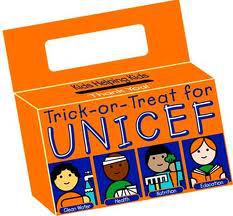 I just love this time of the year. The temperature outside is lovely. Trees are turning colors and putting on a show. Charity is coming into focus for millions of Americans. Last year approximately 174 million Americans donated approximately $50 billion to charities during the holiday season. While most resource development people will tell you this all starts with Thanksgiving, I contend that Halloween is when the starters gun goes off in my head.
 It seems like I’ve been on the road a lot this month, and this allows me to interact with all sorts of talented and amazing non-profit professionals. In fact, just last night I was at dinner with another non-profit consultant who shared with me his “formula” for a successful board volunteer.
 The human element