
Sustainability by Descending Order of Love
By Dani Robbins
Re-published with permission from nonprofitevolution blog
 The new normal has forced a lot of nonprofit leaders to rethink the way they do business. Crises, as unpleasant as they are to experience, allow for growth. I love Rahm Emanuel’s quote “Never let a good crisis go to waste.”
The old normal, otherwise known as normal, to which we all ascribed went something like this: Have a diverse funding base. That way, if ever you lost a government grant, major donor, or foundation award, you could continue to provide services.
Then, as we all remember, the economic crisis of 2008/2009 came, with the compromise of every funding source we had and the end of life as we knew it.
It forced all of us to reassess.
So….what’s a good Executive Director and talented Board to do?
Change!
Think about every process and every assumption, put it on the table, look at it, talk about it and figure out if it still works for your organization. If it does, keep it. If it doesn’t, create a plan to evolve that process into one that better serves the organization and its need for revenue sustainability.
How do you work towards revenue sustainability? Some organizations do it with a consultant, some with a board member, some with a staff member or a donor.
Where do I start? I start with explaining the history of giving in the US and the fact that 80% of all financial gifts, grants and awards, including corporate and foundation giving, come from individuals. I then move on to explain that 80% of most non-profits’ income does not come from individuals.
What, then, do we have? Enormous Opportunity!
I then introduce the idea of descending order of love. Individual giving starts with the people who love you the most.
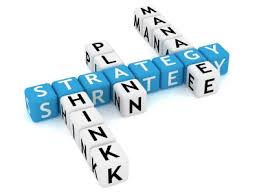 Let’s get those people together and brain storm: Where are we today? Where do we want to go? How can we get there?
Big gifts require big dreams and the capacity to engage people to help reach those dreams.
Get together and figure out your dreams, turn them into goals and then create a plan to meet those goals. Then, put together a list of current donors and a robust list of potential donors, also called prospects. Take a look at your current gift acceptance policies. (Revise or adopt as necessary) Once we have a goal, a plan, lists, and the requisite policies to increase the revenue for your organization, I move to descending order of love.
Your board, staff and major donors will be the foundation of any fundraising plan. Those who love you the most will support you the most. If sustainability were a board game, there would be a Start Here button.
Each board and staff member should make a significant gift. I can hear you thinking “Dani, significant is a fluid term.” Yes it is and that is intentional; my goal is always 100% Board and staff giving. It is critical that those closest to an organization financially support that organization. If they don’t, how can they ask someone else to?
Each board member should be asked in person for a specific gift, not the same gift as every other board member, but a specific gift o that board member which should be determined based what the staff and committee know about their capacity and level of engagement. If someone has enormous capacity but is not that engaged, a significant gift may be less than someone who has less capacity but is more engaged.
Who should do the asking? The person who is most likely to get a YES. Usually that’s another board member, but sometimes, it’s the Executive Director, or a volunteer.
Staff should also be asked to financially support the organization. Care should be taken to who should make that ask as well. I recommend a volunteer, because with fundraising and everything else, we want to avoid even the perception of impropriety.
Once we have 100% giving of staff and board, we move to our major donors and our prospect list and again, make specific in person asks. Prospects should be appropriately cultivated before they are asked for financial support. The definition of appropriate will change based on the individual and the need.
I consider major donors to be the top 10% of givers to your organization. It may be $250, it may be $25,000. It may be more and it may be less. If we continued to play our sustainability board game, there would be a This Way arrow here.
After major donor solicitation are completed, if you have the time and the volunteers, consider asking your larger mid level donors and prospects in person. Then move into your actual mid level donors and prospects. Those with the potential to become major donors should also be asked in person as should anyone who is committed to your organization. While we follow the path of descending order of love in planning, we love all of our donors equally. If someone would like to see you in person, even if it will be a small gift, go. It is fun to thank someone in person and is worth keeping a committed donor engaged. When that is not practical, the next best thing is a phone banks or phone calls.
Our Board game and our plan for income sustainability ends with an appeal letter to those who have not yet been asked or have been asked but have not given and also haven’t said no.
I invite you follow the descending order of love of path to sustainability. Please let me know how it goes. As always, I welcome your feedback.
 I know that this may sound silly, but I think it needs to be said for the record. Non-profit executive directors (e.g. CEOs) are not the undead. They do not live forever. They will leave your agency some day. And every board should be preparing for that eventuality.
 For those that have seen the movie
  Safko explains that social media marketing is like going to a networking event, a party, a trade show, church, or anywhere large groups of people gather.
 A long while ago, a great warrior faced a situation which made it necessary for him to make a decision which insured his success on the battlefield. He was about to send his armies against a powerful foe, whose men outnumbered his own. He loaded his soldiers into boats, sailed to the enemy’s country, unloaded soldiers and equipment, then gave the order to burn the ships that had carried them. Addressing his men before the first battle, he said, “You see the boats going up in smoke. That means that we cannot leave these shores alive unless we win! We now have no choice—we win, or we perish! They won.

 As many of you know, I’m on a temporary assignment for the next few months working with a group of 20 non-profit organizations throughout New Mexico and West Texas. Last night was my first site visit, and the executive director did something that inspired this morning’s post about personal (yet simple) ways to thank your donors.
 This is what I saw:
 In recent weeks, I’ve started receiving phone calls from board volunteers thanking me for my support of their agency.
 Last week I was out to lunch with two male non-profit friends in downtown Chicago when the topic of women board volunteers came up. This happens from time-to-time, and when it does I always bite my tongue because I tend to have strong opinions on this subject. So, I took a deep breath and prepared for what I assumed was going to be one of those “difficult and uncomfortable conversations“. Boy oh boy . . .was I wrong (and pleasantly surprised).
 One particularly hungry monkey eagerly scampered up the pole, intent on retrieving a banana. Just as he reached out to grasp the banana, he was hit with a torrent of cold water from an overhead shower. With a squeal, the monkey abandoned its quest and retreated down the pole.
  We, like our monkey friends, become conditioned. Don’t climb that pole! we learn, when we see what happens to those that do … Then we teach don’t climb that pole! to the newcomers we welcome into the organization, telling the story of what happened to our ambitious co-worker Moe when he climbed that pole it was like a cold shower stopped him right in his tracks! … We learn that we don’t need to climb the pole; we are growing sales and driving profits without climbing the pole; it over time becomes an afterthought, except of course to orient the new talent; and there comes a time when a newbie asks“Why don’t we climb the pole?”and we’re all kind of stumped “dunno; it’s just the way we do things around here!”
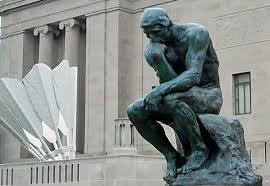 Sometimes I hear something that hits me just right, and it takes days to get it out of my head. This happened on Tuesday during the Fox West Philanthropic Network’s
  Dani suggested that board volunteers who are “strategic thinkers” will have an easier time making the transition from traditional fiduciary modes of governance to more strategic and generative modes.
 If you’re scratching your head while reading this list and asking “what does THAT mean,” then click the link and read the CEB Blog post. It really is quite good. If you want to learn more, then I suggest you start Googling around. 😉 You also might want to
  Sorry about not being able to post yesterday, but it was a crazy busy day because I was one of the co-chairs for
  Positioning Your Board for More Effective Fundraising
 Lunch: Celebrating 100 years of philanthropy
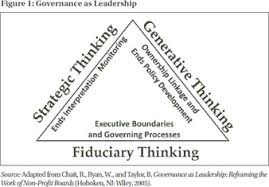 Dani is a big fan of Richard Chait and talked a lot about his