
In case you haven’t heard, DonorDreams blog is hosting for the second year in a row the Nonprofit Blog Carnival in the month of May. This year’s theme revolves around building loyalty among various non-profit stakeholder groups such as donors, employees, volunteers, etc. If you are a blogger and looking for the “Call for Submissions,” then click here. The carnival will be posted right here at DonorDreams blog on Wednesday, May 28, 2014. Stay tuned!
In the interest of building momentum, we’ve dedicated the entire month of blog posts to this topic. We’re specifically focusing on what a variety of non-profit organizations are doing (or are looking at doing) to build loyalty.
All-staff meeting results in health care discussion
Vietnamese Association of Illinois
 The idea of how to build loyalty has bubbled into all sorts of conversations with my non-profit friends this month. Just last week I met my old friend and current President & CEO of the Vietnamese Association of Illinois, Paul Luu, for a delicious lunch at Tank Noodle in Chicago’s Uptown neighborhood. After ordering hot tea and pho, we started talking about his one year anniversary as the top dog at his agency. Quickly, our discussion turned to the topic of loyalty.
When the conversation turned to Paul’s staff, he got very excited and started talking about the quarterly meetings his agency hosts where every employee is invited and encouraged to attend. At these meetings, a wide variety of activities occur. The following are just a few examples of things that have ended up on quarterly all-staff meeting agendas:
- trainings
- updates from upper management and board members about the state of the agency
- Q&A with the President & CEO
Recently, it was brought to Paul’s attention at one of the quarterly all-staff meetings that employees were struggling with health insurance issues. These struggles were going to become more pronounced with the IRS poised to enforce the Individual Mandate of the Affordable Care Act (ACA).
 Understanding that it isn’t enough to just give the staff a forum, Paul and the board of directors listened and developed a plan of action to help employees with their healthcare challenges.
- ACA navigators attended future all-staff meetings to work with employees
- healthcare became a priority and repeatedly talked about in internal communication vehicles
- the agency found funding to help underwrite some of the costs associated with giving employees a healthcare stipend
Why did the agency go to great lengths to meet their staff halfway on the healthcare question? Paul explained it as follows:
“Our staff is talented and could go to work for any number of other social service non-profit agencies throughout the city. We understand that we are only as good as our staff and the services they provide our clients. While we don’t have endless financial resources, we owed it to our employees to engage in a discussion that was very important and collaborate with them on working through the problem until an acceptable solution was found.”
As I heard Paul talk about this situation — one with which he and the board are obviously very happy — I couldn’t help but think about what Peter Drucker once said:
“All organizations now say routinely, ‘People are our greatest asset.’ Yet few practice what they preach, let alone truly believe it. Most still believe, though perhaps not consciously, what nineteenth century employers believe: people need us more than we need them. But, in fact, organizations have to market membership as much as they market products and services — and perhaps more. They have to attract people, hold people, recognize and reward people, motivate people, and serve and satisfy people.”
I believe that Paul and the Vietnamese Association of Illinois just put a huge down payment down on something called employee loyalty because they gave their staff a forum; they listened; they collaborated; and they acted.
I think Peter Drucker, Frederrich Reichheld and all of the other loyalty thought leaders would be very proud of this non-profit organization.
=================================
If you want to learn more about what other non-profit organizations are doing to build loyalty among various stakeholder groups (e.g. donors, employees, volunteers, etc), then tune in here to DonorDreams blog every Tuesday and Thursday throughout the month of May. We will also publish the Nonprofit Blog Carnival on May 28, 2014 with a number of links to other non-profit bloggers who are talking about loyalty related themes.
Here’s to your health!
Erik Anderson
Founder & President, The Healthy Non-Profit LLC
www.thehealthynonprofit.com
erik@thehealthynonprofit.com
http://twitter.com/#!/eanderson847
http://www.facebook.com/eanderson847
http://www.linkedin.com/in/erikanderson847
 Every good planning process begins with some form of evaluation. It could look like a SWOT analysis. It could be significantly more intensive and involve going through an accreditation process. Regardless of what evaluation process you use, good planning starts with evaluation because it is difficult to figure out where you want to go if you don’t know where you are currently.
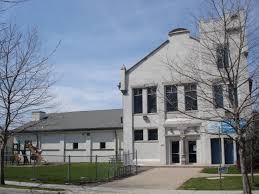 My first days (and those leading up to) as the Director of Operations for the
  Team vs. Group
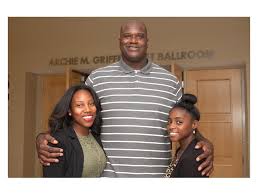 The first step I stress to all of my managers in building a loyal team is the importance of the interview process.
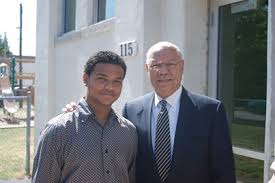 Once hired, make sure the new employee participates in an immediate on-boarding process and orientation to the organization.
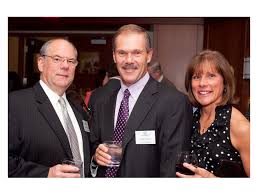 After the honeymoon phase and the initial adrenaline of starting something new, the “real work” is just beginning for the person managing a new employee. The staff manager has the unenviable job of figuring out how to retain talent and simultaneously build a team.
 While Boys & Girls Clubs of Columbus allows each of our five programs to have its own identity, we strive for something that we call a “One Club Feel.” This, to me, is the most important part of my job and truest test of my success (or failure) as a leader.
 “It is all about relationships,” explained
  In addition to these individualized sit down meetings with the executive director, the Club invests time and resources in a variety of other donor stewardship activities including:
 People often ask, “What is the difference between deferred giving, planned giving and charitable gift planning? Isn’t it all the same?” Certainly there have been times in the past when these terms were commonly interchangeable. That was absolutely the case when I entered the field 25 years ago. But over the years, most practitioners have taken to using “charitable gift planning” for a number of good reasons.
 Approximately 14 years ago, I was a young and eager executive director of a non-profit organization in Elgin, Illinois. While I had already worked in a number of different capacities in the non-profit sector, it was the first time I had held the job of “executive director.” Thinking back to that time in my life is where I pull my inspiration for the May 2014
 How to submit your work for consideration?
 Miscellaneous details?
 There is no doubt that as the recession hit many organizations began to cut costs. One of the first areas cut was staff development (e.g. conferences, travel expenses, etc). These expenditured became more of a luxury as donations declined and funding became more uncertain.
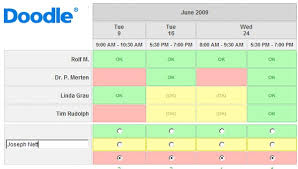 Doodle is one of my favorites. As an Executive Director I would constantly have to convene meetings between groups of people. It was more than frustrating to go back and forth in e-mails trying to figure out a time when people could meet.
 Here is how that new top ten list turned out for
  I may not be the sharpest knife in the drawer, but when I get beat over the head with something enough times over the course of a year it becomes obvious that I’m staring at a trend. LOL! In this case, I am referencing an increasingly popular activity sprouting up all over the place — Giving Day.
 As I started playing around with these ideas in my head, I’ve come to the conclusion that this doesn’t necessarily have to be a community-wide event sponsored by a community foundation or a United Way. (However, I do think a community-wide approach organized by a foundation or United Way is preferable)