
Burn the Boats
By John Greco
Originally published on May 3, 2012
Re-posted with permission from johnponders blog
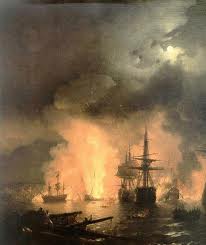 A long while ago, a great warrior faced a situation which made it necessary for him to make a decision which insured his success on the battlefield. He was about to send his armies against a powerful foe, whose men outnumbered his own. He loaded his soldiers into boats, sailed to the enemy’s country, unloaded soldiers and equipment, then gave the order to burn the ships that had carried them. Addressing his men before the first battle, he said, “You see the boats going up in smoke. That means that we cannot leave these shores alive unless we win! We now have no choice—we win, or we perish! They won.
— Napoleon Hill, in Think and Grow Rich
This story is likely familiar; it is often attributed, incorrectly, to Cortez, and it is usually used to compellingly explore the topic of motivation.
You will probably not be surprised to learn that I’m going to go somewhere else with it. I want to talk about change, and what my profession curiously calls change management.
There are two basic theories of change. One of them is flawed.
One holds that change begins with our knowledge and attitudes. Leaders who hold this theory of change implement initiatives that are training intensive, zeroing in on changing our attitudes. The more we know, the more we understand, the more we will adjust our attitudes. Attitudinal change, then, leads us to change our behavior, and as we all change, the organization changes.
Behind door number two we have the theory that says just the opposite — we change our attitudes in response to a change in our behaviors; and we change our behaviors in response to changes in our environment.
I would like to believe that I change my behavior based on different perspectives that I’ve received through learning new and different things. I would like to believe that I don’t need to be “forced” into changing.
 What do you think?
I’ll bet you, like me, would like to think the first theory of change is right, but, in fact, it is exactly backward.
Initiatives based on the first theory of change will take forever to produce meaningful change, if at all. Odds are, it won’t produce a tipping point for the organization before it crosses the frustration threshold of its leaders.
Burning the boats is way more effective.
We change our behaviors because we have to; and we have to because something around us, outside of us, has changed.
I liked hamburgers as a kid, but good gosh no cheese; I wouldn’t eat cheeseburgers, period. Until one day, when I didn’t have an option. I love cheeseburgers now …
What do you think was more responsible for a reduction in smoking: the public service announcements and surgeon general’s warning or the banning of smoking in restaurants, bars, and other public places?
The surprising truth is that we don’t change when we have control and can make choices; we change when we don’t have control and we have limited choices.
Effective leaders don’t try and change their people. They know that they simply do not control their people… And the more they try and directly change our attitudes, the more we push back, dig in, and resist.
Instead, they burn the boats! They redesign the structure; rewrite organizational policies; reengineer processes, integrate technology and tools, update the incentives, clarify the measurements…
Instead of changing us, they change what carries us, what affects us; they change what we depend on; they change what is all around us.
They burn the boats.
Adapted from Managing Change: Cases and Concepts. Todd Jick.
 Last week I was out to lunch with two male non-profit friends in downtown Chicago when the topic of women board volunteers came up. This happens from time-to-time, and when it does I always bite my tongue because I tend to have strong opinions on this subject. So, I took a deep breath and prepared for what I assumed was going to be one of those “difficult and uncomfortable conversations“. Boy oh boy . . .was I wrong (and pleasantly surprised).
 Sometimes I hear something that hits me just right, and it takes days to get it out of my head. This happened on Tuesday during the Fox West Philanthropic Network’s
  Dani suggested that board volunteers who are “strategic thinkers” will have an easier time making the transition from traditional fiduciary modes of governance to more strategic and generative modes.
 If you’re scratching your head while reading this list and asking “what does THAT mean,” then click the link and read the CEB Blog post. It really is quite good. If you want to learn more, then I suggest you start Googling around. 😉 You also might want to
  Boards meetings can quickly go from productive to destructive in any number of ways. The following are just a few lessons I’ve learned throughout the years and thought board volunteers might benefit from reading:
 When you don’t know where you’re going any road will get you there
 Time of Death: 2 hours after we started talking about this
 Every once in a while this job allows me to do something fun and amazing. Last week was one of those times. During an organizational assessment project, I had a brush with history when one of my interviewees turned out to be Nate “Bobo” Smalls. Who is this guy? Quite simply, Bobo is one of the last remaining baseball stars from the Negro Baseball League, which is a piece of history that the world tries very hard not to remember or honor. I walked away from my interview with Bobo with goosebumps on my arm.
 Bobo recalled every neighborhood having at least one mentor.
 The epiphany
 For two days this week, I’ve been holed up in a little room interviewing donors, community leaders, and collaborative partners as part of an organizational assessment project. When you work in a small room for an extended period of time, you tend to notice every little thing. It was during this time that I found inspiration literally painted on the walls, which got me wondering where you and your non-profit organization gets its inspiration?
 I know that today’s post is a little different from the typical DonorDreams blog post, but working in that small room surrounded by those quotations got me wondering:
 I love Monday mornings! I wake up, feed the dog and cat, grab a cup of coffee, sit down at my computer and open my email, and most Monday mornings involves watching “
 Just the other day a friend started talking with me about non-profit directors and officers (D&O) insurance. During the course of that conversation, all sorts of things were discussed and at one point I made a mental note to do a little research. Having just finished my homework, I honestly can say that I completely understand why people don’t like insurance companies — this stuff is complicated.
 The list is long, but the following things are typically excluded from the average D&O insurance policy:
 I shared some of my research with a group of amazing non-profit consultants tonight. The consensus of this group of very smart people was that board volunteers never ask the hard questions about their D&O insurance policies until it is too late.
 The month of October is brutal for me this year. On top of working with my existing client base, I am attending three different conferences in three different regions to help another client with implementation of a specific training track aimed at executive directors and school superintendents. As I attend these conferences, I see non-profit professionals hopping from session-to-session and find myself wondering, “What is their conference strategy?”
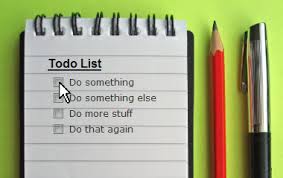 After a few years of proverbially eating popcorn on the couch after attending conferences and trainings, I decided to do something different. My strategy was simple. Rather than taking notes on what the trainer was saying, I only wrote down action items that came to mind while listening to the speaker.
 Welcome to O.D. Fridays at DonorDreams blog. Every Friday for the foreseeable future we will be looking at posts from John Greco’s blog called “