
Doing the Math; Not Necessary!
By John Greco
Originally published on March 9, 2012
Re-posted with permission from johnponders blog
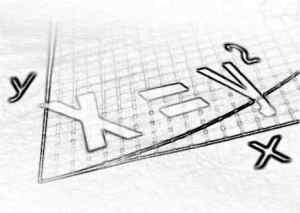 “I regard it in fact as the great advantage of the mathematical technique that it allows us to describe, by means of algebraic equations, the general character of a pattern even where we are ignorant of the numerical values which will determine its particular manifestation.”
— Friedrich August von Hayek
Say what? Algebraic equations? Where might this be going?!?
Here goes: we can equate certain actions, or conditions, or results — without applying numerical rigor — and yet produce a meaningful, insightful, valuable answer.
I’m going to attempt to do Friedrich proud… While my finance, accounting, and engineering friends might cringe, I am going to pose a couple of equations that I think are incredibly meaningful in describing organizational life, yet they require no calculation whatsoever. I call them my “engagement equations.”
First up: Involvement = Commitment.
The general idea here is that as we involve people in diagnosing and solving problems, their commitment to carrying out the resulting course of action grows stronger. Hence, more involvement means increased commitment.
That’s the proactive application of the equation. The reactive application might be when we see low commitment, we should suspect low involvement. And the prescriptive: if leaders want a more committed workforce, they should first seek to involve the workforce in diagnosing why there is low commitment!
Bottom line, we can equate commitment with involvement and be pretty confident it’s not a false equivalence.
I promised two, so next up: Performance = Freedom.
This one’s about the length of the leash. It prompts us to consider that when an individual or team is performing well, we should allow them more space, more autonomy, more freedom. We might get even more performance …
And, of course, there is the flip side: when performance is slipping, more attention might be warranted. Narrow the range, focus on the action.
 (I feel compelled to counter a possible negative perception of this last point by noting that isn’t it a very good thing if a manager sees when an associate or team is struggling, and at the right time and in the right way enters the picture and provides just the right amount of help to get back on the right track? Less freedom is not always a bad thing!)
Shifting our attention to the other side of the equal sign, freedom — autonomy — when earned by performing, can move performance to yet another level; and when there is no freedom, it might very well be thecause of the lagging performance, and not the effect.
Before I close, I can’t help but point out a bit of irony I see when looking at these two engagement equations together… One says “come closer, get involved” whereas the other suggests “I should leave you alone; you’re good!”
And what about the synergy? Involvement equals commitment can driveperformance, and performance equals freedom can enhance commitment!
So there you go, my “engagement equations” … which, honestly, factor into a lot of my work when seeking to improve organizational effectiveness. And I thought I’d never apply that algebra class in real life…
 I look forward to seeing the ones that you’ve run across!
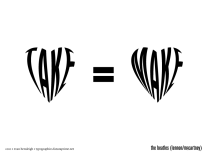
Lastly, in closing, one more — a bonus! — a pretty well known non-mathematical equation, presented in song! from none other than Sir Paul McCartney and his Beatle buddies —
And, in the end, the love you take, is equal to the love you make.

 I was running a Boys & Girls Club in Texas, when I was offered the Executive Director position for the Boys & Girls Clubs in Akron, Ohio. I knew the President of the Akron Community Foundation and not another soul in town. Thankfully, my Board had a plan.
 Program officers of foundations are incredibly generous with their time and are interested in learning about your organization. Community leaders, by definition, care about the community. Go talk to them. You will be pleasantly surprised by the number of people who say yes to your request for a meeting.
 Figure out the “must attend” event in town, and attend. And when you do, walk around and greet everyone, introduce yourself to people you haven’t been able to get in front of and ask if you can call them for a meeting. Again, you’ll be surprised at the number of people who say yes.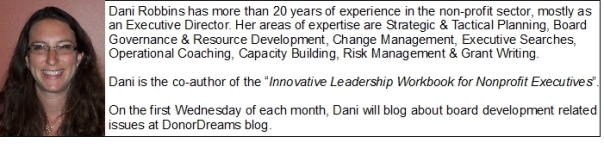
 That July afternoon in Coleman, Texas was particularly hot — 104 degrees according to the Walgreen’s Rexall’s thermometer. In addition, the wind was blowing fine-grained Texas topsoil through the house. But the afternoon was still tolerable; even potentially enjoyable. A fan was stirring the air on the back porch; there was cold lemonade; and finally, there was entertainment. Dominoes. Perfect for the conditions. The game requires little more physical exertion than an occasional mumbled comment, “Shuffle ‘em,” and an unhurried movement of the arm to place the tiles in their appropriate positions on the table. All in all, it had the makings of an agreeable Sunday afternoon in Coleman. That is, until my father-in-law suddenly said, “Let’s get in the car and go to Abilene and have dinner at the cafeteria.”
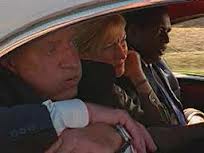 My first exposure to this story was as I was unknowingly about to experience it…
 Last week I was out to lunch with two male non-profit friends in downtown Chicago when the topic of women board volunteers came up. This happens from time-to-time, and when it does I always bite my tongue because I tend to have strong opinions on this subject. So, I took a deep breath and prepared for what I assumed was going to be one of those “difficult and uncomfortable conversations“. Boy oh boy . . .was I wrong (and pleasantly surprised).
 Sometimes I hear something that hits me just right, and it takes days to get it out of my head. This happened on Tuesday during the Fox West Philanthropic Network’s
  Dani suggested that board volunteers who are “strategic thinkers” will have an easier time making the transition from traditional fiduciary modes of governance to more strategic and generative modes.
 If you’re scratching your head while reading this list and asking “what does THAT mean,” then click the link and read the CEB Blog post. It really is quite good. If you want to learn more, then I suggest you start Googling around. 😉 You also might want to
  Boards meetings can quickly go from productive to destructive in any number of ways. The following are just a few lessons I’ve learned throughout the years and thought board volunteers might benefit from reading:
 When you don’t know where you’re going any road will get you there
 Time of Death: 2 hours after we started talking about this
 I am a member of Gen-X, and I behave like a typical person of that generation especially when it comes to my mailbox. I hate going to the mailbox. I hate opening mail because 99.9% of it is junk. Anything important comes to me via email, and all of my bills and charitable giving is set-up using automatic bill pay. So, imagine my surprise the other day when I was opening a three-week stack of mail, and I came across a handwritten envelope from one of my favorite local charities.
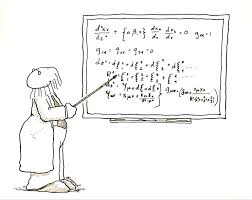 It seems like I’ve been on the road a lot this month, and this allows me to interact with all sorts of talented and amazing non-profit professionals. In fact, just last night I was at dinner with another non-profit consultant who shared with me his “formula” for a successful board volunteer.
 The human element
 Welcome to O.D. Fridays at DonorDreams blog. For the last few years, we’ve looked at posts from John Greco’s blog called “
 Here are just a few examples of what those situations looked like:
 The definition of the word “grace” according to a Google search is: “simple elegance or refinement of movement“.