
Kool-Aid, Groupthink and Generative Governance
By Dani Robbins
Re-published with permission from nonprofit evolution blog
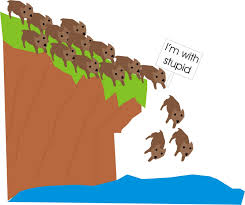 There have been multiple things that have happened in the past week that have made me re-consider the phrase “Don’t drink the Kool-Aid.”
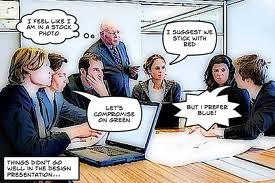
The first was a Board that was exploring introducing a new funding model. The Board, who had been on the inside of a discussion of culture shift for the past year and were familiar with the materials and the arguments, briefly considered not building the organizational culture to introduce the considered change because they “didn’t think it was a big deal.” And it wasn’t a big deal to them because they’d already changed the culture among their group. They’d been thinking about it and reading about it and interviewing other groups that had already implemented the change and there was consensus among the group that it was the right direction for their organization.
Yet… even when there is agreement on the board, there is still the need to create buy-in among others. Without buy-in the potential for failure is high unless all constituents understand the need for change and the foundation is created to implement that change.
The second thing is, in fact, an illustration of just that. The second thing was a local commission’s decision to put forth a levy in the midst of a scandal. They weren’t wrong. They had done their homework, and looked at the issues and put forth a solid plan to introduce change. It failed, primarily and among other things because even though they had a plan to introduce the change and the leaders of the city were behind them, they didn’t have the informal community leaders on board and those leaders didn’t sell it to their constituents.
My intent is not to criticize any of these leaders. Each was in a difficult position and after considering all the options, made the decision that they felt best served their organization, their community and their constituents. That is the very definition of good leadership. Another component of good leadership is to learn from our mistakes and missteps. To that point, we need to ask:
What could have helped? What might have made the difference?
I believe the answer is generative governance. Let’s review how some of the techniques offered in my favorite board book “Governance as Leadership” could have made the difference.
 “Silent Starts — Set aside 2 minutes for each trustee to anonymously write on an index card the most important question relevant to the issue at hand.”
What if a board or commission member had written: “How can we engage community and committee leaders as well as those in informal leadership positions who could, in turn, engage their constituents?”
“One Minute Memos — At the end of discussions give each member 2-3 minutes to write down any thoughts or questions that were not expressed.”
This could have been a great opportunity to consider the worst case scenarios and create a plan ensure against such eventualities.
“Counter Points — Randomly designate 2-3 trustees to make the powerful counter arguments to initial recommendations.”
This could have been used to dispel all the arguments against the change. From that discussion, marketing materials, talking points and an engagement plan could have been created.
“Role Play — Ask a subset of the Board to assume the perspective of different constituent groups likely to be affected by the decision at hand.”
A board member could have taken on the role of a member of the community who would be the most negatively impacted by the change and a plan could be created to embrace those constituents and mitigate their impact.
“Breakouts — Small groups counter group think and ask: Do we have the right questions? What values are at stake? How else might this issue be framed?”
This is my favorite of all the techniques offered. It is the best way I’ve seen to get out of your head, out of the room and really consider all the ramifications of the discussion on the table from all the possible perspectives.
Let me be clear. I wasn’t in the room for any of these discussions; these are my assessments from afar. My intent is not to be a Monday morning quarterback. My intent is always to see if there is a lesson to be learned and how a different outcome might have been achieved. Could generative conversations have made the difference?
When it comes to group think and drinking the Kool-Aid, I try to never forget a church sign I once drove past; it said “Don’t believe everything you think.”
What’s your experience with group think and drinking the Kool-Aid? Do you agree that generative governance could be the answer? How have you mitigated the effects? As always, I welcome your insight, feedback and experience. Please share your ideas or suggestions for blog topics and consider hitting the follow button to enter your email.
A rising tide raises all boats.
 Bright eyed and bushy-tailed. I love those two descriptions because they perfect describe most newly minted non-profit executive directors. They are eager, optimistic, and ready to change the world when they walk through your agency’s door on their first day of work.
 Exhausted yet?
 The two questions I get asked on a regular basis are “What is the right number of board members?” and “How often should our board meet?” The answer to both is the same: whatever it takes. You should have the number of board members you need who meet as often as necessary to get the job done.
 There has been some movement in recent years toward boards meeting less often with committee meetings in between. Some boards meet every other month. Some boards (mine obviously) meet monthly and their committees do as well. Some boards meet quarterly.
 Still, as I stated at the beginning, only you can decide what the best model is for your organization. I offer some questions for you as you consider the right number of meetings:
 Again, only you can decide what the best model is for your organization. I offer some questions as you consider the right number of members:
 My community had a paltry 10% of eligible voters turn out to vote on Election Day. My neighbor said that any vote that didn’t have at least 40% of the eligible voters voting should be thrown out. But, of course and for good reason, it doesn’t work like that. Elections – and most other things – are decided by those who show up.
 Appointed or elected community leaders govern an organization. As outlined in my favorite Board book
  The Finance Committee, chaired by Treasurer, works with the appropriate staff in examining the financial reports, understanding and monitoring the financial condition of the organization and preparing the annual budget. The Treasurer presents the monthly financial statements to the Board at each board meeting. This committee also selects an audit firm each year and reviews the audit plan, audit and 990, which should be signed by the Treasurer prior to submission.
 I recommend caution when creating committees to do the work of staff. It gets very confusing as to who is responsible for what and responsible to whom. If Board members are acting in staff roles, the Executive Director retains the authority for decision-making. If the Board members are operating within the scope of their roles, the Board has the authority for decision-making. Conversations had in advance can help you avoid role confusion and the overstepping of boundaries.
 As someone with two degrees in planning, I catch myself all the time with my non-profit clients explaining that the solution to their problems is that they need a plan. It might be a strategic plan, resource development plan, or board development plan . . . but oftentimes I am amazed at how many times failing non-profit agencies just haven’t invested in creating plans. I mean, come on folks! Who hasn’t heard the old expression, “If you fail to plan, then you plan to fail“?
 Over the last few months, I’ve found myself doing a lot of boardroom trainings on the subject of “Board Roles & Responsibilities“. When facilitating this training, there are two different slides talking about the board’s collective responsibilities and the other illustrates individual board members’ responsibilities. Listed on both slides at the top of the list is the responsibility of “asking questions“.
 Of course, we aren’t talking about asking questions that lend themselves to micro-management of staff. Here are just a few important questions that good boards ask:
 I tried to picture what a non-profit board might look like if it didn’t ask questions, and these words all came to mind:
 On Tuesday evening I found myself sitting in front of a group of board volunteers as well as prospects who were contemplating joining the board. What started off as a routine training about basic board roles and responsibilities morphed into a discussion about what makes an exceptional board.
 Working with organizations in New Mexico and West Texas means lots of windshield time, and last week I found myself contemplating the question: “What is the biggest cardinal sin a non-profit executive director can commit?” In the final analysis, my conclusion surprised me, which means it was destined to end up here on the DonorDreams blog for you to chew on and contemplate.
 It happened again yesterday. A non-profit friend of mine called and we talked for an hour about their revenue model and fundraising issues. Questions included: