
You may remember that around the turn of the century there was a rash of failures when it came to the idea of “board governance“. These failures emanated from the for-profit sector — WorldComm, Enron, and Tyco — but it got people asking an important question: “Does a board governance model still work in the 21st Century?” This question logically lead to the next question, which was “What does it take to build a more effective board of directors?”
I stumbled upon an old article 2002 article from Jeffrey Sonnenfeld in the Harvard Business Review titled “What Makes Great Boards Great“. OMG! If you haven’t read this article, it is a MUST READ! While I’m going to hit a few of the highlights in today’s blog post, please trust me when I say this is worth the click.

The usual suspects
How many times have you sat around a board development/governance committee table and talked about how to make your board work better?
I’ve been there more times than I care to admit, and it is almost as if Sonnenfeld was a fly on the wall in all of those meetings. In the first few pages of his article, he rattles off the list of things we’ve all talked about when discussing this issue.
- Improving board attendance
- Improving the committee system
- Diversifying our board (esp. recruiting younger board members)
- Focusing on board size and trying to right-size our board
We focus so much on structural best practices, and this never seems to get us any closer to a more functional board.
 The human element
There is a pop-up quote in Sonnenfeld’s article that captures his thoughts on this subject perfectly:
“What distinguishes exemplary boards is that they are robust, effective social systems.”
Here are just a few suggestions he offers to those of you trying to build great boards:
- Establish and use annual evaluation tools for both the organization and individual
- Establish and use accountability tools
- Encourage board members to constantly re-examine their roles
- Foster a culture of open dissent
- Create an organizational culture built on trust and candor
Each of these bullet points could be a blog post by itself. Luckily, Sonnenfeld does a nice job of elaborating on all of this in his article, which is why you really need to go read his article.
Rather than drill deeper, I’m going to throw it open to you and the other readers this morning. What are you doing to build a GREAT board? What do your evaluation and accountability tools look like? What are you doing to change organizational culture and foster respect, openness, trust, etc? What is working and what isn’t working at your agency? Please share your thoughts and experiences using the comment box below. We can all learn from each other.
Additionally, I strongly urge you to click-through and read the Sonnenfeld article in the Harvard Business Review. Sure, some of the for-profit stuff won’t apply to your non-profit agency, but much of it will. You won’t be disappointed.
Here’s to your health!
Erik Anderson
Founder & President, The Healthy Non-Profit LLC
www.thehealthynonprofit.com
erik@thehealthynonprofit.com
http://twitter.com/#!/eanderson847
http://www.facebook.com/eanderson847
http://www.linkedin.com/in/erikanderson847
 Just the other day a friend started talking with me about non-profit directors and officers (D&O) insurance. During the course of that conversation, all sorts of things were discussed and at one point I made a mental note to do a little research. Having just finished my homework, I honestly can say that I completely understand why people don’t like insurance companies — this stuff is complicated.
 The list is long, but the following things are typically excluded from the average D&O insurance policy:
 I shared some of my research with a group of amazing non-profit consultants tonight. The consensus of this group of very smart people was that board volunteers never ask the hard questions about their D&O insurance policies until it is too late.
 Welcome to O.D. Fridays at DonorDreams blog. Every Friday for the foreseeable future we will be looking at posts from John Greco’s blog called “
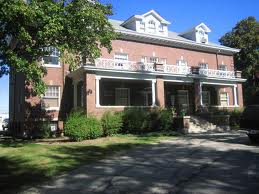 As the years passed, Larkin Center added more services including a school for children struggling with behavior disorders and counseling services for adults.
 There will be lots of news coverage about the “failure“. Many people will weigh-in with what they think went wrong and what could’ve and should’ve been done differently. There might even be a victory lap taken by a few Elgin city council members who openly fought with Larkin Center because they didn’t think “those kids” belonged in our community.
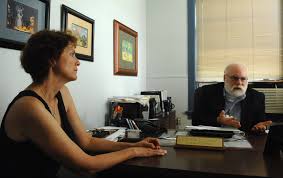 When I think about the donors who invested in efforts to save this organization in the final months and years of its life, I want to honor those efforts.
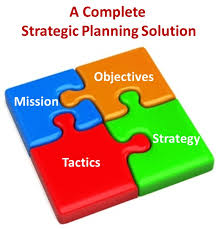
 I believe there is a misconception out there about strategic planning because I keep running into executive directors who think just because the current plan is expiring that is must be time to begin work on a new strategic plan. I also oftentimes run into folks who believe it is a perfect time to start planning when their agency is experiencing instability, blurriness, and confusion. In my humble opinion, there is a time and place for strategic planning and embarking on this journey at the wrong time can be at best frustrating and at worst damaging.
 As I had hoped, I found a section titled “Key Questions to Assess Readiness and Capacity”. Here are those questions:
 We’re not ready, but we still need a plan!
 Welcome to the final post in our five-part series on Governance. We have already discussed the Board’s role in
 The following is a thumbnail sketch of what my process looked like:
 I am not suggesting that my process is the right way to put a non-profit budget together. However, I do believe strongly in the following few budget construction principles:
 You know what Douglas Adams says (according to
  When I look at my email inbox, I do a lot of scanning. I first look at the names of people who sent me something. As I do this, I am deleting anything that vaguely looks like spam or advertising. I don’t even open it. After this first purge, I re-visit those who are left standing and start looking at subject lines. I’m essentially trying to prioritize what I should open first versus leave for later when I have more time. And when I say “leave for later,” it could be days or weeks later.
 Welcome to O.D. Fridays at DonorDreams blog. Every Friday for the foreseeable future we will be looking at posts from John Greco’s blog called “
 One of the pre-test questions that tends to trip people up is whether or not the board has a responsibility to “oversee the CEO“. Believe it or not, it isn’t uncommon for one-quarter to one-third of board volunteers to say “NO“.
 So, maybe you don’t know where to start?
 I was reviewing some old non-profit board governance material this morning and came across a document talking about “trends in non-profit governance“. In other words, the person who wrote that paper thought s/he was able to predict the future. Of course, this document was written more than 10 years ago, which got me thinking it might be fun to review some of their trends and determine where they were right or wrong.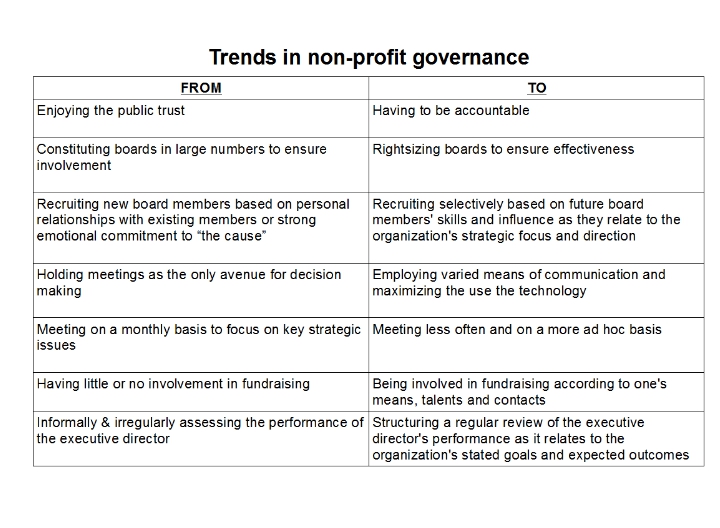
 Over the years, I’ve met non-profit board volunteers who didn’t see value or the need for staff. Likewise, I’ve met countless numbers of staff who complain about their board members. I’ve also met executive directors who deliberately do things to disengage their board volunteers (e.g. taking on fundraising responsibilities, reducing the number of board meetings, etc).